Flowers for a Russian Boss: What Signals Respect and What Does Not
Giving flowers to a boss in Russia is not just a nice gesture — it is a small social ritual with real stakes. Get it right and you reinforce a warm, professional relationship. Get it wrong and an innocent bunch of carnations can feel dismissive, or a lavish arrangement can read as awkward flattery. If you are unfamiliar with Russian workplace culture, the rules are not obvious, but they are consistent once you understand the logic behind them.
Why Hierarchy Changes Everything About the Gift
In Russian professional culture, the distance between an employee and a manager is treated with genuine seriousness. Gifting upward — meaning from a subordinate to a superior — carries a different weight than giving between colleagues of equal standing. The gift is read not just as a gesture of goodwill but as a statement about how well you understand your place in the relationship.
This does not mean the gift must be cold or impersonal. It means it must be considered. A bunch thrown together at the last moment from a convenience kiosk will be noticed, and not favourably. The quality of the flowers, the coherence of the arrangement, and the appropriateness of the occasion all communicate something about the giver's attentiveness and respect.
Flowers given upward should feel elevated without being extravagant to the point of embarrassment. A very large, theatrical arrangement can make a boss uncomfortable — it can feel like an attempt to impress rather than to honour. The sweet spot is something that looks genuinely beautiful and clearly well-chosen, but does not demand to be the centrepiece of the entire office. Think polished, not performative. That balance is where a good florist earns their keep.
Bouquets we can deliver



Occasions That Actually Call for Flowers
Not every Friday afternoon is a reason to arrive with roses. In Russian workplaces, flowers given without a clear occasion can confuse people — they may wonder what you want or whether something unusual is going on. Timing your gift correctly is as important as the flowers themselves.
The most universally accepted occasions are birthdays, International Women's Day on the eighth of March, and professional holidays relevant to the boss's field — Teacher's Day, Doctor's Day, and similar dates are taken seriously across Russia. New Year is another moment when a small floral gesture fits naturally. If your boss is female, the eighth of March is arguably the single most important gifting date of the Russian calendar, and arriving without flowers on that day would be conspicuous.
Retirement milestones and significant work anniversaries also warrant flowers, though these are typically coordinated as a group gift from the whole team rather than from one individual. If you are giving alone, a birthday or a professional holiday is the safest and clearest occasion. Giving flowers simply because you are grateful for feedback or a good review is a Western habit that does not translate cleanly — it can feel strange or even suspicious in a Russian context. Choose a recognised date and let the occasion carry the meaning.
Varieties That Read as Respectful
Roses are the most reliable choice for a boss, particularly long-stemmed varieties in deep red, white, or soft cream. They carry an inherent sense of occasion and formality that other flowers do not. A bunch of twelve or fifteen roses in a single colour, properly wrapped, reads as both generous and tasteful. Avoid mixing too many colours in a rose arrangement for a superior — a single colour palette feels more deliberate and composed.
Peonies, when in season from late May through June, are an excellent alternative. They feel abundant and celebratory without being overly romantic. White or blush peonies in particular have a quiet elegance that suits a professional gift. Chrysanthemums in large-headed varieties — not the small spray types — are also widely accepted in Russia and carry no negative associations when chosen in white or yellow.
Lisianthus, with its layered petals that resemble roses from a distance, is a florist's favourite for upward gifting because it looks expensive and refined while holding up well in an office environment. Orchid stems added to an arrangement can lift it into genuinely premium territory without making it look over the top. What you want to build is a sense of quality and intention — flowers that clearly did not come from a bucket outside a metro station, but that also do not look like you are trying to bribe anyone.
Colours, Numbers and Combinations to Avoid
The number of flowers in Russia carries meaning that is easy to overlook if you are from outside the culture. An even number of flowers is associated with mourning and is given at funerals. Always ensure your arrangement contains an odd number of stems — seven, nine, eleven, fifteen. This is a firm rule, and breaking it will be noticed immediately by any Russian recipient.
Yellow flowers carry a persistent association with separation and infidelity in Russian popular belief. While younger, urban Russians may be relaxed about this, gifting yellow flowers to a boss is an unnecessary risk. The same applies to yellow roses specifically. Stick to white, cream, red, blush pink, or deep burgundy for a safe and elegant result.
All-white arrangements should be approached carefully. White is clean and sophisticated, but a very large, exclusively white bouquet can feel funereal to some recipients. Mixing white with a warm accent — blush spray roses, pale peach lisianthus, or a few stems of soft eucalyptus — keeps the arrangement bright and alive.
Carnations are a complicated choice. They are not inappropriate in Russia the way they are sometimes perceived in Western Europe, but they are considered a modest, everyday flower. Giving only carnations to a boss signals that you did not put much thought or budget into the gift. If you use them at all, they should be mixed with more elevated varieties rather than presented alone.
Presentation and Wrapping Matter More Than You Think
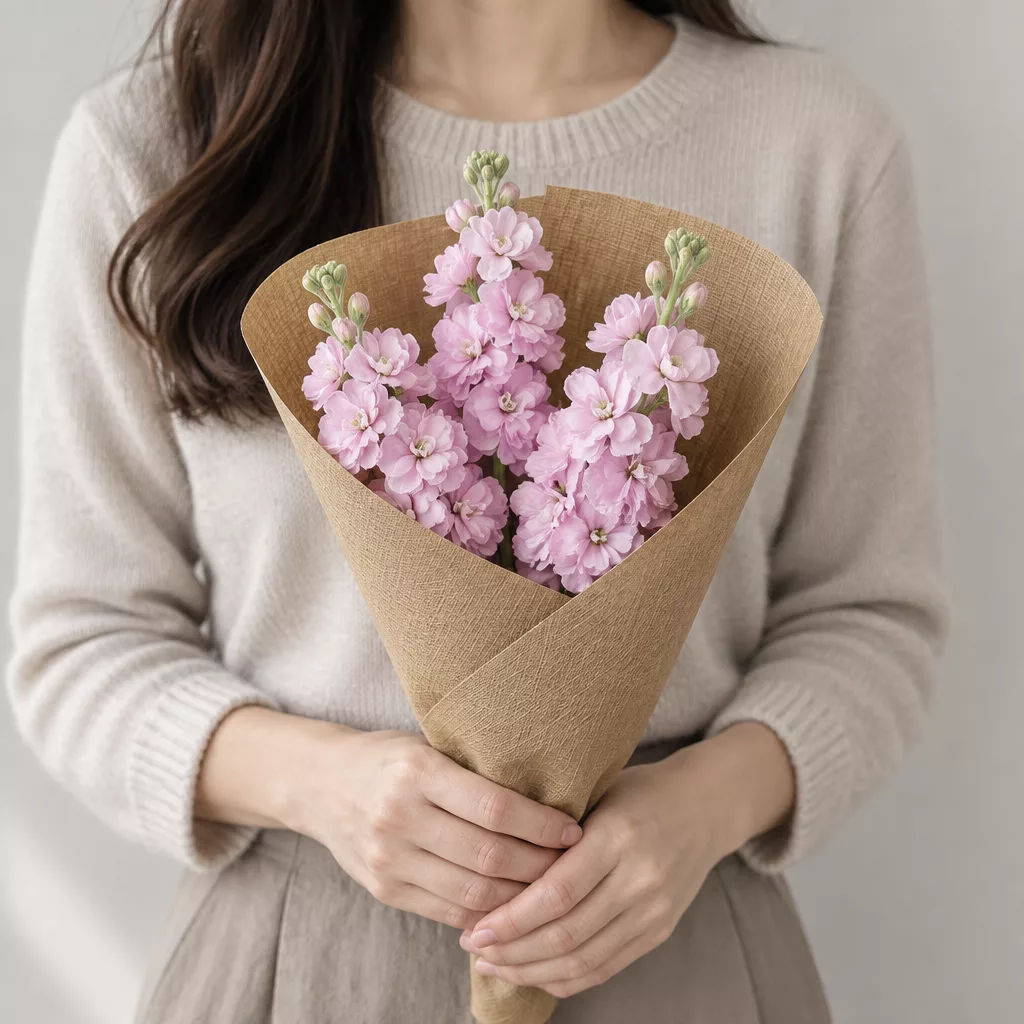
In Russia, how a bouquet is wrapped is treated as part of the gift itself. A loosely bundled bunch handed over without proper wrapping looks careless regardless of what is inside. The standard expectation for a workplace gift is a neat, structured arrangement — either a classic conical wrap in kraft paper or a more formal presentation with ribbon. For a boss, the packaging should feel considered and complete.
For a female boss, soft wrapping in pastel or neutral tones with a simple satin ribbon reads as both feminine and professional. For a male boss — and yes, male managers in Russia do receive flowers, particularly on birthdays — the presentation should be cleaner and simpler. Structured kraft paper or a plain linen wrap, tied with a minimal ribbon, works well. Avoid anything that looks overly decorative or gift-shoppy for a male recipient.
If you are ordering delivery to an office, make sure the flowers arrive in good condition. Roses should be delivered with their heads still firm and upright — a rose that has already begun to droop on arrival reflects poorly even if the variety and colour were perfect. Flowers should be kept cool during transit, ideally below eighteen degrees Celsius, which is why a reliable delivery service matters as much as the flowers themselves. A small care card with instructions for the recipient is a thoughtful touch that most people genuinely appreciate.
Practical Choices by Setting and Group Size
If you are giving flowers as part of a team, the arrangement can be larger and more impressive — this is the moment for a generous mixed bouquet or even a hatbox arrangement with roses and lisianthus. A group gift allows for a higher budget and a more dramatic presentation, and a boss is far more likely to be genuinely moved by something that the whole department contributed to. Coordinate on both the flowers and the card message, which should be warm but professional in tone.
If you are giving alone, keep the scale proportionate. A single person presenting a very large arrangement to their boss can feel like an attempt to stand out from colleagues in a way that reads as competitive rather than respectful. Eleven or thirteen roses, or a mid-sized mixed bouquet with roses and complementary greenery, is the right register for an individual gift.
For an office with an open-plan layout, consider that the flowers will sit on a desk or a windowsill and be seen by everyone. This is actually an argument for choosing something elegant rather than something that simply smells nice — fragrance in a shared office space can be divisive. Roses and lisianthus are relatively low in scent while remaining visually striking. Avoid heavily fragrant lilies in an office environment, as the scent can become overwhelming in a closed space and some people find it difficult to work alongside.
Giving flowers to a Russian boss is one of those gestures that rewards a little knowledge and a little care. Understand the occasion, choose varieties that feel elevated rather than casual, respect the odd-number rule, and make sure the presentation is as polished as the flowers themselves. When all of those elements come together, the gift does exactly what it should — it communicates that you see and respect the person receiving it, without saying a word more than necessary.
Frequently asked questions
Is it appropriate to give flowers to a male boss in Russia?
Yes, male managers in Russia do receive flowers, most commonly on birthdays and professional holidays. The presentation should be simpler and less decorative than for a female recipient — structured kraft paper wrapping and a clean colour palette like white or deep red work well. The gesture is entirely normal and will not be considered unusual.
Why does the number of flowers matter so much in Russia?
Even numbers of flowers are associated with mourning in Russian tradition and are given at funerals. An odd number is always used for a living recipient. This is one of the most consistent rules in Russian gifting culture and is observed across generations and regions, so always confirm your bouquet has an odd number of stems before it is sent.
Can I give yellow flowers to my boss if I know they like them personally?
It is better to avoid yellow flowers even if your boss seems relaxed about the tradition, particularly for a first or formal gift. The association with separation is deeply embedded in Russian popular culture and older colleagues or family members present at the occasion may react negatively. White, cream, blush, or red are universally safe choices that carry no risk.
How far in advance should I order flowers for delivery to an office?
For a timed delivery to an office — especially for a morning occasion like the eighth of March — ordering the evening before or early the same morning gives the best results. Roses and lisianthus hold well when kept cool during transit, but you want them arriving fresh and firm, not after they have been sitting in a warm lobby.
Are carnations really considered inappropriate for a boss in Russia?
Carnations are not taboo, but they are seen as an everyday, budget flower in Russia. Presenting only carnations to a superior signals a lack of effort or consideration. If you want to include them, mix them with roses or lisianthus so they contribute texture without defining the arrangement. For a standalone gift to a boss, choose something with more visual weight.
Ready to send flowers?
Pick the city, choose the bouquet, and a local florist takes it from there.
Choose a city →