Flowers for March 8 vs a Birthday: Are the Rules Different?
Every year around late February, the same question arrives in our messages dozens of times a day: can I just send her the same tulips I sent for her birthday last month? The short answer is yes — but the longer answer is more interesting, and knowing it will make your bouquet land completely differently. March 8 and a birthday are both celebrations of a woman, but they carry different emotional weight, different social expectations, and in Russia, they come with customs that have built up over generations. Understanding those differences does not require a degree in etiquette. It just requires thinking about the person receiving the flowers before you think about the flowers themselves.
Why March 8 Feels Different Even Before the Flowers Arrive
International Women's Day on March 8 is not simply a holiday in Russia — it is closer to a national ritual. From the first of March, flower stalls appear on every corner, prices rise sharply, and the social pressure to give flowers becomes nearly universal. A woman receiving nothing on March 8 notices. A woman receiving something beautiful on her birthday feels individually chosen. That distinction matters enormously when you are deciding what to send.
On March 8, the bouquet carries a collective message: I see you as a woman, I respect that, and I am part of a culture that marks this day. It does not need to be deeply personal. It can be given by a colleague, a son, a neighbour, or a boss, and it will be received warmly regardless of how well the giver knows the recipient. The occasion itself does the emotional work.
A birthday bouquet works the opposite way. Here the occasion is personal by definition, and the flowers are expected to reflect some knowledge of the person — her taste, her age, the nature of your relationship. A generic bouquet on a birthday reads as an afterthought. The same bouquet on March 8 reads as perfectly appropriate. This is the core difference florists think about every single day during the first week of March, and it should shape your choices before you even look at varieties.
Bouquets we can deliver


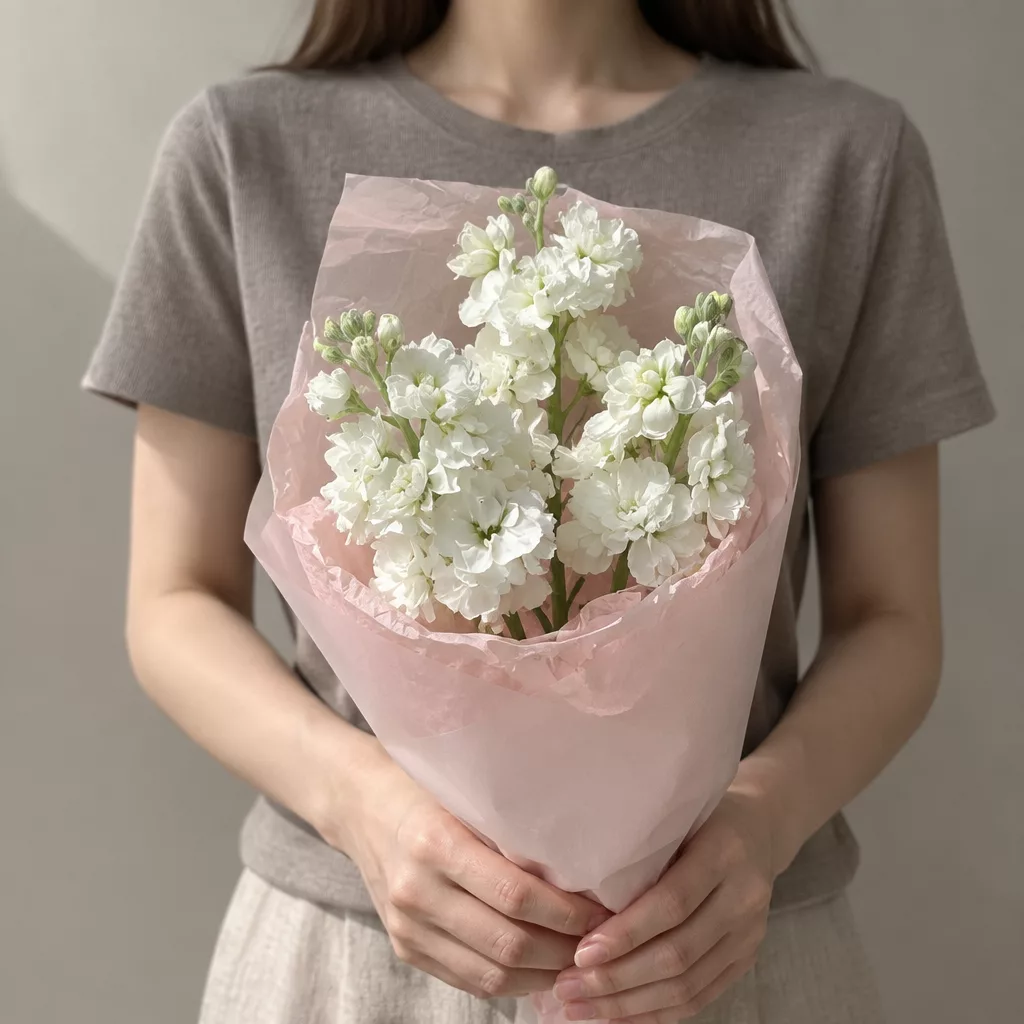
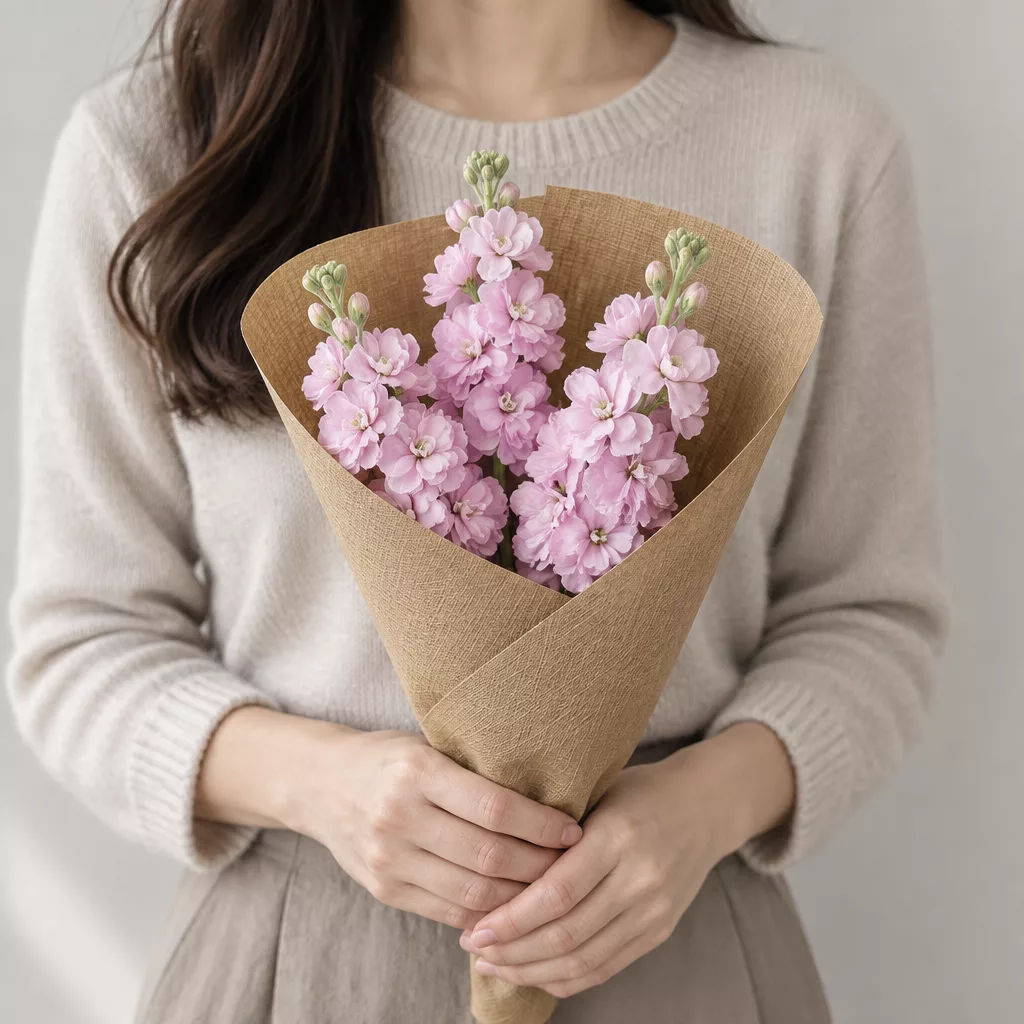
Choosing for the Occasion: March 8 Has Its Own Visual Language
Russia has a strong visual tradition around March 8, and tulips sit at the centre of it. Single-colour tulip bouquets — white, yellow, coral, soft pink — have become so associated with the holiday that receiving them on March 8 feels correct in a way that is almost ceremonial. Mimosa branches, with their tiny yellow clusters and powdery scent, are the other classic, though their fragility means they need to travel carefully and be placed in water within hours of delivery.
Spring messaging matters on March 8 in a way it does not on a birthday in, say, October. Hyacinths, ranunculus, and anemones all read as seasonally appropriate and they photograph beautifully, which is increasingly relevant since many recipients share their bouquets on social media. The colour palette skews lighter and warmer: cream, blush, yellow, lavender. Deep reds and dramatic burgundies are less common because they carry romantic weight that can feel mismatched when the sender is a colleague or a relative.
For a birthday, the palette opens up completely. You are free to go bold with garden roses in deep apricot or terracotta, to use peonies in high summer, to build something architectural with anthuriums or tropical foliage. The birthday bouquet can afford to be unusual because the personal context justifies it. A woman who loves dark, moody arrangements will appreciate exactly that on her birthday, whereas on March 8 a more conventional choice is often the kinder one — it fits the shared language of the day.
Budget Thinking: What Each Occasion Typically Calls For
March 8 creates a market situation unlike any other point in the year. Wholesale tulip prices in Russia typically double or even triple in the days immediately before the holiday, and that cost passes through to the bouquet. A buyer who expects March 8 pricing to match mid-January pricing will be disappointed, and a florist who absorbs the difference will not stay in business. The practical advice here is to order early — by March 5 at the latest — to access better availability and to avoid last-minute rush surcharges.
For March 8, a mid-size tulip bouquet of fifteen to twenty-five stems is the standard gesture. It is enough to feel generous without being overwhelming, and tulips in odd numbers look fuller than they do in even numbers because of how the stems fan naturally. Adding a few stems of white freesia or a branch of eucalyptus gives the arrangement depth without dramatically changing the cost.
Birthday budgets are more personal and more flexible. A close friend's milestone birthday calls for something genuinely special — a large mixed bouquet with garden roses, lisianthus, and greenery, or a single-variety arrangement of fifty or more stems of one rose variety for dramatic effect. A work colleague's birthday might call for something smaller and cheerful, like a compact arrangement of spray roses and seasonal greens. The key difference is that on a birthday, the size and composition of the bouquet communicates how much you value the specific relationship, whereas on March 8 it communicates participation in a shared tradition.
Combinations That Work and Mistakes That Are Easy to Avoid
One of the most common March 8 mistakes is over-complicating the bouquet. A mixed arrangement of twelve different flower types looks busy and loses the clean spring feeling the holiday calls for. Two or three varieties, chosen for colour harmony and seasonal character, almost always outperform a crowded mix. Tulips with white narcissus and a few stems of muscari — the small blue grape hyacinth — is a combination that photographs well, smells gently wonderful, and reads immediately as a spring celebration.
Another mistake is sending yellow flowers to older recipients without thinking about it. In Russian tradition, yellow flowers have a historical association with parting and jealousy, though this belief is fading among younger generations in cities. If you are sending to a woman over sixty and you are unsure of her views, a mixed palette with only accent yellows is safer than an all-yellow bouquet, regardless of the occasion.
For birthdays, the mistake runs in the other direction: playing it too safe. A woman who collects vintage ceramics and wears unusual jewellery will love an arrangement built around café au lait dahlias and chocolate cosmos in August, or burgundy anemones and dusty miller in autumn. Reading the person and reflecting that back in the flowers is what makes a birthday bouquet memorable. On March 8, restraint is a virtue. On a birthday, specificity is the virtue. Mixing up these two instincts — being too bold for March 8 or too generic for a birthday — is where most well-intentioned givers go wrong.
Care and Vase Life: Spring Flowers Need More Attention Than You Think
Tulips are one of the most misunderstood flowers when it comes to care. They continue to grow after cutting — sometimes by several centimetres — and they bend toward light, which means a vase placed near a window will produce a dramatically leaning arrangement within twenty-four hours. For March 8 bouquets, advise the recipient to place tulips in a cool room away from direct sunlight and to change the water daily. Tulips last five to seven days in good conditions, and cutting the stems at an angle every two days extends that significantly.
Mimosa, the other March 8 classic, is far more delicate. It wilts quickly in heated apartments, which is the norm across Russia in early March when central heating is still running at full capacity. A recipient who receives mimosa should put it in water immediately, mist the branches lightly, and keep it away from radiators. Even with perfect care, mimosa rarely lasts more than three to four days indoors.
Birthday flowers vary widely by variety. Garden roses and lisianthus, two of the most popular birthday choices, last seven to ten days with proper care — fresh water every two days, stems re-cut, and a cool overnight temperature. Peonies, beloved for summer birthdays, are more temperature-sensitive and should never be placed near fruit bowls, since ripening fruit releases ethylene gas that accelerates petal drop. Passing this information along with the bouquet, whether as a note or a message, is a small gesture that significantly extends how long the recipient enjoys your gift.
Timing and Delivery: When to Send for Maximum Effect
For March 8, the delivery window matters socially in a way it rarely does for birthdays. Receiving flowers in the morning of March 8 — before noon — is considered the ideal. It sets the tone for the whole day and means the recipient can enjoy the bouquet throughout the holiday. An evening delivery on March 8, while still appreciated, carries a faint suggestion of last-minute organisation. If you are sending to multiple people — a mother, a sister, a colleague — order all deliveries for the morning slot and do so at least two or three days in advance, because morning slots fill up quickly across the city.
Birthday deliveries follow a different logic. Here, the timing should align with the recipient's day. Sending flowers to a woman's workplace so they arrive during the working day is a lovely gesture — her colleagues see the delivery, which adds a social dimension she will enjoy. Sending to her home in the evening is more intimate and works beautifully for close relationships. The one timing mistake to avoid for birthdays is delivering the day before — it reads as disorganised, and the flowers will be one day older when the actual birthday arrives.
In Saint Petersburg and across Russia's larger cities, same-day delivery within one to two hours is now entirely normal and reliable for both occasions. This removes the old anxiety about planning weeks ahead, but it does not remove the advantage of ordering early for March 8 specifically, when demand is genuinely exceptional and the best varieties sell out before midday.
The rules for March 8 and a birthday are not opposites — they are simply different kinds of attention. March 8 asks you to participate in something collective and seasonal, to speak a shared visual language of spring and celebration that any woman will recognise and appreciate. A birthday asks you to pay attention to one specific person and to let the flowers reflect what you know about her. Get those two instincts the right way round and you will never send a forgettable bouquet again. The flowers themselves — tulips or roses, mimosa or dahlias — matter less than the thought behind the choice, and the thought always starts with the person who will receive them.
Frequently asked questions
Is it acceptable to send the same flowers for March 8 and a birthday if they fall close together?
Yes, but vary the presentation. If you sent white tulips for March 8, choose a different colour palette or variety for the birthday — garden roses or ranunculus in a warmer tone, for example. The recipient will notice the effort to treat the two occasions as distinct, which is exactly the right message to send when celebrations land within weeks of each other.
Do Russian women expect flowers from male colleagues on March 8, or is that considered old-fashioned?
It remains very much the norm across Russia, including in professional environments. Most women expect some acknowledgement from male colleagues on March 8, even if it is a small shared arrangement for the office rather than individual bouquets. Skipping it entirely is more likely to be noticed negatively than participating is likely to feel awkward. A light, cheerful spring bouquet is always appropriate in this context.
Are there flowers that are considered inappropriate for March 8 specifically?
Deep red roses carry strong romantic connotations and can feel out of place when sent by a colleague or a son. All-yellow bouquets may unsettle older recipients due to a traditional association with separation. Chrysanthemums, while beautiful, are primarily associated with cemetery visits in Russian culture and are best avoided for any celebratory occasion, including both March 8 and birthdays.
How far in advance should I order March 8 flowers compared to a birthday bouquet?
For March 8, order by March 5 at the latest, and earlier if you want morning delivery or specific varieties like mimosa or white tulips, which sell out first. For a birthday, same-day ordering is perfectly fine since demand is not concentrated. Two to three hours lead time is usually enough for a birthday delivery anywhere in the city on a normal day.
What is the best single flower to send if I am unsure of the recipient's taste for a birthday?
A single-variety bouquet of spray roses is the most reliably well-received choice. They come in a wide range of colours, last well over a week with basic care, and look generous without being overwhelming. Choosing a soft peach or warm cream shade works across nearly all ages and personal styles, making it the safest genuinely beautiful option when you do not know the recipient's preferences well.
Ready to send flowers?
Pick the city, choose the bouquet, and a local florist takes it from there.
Choose a city →