How to Plan a Wedding Flower Package That Fits Your Day
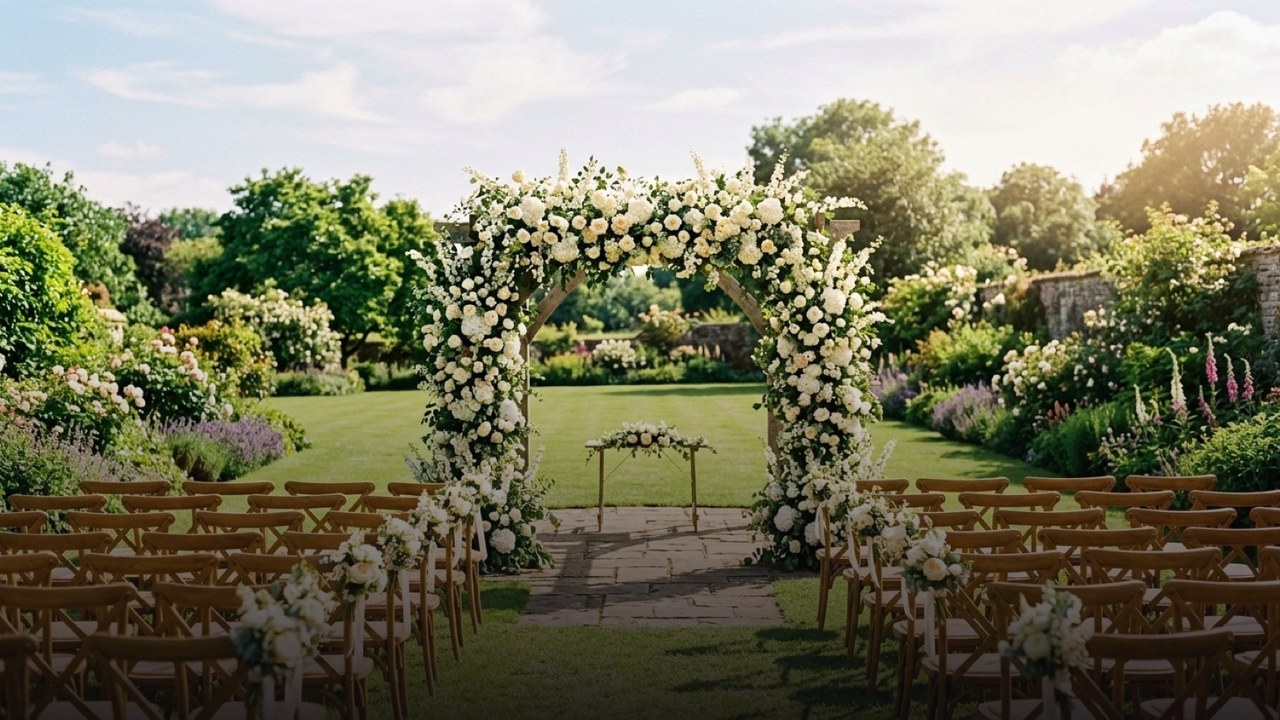
Wedding flower packages group the floral pieces you need for the day, usually a bridal bouquet, buttonholes and selected ceremony or reception arrangements. To compare them properly, check the quantities, sizes, flower choices and any setup requirements: the word “package” alone tells you very little about what is included. Start with the people and spaces that need flowers, then decide which pieces deserve the largest share of your budget.
If you are planning from abroad or sending flowers to a wedding in Russia, first separate the couple’s event flowers from your own congratulatory gift. A bouquet delivered with a personal card serves a different purpose from flowers prepared for the ceremony. This guide explains how to build a useful brief, assess proposed packages and arrange a Turboflora bouquet delivery using details you can confirm before ordering.
Define the pieces before comparing wedding flower packages
Write your requirements as quantities rather than broad labels such as “flowers for the wedding party”. Record one bridal bouquet, the number of attendants’ bouquets and each person who needs a buttonhole or corsage. For tables, count the actual arrangements required. Ten guest tables with one arrangement each is a much clearer starting point than a request for reception flowers.
Next, describe the scale and use of each piece. A small hand-tied bouquet and a long trailing design can require very different construction, even when their colours match. For a table arrangement, note the table shape and whether guests must see one another across it. Give dimensions or a reference photograph where possible; “medium” has no consistent meaning between proposals.
Treat every package description as a list to verify. Ask whether containers, transport, placement, collection of hired items and any venue work are included wherever those services are offered. Do not assume that ordering bouquets also covers decorating a room. For Turboflora, use the bouquets catalogue to explore bouquet options, and confirm any wedding-specific requirements before relying on them.
Choose a palette and priorities before individual flowers
Choose two or three colour directions and describe their undertones: ivory with leafy green, soft pink with cream, or burgundy with muted pink, for example. Words such as “white” and “pink” cover a wide range of shades. Compare references beside the outfits and venue materials, because a bouquet that looks harmonious on its own may feel quite different against a particular fabric.
Set priorities in order. You might care most about the bridal bouquet’s shape, followed by the colour balance and then particular flower varieties. Tell the person preparing the proposal which choices are essential and which are flexible. Flower availability can vary, so ask how any proposed changes would affect colour, outline and texture before agreeing to them; do not leave this understanding implicit.
Think about how people will use the flowers. A bouquet should feel manageable to carry, and flowers worn on clothing need an appropriate fastening agreed with the wearer. Mention fragrance sensitivities and allergies when discussing choices, without assuming that any mixed arrangement will be suitable. If you want background on familiar choices, read our guide to flowers used in Russian weddings.
Bouquets we can deliver




Match arrangements to the venue and the wedding schedule
Map flowers to moments rather than filling every available surface. The bouquet appears during the ceremony and portraits; dining arrangements stay with guests for longer. If your budget needs a boundary, prioritise the pieces people will carry or sit beside. A clear focal arrangement can give a space direction without requiring flowers along every aisle, staircase and windowsill.
Check venue rules before committing to designs. Ask about access times, permitted fixings, candles, water-filled containers and who may move arrangements. A ceremony arrangement might be reused at the reception, but only if its dimensions suit both locations and someone is responsible for moving it. Include the journey and handling time in the plan instead of assuming reuse will happen automatically.
Give each task an owner: who receives flowers, who checks names on wearable pieces, and who puts bouquets in water before photographs. Share a short written schedule with those people. For any essential ceremony flowers, discuss the receiving time in relation to the ceremony itself, allowing room for checking and distribution. The moment the first guest arrives is usually a poor deadline for discovering a missing detail.
Send a wedding gift bouquet with the couple’s plans in mind
As a guest or relative abroad, check whether the couple has requested flowers, an alternative gift or no gifts. A surprise bouquet can be thoughtful, but it also needs somewhere to go during a busy day. Ask a trusted contact whether delivery to a home or another agreed address would be easier than bringing flowers to the ceremony. Never assume the venue will receive or store them.
In Russian gift-giving, an odd number of stems is customary for a celebratory bouquet when the stems are individually counted; even numbers are associated with mourning. Colour meanings are less uniform, so the couple’s taste is a better guide than a rigid symbolism chart. If you are unsure, explain the occasion and preferred colours when asking for help choosing the bouquet.
Use the card to make the gesture clear, especially when you cannot attend. A short message naming both partners and offering a personal wish is enough. Turboflora includes a card with your text free of charge. Delivery is anonymous by default, and the courier does not name the sender, so sign the message if you want the couple to know who sent their flowers.
Arrange flower delivery to Russia with clear instructions
Turboflora delivers flowers across Russia. City delivery costs 500 RUB; for remote districts and suburbs, the operator confirms the delivery price when confirming the order. You can contact a manager on WhatsApp for help choosing a bouquet, agreeing the address, delivery time and card text, and arranging a photo of the bouquet before delivery. Explain whether this is a wedding gift or a request involving ceremony flowers.
For timing, orders can be placed 1–30 days ahead. Available delivery formats include an exact time with a tolerance of plus or minus 30 minutes, or the windows 09–12, 12–15, 15–18 and 18–21. Express delivery in large cities is 1–2 hours after the order is confirmed. For a wedding, agree the timing against the recipient’s schedule and state the delivery time in the destination’s local time to avoid confusion when ordering abroad.
The courier calls the recipient about 15 minutes before arrival, so choose a contact who can answer during that part of the day. If the recipient is absent, we agree a second delivery the same day or handing the flowers to a neighbour or concierge with the sender’s consent. Online checkout uses CloudPayments; check the options displayed at checkout, as acceptance of every foreign card cannot be promised. See delivery and payment details when preparing your order.
Keep wedding flowers fresh and make the final check useful
For cut stems in a vase, use a clean container and fresh water, keeping leaves below the waterline out of the vase. Follow any care instructions supplied with the flowers, including directions for flower food. Keep arrangements away from direct sun, heaters and ripening fruit. These everyday precautions help reduce unnecessary stress while the flowers wait for their place in the day.
Keep a hand-tied bouquet in a suitable vase between uses where its construction allows, with ribbon and decorative wrapping clear of the water. Support it securely so it cannot topple. Designs made in floral foam or other supports need different care; ask how to maintain the particular arrangement instead of pulling it apart. Avoid misting petals indiscriminately, since some flowers mark when wet.
Before the wedding, review one written list covering quantities, agreed appearance, receiving details, timing and responsibilities. Check that the card names are spelt correctly and that the person receiving the flowers knows what to expect. A photograph before delivery can help you see the bouquet’s appearance, but it does not resolve missing logistical instructions. Clear decisions about where the flowers go and who takes them are just as valuable as the colour choice.
Frequently asked questions
What should a wedding flower package include?
It should include the specific pieces you need, with quantities and clear descriptions of their size and style. Bridal bouquets, attendants’ bouquets, buttonholes and table arrangements are common components, but you should confirm every inclusion and any related services individually.
Can I order a complete wedding flower package from Turboflora?
Contact the manager with your required pieces, quantities, location and date to establish what can be arranged. The bouquet catalogue alone does not confirm a complete wedding package or venue decoration service.
How far ahead can I schedule a bouquet delivery in Russia?
Turboflora accepts pre-orders 1–30 days ahead. Agree a receiving time that fits the wedding schedule, using either an available time window or an exact time with a tolerance of plus or minus 30 minutes.
Will the couple know who sent the flowers?
The courier does not name the sender because delivery is anonymous by default. Include your name in the free card text if you want the couple to identify your gift.
Can I pay for wedding flowers with a foreign card?
Online checkout uses CloudPayments, and acceptance of every foreign card is not guaranteed. Check the payment options displayed at checkout before completing your order.
Ready to send flowers?
Pick the city, choose the bouquet, and a local florist takes it from there.
Choose a city →