Flowers for a Russian Business Partner: What Works and What to Avoid
Giving flowers to a Russian business partner is a genuine gesture of respect, not a formality — but the details matter more than most people expect. The wrong colour combination, an even number of stems, or a bouquet that arrives looking tired can quietly undermine the impression you worked hard to build. Get it right, and a well-chosen arrangement signals attentiveness, cultural awareness, and the kind of care that makes professional relationships last.
When Giving Flowers to a Business Partner Actually Makes Sense
In Russian business culture, flowers are a natural and welcomed gift, but timing shapes how they land. The clearest occasions are company anniversaries, the opening of a new office or branch, a successful deal closing, and personal milestones like a birthday or a professional promotion. Women's Day on March 8th is perhaps the most universally observed — skipping it for a female partner or colleague would be noticed. New Year is another moment when a thoughtful arrangement fits naturally alongside a seasonal greeting.
Avoiding the wrong moment matters just as much. Do not send flowers as an apology in a professional context — it reads as overly personal and can embarrass the recipient in front of colleagues. Flowers tied to a crisis or a difficult negotiation carry awkward associations. The safest rule is to connect your gift to a celebration or a clear achievement, so the meaning is unambiguous from the moment it arrives.
If you are uncertain whether the occasion calls for flowers at all, consider the seniority of the recipient. Senior executives and founders often receive flowers from clients and partners as a matter of course, especially on landmark dates. A middle manager may appreciate the gesture just as much, but a more modest arrangement suits the context better. Matching the scale of the bouquet to the relationship and the occasion is itself a form of good judgment.
Bouquets we can deliver



The One Rule Everyone Gets Wrong: Counting the Stems
The single most important rule in Russian flower-giving — and the one that catches most international visitors off guard — is the odd-number rule. Bouquets for living recipients are always made with an odd number of flowers: three, five, seven, eleven, fifteen, and so on. Even numbers, particularly single stems or pairs, are associated with funerals and mourning. Arriving at a business meeting with a dozen roses, however beautiful, sends entirely the wrong signal.
This rule applies regardless of the flower type. A bouquet of ten peonies and a bouquet of twelve tulips both carry the same uncomfortable connotation. Florists working in Russia follow this automatically, but if you are assembling something yourself or ordering from outside the country, it is easy to overlook. When in doubt, ask for one more stem rather than one fewer.
Large ceremonial arrangements — the kind placed on a table at an event rather than handed to a person — are sometimes exempt from this counting because they function more as décor than as a personal gift. But any bouquet that will be handed directly to your partner or placed on their desk should follow the odd-number rule without exception. It is one of those customs where being right is invisible, but being wrong is immediately noticed by everyone in the room except you. A professional florist who knows the Russian market will apply this rule as a default, so you do not have to think about it at all.
Colours That Communicate Respect and Colours to Use Carefully
White, cream, and champagne tones are the most universally safe choices for business contexts. They read as elegant, neutral, and considered — qualities that translate well across industries and seniority levels. White roses, white lisianthus, and cream-coloured spray chrysanthemums all work well either alone or in combination. A monochromatic arrangement in these tones looks polished and intentional without feeling cold.
Deep burgundy and rich coral tones occupy a middle ground — warm and celebratory without being as forward as bright red. Red roses specifically carry strong romantic associations in Russian culture, so a full bouquet of red roses sent to a female business partner can be misread as a personal overture rather than a professional gesture. This does not mean red is forbidden — a few red accents within a larger mixed arrangement read very differently than a solid red bouquet.
Yellow flowers deserve a separate mention. In some older Russian traditions, yellow is associated with separation or the end of a relationship, and while this belief is much less widespread among younger generations, it is still worth being cautious. If your partner is older or more traditional, avoid a purely yellow arrangement. Mixed bouquets that include yellow alongside white, green, or peach tones are generally fine and carry no negative connotation.
Purple, lilac, and violet tones — found in lisianthus, lavender, and some varieties of freesia — are considered sophisticated and work well for senior recipients. They signal thoughtfulness without any of the associations that surround red or yellow. For a male business partner, stick to structured, less ornate arrangements in white, green, or deep jewel tones.
Choosing Flowers by the Occasion and the Relationship
For a first meeting or an early-stage business relationship, restraint is your ally. A compact, well-structured bouquet of five to seven stems — white roses with eucalyptus, or cream lisianthus with green pittosporum — says you made an effort without overstepping. The goal at this stage is to be remembered as considerate, not to make a dramatic impression. Avoid anything too fragrant for an office setting; heavy perfume from lilies or hyacinths can be distracting during a meeting.
For a long-standing partner or a significant milestone like a ten-year anniversary, you have more room to be generous. A larger arrangement of fifteen or twenty-one stems, perhaps peonies in season combined with white garden roses and soft greenery, feels appropriately celebratory. Peonies are especially well-regarded in Russia — they carry associations of abundance and prosperity, which makes them a natural fit for business gifting when they are available, typically from May through July.
For a female partner's birthday, you can lean into more personal florals — garden roses, ranunculus, or freesia — while keeping the palette refined. For a male partner's birthday, the gesture is still appreciated but the arrangement should feel more architectural: fewer varieties, cleaner lines, perhaps a structured bunch of white tulips or a single-variety bouquet of calla lilies. The presentation itself signals that you thought about the recipient specifically, which is always the right message in a professional relationship.
Presentation and Packaging: The Details That Get Noticed
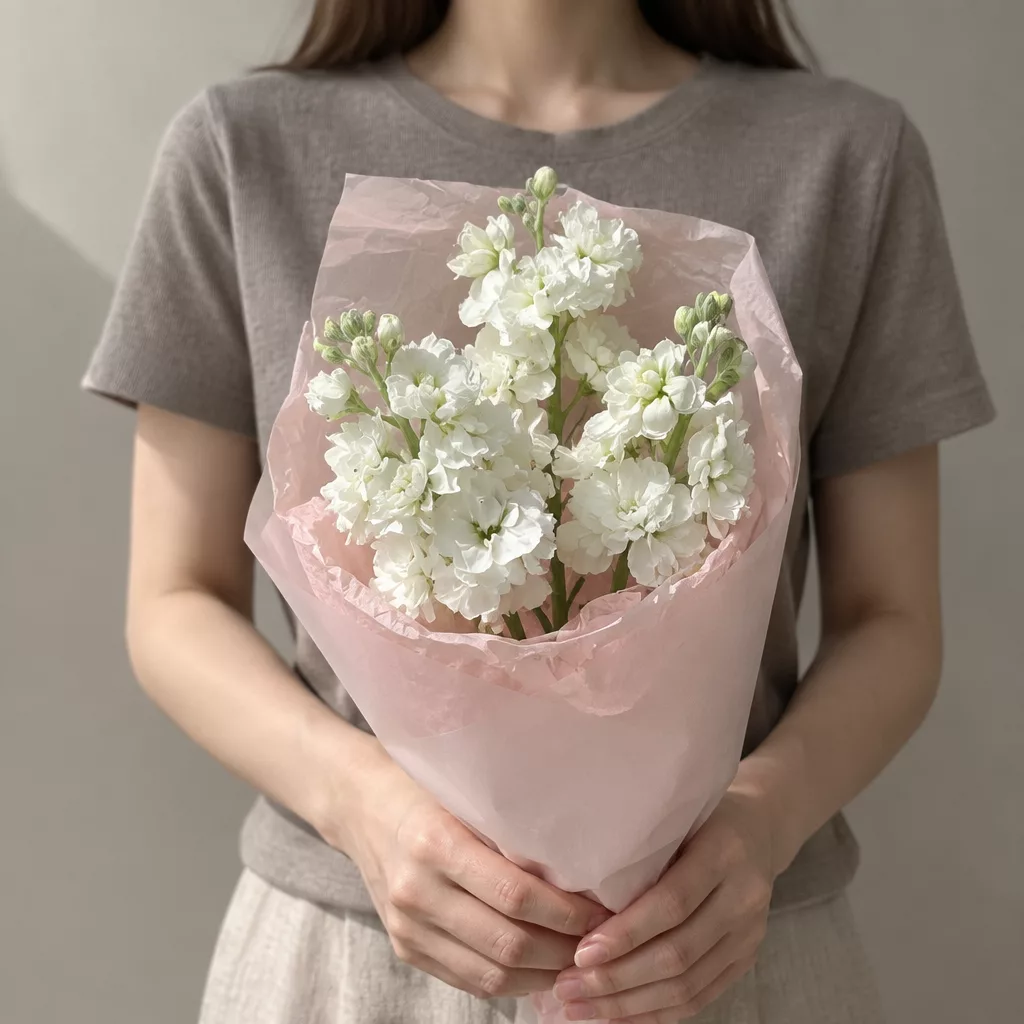
In Russia, how a bouquet is wrapped matters almost as much as what is inside it. Bare, unwrapped flowers handed over informally would feel unfinished — the packaging is part of the gift. Kraft paper wrapping with a simple ribbon reads as modern and tasteful. Cellophane alone, especially in bright colours, can look dated. For a business context, matte wrapping in neutral tones — cream, grey, or deep green — is the most appropriate choice.
A handwritten card is a small detail that carries real weight. Even a brief note — congratulating the recipient on the occasion and wishing them continued success — shows that the gift was chosen deliberately rather than ordered as an afterthought. In Russian business culture, personal touches within a professional frame are valued. The card does not need to be elaborate; three or four sincere sentences are plenty.
If the bouquet is being delivered to an office rather than presented in person, timing matters. Arriving in the middle of a busy workday when your partner is in meetings means the flowers may sit unattended for hours. Early morning delivery, before the main working day begins, or early afternoon after the post-lunch lull, tends to work better. Flowers that arrive fresh and are placed in water promptly will look their best for the moment your partner actually sees them — which is the only moment that counts.
Temperature during transit also affects first impression. In Saint Petersburg's colder months, flowers need to be protected from frost during delivery. A reputable florist will pack the arrangement appropriately, but it is worth confirming this when ordering for a winter occasion.
What to Avoid: Mistakes That Are Hard to Undo
Beyond even numbers and the cautious use of yellow, there are a few other pitfalls worth knowing. Sending a pot plant rather than a cut bouquet can work, but it carries different associations — a potted plant feels more like a long-term installation than a celebratory gesture, and in some interpretations it can feel presumptuous, as though you are furnishing someone's office. Stick to cut flowers for business gifting unless you know the recipient well and are confident they would enjoy a plant.
Mixed bouquets that combine too many varieties and colours can look unfocused. A business gift should feel curated. Three to four varieties in a coherent palette — say, white roses, white lisianthus, eucalyptus, and a touch of wax flower — look far more considered than seven varieties assembled without a clear visual logic. More is not better here; intentionality is what impresses.
Avoid flowers that drop petals heavily or create mess, particularly if the bouquet will be placed on a desk or a conference table. Certain varieties of lilies shed pollen that stains fabric and surfaces, which is an unwelcome surprise in a professional environment. If you love the look of lilies, choose varieties with stamens removed, or ask your florist to do this before delivery.
Finally, do not send flowers anonymously in a business context. An unsigned gift creates confusion and mild discomfort — the recipient spends energy wondering who sent it rather than feeling appreciated. Your name and a brief message should always accompany the arrangement. The gesture only works when its source is clear.
Keeping the Bouquet Fresh After Delivery
A beautiful bouquet that wilts within a day reflects poorly on the giver, even if the flowers were perfect when they left the shop. Passing on a few care tips — either verbally or on a small care card — is a thoughtful finishing touch that extends the life of your gift. Most cut flowers do best in a clean vase with fresh, cool water changed every one to two days. The vase should be rinsed thoroughly each time, as bacterial buildup in the water is the main reason flowers decline faster than they should.
Stem trimming makes a significant difference. Cutting two to three centimetres from the base of each stem at a diagonal angle, ideally under running water, allows the stem to absorb water more efficiently. This should be done when the bouquet first arrives and again each time the water is changed. Removing any leaves that fall below the waterline prevents them from rotting and contaminating the water.
Office environments present a specific challenge: air conditioning and central heating both dry out flowers faster than a domestic setting. If the bouquet is placed near a heating vent or in direct sunlight from a window, it will fade noticeably faster. A spot away from direct sun and heat sources, where the temperature stays relatively stable, will extend vase life considerably.
With proper care, roses and lisianthus typically last seven to ten days. Tulips and ranunculus are shorter-lived at five to seven days but open beautifully in the vase. Peonies, when they arrive as tight buds, can take a day or two to open fully — which means they often look their most spectacular a day after delivery, a pleasant surprise for the recipient.
Sending flowers to a Russian business partner is one of the more personal gestures available in a professional relationship — and when it is done well, it is remembered long after the meeting ends. The rules are not complicated once you know them: odd numbers, considered colour choices, clean presentation, and timing that respects the recipient's day. The flowers themselves do the rest. A well-chosen bouquet, delivered fresh and packaged with care, says something about your attention to detail that no email or formal gift basket quite manages to replicate.
Frequently asked questions
Is it appropriate to give flowers to a male business partner in Russia?
Yes, though the gesture is less common than for female recipients. Keep the arrangement structured and simple — a single-variety bouquet of white tulips, calla lilies, or roses in a clean palette works well. Avoid anything overly decorative or soft in tone. The occasion matters too: a company anniversary or a significant professional milestone gives the gift a clear, unambiguous context.
Can I send flowers to a business partner's office rather than giving them in person?
Absolutely, and it is often the more practical option. Delivery to an office works well provided you include a signed card with a brief personal message. Aim for early morning or early afternoon delivery to ensure the flowers are placed in water promptly. Confirm with the florist that the arrangement is packaged to withstand the temperature during transit, especially in winter months.
Are there specific flowers that are considered particularly prestigious in Russian business culture?
Roses remain the most universally recognised prestige flower. Peonies, when in season from May through July, are highly regarded and carry associations of abundance. Calla lilies read as elegant and modern. Lisianthus is appreciated for its refined appearance and long vase life. Avoid flowers that are strongly associated with informal or everyday settings, such as daisies or sunflowers, for senior recipients.
How far in advance should I order a business bouquet for a specific date?
For standard occasions, ordering the day before or the morning of delivery is usually sufficient when working with a florist that holds good stock. For significant dates like March 8th or New Year, demand is very high and ordering two to three days ahead is strongly advisable. If you need a specific variety that may not be in regular stock, a week's notice gives the florist time to source it properly.
What is the right size for a business bouquet — is bigger always better?
Not at all. For a first meeting or an early relationship, a compact arrangement of five to seven stems is more appropriate than something large and theatrical. Scale should match the occasion and the depth of the relationship. A landmark anniversary or a significant deal closing justifies a more generous arrangement, but a modest, beautifully composed bouquet at the right moment will always outperform an oversized one at the wrong one.
Ready to send flowers?
Pick the city, choose the bouquet, and a local florist takes it from there.
Choose a city →