Flowers for a Russian Graduation: What to Send and Why
Graduation day in Russia is one of the few moments when flowers are not just welcome — they are expected. Whether your recipient is stepping off a school stage in June or collecting a university diploma after five hard years, arriving without a bouquet would feel genuinely incomplete. If you are sending from abroad or simply want to get the gesture right, this article will walk you through every choice: what Russians actually value on this day, which flowers hold up in summer heat, and how to match your budget to the occasion without guessing.
Why Flowers Matter So Much at Russian Graduations
In Russia, graduation — whether from school or university — is treated as a milestone on the same level as a wedding or a major anniversary. The ceremony itself is formal and emotional, and flowers are the standard public expression of pride from family and friends. Teachers and professors receive bouquets too, not just the graduate, so the total volume of flowers at a Russian graduation hall on a single afternoon can be staggering.
This culture goes back decades. During the Soviet period, flowers were one of the few personal gifts that carried real warmth, and the tradition stuck. Today it has evolved, but the core expectation has not: showing up with a thoughtful bouquet signals that you take the achievement seriously.
For someone sending from outside Russia, this context matters. A card alone, or a small potted plant, would feel underwhelming compared to what the graduate will receive from everyone around them. A well-chosen bouquet, on the other hand, will be remembered and photographed. It becomes part of the day rather than a footnote to it. Understanding this helps you choose not just a variety but a scale — and scale, as we will see, is something Russian graduation etiquette has strong opinions about.
Bouquets we can deliver

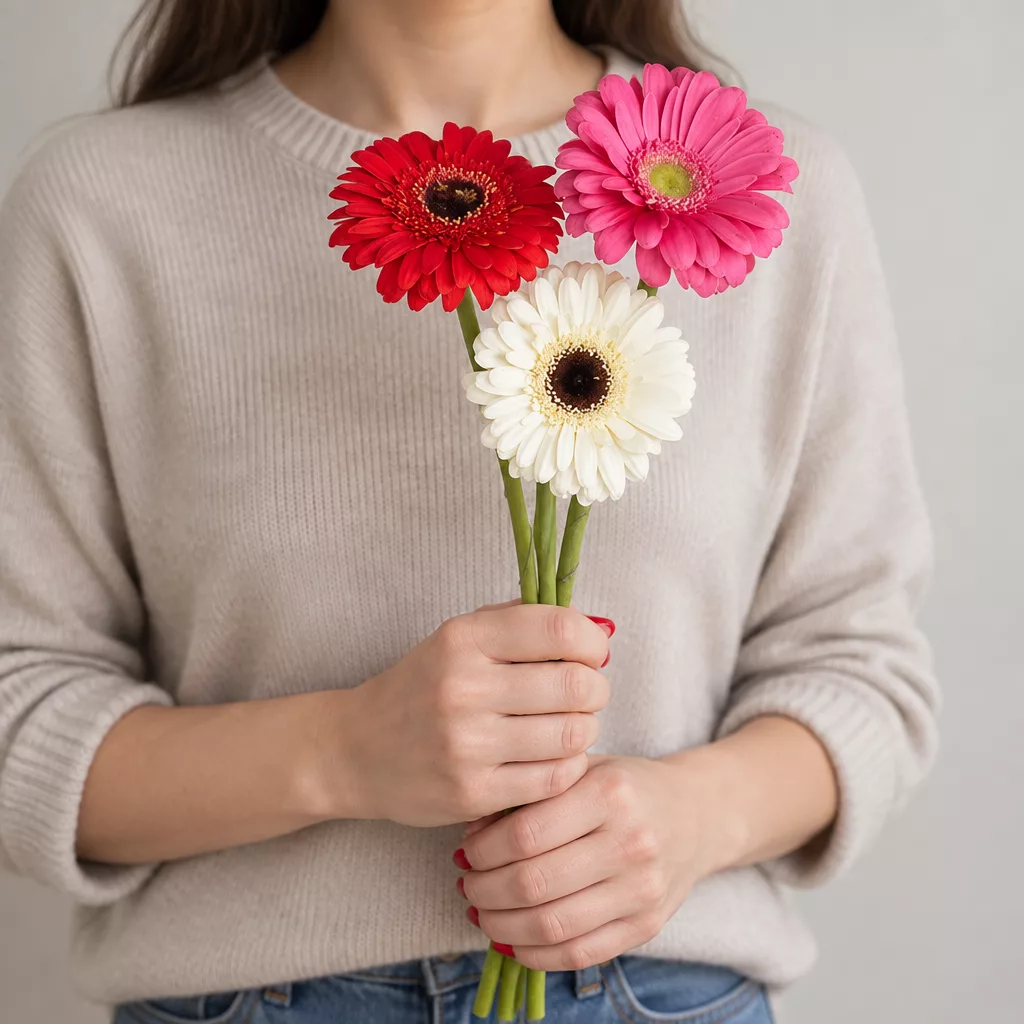

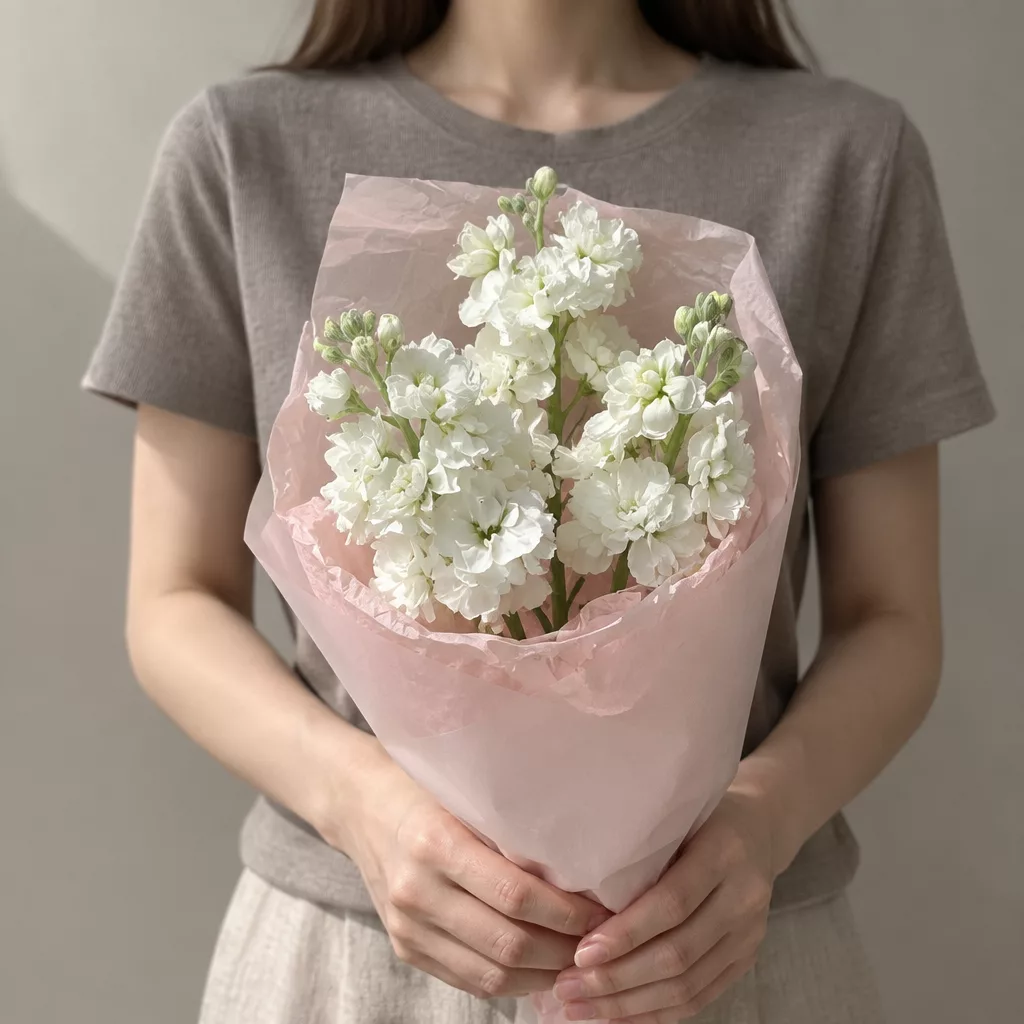
School Versus University: the Difference in Tone
Russian school graduation, known as Vypusknoj, typically falls in late May or early June for eleventh-grade students aged seventeen or eighteen. It is intensely celebratory, often lasting through the night, and the mood is youthful and bright. Bouquets here tend to be colourful, playful and generous in size. Peonies, spray roses, lisianthus and seasonal garden flowers all fit perfectly. Pastel palettes — soft pink, lavender, cream and peach — are especially popular for school graduates because they feel fresh without being childish.
University graduation ceremonies, by contrast, carry a slightly more serious register. The graduate is older, often in their early to mid-twenties, and the achievement involved years of sustained effort. Bouquets here can afford to be more structured and considered. Long-stemmed roses, garden roses, orchids or an architectural arrangement mixing greenery with statement blooms all read as appropriately grown-up. Deep burgundy, white, blush and forest green combinations work particularly well.
The overlap is larger than the difference, though. Both occasions call for abundance rather than minimalism, and both respond well to seasonal flowers chosen for their freshness rather than their prestige. The key adjustment is in palette and structure, not in the fundamental generosity of the gesture. When in doubt, lean toward something that photographs beautifully — graduation days produce hundreds of pictures, and a striking bouquet will appear in many of them.
Choosing Flowers for the Season and the Climate
Most Russian school and university graduations cluster in late May, June and early July. Saint Petersburg and other northern cities can still be cool in late May, but by June temperatures regularly climb into the mid-twenties Celsius, and in southern Russian cities they go higher. This matters enormously when choosing flowers, because a bouquet that looks perfect at eleven in the morning can wilt badly by three in the afternoon if it is not suited to the heat.
Peonies are the single most popular choice for Russian June graduations, and for good reason — they are at peak season, abundantly available, and their full, rounded heads photograph spectacularly. However, peonies are sensitive to heat once open. If you are ordering for a long outdoor ceremony, specify tight or medium buds rather than fully open blooms so they last through the day.
Spray roses and standard roses handle heat better than peonies and hold their shape for longer without water. Lisianthus, sometimes called eustoma, is another excellent warm-weather option — it is sturdy, long-lasting and has a delicate ruffled appearance that reads as both elegant and celebratory. Chrysanthemums and alstroemeria are reliable fillers that add volume without compromising longevity. Avoid tulips for summer graduations entirely: they go limp within hours in warm conditions and are better suited to the March and April ceremonies that mark some vocational and college programmes.
Quantities, Odd Numbers and What the Rules Actually Mean
You may have heard that flowers in Russia must always be given in odd numbers, and that even numbers are reserved for funerals. This rule is real, widely observed and worth following. A bouquet of eleven roses or fifteen stems of lisianthus is appropriate; a bouquet of ten or twelve is not, regardless of how it looks aesthetically.
In practice, most Russian florists build bouquets to standard odd-number counts: seven, nine, eleven, fifteen, nineteen, twenty-five, thirty-one or fifty-one stems. The count does not need to be visible or announced — it simply needs to be correct. When ordering online, a reputable florist will handle this automatically, but it is worth confirming if you are specifying a custom arrangement.
For school graduation, a bouquet of fifteen to twenty-five stems is considered appropriately generous without being overwhelming. For university graduation from a close family member, twenty-five to fifty-one stems is more common, and some families send larger statement arrangements. If you are a friend rather than a parent or sibling, fifteen to nineteen stems is entirely correct and will not look sparse.
Teachers traditionally receive smaller, more modest bouquets — seven to eleven stems — often in a single variety like roses or chrysanthemums. If you are sending flowers to thank a teacher on behalf of a graduate, this is the right scale. Sending a teacher the same size bouquet as the graduate would feel slightly off in Russian etiquette, even if well-intentioned.
Colours That Work and Colours to Avoid
White flowers are universally appropriate for graduation in Russia and carry connotations of new beginnings and clarity. A mono-white bouquet of roses or lisianthus reads as sophisticated and intentional. White combined with soft greenery — eucalyptus, pistache or ruscus — is one of the most consistently successful choices for university graduation.
Pink in all its shades is the most popular colour for school graduation bouquets. Blush pink, hot pink and dusty rose all work, and mixing two or three shades of pink in a single bouquet is common and well-received. Lavender and lilac tones, often achieved with lisianthus, matthiola or lilac itself when in season, have become increasingly fashionable over the past several years.
Yellow and orange flowers are cheerful and appropriate, particularly for graduates who have a sunny, outgoing personality or when you want to send something that stands out in a sea of pinks and whites. Sunflowers work well for school graduation in particular — they are bold, seasonal and joyful without any of the formal weight that roses carry.
Red roses are acceptable but carry a romantic association in Russian culture, so a full bouquet of red roses from a friend or colleague can feel slightly ambiguous. If you love red, mix it with white or cream to soften the romantic reading. Avoid dark purple or very deep plum tones, which can feel heavy for a celebratory occasion, and avoid mixing white with yellow and black, which is associated with mourning in some regional traditions.
Bouquet Styles That Suit the Occasion
Russian graduation bouquets tend to be round, full and generous rather than architectural or sculptural. The classic round hand-tied bouquet — where all stems are gathered at a single point and the flowers fan outward in a dome — is the default style for a reason: it is easy to hold for hours, photographs well from any angle and can be made in virtually any size.
For a more modern presentation, a garden-style bouquet that mixes several varieties at slightly different heights creates a lush, natural look that has become very popular in the last five years. Combining peonies with spray roses, lisianthus and a few stems of eucalyptus produces exactly this effect. The informality suits the celebratory mood without looking thrown together.
Mono-bouquets — a single variety in large quantity — are a strong alternative when you want to make an impact. Fifty-one spray roses in a single colour, or thirty-one white peonies, creates a visual statement that reads as genuinely impressive. This style works particularly well for university graduation from parents.
Box arrangements and hat-box flowers have grown in popularity for graduation in Russia, especially when the recipient will be moving between multiple events during the day and needs something easy to transport. A hat box also protects the flowers better during warm outdoor ceremonies. If you choose this format, make sure the box is generously filled — a sparse box arrangement looks worse than a modest hand-tied bouquet and will feel like an understatement on such an important day.
Getting the Bouquet There on Time
Russian graduation ceremonies follow a fairly predictable schedule. School Vypusknoj ceremonies typically begin in the afternoon or early evening, often around four or five o'clock, so delivery before two in the afternoon gives the graduate time to receive the flowers, take photographs at home and travel to the venue. University ceremonies vary more widely but are usually held in the morning or early afternoon, making a delivery window of eight to eleven in the morning ideal.
If you are ordering from abroad or from a different city, confirm the exact ceremony time before placing your order and build in at least two hours of buffer. Flowers delivered during the ceremony itself, when the recipient is unreachable, can sit in a hallway or with a neighbour and will suffer in warm weather. A same-day delivery service with a precise window, like the one-to-two-hour delivery offered by Turboflora across Russia, makes it possible to time this accurately even when you are not in the same city.
Include a card with a message written in Russian if you can — even a simple phrase like Pozdravlyayu s okonchaniyem (congratulations on finishing) means a great deal to the recipient. If you write in English, that is entirely fine, but a Russian line alongside it will be warmly noticed. Specify in your order notes whether the bouquet should be delivered to a home address before the ceremony or to the venue itself, and provide a working phone number for the recipient so the courier can coordinate if needed.
A graduation bouquet in Russia is not a formality — it is the physical shape of your pride in someone's achievement. Get the season right, respect the odd-number rule, choose flowers that hold up in the heat and pick a scale that matches your relationship with the graduate. Do those four things and your bouquet will not just be received: it will be remembered, photographed and talked about long after the ceremony ends. The varieties and colours matter, but the underlying message is simply that you paid attention — and in Russia, on graduation day, that attention is everything. We deliver bouquets across Russia in 1–2 hours.
Frequently asked questions
Is it appropriate to send flowers to a Russian graduation if I am not a family member?
Absolutely. Friends, colleagues and even acquaintances regularly send flowers to Russian graduates. A bouquet of eleven to nineteen stems is the right scale for a non-family sender. It signals genuine warmth without overstepping. Include a personal note — even a brief one — to make the gesture feel considered rather than automatic.
Can I send flowers to a male graduate, or is it only for women?
Flowers for male graduates are entirely normal in Russia, though the style tends to differ slightly. Structured bouquets in stronger colours — deep red, white, or rich burgundy mixed with greenery — are more common than soft pastels. A mono-bouquet of roses or a bold arrangement with large-headed flowers reads as appropriately masculine while remaining fully celebratory.
How far in advance should I order a graduation bouquet for delivery in Russia?
For same-day delivery, placing your order two to three hours before the desired delivery window is sufficient with a fast delivery service. For popular graduation dates in late May and June, ordering the evening before is safer. If you need a very large or custom arrangement, give at least twenty-four hours notice so the florist can source specific varieties at peak freshness.
What is the best flower to send if I have no idea what the graduate's taste is?
White or blush lisianthus is the safest universal choice. It suits both school and university graduation, holds up well in warm weather, looks elegant in photographs and carries no ambiguous cultural associations. Paired with soft greenery, it works for any gender and any age. It is the florist's default recommendation precisely because it almost never disappoints.
Do Russian graduates expect flowers at both the ceremony and a separate celebration dinner?
The main bouquet is given at or before the ceremony itself. At a subsequent dinner or home celebration, smaller gifts or a second, more modest bouquet are common from immediate family, but guests at a dinner party are not expected to bring flowers again. One well-chosen bouquet timed to the ceremony covers the full etiquette requirement comfortably.
Ready to send flowers?
Pick the city, choose the bouquet, and a local florist takes it from there.
Choose a city →