Graduating in Russia? Here Is What Flowers to Send and When
Graduation day in Russia is one of the most flower-heavy occasions of the entire year. Whether it is a school leaver stepping off a stage for the last time or a university student finally holding a diploma, the expectation is clear: flowers will arrive, and they will be noticed. If you are sending from another city, or simply want to get it right rather than guess, this guide walks you through every layer of the tradition — what is expected, what is genuinely appreciated, and how to make sure the bouquet lands at exactly the right moment.
Why Flowers Matter So Much at Russian Graduations
In Russia, flowers are not a casual afterthought at a graduation — they are a central part of the ritual. Teachers receive bouquets from students at school graduation (called Posledniy Zvonok, the Last Bell, and then the actual prom ceremony, Vypusknoy), and graduates themselves are showered with arrangements from parents, grandparents, and close friends. The volume of flowers on these days can be extraordinary. A graduating class of thirty students means thirty families buying bouquets, often for both the student and the homeroom teacher.
This culture has deep Soviet-era roots, when flowers were one of the few personal gifts available and giving them was considered both generous and respectful. That habit never faded. Today it has simply expanded into a wider range of styles and price points, but the underlying message is the same: you showed up, you care, and you want the person to feel celebrated in a visible, tangible way.
For someone outside Russia, this can feel like a lot of pressure. The good news is that the tradition is generous by nature — there is no single correct flower, no rigid colour rule, and no bouquet size that is considered too much. What matters most is that the arrangement feels intentional and warm rather than thrown together at the last minute. A wilting bunch from a petrol station is the only real mistake you can make.
Bouquets we can deliver


School Versus University: the Differences That Change Your Choice
Russian school graduation and university graduation are emotionally quite different occasions, and the flowers that suit each one reflect that difference. School graduation (typically for students aged seventeen or eighteen) is a milestone that carries enormous nostalgia for families. The mood is bittersweet — childhood is ending. Bouquets for school graduates tend to be romantic and soft: garden roses in blush or cream, lisianthus, peonies when they are in season, and lots of greenery. Pastel palettes read as youthful without being childish.
University graduation is more triumphant. The graduate has spent four to six years working toward this moment and is now entering professional life. The tone shifts toward confidence. Deeper colours work well here — burgundy roses, coral gerbera, sunflowers, or bold tropical accents like anthurium. Structured, architectural bouquets make a stronger statement than loose, whimsical wraps.
There is also a practical difference: school ceremonies often take place outdoors in late May or early June, when temperatures in Saint Petersburg can already reach twenty degrees Celsius or higher. Flowers need to be hardy in the heat. Carnations, chrysanthemums, and alstroemeria all hold up well in warm conditions and are entirely respectable choices. University ceremonies spread across June and July, sometimes moving indoors to assembly halls, which gives you slightly more flexibility with delicate varieties like ranunculus or sweet peas — but only if delivery timing is precise and the bouquet is kept cool until the moment of giving.
The Bouquets That Russians Actually Appreciate Most
Ask any florist who has worked Russian graduation season and they will tell you the same thing: roses are always safe, but combinations are what people remember. A mono bouquet of fifty red roses is impressive in scale, but a thoughtfully mixed arrangement of garden roses, eucalyptus, lisianthus, and a few stems of waxflower tells a story. It feels considered rather than purchased by the kilogram.
For school graduates, peonies are the most beloved flower of the season when they are available, roughly from late May through June. A round, full bouquet built around three or five large peony heads, supported by ranunculus and soft greenery, is the kind of thing that gets photographed and remembered. If peonies are past season, garden roses in soft pink or apricot tones make an excellent substitute and are available year-round through quality suppliers.
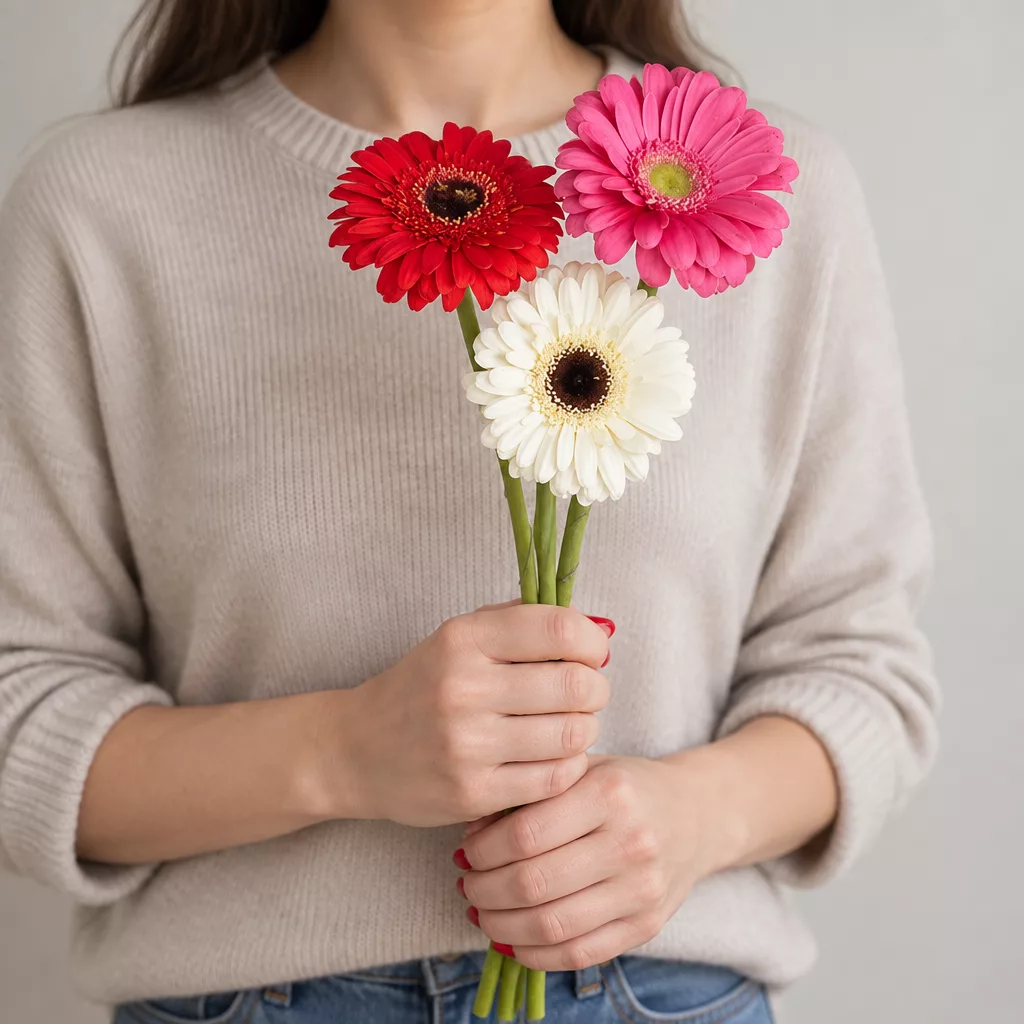
For university graduates, sunflowers mixed with white spray roses and steel grass create an energetic, modern look that photographs beautifully against academic gowns and formal wear. Gerbera in warm tones — orange, coral, deep yellow — are another strong choice: they are cheerful, long-lasting, and unpretentious in the best way.
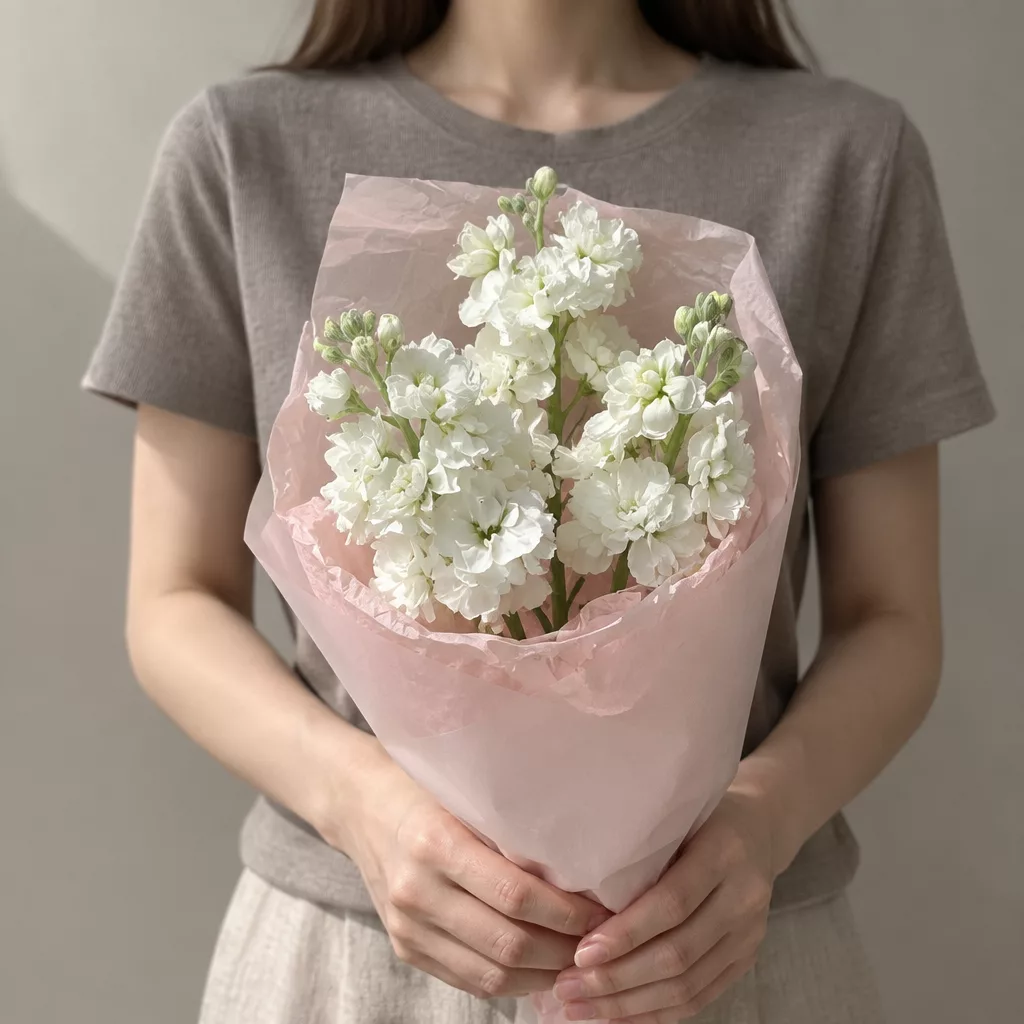
One combination that works across both occasions is white and green: white roses or white lisianthus with eucalyptus, ruscus, and maybe a few stems of green trick dianthus. It is elegant without being cold, and it suits both a seventeen-year-old and a twenty-three-year-old equally well. When in doubt, this palette is your most reliable option.
Choosing by Budget Without Sacrificing the Impression
Graduation flowers in Russia cover a wide range of budgets, and the social expectation is flexible enough that a modest but well-made bouquet is far more appreciated than an expensive one that looks careless. What creates the impression of generosity is not size alone — it is fullness, freshness, and presentation.
A smaller bouquet of seven to nine stems looks luxurious when every stem is in perfect condition, the foliage is clean, and the wrapping is done properly. Kraft paper with a wide satin ribbon, or a linen-texture wrap in a neutral tone, elevates even simple flowers. A crumpled cellophane sleeve does the opposite, no matter what is inside.
At a moderate budget, the strongest move is to anchor the bouquet with one statement flower — a large-headed garden rose, a peony, or a sunflower — and build around it with filler blooms and textured greenery. This approach uses fewer expensive stems but still creates visual impact. Lisianthus is particularly useful here: it looks like a luxury flower, holds for seven to ten days in a vase, and costs considerably less than a rose of similar visual weight.
At a higher budget, consider a hand-tied bouquet in a box rather than a traditional wrap. Box arrangements travel well, stay hydrated during delivery, and feel unmistakably special when the recipient opens them. They have become increasingly popular at Russian graduations over the last several years precisely because they survive a long ceremony and still look fresh when the photographs are taken at the end of the evening.
Sending Flowers for the Teacher: a Separate Tradition Worth Knowing
If you are the parent of a school graduate, you are almost certainly expected to contribute to a teacher's bouquet — and if you are sending flowers remotely, you may want to send one independently as well. In Russian school culture, the homeroom teacher (klassniy rukovoditel) occupies a central role in a student's life for years, and graduation is the moment when that relationship is formally honoured.
Teacher bouquets tend to be more formal and restrained than the ones given to students. Classic combinations work best: white roses and green hypericum, red roses with dark foliage, or a structured mix of cream and burgundy. Avoid anything too playful or trend-driven — the gesture is one of respect, and the flowers should reflect that.
In practice, many families coordinate a collective bouquet from the whole class, but individual families also bring separate arrangements. If you are organising delivery from a distance, it is worth confirming with the family on the ground whether a collective arrangement is already planned, so you are not duplicating the effort. If you are sending independently, a medium-sized, formally presented bouquet in classic colours is the right call.
One thing to remember: teachers receive a great many flowers on graduation day and will need to carry them home. A bouquet that is too large becomes a burden rather than a gift. Aim for something generous but portable — around nine to thirteen stems in a compact, well-wrapped format that can be held in one arm while the teacher manages everything else happening around them.
Timing the Delivery: the Detail That Makes or Breaks the Gift
Graduation ceremonies in Russia follow tight schedules, and a bouquet that arrives two hours after the ceremony ends is a missed moment. The flowers are meant to be part of the celebration — held in photographs, carried across the stage, handed over in front of family. Timing is not a logistical footnote; it is the whole point.
School graduation ceremonies typically begin in the morning, often between nine and eleven o'clock, with the outdoor Posledniy Zvonok. The evening prom (Vypusknoy) follows in late June, usually starting around six or seven in the evening. University diploma ceremonies are often scheduled in the afternoon, between noon and four. If you know the start time, aim to have the flowers delivered thirty to forty-five minutes before the ceremony begins. This gives the recipient time to receive the bouquet, react properly, and carry it into the event.
For remote deliveries, confirm the exact address — this is frequently a school courtyard, a university hall, or a banquet venue rather than a home address. Delivery to a venue requires clear communication: the building name, the recipient's full name, and ideally a contact phone number for the person receiving. If the ceremony is outdoors, note that in the order comments so the courier knows what to expect.
In high-temperature conditions — common in June and July across most of Russia — request that the bouquet be kept refrigerated until the last possible moment before dispatch. A bouquet that sits in a warm car for an hour before a two-hour ceremony will not look its best by the time photographs are taken. Fresh conditioning and cool transport are the two factors that determine vase life more than any other.
Caring for Graduation Flowers After the Ceremony
Graduation day is long, warm, and full of activity, which means flowers take a beating before they ever reach a vase. Helping the recipient know what to do the moment they get home extends the life of the bouquet significantly and turns a one-day gift into something that lasts a week or more.
The first step is always a fresh cut. Using clean scissors or a sharp knife, trim each stem at an angle — about two centimetres from the bottom — while holding the stem under running water or submerging it in a bowl. This prevents air from entering the stem and blocking water uptake. It takes three minutes and makes a measurable difference.
Remove any leaves that would sit below the waterline in the vase. Submerged foliage rots quickly and introduces bacteria that shorten the life of every stem in the arrangement. A clean vase, changed water every two days, and a cool location away from direct sunlight and ripening fruit are the basic conditions that keep flowers looking good.
Different varieties have different natural lifespans. Chrysanthemums and carnations can last ten to fourteen days with proper care. Roses typically last seven to ten days. Lisianthus is similarly long-lived. Peonies and ranunculus are shorter — five to seven days — but they are so beautiful in full bloom that the brevity feels forgivable.
If you are ordering for someone who travels immediately after graduation, consider varieties known for durability rather than drama. Alstroemeria, spray roses, and waxflower all travel well and recover quickly from the stress of being out of water for a few hours — a realistic scenario on a busy graduation day.
Graduation flowers in Russia carry real emotional weight, and getting them right is less complicated than it might seem from the outside. Choose combinations over catalogues, match the tone of the occasion, pay close attention to timing, and make sure the bouquet is fresh enough to survive the day and still look beautiful in the evening photographs. Whether you are sending to a school leaver in Saint Petersburg or a university graduate across the country, the gesture reads the same way: you marked the moment, and you did it with intention. That is what stays with people long after the petals have fallen.
Frequently asked questions
Is there a specific flower colour considered traditional for Russian graduation gifts?
There is no single required colour. White and pastel tones are popular for school graduates because they feel youthful and celebratory. Deeper, bolder colours suit university graduates well. Red roses are always acceptable but are so common that a thoughtful mixed arrangement in any palette will stand out more and feel more personal.
Can I send flowers directly to the graduation venue rather than a home address?
Yes, and it is often the better option since the recipient is not at home on graduation day. Provide the full venue name, street address, the recipient's name, and a working phone number when placing the order. Noting the ceremony start time in your order comments helps ensure the bouquet arrives before the event begins rather than after.
How far in advance should I order graduation flowers for a same-day ceremony?
Ordering the evening before or first thing in the morning of the ceremony gives the best results. For morning ceremonies starting before eleven o'clock, placing the order the night before is strongly recommended. Last-minute same-day orders can be fulfilled, but earlier orders allow more time to source the specific varieties you want and ensure the bouquet is properly conditioned before delivery.
Are there flowers I should avoid giving at a Russian graduation?
Even numbers of flowers are traditionally associated with mourning in Russia, so bouquets are always made with an odd number of stems — three, five, seven, nine, and so on. Beyond that, there are no flowers that are considered inappropriate for graduation. Focus on freshness and presentation rather than worrying about specific varieties being unwelcome.
What is the best bouquet choice if I do not know the graduate's personal taste?
A white and green combination — white roses or lisianthus with eucalyptus and soft greenery — works across ages, genders, and ceremony types. It is elegant without being overpowering and suits both formal and relaxed settings. Lisianthus in particular is an excellent choice because it looks luxurious, lasts well over a week in a vase, and is rarely a wrong answer on any celebratory occasion.
Ready to send flowers?
Pick the city, choose the bouquet, and a local florist takes it from there.
Choose a city →