How to Make Your Roses Last Longer at Home
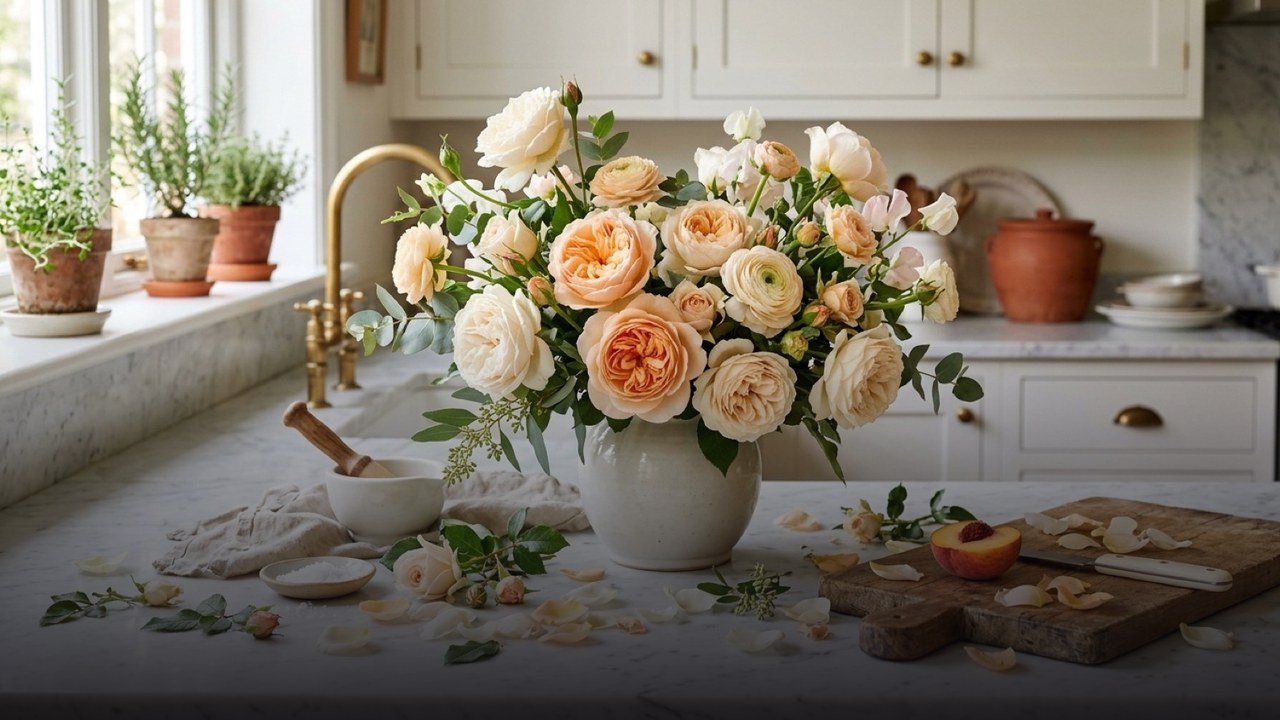
To make roses last longer, put them in a clean vase, trim the stem ends with a sharp tool, remove leaves below the waterline and use fresh water with properly measured cut-flower food. Keep the vase away from direct sun, heaters and ripening fruit, then check the water daily and change it whenever it becomes cloudy.
The most useful care starts when the bouquet arrives: unpack it promptly and give the stems water before choosing where to display it. You cannot control the roses' age before arrival or reverse every sign of decline, but you can reduce the dirt, water loss and heat that shorten their display. Follow the routine below, and judge the flowers by their condition rather than expecting every rose to last an identical number of days.
Start with a clean vase and remove submerged leaves
Wash the vase with washing-up liquid, rinse it thoroughly and check the base and sides for any slippery film. A quick rinse of a previously used vase can leave residue behind, which encourages microbial growth in the new water. Choose a stable vessel with enough room for the stems: forcing a large bouquet through a narrow neck makes it harder to remove damaged material and clean between water changes.
Remove wrapping that would sit in the water or prevent the stems from spreading naturally. Strip off only the leaves that will fall below the waterline, keeping healthy foliage higher up. Submerged leaves break down and dirty the water; removing every leaf, however, creates unnecessary wounds. Handle thorny stems carefully and avoid scraping long strips of skin from them when preparing the bouquet.
Look at the blooms before arranging them. A few weathered outer petals can be guard petals that protected the flower during handling; gently remove an unattractive one if it releases easily. Do not peel away several layers to make every rose look identical, and do not confuse soft, spreading brown patches with ordinary outer-petal wear. Remove decaying material so it does not sit against neighbouring flowers.
Trim the stems carefully and put them straight into water
Use clean, sharp secateurs or a sharp knife that you can handle safely. Remove roughly 1–2 cm from the bottom of each stem, cutting above any visibly crushed or deteriorated area. A slight angle helps keep the cut surface from sitting flat against the vase base, but a clean cut matters more than achieving a particular angle. Blunt household scissors can squash a thick rose stem.
Prepare the vase water before cutting, then place each trimmed stem into it promptly. There is no need to leave the bouquet on the table while you finish arranging the room. Avoid hammering, splitting or crushing the ends: these methods damage tissue and make the stems harder to keep clean. Check that all the cut ends reach the water, especially when you mix short and long stems.
When changing the water, inspect the stem ends and make another small cut if they have become discoloured or the roses are taking up water poorly. Recutting is useful maintenance, but removing a large section every day soon leaves you with stems too short for the vase. As the bouquet gets shorter, switch to a smaller vessel that still supports the flowers without compressing their heads.
Bouquets we can deliver




Keep the water clean and measure flower food correctly
If you have a sachet of commercial cut-flower food, follow its instructions for the amount of water. Measure the water rather than guessing from the height of the vase: a wide vase holds much more than a narrow one at the same depth. Properly diluted flower food supplies nutrients and helps manage water conditions. Adding extra powder does not provide extra freshness and can make the solution unsuitable.
Check the water level every day, because roses can use enough water to leave shorter stems exposed. Top up with a solution prepared at the stated dilution, and replace the water completely every two days as a practical starting routine. Change it sooner if it becomes cloudy, smells unpleasant or contains fallen leaves. Wash and rinse the vase during a full change instead of pouring fresh water over old residue.
If you have no flower food, use clean drinking-quality water and be attentive to cleanliness and regular changes. Avoid improvised mixtures of sugar, bleach, aspirin or coins: household recipes have uncertain concentrations, and sugar alone can feed unwanted microbes. For a fuller maintenance routine, see our guide to how often to change vase water.
Choose a cool display spot with gentle light
Put your roses somewhere comfortably cool, away from radiators, fireplaces, hot appliances and windows that receive strong direct sunlight. A sunny windowsill can warm both the flowers and their water, even when the rest of the room feels pleasant. Cut roses do not need a sunbathing session to keep blooming. Gentle room light lets you enjoy them without adding unnecessary heat.
Avoid placing the bouquet directly under an air-conditioning outlet, beside a fan or in a persistent draught. Moving air can increase moisture loss from petals and leaves, while a busy doorway also exposes the arrangement to knocks. Keep it away from fruit bowls, particularly ripening fruit, which releases ethylene that can hasten ageing in sensitive cut flowers. A separate table is a simple precaution.
If your main room becomes warm during the day, move the vase to a cooler room when practical. An ordinary household fridge is not an ideal default: it may contain fruit, have unsuitable cold spots or squeeze the flower heads against shelves. You can find more placement advice in Do Flower Bouquets Need Sunlight?, including how to assess the spot you already use.
Respond to drooping roses without damaging the blooms
If a rose droops, first check whether its stem end is actually submerged and whether the water is dirty. Lift out the bouquet, clean the vase, prepare fresh water and recut the affected stem with a clean, sharp tool. Return it promptly and leave it in a cool place for a few hours. A rose affected by interrupted water uptake may improve, but a drooping head can also reflect damage or advanced ageing.
Keep the flower heads above the water during routine care. Soaking the whole bouquet in a bath or repeatedly misting the petals leaves moisture between tightly packed petals, where spotting and decay can develop. Avoid boiling-water treatments or drastic home remedies: they can damage stems and do not address every cause of wilting. Support the flowers with an appropriately sized vase while you assess their condition.
Remove an individual bloom when it becomes mushy, mouldy or sheds deteriorating petals onto the others. If only one rose declines, the rest of the bouquet can still be worth keeping; rearrange the healthy stems in a smaller vase. Natural opening is different from collapse: a rose that gradually opens and softens is ageing normally. No care method can restore petals that have already dried out or decayed.
Plan delivery so roses can go into water promptly
When sending roses to someone in Russia, choose a delivery time when they can receive the bouquet and put it into a vase. Turboflora delivers flowers across Russia, with city delivery costing 500 RUB; an operator confirms the delivery price for remote districts and suburbs when confirming the order. You can choose flowers from the bouquets catalogue and consider whether the recipient has a suitable vase and space to display them.
In large cities, express delivery is available 1–2 hours after order confirmation. Other options include an exact time within a margin of 30 minutes, the windows 09–12, 12–15, 15–18 or 18–21, and pre-ordering 1–30 days ahead. If you are arranging the gift from abroad, agree the recipient's local date, time and address with a manager on WhatsApp. You can also agree card text and request a photo of the bouquet before delivery.
The courier calls the recipient about 15 minutes before arrival. If the recipient is absent, we agree a second delivery that day or, with the sender's consent, hand the flowers to a neighbour or concierge. Delivery is anonymous by default, so include your name in the free message card if you want the recipient to know who sent them. Online checkout uses CloudPayments; check the payment options displayed there, as acceptance of every foreign card cannot be guaranteed. We deliver bouquets across Russia in 1–2 hours.
Frequently asked questions
How often should I change the water for roses?
Change it every two days as a starting routine, and sooner if it looks cloudy, smells unpleasant or contains debris. Check the level daily and wash the vase whenever you replace the water.
Does adding sugar make roses last longer?
Sugar alone is not a reliable substitute for cut-flower food because it can also encourage microbial growth. Use commercial flower food at the instructed dilution, or focus on clean water and regular vase cleaning.
Can I revive a rose with a bent neck?
Try cleaning the vase, refreshing the water and making a clean cut at the stem end, then leave the rose somewhere cool for a few hours. It may recover if water uptake was the problem, but damage and advanced ageing can prevent recovery.
Should I spray rose petals with water?
Routine misting is unnecessary for cut roses and can leave moisture trapped between petals. Keep the stems supplied with clean water and the blooms away from heat and drying airflow instead.
Should I remove all the leaves from cut roses?
Remove leaves that would sit below the waterline, along with any that are damaged or decaying. Keep healthy leaves above the water and avoid tearing or scraping the stems during preparation.
Ready to send flowers?
Pick the city, choose the bouquet, and a local florist takes it from there.
Choose a city →