How long do flowers last without water?
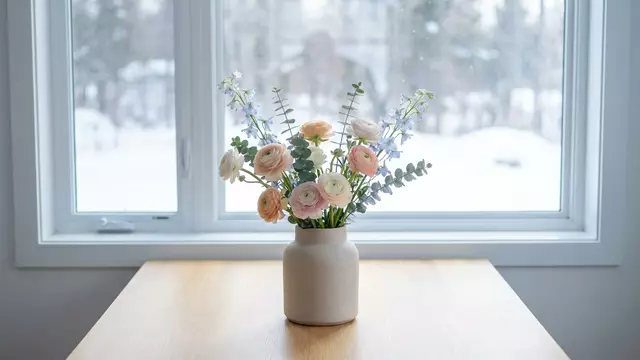
Cut flowers may stay presentable for a few hours without water, but there is no reliable limit for every bouquet. As a practical precaution, aim to get them into water within one to two hours, sooner in heat or direct sun. An overnight wait can leave flowers badly wilted, and some will not recover.
The useful question is how long your flowers can stay fresh enough to enjoy afterwards. Their condition before the journey, the varieties in the bouquet, and the surroundings all affect that answer. A bouquet can still look upright while losing moisture, so do not wait for drooping heads before finding a vase.
Why the same journey affects bouquets differently
Once a flower is cut, it loses its connection to the plant's water supply. Its leaves and petals continue losing moisture, while the cut stem needs water to replace it. Without that supply, tissues lose firmness. This is why soft leaves or a bending neck can appear before petals look noticeably dry.
There is no dependable timetable that applies equally to roses, tulips, hydrangeas and mixed bouquets. Hydrangeas can show water stress quickly; roses may develop drooping heads, while tulips naturally bend as well as responding to their surroundings. A change in shape alone does not tell you how long a flower has been dry.
Starting condition matters too. Flowers that were already thirsty before being wrapped have less margin for a journey than well-hydrated stems. Ask when the bouquet last stood in water and whether its stems have a water source for transport. Ordinary decorative wrapping protects the arrangement but does not supply water.
Plan the journey around water, shade and minimal waiting
For a short trip, collect the bouquet near the end of your errands and take it directly to its destination. Keep it shaded and away from heaters or strong airflow. Treat the one-to-two-hour aim as a planning precaution, not permission to leave every variety dry for that long: a warm journey may require water much sooner.
In a car, keep the bouquet secure in the temperature-controlled passenger area, clear of direct sunlight and air vents. Avoid leaving it in a parked vehicle while you shop or eat. A car can become an unsuitable place for flowers quickly, even when the weather outside feels comfortable; see our guide to flowers without water in a car.
For a longer journey, use a stable container with enough clean water to cover the cut ends, secured against tipping. If someone prepares a transport water pack, check that it actually keeps every stem end wet and remains sealed. Damp wrapping is only a temporary measure, and gift paper around dry stems does not extend a bouquet's safe travel time.
Bouquets we can deliver




What to do as soon as the flowers arrive
Have a clean vase ready before you unwrap the bouquet. Wash it thoroughly, rinse away detergent, and add fresh water appropriate for the flowers, usually cool to lukewarm. If flower food comes with the bouquet, follow its dilution instructions. Adding extra concentrate does not compensate for time spent without water.
Remove any leaves that would sit below the waterline. With clean, sharp scissors or secateurs, trim a small section from each stem, roughly one to two centimetres, then place it promptly in water. A fresh cut can help water uptake, but it cannot reverse dried petals or repair a stem that has been crushed during transport.
Position the vase somewhere cool, away from direct sun, radiators and ripening fruit. Check the water level after the flowers have settled, because thirsty stems may take up water and leave shorter stems exposed. For ongoing care, our guide to changing vase water explains how to keep the water and container clean.
Can a wilted bouquet recover after time without water?
Sometimes it can, particularly when the flowers are limp from water loss but their petals and stems are still intact. Recut the stems, place them in clean water and leave them in a cool, shaded room for several hours. Recovery varies by variety and condition, so assess each stem rather than expecting the whole bouquet to respond together.
Look for leaves becoming firmer and heads holding themselves more steadily. Dry, crisp petal edges, browned tissue and sharply creased stems are unlikely to return to their original appearance. Remove damaged stems if needed so that the remaining flowers can sit comfortably in the vase without being crowded or supported by failing stems.
Avoid trying several dramatic remedies at once. Boiling water, sugary kitchen mixtures and immersing an entire mixed bouquet can create additional problems, depending on the flowers. Start with a clean vase, fresh cuts and water. If one variety keeps wilting, seek advice specific to that flower rather than repeating a general rescue trick.
Giving flowers when the recipient cannot use a vase immediately
Think about what happens after you hand over the bouquet. Someone receiving flowers at a restaurant, graduation or station may have hours ahead of them before reaching home. Giving the bouquet near the end of an event can shorten that dry interval. If the timing matters, arrange access to a vase or a suitable water container beforehand.
A brief care note is helpful and need not make the gift feel complicated: ask the recipient to recut the stems and put them in water as soon as practical. If you are sending flowers to a workplace, consider whether the recipient has somewhere to place them and can carry them home safely. A convenient handover helps preserve both the flowers and the pleasure of receiving them.
Do not assume that a wrapped bouquet can wait until the next morning because it still looks fresh that evening. If there is no vase, a clean jug or bucket is a useful temporary option, provided it supports the stems without crushing the blooms. Keep submerged leaves out of the water and transfer the flowers to a suitable vase when one is available.
Sending flowers to Russia: choose a time that works for the recipient
If you live abroad, arranging delivery in Russia can spare the recipient a long journey carrying flowers. You can choose a bouquet in our catalogue and contact a manager on WhatsApp to agree the address, delivery time and card text, or request a photo of the bouquet before delivery. We deliver flowers across Russia.
In large cities, express delivery is available one to two hours after the order is confirmed. Other options include an exact time with a margin of plus or minus 30 minutes, the windows 09–12, 12–15, 15–18 and 18–21, or pre-ordering one to 30 days ahead. Agree the timing for the recipient's location; city delivery costs 500 RUB, while an operator confirms the price for remote districts and suburbs.
The courier calls the recipient about 15 minutes before arrival. If they are absent, we agree a second delivery the same day or handover to a neighbour or concierge with the sender's consent. Delivery is anonymous by default, and a card with your text is free. Online checkout uses CloudPayments; check the payment options displayed there, since acceptance of every foreign card cannot be guaranteed. Availability and timing of delivery across Russia are confirmed for the chosen city, address, date and bouquet.
Frequently asked questions
Will flowers survive two hours without water?
Many cut flowers can remain presentable during a short, cool journey, but two hours is not a guarantee for every bouquet. Minimise the dry interval and put the stems in water sooner if the surroundings are warm or the flowers begin to wilt.
Can I leave a bouquet without water overnight?
Avoid leaving cut flowers dry overnight, because prolonged water loss can cause lasting damage. A clean jug or bucket with water is a better temporary solution when you do not have a vase.
Does wrapping keep flowers hydrated?
Decorative paper does not hydrate cut flowers. A transport pack only supplies water if it contains water and keeps all the cut stem ends in contact with it.
Should I spray petals to keep a bouquet fresh without water?
Misting petals does not replace water taken up through the stems. Keep the cut ends in water where possible, and avoid soaking blooms, since some petals mark or deteriorate when wet.
How long should I wait for wilted flowers to recover?
Give freshly trimmed stems several hours in clean water in a cool, shaded place, then check for improved firmness. Some flowers recover only partly, and dry or browned petals will not become fresh again.
Ready to send flowers?
Pick the city, choose the bouquet, and a local florist takes it from there.
Choose a city →