How Long Does It Take for Cut Flowers to Go Bad?
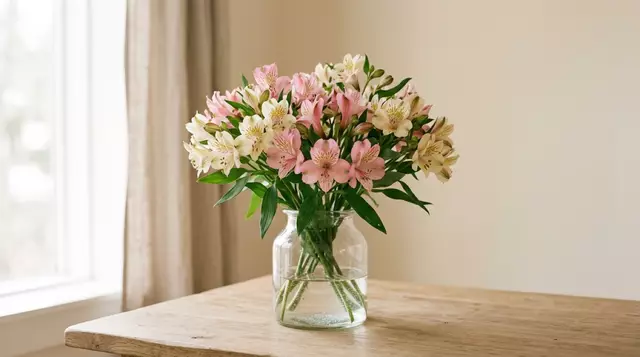
Most cut flowers stay attractive for roughly five to ten days in a vase, although the variety, condition on arrival and care can shorten or extend that time. Without water, flowers may begin wilting within hours; soft, slimy stems or mould indicate decay rather than ordinary thirst.
There is no single moment when an entire bouquet goes bad. One open bloom may fade while a neighbouring bud is still developing, and a drooping stem may recover after a fresh cut and a drink. To decide what to keep, refresh or remove, look at the petals, stems and water together. Here is how to judge what you are seeing and give the remaining flowers useful care.
How long different cut flowers usually last
As a practical guide, roses and tulips often give you about a week of display, while carnations and chrysanthemums can remain attractive for two weeks or longer. These are broad expectations, not expiry dates. Cultivar, maturity at cutting, transport conditions and time already spent in a vase all affect how much display life a particular stem has left.
In a mixed bouquet, judge each flower separately. A delicate bloom can finish before a sturdier companion without making the whole arrangement unusable. Remove spent stems and rearrange the healthy ones in a smaller vase. This also makes it easier to spot fallen petals and submerged leaves before they start breaking down in the water.
Opening is part of a flower's normal life, so a bloom becoming wider does not automatically mean it is spoiling. Lilies may open in succession, while rose buds gradually loosen. If your main concern is whether tightly closed roses will develop, our guide to how long rose buds take to open explains what to watch for.
Wilting, ageing or rotting: how to tell the difference
Wilting often starts with loss of firmness: leaves hang, petals look limp or a flower head bends. This can happen when the vase runs low or the stem cannot take up enough water. If the stem is still firm and has no unpleasant smell, try a clean vase, fresh water and a fresh cut before deciding that the flower is finished.
Normal ageing looks different across varieties. Petal edges may dry, colours may fade and individual petals may fall. A rose can also have a few weathered outer petals around a sound centre. Check the whole bloom before discarding it, but avoid repeatedly peeling away petals to disguise widespread browning or a soft, deteriorating centre.
Decay calls for removal. Look for slippery stem surfaces, soft dark patches, fuzzy mould or an unpleasant smell from the water or flower. Cloudy water is a reason to clean the vase promptly, even if the blooms still look good. Do not leave a rotting stem among healthy flowers while waiting to see whether its appearance improves.
Bouquets we can deliver




What to do as soon as you receive a bouquet
Prepare a clean vase before leaving the bouquet on a table. Wash away any residue from the previous arrangement and rinse thoroughly. Add fresh water and flower food if supplied, following the packet's dilution instructions. More powder is not necessarily better, and guessing the concentration can create a solution quite different from the one intended.
Remove transport wrapping as needed to place the stems freely in water, then trim their ends with a clean, sharp tool. Take off leaves that would sit below the waterline; submerged foliage breaks down and makes vase hygiene harder to maintain. For roses, our guide to removing leaves for a vase shows how to keep useful foliage above the water.
Check whether every cut end actually reaches the water, especially in a loosely arranged bouquet with stems of different lengths. Choose a vase that supports the flowers without squeezing them tightly together. Place it somewhere cool in the room, away from direct sun, radiators and ripening fruit, which can accelerate ageing in sensitive flowers.
Daily care that helps flowers last
Check the water level every day rather than waiting for the flowers to droop. A full-looking arrangement can hide a nearly empty vase, and some bouquets drink quickly at first. Top up with fresh water as needed. If the water becomes cloudy, smells unpleasant or contains fallen plant material, replace it and wash the vase instead of simply adding more.
When changing the water, inspect the stem ends and trim them again if they have dried or deteriorated. Use clean tools and remove loose leaves or petals from the arrangement. If you use flower food in the replacement water, prepare it according to the instructions again; do not keep adding concentrate to an unknown amount of old solution.
Avoid household mixtures of sugar, bleach, vinegar or medicines made by eye. Their concentration matters, and a homemade recipe can harm flowers or make the water harder to manage. A clean vase, adequate fresh water and a suitable position are a more practical starting point. Remove fading blooms as they finish so you can keep enjoying the healthy stems.
Can you revive flowers that have started to droop?
If the bouquet has been out of water, act promptly. Put it somewhere away from heat while you clean the vase, remove damaged foliage and recut the stems. Return the flowers to fresh water and give them a few hours before judging the result. Recovery depends on the variety and the extent of dehydration; petals that have become dry and brittle will not become fresh again.
Check the reason for the droop before trying a remedy. A stem trapped above the waterline needs repositioning, while a cracked or crushed stem may no longer support its flower head. A tulip can also bend as it grows and responds to light, so a curved shape alone does not prove that it is dying. Firmness and the condition of the petals give you more useful clues.
Skip dramatic treatments such as boiling stem ends or putting the entire bouquet in a household freezer. Different flowers respond differently, and unsuitable treatment can add damage. If fresh water and a clean cut do not help, retain the sound stems and remove those with continuing collapse, mould or soft tissue. A smaller healthy arrangement is easier to care for.
Timing a flower gift to Russia so it can be enjoyed
For a gift, arrange delivery for a time when the recipient can put the bouquet in water reasonably soon. If you are ordering from abroad, check the recipient's local date and availability before choosing the slot. Flowers left waiting through a long working day may have less time looking their best, even when the occasion itself is several days away.
Turboflora delivers flowers across Russia. In large cities, express delivery is available one to two hours after order confirmation. You can also choose an exact time with a tolerance of 30 minutes either way, a window of 09–12, 12–15, 15–18 or 18–21, or preorder one to 30 days ahead. City delivery costs 500 RUB; an operator confirms the price for remote districts and suburbs.
Browse the bouquets catalogue, then contact a manager on WhatsApp to agree the address, timing and free card text, or arrange a photo before delivery. The courier calls about 15 minutes before arrival. Delivery is anonymous by default, so include your name in the card if you want it known. Checkout uses CloudPayments; check the payment options displayed there for your card. Check our delivery information; confirm the timing for your order.
Frequently asked questions
Can cut flowers go bad overnight?
Yes, flowers can deteriorate noticeably overnight if they are already ageing, run out of water or sit near a heat source. Check for firm stems and signs of decay before trying fresh water and a clean cut.
How long can a bouquet stay out of water?
There is no reliable limit that applies to every bouquet: variety, temperature and exposure all matter. Wilting can begin within hours, so keep time without water as short as possible.
Does bad-smelling vase water mean I must throw away every flower?
Not necessarily, but it means the vase needs attention immediately. Discard soft or slimy stems, wash the vase and return only sound flowers to fresh water.
Should I remove dead flowers from a mixed bouquet?
Yes, remove spent blooms and any petals or leaves that have fallen into the water. Keep the firm, healthy stems and move them into a smaller clean vase if that supports them better.
What happens if the recipient is not there for delivery?
We agree a second delivery the same day or, with the sender's consent, hand the flowers to a neighbour or concierge. The courier calls the recipient about 15 minutes before arrival.
Ready to send flowers?
Pick the city, choose the bouquet, and a local florist takes it from there.
Choose a city →