How Long Does It Take Lilies to Open in a Vase?
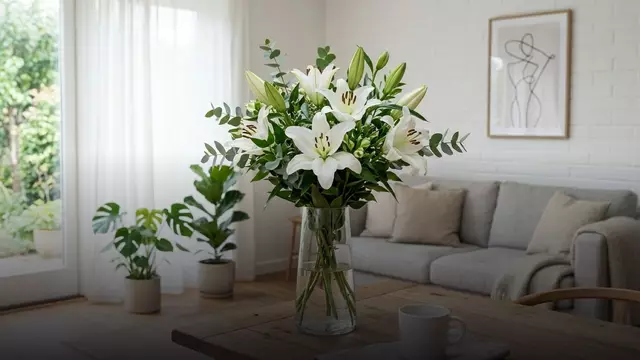
Lilies often take 2–4 days to open in a vase, although a plump bud already showing petal colour may open within 24–48 hours. Small, tightly closed green buds can take a week or longer, and some will never open. The starting condition of the buds, the variety and their ability to take up water matter more than a fixed countdown.
Look at each bud separately: one stem can carry an open flower, a swelling bud and a smaller bud that is several days behind. This staggered opening is normal and lets the display change over time. If you need lilies looking full for a particular occasion, judge their readiness by their appearance rather than assuming every closed bud will bloom on the same day.
Read the buds before you start counting days
A promising bud looks full rather than narrow, with the flower's colour visible through its outer surface. As it approaches opening, the seams between the petals become more distinct and the tip begins to loosen. A bud at this stage is usually much closer to flowering than a small, firm green one, even when both are on the same stem.
Bud colour needs interpreting with the variety in mind: a white lily will not develop the same obvious blush as a pink one. Look for increasing size, fullness and loosening petals instead of relying on colour alone. Compare the same bud each morning; gradual swelling is a more useful sign than repeatedly touching it to check whether it feels ready.
Different lily groups also develop at different rates, so mixed stems need not open together. Our guide to lily varieties, scent and vase life helps you understand those differences. Treat any opening estimate as a range, particularly if you do not know the variety or how mature the buds were when cut.
Give your lilies a clean start in the vase
Wash the vase thoroughly before filling it with fresh water. Remove any leaves that would sit below the waterline, leaving healthy foliage higher on the stems. Submerged leaves decay and encourage bacterial growth, which can interfere with water uptake. Choose a vase that supports the stems without crowding them tightly together at the neck.
With a clean, sharp tool, cut about 1–2 cm from each stem base and place the stems promptly into water. A fresh cut can help restore water uptake after the stems have been out of water. If flower food came with the bouquet, mix it exactly as the packet directs; a stronger solution is not a shortcut to faster opening.
Check the water level daily, particularly during the first few days, and top it up before the cut ends become exposed. Replace cloudy water promptly and clean the vase when you do. If you have no flower food, use clean water and keep up with water changes rather than improvising a mixture of sugar, bleach or household remedies.
Use a suitable room, not heat, to encourage opening
Keep the vase in a comfortably temperate room with bright, indirect light. A chilly position can slow development, while excessive warmth can shorten the life of flowers that have already opened. Avoid radiators, heating vents, hot windowsills and strong draughts. Consistent conditions are more useful than moving the bouquet between very different spots.
Direct sun is not necessary for cut lilies to open. In a sunny window, the vase water and petals may become warmer than you expect, especially behind glass. If you are choosing between two positions, use the one with gentle light and less heat. See our advice on where to keep cut lilies for a closer look at placement.
Do not use hot water, a hairdryer or steam to hurry the buds, and do not peel their petals apart. These methods can damage delicate tissue without solving the underlying problem. Keep the vase away from ripening fruit as well: the ethylene released by some fruit can accelerate ageing and contribute to bud or flower deterioration.
Lily bouquets
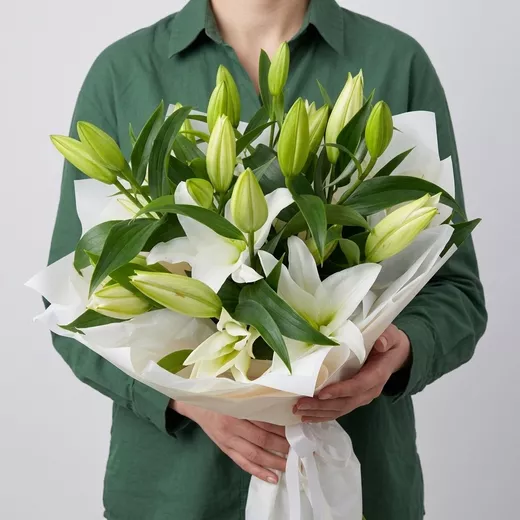

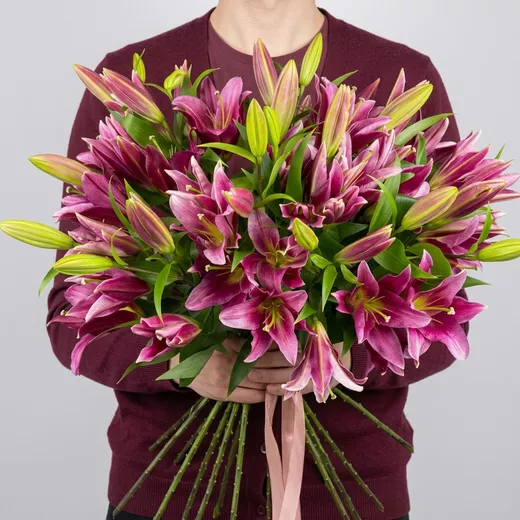
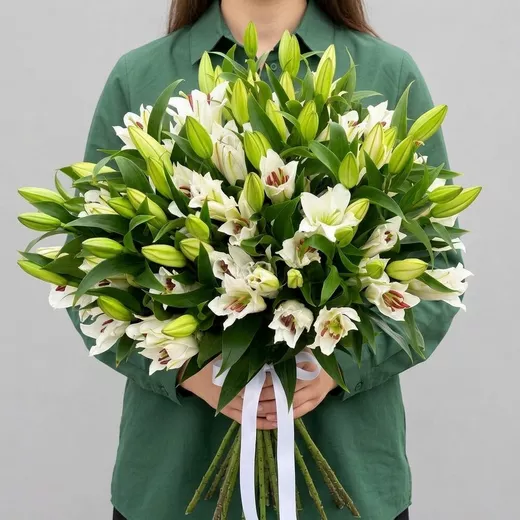

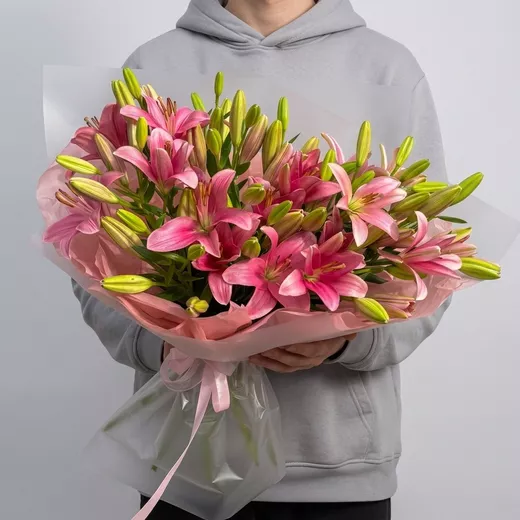


What to check when lily buds stay closed
If the buds remain closed after several days, first look for progress rather than declaring them lost. A firm bud that is slowly swelling may simply need more time. Check that the stem ends are submerged, the water is clear and the room is not unusually cold. Correct those conditions and watch for a change over the following day or two.
A wrinkled bud, limp foliage or a stem that seems unable to stay hydrated deserves closer attention. Refresh the water, wash the vase and recut the stem base with a clean tool. This may help if poor water uptake is the issue, but it cannot reverse every kind of damage. Brown, soft or shrivelling buds are less promising than firm, gradually developing ones.
Some buds were cut too immature to complete development, while others may have suffered during handling or storage. You cannot reliably diagnose their whole history from the vase, and more warmth will not necessarily rescue them. Remove a clearly deteriorating bud carefully, retain healthy buds on the stem and avoid repeatedly cutting away large lengths in search of a quick fix.
Care for the flowers as each lily opens
Once the petals unfold, give the flower space so it is not pressed against a wall or another bloom. Lily pollen can mark clothing, table linen and pale surfaces. If you choose to remove the pollen-bearing anthers, lift them away gently with a tissue as the flower opens, before loose pollen spreads; avoid rubbing against the petals.
If dry pollen lands on fabric, avoid rubbing it in or immediately wetting it. Gently lift loose grains with adhesive tape, then follow the fabric's care instructions. Remove fading individual flowers while leaving healthy buds and foliage in place. For ongoing care after opening, read our guide to lily vase life.
Before keeping or sending lilies, check whether there are cats in the home. True lilies, including Asiatic and Oriental lilies, are highly toxic to cats; pollen and vase water can also pose a danger. Removing the anthers does not make the bouquet safe. Choose different flowers for a home with cats, and seek urgent veterinary help if exposure is suspected.
Plan lilies for an occasion or a delivery to Russia
For a dinner or celebration, lilies with some flowers already open are easier to plan around than a bouquet of tight green buds. Buying ahead may give mature buds time to develop, but it cannot guarantee a particular opening day. For a gift, consider scent as well as appearance: strongly scented lilies may be unwelcome in a bedroom or a shared workspace.
To send flowers to someone in Russia, browse our bouquets catalogue and contact a manager on WhatsApp for help choosing, agreeing the address and delivery time, and arranging a photo of the bouquet before delivery. If open flowers matter for the occasion, explain that when discussing your choice so the request is clear before you order.
We deliver across Russia. City delivery costs 500 RUB; the operator confirms the price for remote districts and suburbs when confirming the order. In large cities, express delivery is available 1–2 hours after confirmation. You can also arrange an exact time within ±30 minutes, choose a 09–12, 12–15, 15–18 or 18–21 window, or pre-order 1–30 days ahead.
Delivery is anonymous by default, so include your name in the free card text if you want the recipient to know who sent the flowers. The courier calls about 15 minutes before arrival. Online checkout uses CloudPayments; check the payment options displayed there rather than assuming that every foreign-issued card will be accepted. Availability and timing of delivery across Russia are confirmed for the chosen city, address, date and bouquet.
Frequently asked questions
Can lilies open overnight in a vase?
Yes, a mature, swollen bud with loosening petals may open overnight. A small, tight green bud is unlikely to reach the same stage that quickly.
How can I make lilies open faster without damaging them?
Give them fresh water, cleanly recut stems and a comfortably temperate position with indirect light. Avoid direct heat and pulling the petals apart; these can damage the flowers.
Why has one lily opened while the other buds are still closed?
Buds on a lily stem develop at different stages, so staggered opening is normal. Watch the remaining buds for swelling and loosening rather than expecting them all to open together.
Will every green lily bud open after a week?
No: very immature or damaged buds may never open, even with careful vase care. Firm buds that continue to swell are more encouraging than buds that shrink, soften or turn brown.
Should I remove lily pollen before the flower opens?
Wait until the flower opens enough for you to reach the anthers without forcing the petals apart. Removing anthers can reduce staining, but it does not make lilies safe for cats.
Ready to send flowers?
Pick the city, choose the bouquet, and a local florist takes it from there.
Choose a city →