How Many Petals Does a White Lily Have?
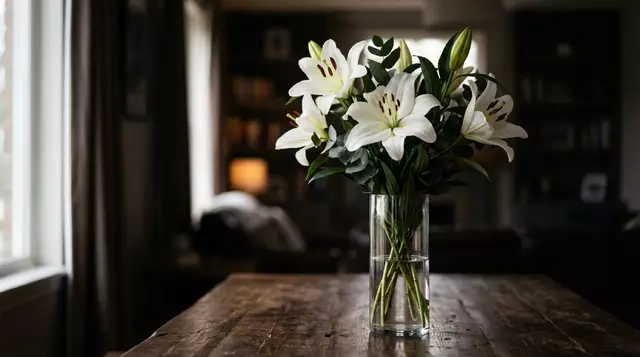
A typical single white lily has six petal-like parts: three true petals and three sepals. Because these parts look so similar, botanists call them tepals; in everyday conversation, saying that a white lily has six petals is understandable. Double-flowered varieties have extra petal-like parts, so their count can be higher.
That count belongs to one open flower, rather than the whole stem, which may carry several flowers and buds. If you are checking a bouquet photograph, identifying a flower or choosing lilies for someone, it helps to separate flower structure from stem count. Here is how to recognise the usual six-part bloom and what to consider before giving or caring for white lilies.
Why six “petals” are more precisely called tepals
On many flowers, green sepals protect the bud and sit beneath the colourful petals after it opens. A true lily, in the genus Lilium, has a different appearance: its three outer sepals resemble its three inner petals. Together they make two alternating groups of three. The word tepal describes a part whose appearance does not clearly distinguish it as a petal or a sepal.
To count them, look straight into a fully open flower and follow each broad white segment from its tip towards its base. You should find six separate segments arranged around the centre. Their edges may overlap, curl backwards or form a trumpet, but these shapes do not change the usual count. A side view can hide one or more segments behind the others.
The slender structures in the middle are separate from the tepals. A typical single lily has six stamens, each with a pollen-bearing anther, surrounding a central pistil. Do not add these to your petal count. On a partly opened bud, the folded tepals can look like fewer, thicker pieces, so wait until the flower opens before trying to identify its structure.
When a white lily may look different
White is a flower colour, not a single lily variety. Different Lilium species and cultivated varieties can have white flowers with different sizes, shapes and markings while retaining the usual six tepals. A flower with strongly curved tips may look quite different from a broad, outward-facing bloom, even though the underlying arrangement is the same.
Double-flowered lilies are the main exception to a simple six-part answer. They have additional petal-like structures, often giving the centre a layered appearance. The exact number depends on the variety and the individual flower, so there is no useful universal count for every double white lily. If the centre looks full of overlapping white segments, count the actual bloom rather than applying the standard number.
Common names can also mislead you. A peace lily has a white spathe around a central flower spike, and a calla lily has a similar conspicuous spathe; neither is a true Lilium lily. That white structure is a modified leaf, rather than six joined petals. If the flower resembles a smooth white funnel with a central spike, the ordinary six-tepal explanation may not apply.
Bouquets we can deliver




How to judge lilies in a bouquet photograph
Start by identifying individual flowers, then trace them back to their stems where possible. One lily stem can carry several buds and open blooms, so six visible flowers do not necessarily mean six stems. Petal count tells you about the structure of each flower; it does not tell you how many stems are in the bouquet or how full it will become as buds open.
Look at the balance between open flowers and closed buds. Open blooms give an immediate impression of the bouquet's shape, while buds show that its appearance can change after arrival. A very tight bud does not reveal the final spread of its tepals. For an occasion where the flowers need to look open at a particular moment, explain that preference when discussing your order.
Check whether you are viewing an ordinary single lily or a layered double variety before comparing pictures. Then consider the bouquet's overall proportions and the recipient's space, rather than treating more visible petals as a measure of quality. Our guide to flower bunch and stem counts explains why counting stems and counting flower heads can produce different answers.
Care for the tepals, pollen and opening buds
Use a clean vase, recut the stem ends with a clean, sharp tool and remove leaves that would sit below the waterline. Add fresh water and follow the instructions on any flower-food packet supplied. Keep checking the water as the stems drink, and replace it when it becomes cloudy. These basic steps support the whole stem, including flowers that have not yet opened.
Place the vase away from direct sun, radiators and ripening fruit. Give the flowers enough room to open without pressing against a wall or shelf, and avoid pulling apart a tight bud. White tepals show bruising and handling marks readily. As individual blooms fade, remove them carefully while leaving healthy buds and foliage in place; flowers on the same stem need not open or fade together.
If pollen staining is a concern, carefully remove accessible anthers before they shed pollen, keeping them away from the tepals and fabric. Avoid rubbing loose pollen into clothing. This grooming does not make lilies safe for cats: true lilies are highly toxic to them, including their pollen and vase water. Choose other flowers for a home with cats, and seek urgent veterinary advice after suspected exposure.
There is no single vase-life figure that a petal count can predict. Variety, the condition of the stems on arrival and care in the recipient's home all affect how the bouquet develops. Think of the display as a sequence of flowers opening along each stem. For a closer explanation, read how many days lily flowers last.
Choose white lilies with the recipient in mind
White lilies can suggest purity, remembrance or a formal expression of affection, but their meaning depends on the occasion and the recipient's cultural associations. Some people connect them strongly with sympathy flowers; others enjoy them as elegant birthday or anniversary blooms. If you are unsure, use the card to make your intention clear rather than assuming the flower will communicate it on its own.
Consider scent as well as appearance. Some lilies are strongly fragrant, and a bouquet that suits a large room may feel overwhelming beside a bed or desk. Ask about the particular flowers you are considering if the recipient is sensitive to fragrance. A white colour or a double flower shape alone is not enough to establish that a lily will be unscented.
For a personal gift, a specific message is often more helpful than a formal explanation of flower symbolism: say what you are celebrating or why you are thinking of the recipient. Turboflora includes a card with your text free. Delivery is anonymous by default, and the courier does not name the sender, so add your name to the card if you want the recipient to know who sent the flowers.
Sending a lily bouquet to someone in Russia
You can browse our bouquets catalogue and contact a manager on WhatsApp for help choosing flowers and agreeing the address, delivery time and card text. If you are considering white lilies, explain whether your priority is the flower shape, a particular occasion or the bouquet's appearance on arrival. A manager can also help with a photo of the bouquet before delivery.
We deliver flowers across Russia. City delivery costs 500 RUB; for remote districts and suburbs, the operator confirms the price when confirming the order. In large cities, express delivery is available in 1–2 hours after order confirmation. You can also arrange an exact time with a tolerance of plus or minus 30 minutes, choose a 09–12, 12–15, 15–18 or 18–21 window, or pre-order 1–30 days ahead.
When ordering from abroad, agree the date and time for the recipient's location. The courier calls the recipient about 15 minutes before arrival. If the recipient is absent, we agree a second delivery the same day or, with the sender's consent, hand the flowers to a neighbour or concierge. Online checkout uses CloudPayments; check the options displayed there for your card, as acceptance of every foreign card is not guaranteed. Check our delivery information; confirm the timing for your order.
Frequently asked questions
Does a white lily have three petals or six?
Botanically, a typical single white lily has three true petals and three similar-looking sepals. Together, these six parts are called tepals, although people commonly call all six petals.
Do all white lilies have six tepals?
Six is the usual number for a single-flowered true lily. Double varieties have additional petal-like structures, and plants commonly called lilies may belong to other genera with different flower structures.
Does one lily stem have only one flower?
A lily stem can carry several flowers and buds. Count the stems separately from the open flowers when assessing a bouquet.
Should I remove the pollen-bearing parts of a white lily?
You can carefully remove the anthers to reduce the risk of pollen stains, taking care not to mark the white tepals. Removing them does not make the plant safe for cats; choose other flowers for a household with cats.
Can I order flowers for delivery in Russia while I am abroad?
You can order online and contact a manager to agree the recipient's address, timing and card text. Checkout uses CloudPayments, so check the payment options displayed for your card rather than assuming every foreign card will be accepted.
Ready to send flowers?
Pick the city, choose the bouquet, and a local florist takes it from there.
Choose a city →