How to Arrange Garden Flowers in a Vase
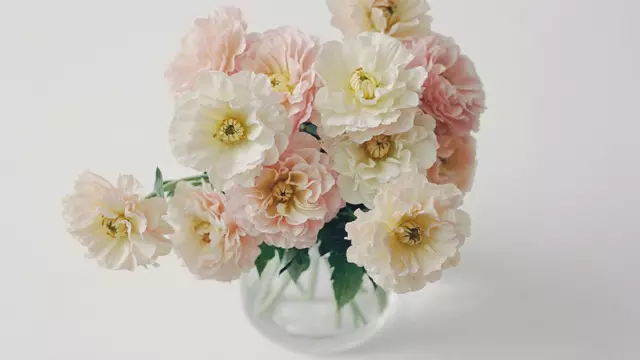
To arrange garden flowers, prepare the stems, build a loose outline with foliage, then add your largest blooms before filling the gaps with smaller flowers. Work in a clean vase with fresh water, turning it as you go so the stems have room and the arrangement feels balanced.
Start with what your garden offers: a few substantial blooms, some smaller flowers and leafy stems. You do not need equal quantities of everything; differences in height, shape and texture give you useful choices as you arrange.
Choose flowers and a vase that work together
Gather healthy stems with clean, undamaged petals and firm foliage. Choose flowers at different stages of opening, but avoid relying entirely on tight buds: some flowers will not open well after cutting. Leave behind anything visibly diseased or carrying insects.
For an easy first arrangement, choose two main colours and repeat them through the vase. Combine a rounded flower shape with something airy or upright so each is easy to see. Before cutting foliage, identify the plant and check that it is suitable for handling and bringing indoors.
Use a vase whose opening holds your stems loosely together. A wide mouth needs more material to support a full arrangement; a narrow neck suits a handful of stems. For a dining table, choose a height that lets people see one another across it.
Prepare the stems before arranging
Wash the vase thoroughly and rinse it well. Take a clean bucket of water into the garden, use sharp, clean secateurs or scissors, and place cut stems in water promptly. Cut only what you need, leaving enough growth on each plant.
Remove every leaf that would sit below the waterline, then recut the stem ends cleanly before placing them in fresh water. Keep useful upper leaves, but remove damaged foliage and crowded side shoots. If you use commercial cut-flower food, follow its packet instructions.
Let the flowers stand somewhere cool and shaded while you prepare your workspace. Different flowers can need different treatment, so check species-specific guidance for an unfamiliar stem rather than applying boiling water, flame or other special treatments to the whole bunch.
Bouquets we can deliver




Build the arrangement in five steps
1. Set the outline with a few foliage stems. Angle them in different directions to establish the width and height, allowing their stems to cross inside the vase. Keep the opening accessible so you can add flowers without forcing them through.
2. Add your largest blooms. Place them at slightly different heights and facing different directions, with one or two lower down to connect the flowers visually to the vase. Avoid lining every flower head up at the same level.
3. Add smaller flowers between the larger blooms. Repeat a colour in several places to draw the eye through the arrangement. Turn the vase after every few stems if it will be viewed from all sides.
4. Introduce upright or branching stems where the outline needs movement. Leave small spaces between flower heads so their shapes remain visible. Stop adding material when a new stem would hide a flower you want to see.
5. Step back and check the proportions. If the arrangement looks top-heavy or unstable, shorten the tallest stems or use a more substantial vase. Check the water level after arranging and make sure every cut stem end reaches it.
Fix common problems and keep the flowers cared for
If stems keep falling sideways, try a narrower vase or divide the flowers between two smaller vessels. If the display looks crowded, remove a few stems before adding anything else. For a vase against a wall, check the front and sides; there is no need to make the hidden back equally full.
Check the water daily and top it up as needed. Replace cloudy water, clean the vase and remove deteriorating flowers or leaves. Keep the arrangement away from direct sun, radiators and ripening fruit, and follow any flower-food instructions when refreshing the water.
Mixed garden flowers may age at different rates. Remove individual stems as they fade and move the remaining flowers into a smaller vase when the original arrangement begins to look sparse.
Sending flowers to someone in Russia
If you are abroad and want to send flowers to someone in Russia, browse the bouquets catalogue. Use WhatsApp to get help choosing a bouquet and agree the address, delivery time and card text with a manager. You can also arrange a photo of the bouquet before delivery.
We deliver across Russia. City delivery costs 500 RUB; for remote districts and suburbs, the operator confirms the price when confirming the order. In large cities, express delivery is available in 1–2 hours after confirmation. You can also select an exact time with a ±30-minute allowance, a delivery window of 09–12, 12–15, 15–18 or 18–21, or pre-order 1–30 days ahead.
Delivery is anonymous by default: the courier does not name the sender, so include your name in the free card if you want the recipient to know who sent the flowers. Online checkout uses CloudPayments; check the payment options displayed at checkout. See delivery and payment for more information.
Frequently asked questions
How many garden flowers do I need for one vase?
Use the vase opening as your guide: the stems should sit securely without being tightly packed. Start with a few main blooms and add smaller flowers and foliage until the outline feels balanced.
Can I arrange garden flowers without floral foam?
Yes, a vase with a suitably narrow opening can support a simple arrangement on its own. Cross the foliage stems inside the vase first, then place flower stems through the gaps.
Ready to send flowers?
Pick the city, choose the bouquet, and a local florist takes it from there.
Choose a city →