The Right Way to Cut Flower Stems for Maximum Freshness
You have just received a beautiful bouquet — roses still tight, lisianthus just beginning to open, a few stems of eucalyptus adding that soft grey-green depth. The next thing you do in the first five minutes will decide whether those flowers last four days or ten. Cutting the stems correctly is not a florist secret or a complicated technique. It is a small, deliberate action that changes everything about how a flower drinks, and once you understand why it works, you will never skip it again.
Why the Cut Matters More Than the Water
Most people assume that fresh water and a clean vase are the main factors in flower longevity. Water matters, but the stem end is where everything begins. When a flower stem is cut and then sits exposed to air — even for thirty seconds — the cut surface begins to seal. Cells collapse, sap thickens slightly, and the tiny tubes that carry water up through the stem, called xylem vessels, become partially blocked. The flower is still alive, but it is working against resistance every time it tries to drink.
This is why florists recut stems immediately before placing flowers in water, and why they do it again when they arrive at your home. A bouquet that has travelled across Saint Petersburg, even in a cool delivery bag, has been out of water for at least some of that journey. The xylem vessels at the base have had time to close. A fresh cut removes that blocked section entirely and opens the flower up to full hydration again.
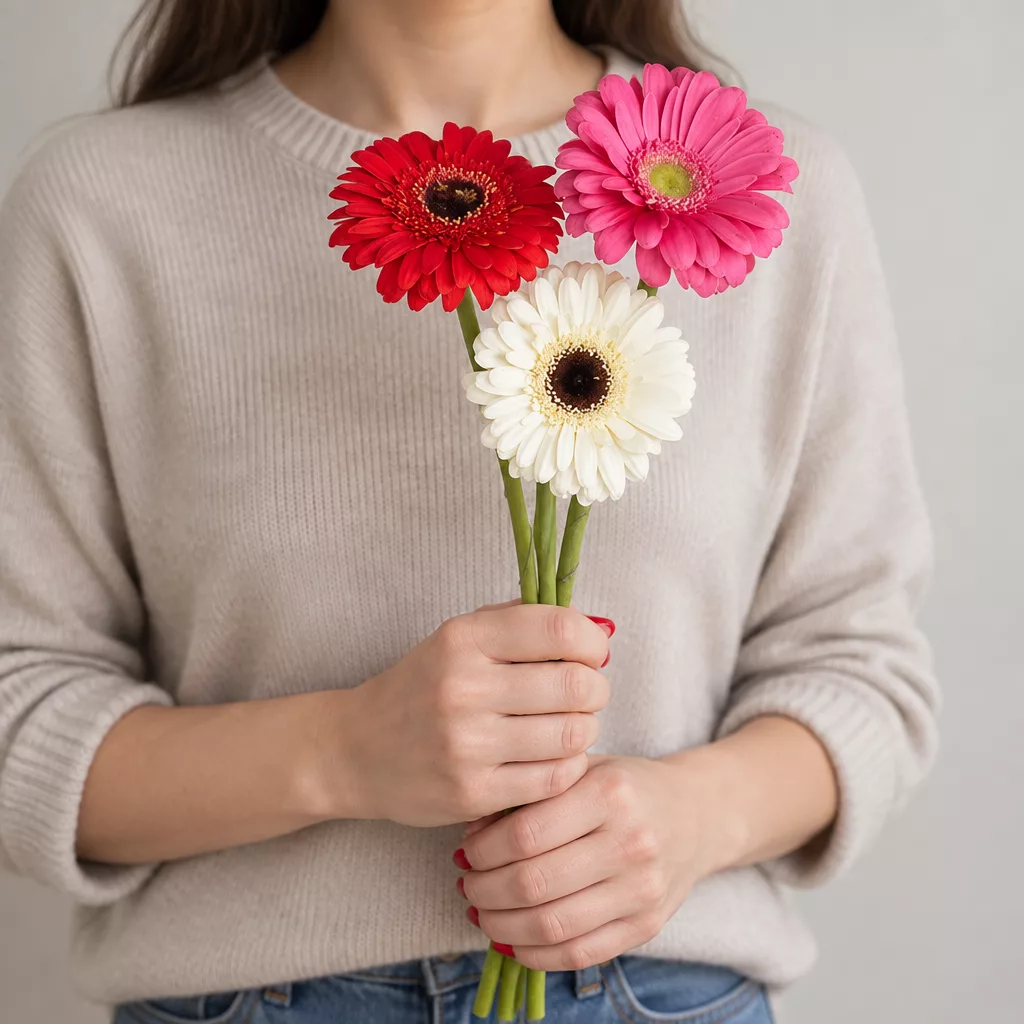
Roses show this most dramatically. A rose that arrives slightly soft and drooping will often recover completely within two hours of a proper recut and a deep drink of cool water. Gerberas and sunflowers respond almost as quickly. Tulips are a little more forgiving because their stems are so soft, but they still benefit. The cut is the first act of care, and it sets the tone for everything that follows.
Bouquets we can deliver


The Correct Angle and Why Forty-Five Degrees Works
A diagonal cut at roughly forty-five degrees is the standard in professional floristry, and it earns that status for two practical reasons. First, it increases the surface area of the cut end compared to a straight horizontal slice. More exposed xylem tissue means more contact with water and a faster, more efficient uptake. Second, and just as important, the angled tip rests against the bottom of the vase at a single point rather than sitting flat against the glass or ceramic. A flat-cut stem pressed against the vase floor is partially sealed off from the water. A diagonal tip touches minimally, leaving the full cut face open and submerged.
The angle does not need to be precise to the degree. Florists work quickly and by feel. Somewhere between thirty and fifty degrees is effective. What you want to avoid is a perfectly straight cut, especially for roses, carnations, and chrysanthemums, which have denser stems and benefit most from that extra surface area.
For hollow-stemmed flowers like delphiniums and some dahlias, the angle matters less, but the freshness of the cut matters more. These stems can trap air bubbles inside the hollow channel, which blocks water movement. Some florists turn hollow stems upside down, fill them with water using a small jug, and plug the base with a fingertip before placing them in the vase. It sounds fussy but takes about ten seconds and noticeably extends the life of tall, dramatic spikes that would otherwise wilt at the tip within two days.
Choosing the Right Blade: Scissors Versus a Sharp Knife
The tool you use to cut flower stems is not a minor detail. A blunt pair of kitchen scissors is one of the most common causes of shortened vase life, and the reason is mechanical. Scissors work by pressing two blades together, which means they crush the stem as they cut. Even if the cut looks clean to the eye, the xylem vessels along the cut edge have been pinched and compressed. The flower can still drink, but the pathway is narrower than it should be.
A sharp knife — a paring knife, a chef's knife, or ideally a proper florist's knife with a slightly curved blade — slices cleanly through the tissue without compression. The cells at the cut surface remain open and intact. If you only have scissors at home, they will do the job adequately as long as they are sharp and you work with a single confident motion rather than sawing back and forth. Sawing is the worst approach because it shreds the stem wall and creates a ragged, partially sealed surface.
For woody stems like roses, lisianthus, and spray carnations, a sharp knife makes a noticeable difference. For softer stems like tulips, freesia, and ranunculus, good scissors are perfectly acceptable. Whichever tool you use, keep it clean. Bacteria on the blade transfer directly to the cut surface and into the water. A quick wipe with a clean cloth between stems costs nothing and reduces the microbial load that clouds your vase water and shortens bloom life significantly.
Timing Your Recut: When and How Often to Do It
The most important recut happens within the first few minutes of unwrapping your bouquet. Do not arrange the flowers first, do not trim the leaves first, do not choose a vase first. Cut the stems, place the flowers in water, and then do everything else. Those first minutes of hydration after a fresh cut are when the flower drinks most aggressively, and you want that window to count.
After the initial recut, a second trim every two to three days will extend vase life considerably. Each time you change the water — which you should do every two days for most arrangements — take off another centimetre from the base of each stem. This removes any section that has begun to soften, discolour, or reblock. It also keeps the stem end actively drinking rather than slowly sealing over again.
Timing within the day also matters more than most people realise. Early morning is the best time to recut and arrange flowers. Temperatures in a typical Russian apartment kitchen are cooler in the morning, and flowers are less stressed by the process. Cutting stems in a warm room in the afternoon, especially in summer, accelerates the rate at which the cut surface closes. If you receive a delivery in the evening, cut and water the flowers immediately rather than leaving them wrapped until morning.
For long-lasting varieties like alstroemeria, chrysanthemums, and statice, a weekly recut combined with fresh water can push vase life from ten days to nearly two weeks without any other special treatment.
Water Temperature, Depth, and What to Add to the Vase
After a fresh cut, cool water is almost always the right choice. Room-temperature water is acceptable for most flowers, but cold water — around ten to fifteen degrees Celsius — slows bacterial growth and keeps the stems firm. The exception is bulb flowers like tulips and hyacinths, which actually prefer slightly cooler water still, closer to eight degrees. Putting a freshly cut tulip bouquet into a vase with cold water and placing it in a cool room for the first hour produces noticeably upright, long-lasting stems.
Water depth matters too. Most florists fill vases two-thirds full, which keeps the lower portion of the stem submerged while allowing the upper stem and leaves to breathe. Submerging leaves is one of the more common mistakes at home. Leaves below the waterline rot quickly, releasing bacteria into the water that then travel up into the stem. Strip any foliage that would sit below the water surface before placing the flowers.
Flower food sachets, the small packets often included with bouquets, contain three things: a sugar to feed the flowers, an acidifier to help water travel up the stem more efficiently, and a biocide to slow bacterial growth. They genuinely work and are worth using. If you do not have a sachet, a small amount of sugar and a drop of bleach in the water is a rough approximation. Avoid aspirin, copper coins, and vodka — these are popular home remedies in Russia but none of them perform as reliably as proper flower food or simply very clean, cool water changed regularly.
Stem-Specific Rules for the Flowers You Receive Most Often
Different flowers have different stem structures, and a one-size approach to cutting does not serve all of them equally well. Roses have dense, woody stems with thorns. Cut them at a firm diagonal with a sharp knife, remove all thorns below the waterline to reduce bacterial entry points, and place them immediately in deep water. Roses benefit from a deep drink — at least fifteen centimetres of water — in the first hour after cutting.
Lisianthus stems are semi-woody and branch at the top into multiple buds. Cut the main stem at an angle and also trim the small side stems that branch off lower down. This directs the plant's energy toward the upper buds and prevents the lower, smaller flowers from consuming water that the main blooms need.
Chrysanthemums and spray carnations are among the longest-lasting cut flowers, but they have dense, fibrous stems that benefit from a slightly crushed or split base in addition to the diagonal cut. Some florists make a small vertical split of about one centimetre at the base of the stem after the angled cut. This increases water uptake significantly for these varieties.
Tulips are unusual because they continue to grow after cutting, sometimes by several centimetres. They also bend toward light. Recutting tulip stems in a bucket of water rather than in the air prevents air bubbles from entering the stem and keeps them drinking steadily. Gerberas have hollow, hairy stems that are prone to bacterial blockage, so frequent recutting every two days and very clean water are especially important for them.
Common Mistakes That Quietly Shorten Your Flowers' Life
The most widespread mistake is cutting stems in the air and then pausing before placing them in water. Even a gap of one minute allows the cut surface to begin sealing. Professional florists cut stems underwater when possible, holding the stem submerged in a bucket and making the cut below the surface. At home, you can approximate this by cutting quickly and moving the stem to water within ten seconds. The longer the gap, the less effective the cut.
Leaving the original rubber band or string tightly around the bouquet stems while you arrange them is another quiet problem. The compression restricts water movement through the lower stems and creates pressure points where stem tissue can bruise. Remove all bindings before recutting, and let the stems separate naturally.
Placing flowers near fruit bowls, radiators, or sunny windowsills shortens vase life dramatically regardless of how well the stems are cut. Fruit releases ethylene gas, which accelerates ageing in flowers — roses and carnations are particularly sensitive to it. A warm, sunny spot feels welcoming but raises the ambient temperature around the blooms and speeds moisture loss through the petals. A cool spot away from direct heat, with indirect light, is where flowers last longest.
Finally, forgetting to recut when you change the water is perhaps the most common missed opportunity. Changing the water without trimming the stems removes bacteria from the vase but does nothing about the sealed stem base. The two actions together — fresh cut, fresh water — are what actually reset the flower's ability to drink and extend the arrangement by several more days.
Cutting flower stems correctly takes less than two minutes and requires nothing more than a sharp blade, cool water, and the habit of doing it immediately. The angle, the tool, the timing, and the small stem-specific details covered here are not complicated once you have done them once. A bouquet delivered fresh to your door in Saint Petersburg already starts its life in good condition — these steps simply make sure it stays that way for as long as possible. Treat the first five minutes after unwrapping as the most important five minutes of the flower's time in your home, and the days that follow will show it.
Frequently asked questions
Should I cut flower stems underwater or is that unnecessary?
Cutting underwater prevents air from entering the xylem vessels the moment the stem is opened, which is the main cause of blockage. It is genuinely effective, especially for roses and gerberas. If cutting underwater is not practical, move the stem into water within ten seconds of cutting and the result will be nearly as good.
How often should I recut the stems of a bouquet I want to last as long as possible?
Recut stems every two to three days, ideally each time you change the water. Remove about one centimetre from the base each time. For long-lasting varieties like chrysanthemums and alstroemeria, this routine alone can extend vase life by several days beyond what most people expect from cut flowers at home.
Can I use kitchen scissors if I do not have a florist's knife?
Yes, but only if they are sharp and you cut with a single firm motion. Dull scissors crush the stem rather than slicing it, which compresses the water-conducting tissue. If your scissors require more than one squeeze to get through the stem, they are too blunt and a sharp paring knife from your kitchen will serve the flowers much better.
Does the type of water I use make a difference to how long flowers last?
Cool, clean tap water works well for most flowers. The temperature matters more than the source — aim for ten to fifteen degrees Celsius. Avoid softened water if possible, as the sodium content can stress some varieties. Changing the water every two days and keeping the vase clean has far more impact than any special water type.
Why do my tulips always bend and droop even after I cut the stems properly?
Tulips continue to grow after cutting and naturally bend toward their light source. To keep them upright, place them in a tall vase that supports at least half the stem length, use cool water, and rotate the vase a quarter turn each day. Recutting in a bucket of water rather than in the air also helps tulips stay firm and straight longer.
Ready to send flowers?
Pick the city, choose the bouquet, and a local florist takes it from there.
Choose a city →