Your Bouquet Just Arrived — Here Is How to Unpack It Properly
The courier hands you a bouquet and you want to tear the wrapping off immediately — that impulse is completely natural, but those first two minutes matter more than anything else in the life of the flowers. Stems that are crushed, bent, or left dry for even half an hour after unpacking will never fully recover. This guide walks you through every step, from the moment you close the door behind the delivery to the moment the bouquet is standing in fresh water looking exactly the way it should.
Give Yourself a Clear Space Before You Touch the Wrapping
Before you even set the bouquet down, prepare your workspace. Clear a kitchen counter or a large table so you have room to lay the arrangement flat without crowding it. Flowers that tip sideways or get pressed against a wall during unpacking can snap stems or bruise petals, and bruised petals on roses or peonies show within hours as dark-edged browning.
Fill a clean vase or tall bucket with cool water right now, not after unpacking. The water temperature matters: aim for around 15 to 18 degrees Celsius. Cold water from the tap is usually perfect in a Russian apartment during most of the year. Avoid warm water unless you are dealing with tropical varieties like anthurium or bird of paradise, which prefer slightly warmer conditions.
Have a pair of sharp scissors or, even better, a clean kitchen knife within reach. Blunt scissors crush the vascular tissue at the base of the stem instead of cutting cleanly through it, and a crushed stem cannot draw water efficiently no matter how long you leave it soaking. If you only have blunt scissors, rinse them and do your best — a clean cut is the goal. Keep a small towel nearby for wiping your hands between steps. This two-minute preparation saves you from rushing, which is when most damage actually happens.
Bouquets we can deliver

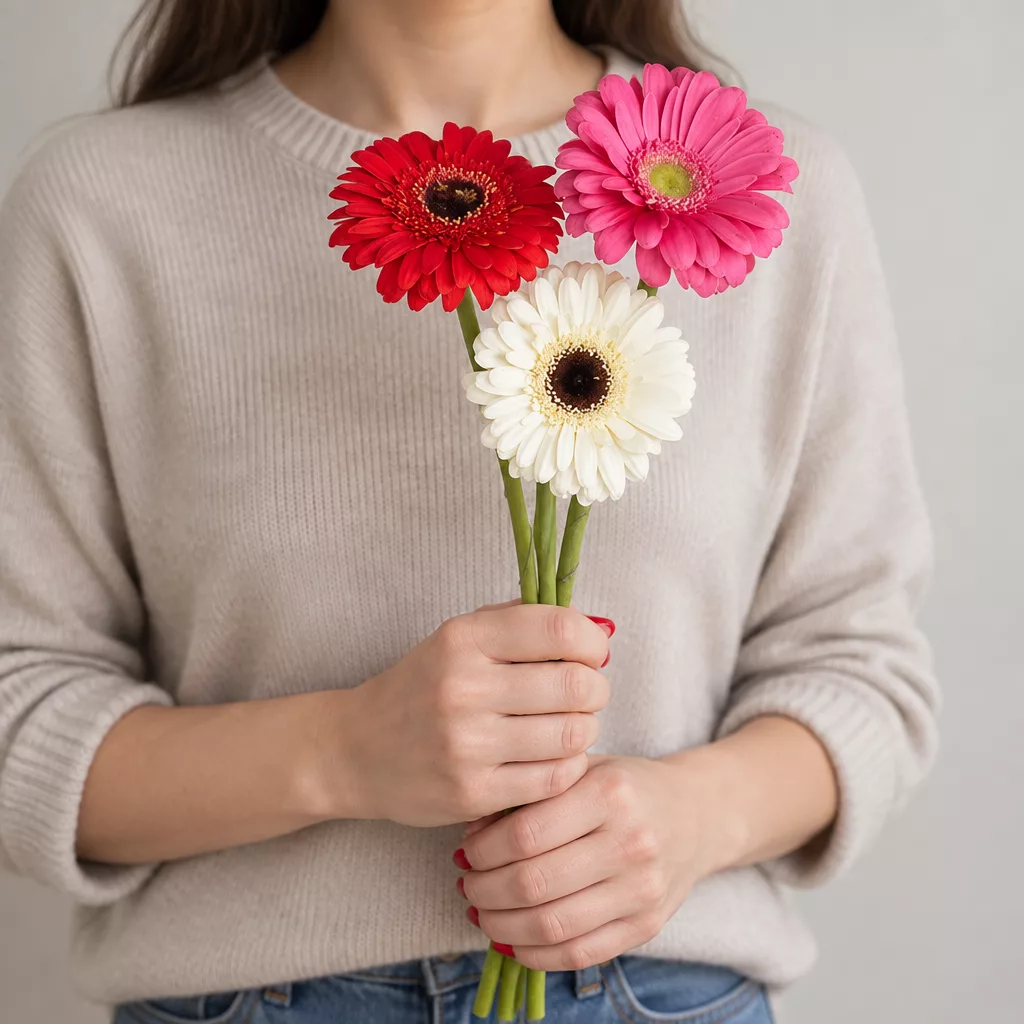

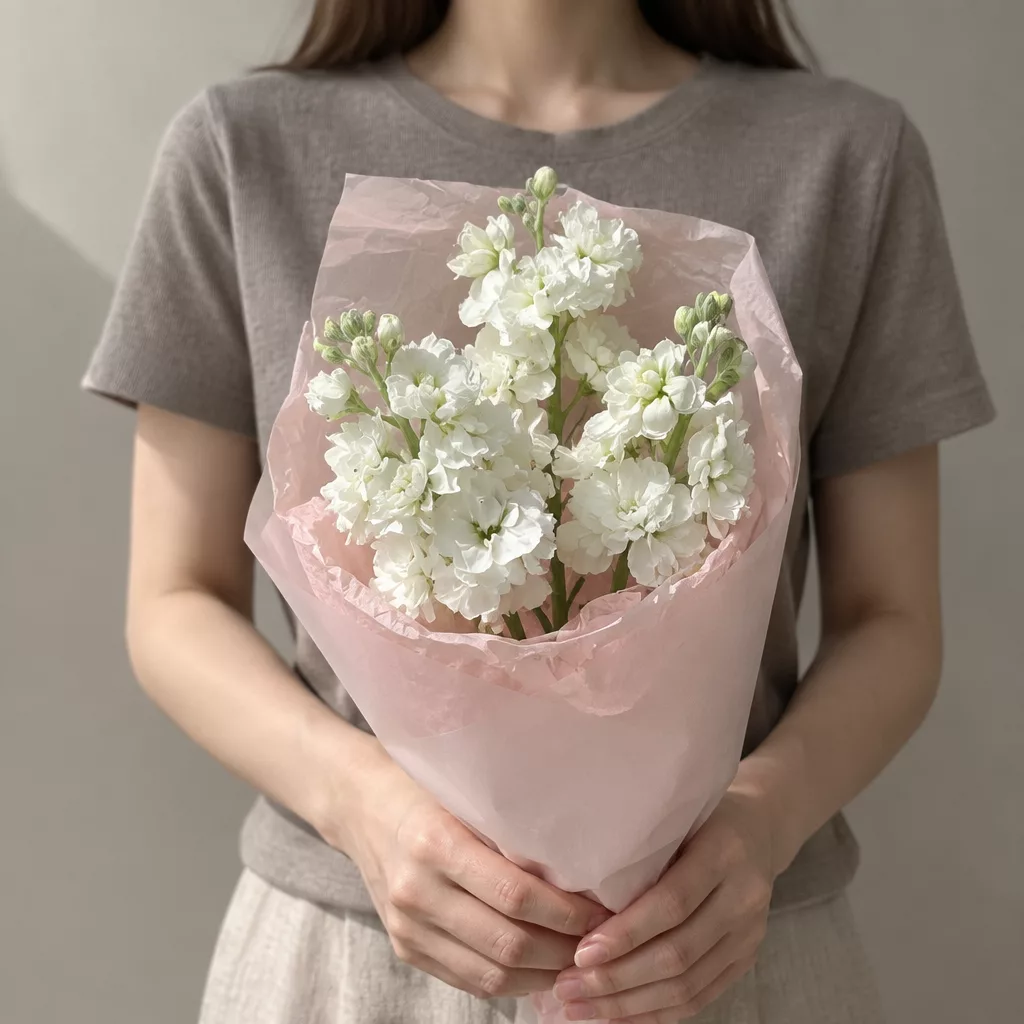
Reading the Wrapping Before You Remove It
Russian flower bouquets are typically wrapped in several layers: an outer kraft paper or decorative paper sleeve, sometimes a second layer of thin tissue or cellophane, and occasionally a foam or cotton pad at the base of the stems to keep them moist during transit. Turboflora uses protective packaging designed specifically for same-day delivery, so the arrangement inside is usually more stable than it looks from the outside.
Before cutting anything, turn the bouquet gently and look at how it is constructed. Identify where the stems are gathered and tied — usually with a rubber band, a ribbon, or a piece of raffia. Note whether the flowers face one direction or whether it is a round bouquet meant to be viewed from all sides. This tells you which way to lay it down when you unwrap it.
Check for any small water vials attached to individual stems. Some delicate flowers, particularly orchid stems or single garden roses, arrive with a tiny plastic tube of water secured over the cut end. Do not pull these off yet — leave them in place until you are ready to cut and transfer the stems directly into the vase. Removing the vials too early and then spending five minutes fussing with paper means the stem tip is exposed to air unnecessarily. Every florist will tell you that the enemy of a fresh stem is air, not time — air enters the cut end and blocks water uptake almost immediately.
Removing the Outer Packaging Without Pulling
The most common mistake people make at this stage is gripping the paper and pulling upward while holding the stems down. This creates tension along the length of every stem simultaneously, and delicate varieties like lisianthus, sweet peas, or spray roses can snap at the neck — the thin section just below the flower head — in exactly this way. The neck is the weakest point on most flowers.
Instead, lay the bouquet horizontally on your prepared surface with the flower heads facing away from you. Use your scissors to cut any tape or ties holding the outer paper closed, starting from the base end, not the top. Peel the paper back gently from the sides, folding it away rather than lifting it. Think of it less like unwrapping a gift and more like opening a book — slow, flat, and controlled.
If there is a second layer of tissue or cellophane around the flowers themselves, treat it the same way. Cut it at the base and peel it outward from the stems. Some bouquets have individual blooms nestled in tissue to prevent them from rubbing against each other during transport — roses and tulips are often packed this way. Remove this inner tissue last, after the outer layers are completely clear, so the flowers are never left unsupported mid-process.
Once the packaging is off, do not yet stand the bouquet upright. Keep it horizontal and move directly to inspecting the stems before anything else.
Inspecting Stems and Removing the Right Leaves
With the wrapping cleared, hold the bouquet over your work surface and look at the stems from base to bloom. You are checking for three things: any leaves that will sit below the waterline in your vase, any stems that are visibly bent or kinked, and the overall length relative to your vase.
Leaves below the waterline must come off before the bouquet goes into water. This is not optional — submerged leaves rot within a day and the bacteria they produce will clog the stem ends and shorten the life of every flower in the arrangement. Strip these leaves by running your fingers firmly downward along the stem, not upward. Pulling upward tears the outer layer of the stem and creates entry points for bacteria. Varieties like chrysanthemum and solidago tend to have a lot of foliage low on the stem, so expect to remove more from these than from roses or gerbera.
For kinked stems — most often seen in tulips and gerbera after transit — do not try to straighten them by bending in the opposite direction. Simply cut below the kink when you trim the stems in the next step. A clean stem below the damage point will take up water normally. Check the flower heads briefly: if any petals are folded inward or slightly compressed from packaging, leave them alone. Most will open naturally within a few hours once the flower is hydrated. Trying to open petals by hand almost always causes tearing.
Cutting the Stems: Angle, Length, and Timing
This is the single most important step in the entire process, and it needs to happen with the stem partially submerged in water or immediately before the stem enters the vase — within about ten seconds of the cut. When you cut a stem in open air, a small air bubble is drawn into the vascular tissue. If the stem then goes straight into water, that bubble is usually flushed out. If you cut the stem and then spend a minute adjusting the arrangement, the bubble becomes trapped and water uptake is permanently reduced.
Cut at a 45-degree angle, not straight across. The angled cut increases the surface area of the stem end and also prevents the cut end from sitting flat against the bottom of the vase and sealing itself off. Use your sharpest blade and make one clean motion — do not saw back and forth. For woody stems like roses or lisianthus, a knife gives a cleaner result than scissors. For hollow stems like amaryllis, a straight cut is actually preferable because the hollow channel is the main pathway for water.
Remove between two and five centimetres from the base of each stem. If the bouquet has been in transit for more than two hours, remove a little more — up to seven centimetres — because the tissue at the very base will have begun to seal. Place each stem into the prepared vase immediately after cutting. Work through the bouquet one stem at a time rather than cutting all of them and then arranging. Speed here is not about rushing — it is about keeping each cut end exposed to air for the shortest possible time.
The First Hour in the Vase: What to Watch For
Once all the stems are in water, move the vase to a cool spot away from direct sunlight, radiators, and draughts from open windows. In a Russian apartment during winter, the area near a window is often very cold on one side and very warm on the other — neither extreme is ideal. A spot on a dining table or kitchen counter away from the window is usually best. The target ambient temperature is between 18 and 22 degrees Celsius for most cut flowers.
Do not add anything to the water yet unless your bouquet came with a sachet of flower food. If it did, dissolve the entire sachet into the water now — these preparations contain a mild acidic compound that helps water travel up the stem, a small amount of sugar to feed the bloom, and a biocide to slow bacterial growth. They are genuinely effective and worth using. If you do not have a sachet, plain cool water is perfectly fine for the first day.
Check the bouquet after thirty minutes. Tulips are particularly expressive — if they are standing straight and the heads are beginning to lift, the stems are drinking. If they are drooping significantly, remove them, recut the stems under water, and return them to the vase. Roses sometimes look slightly tight and closed in the first hour — this is normal and not a sign of dehydration. Gerbera heads should be upright; a gerbera that droops within the first hour usually has a stem that was not cut cleanly. Recut it and the head will typically recover within two hours.
Keeping the Bouquet Fresh in the Days That Follow
The unpacking is done and the flowers are drinking — now the work shifts to maintenance. Change the water every two days, and each time you change it, recut the stems by another one to two centimetres. This removes the portion of stem that has begun to seal or accumulate bacteria at the cut end and restores full water uptake. Rinse the vase with cold water each time — do not use soap, as residue can harm the stems.
Different varieties have different natural lifespans, and knowing this helps you manage the bouquet rather than feel disappointed. Roses in good conditions last seven to ten days. Tulips typically last five to seven days, though they continue to grow in the vase — sometimes dramatically, adding three or four centimetres in height — so leave room for them. Chrysanthemums are among the longest-lasting cut flowers and can hold for two weeks with good care. Gerbera and lisianthus generally last seven to nine days. Alstroemeria is exceptional — it often lasts ten to fourteen days.
As individual stems begin to fade, remove them from the arrangement rather than leaving them in place. Decomposing stems release ethylene gas, which accelerates the ageing of every other flower in the vase. This is the same reason you should keep your bouquet away from a fruit bowl — ripening fruit produces ethylene too, and it will shorten the life of your flowers noticeably. With consistent water changes and a cool location, a well-unpacked bouquet from a same-day delivery should reward you with close to its maximum possible vase life.
Unpacking a bouquet carefully takes about five minutes from start to finish, and those five minutes determine whether your flowers last four days or ten. The wrapping comes off slowly and flat, the leaves below the waterline come off before the stems go in, and the cut happens fast and at an angle. Everything after that — the cool spot, the clean water, the occasional recut — is simply protecting the work you did in those first minutes. A fresh bouquet delivered to your door is already most of the way there. You just need to give it the right start.
Frequently asked questions
Can I leave the bouquet in its wrapping for a few hours before unpacking it?
It is better to unpack within thirty minutes of receiving the bouquet. Stems left wrapped cannot breathe properly, and any moisture trapped against the foliage encourages bacterial growth. If you absolutely cannot deal with it immediately, stand the wrapped bouquet in a bucket of cool water and unpack it as soon as you can — within two to three hours at most.
Do I need special scissors or can I use whatever I have in the kitchen?
Sharp kitchen scissors or a clean kitchen knife work well. The key is sharpness — a blunt blade crushes stem tissue rather than cutting through it, which reduces water uptake significantly. If your scissors feel like they are tugging rather than cutting, use a knife instead. Rinse the blade between stems to avoid transferring bacteria from one stem end to another.
My roses arrived with their heads drooping — is the bouquet already damaged?
Not necessarily. Roses often droop slightly during transit, especially in warm weather. Recut the stems at a 45-degree angle, place them in cool water, and move the vase somewhere cool and dim for two to three hours. Most roses recover fully. If the neck — the section just below the head — is bent at a sharp angle rather than simply drooping, that stem is unlikely to recover, but the rest of the bouquet should be fine.
Should I put the bouquet in the fridge overnight to make it last longer?
A domestic fridge is generally too cold and too dry for most cut flowers — temperatures below eight degrees Celsius can damage tropical varieties like anthurium, and the dry air dehydrates petals. A cool room between 16 and 20 degrees is better than a fridge for most bouquets. If you have a very warm apartment, placing the vase in the coolest corner of the room overnight is more effective than refrigerating.
Is the water sachet that came with the bouquet actually useful or just a gimmick?
It is genuinely useful. Flower food sachets contain three active components: a mild acid that lowers water pH and helps stems draw water more efficiently, a small amount of sugar that feeds the bloom, and a biocide that slows bacterial growth in the vase. Studies by flower industry bodies consistently show that flowers kept with flower food last measurably longer than those kept in plain water alone.
Ready to send flowers?
Pick the city, choose the bouquet, and a local florist takes it from there.
Choose a city →