What About Colours? A Practical Guide to Bouquet Colour
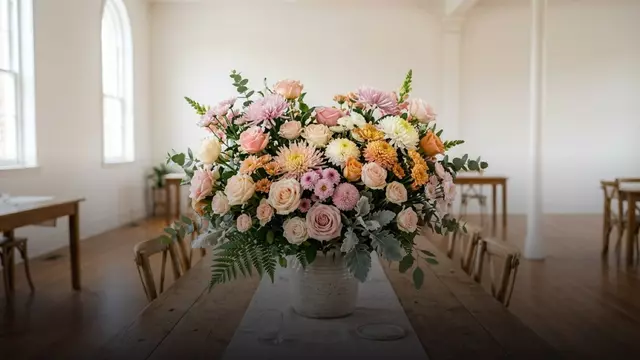
“Hvad med farver” is Danish for “what about colours?” For flowers, start with the recipient’s favourite colour, then consider the occasion and how romantic or formal you want the bouquet to feel. Colour meanings are useful clues, but personal taste and the message on your card are more reliable than a rigid flower code.
When you send flowers to someone in Russia from abroad, colour can help express something you would otherwise say in person. A restrained white-and-green palette can feel composed, while peach, pink and yellow bring a warmer mood. You do not need to decode every shade: choose a clear direction, consider the relationship, and use your card to explain the sentiment.
Start with the person, then choose the palette
Think about colours the recipient already chooses for clothes, interiors or previous bouquets. Someone who loves strong orange may enjoy it far more than a traditionally romantic red arrangement. If you have no clues, start with the occasion and your relationship: a birthday for a close friend gives you different scope from a formal thank-you to a colleague.
Choose one main colour and decide whether the supporting flowers should blend with it or create contrast. Pink with lilac gives a softer transition; pink with orange produces a more energetic effect. A limited palette is easier to assess in a photograph because you can see the overall idea without being distracted by several competing colours.
Also consider intensity. Pale peach and vivid coral belong to a similar colour family but have very different visual weight. If you ask for something “bright”, explain whether you mean saturated colours, a cheerful mixture or simply a bouquet that stands out. A reference photograph is usually more helpful than a long list of loosely defined colour words.
Read colour meanings as context, not fixed rules
Red roses carry a strong romantic association, so they are a deliberate choice for a partner and a less neutral choice for a professional contact. Pink often suggests affection or appreciation without the same intensity. Neither colour dictates the entire message: the flower type, arrangement and wording on your card all influence how the gift is received.
White can suggest simplicity, elegance or remembrance, depending on the occasion. It is not automatically unsuitable for a celebration, but context matters, especially when you do not know the recipient’s preferences. For a birthday, combining white with a colour they enjoy can make your intention clearer; for condolences, restrained wording matters more than an elaborate colour explanation.
Yellow deserves particular care when choosing for someone in Russia. Some people associate yellow flowers with separation, while others simply enjoy their sunny appearance. Treat that association as a preference to check, rather than a universal prohibition. If you are unsure, peach or pink may feel less ambiguous, or a personal card can make a cheerful intention explicit.
Bouquets we can deliver




Match the occasion without making the bouquet impersonal
For a birthday, let the recipient’s taste lead. A bold palette suits someone who enjoys vivid colour; a quieter combination can feel just as celebratory for someone who prefers subtle arrangements. Avoid assuming that age or gender determines the right shade. A favourite colour is a more useful starting point than a rule about who should receive pink or blue.
For thanks, congratulations or a professional gift, consider whether the palette could imply a closer relationship than you intend. Mixed colours or a restrained combination can work well when you want warmth without an overtly romantic signal. Keep the card specific: naming the help, achievement or occasion makes the gesture easier to understand than relying on colour symbolism alone.
Flower count is another etiquette point to consider alongside colour. In Russian custom, an odd number of stems is generally chosen for celebratory gifts when the stems are individually counted, while even numbers are associated with mourning. If a particular count matters to you, discuss it when choosing the bouquet rather than judging the arrangement only by its photograph.
Choose combinations that work as a whole
A bouquet needs a visual hierarchy: one colour can lead, with the others supporting it. White and green can provide breathing space around a strong pink or purple, while several equally vivid colours create a busier effect. Neither approach is inherently better. The useful question is whether you want the recipient to notice a single dominant shade or enjoy a lively mixture.
Similar colours create continuity, but texture keeps them interesting. A pale pink bouquet can still have depth when its flowers differ in shape and openness. Conversely, a strong colour contrast may need fewer competing textures to remain easy to read. When browsing the bouquets catalogue, look at the overall balance before focusing on one attractive flower.
Remember that a screen is an imperfect colour reference. Lighting, display settings and the natural variation of petals can change how a shade appears. If a particular distinction matters, such as cool pink rather than peach-pink, describe it explicitly. You can ask a manager about a photo of the bouquet before delivery to assess its overall colour balance.
Help the colours look their best after arrival
Colour choice does not determine how long a bouquet will last. Flower type, freshness, handling and conditions in the recipient’s room all matter. Once the flowers arrive, use a clean vase, remove foliage that would sit below the waterline, and recut the stems with a clean, sharp tool. Keep decorative wrapping clear of the water and give the stems enough room.
Place the vase away from direct sunlight, radiators and ripening fruit. Strong light can make a display look striking briefly, but it also adds heat; a shaded position away from heat sources is more practical for everyday enjoyment. Check the water daily, replenish it as needed, and replace it if it becomes cloudy, cleaning the vase at the same time.
Different flowers in a mixed bouquet may develop at different speeds. Remove spent flowers and leaves promptly, and rearrange the remaining stems if gaps appear. Follow any flower-specific care instructions supplied with the bouquet. If flower food is provided, use the stated dilution rather than adding extra powder or improvising with sugar, household cleaners or other additives.
Order flowers to Russia with the colour and timing clear
Turboflora delivers flowers across Russia. Before ordering, prepare the delivery city, address, recipient’s contact details, preferred timing and card text. For help choosing the bouquet or agreeing these details, contact a manager on WhatsApp. Describe your preferred palette and any colour you want to avoid; this is clearer than asking only for something “beautiful”.
City delivery costs 500 RUB; an operator confirms the price for remote districts and suburbs when confirming the order. In large cities, express delivery is 1–2 hours after confirmation. You can also arrange an exact time with a tolerance of plus or minus 30 minutes, choose 09–12, 12–15, 15–18 or 18–21, or pre-order 1–30 days ahead. Plan around the recipient’s local schedule.
Delivery is anonymous by default: the courier does not name the sender, and a card with your text is free. The courier calls the recipient about 15 minutes before arrival. If they are absent, we agree a second delivery that day or a handover to a neighbour or concierge with your consent. Checkout uses CloudPayments; check the payment options displayed there, since acceptance of every foreign card is not guaranteed. See delivery and payment details.
Frequently asked questions
What does “hvad med farver” mean when choosing flowers?
It means “what about colours?” Start with the recipient’s preferences, then consider the occasion and whether you want the bouquet to feel romantic, formal, soft or bright.
Are yellow flowers inappropriate to send to Russia?
Not universally: some recipients associate them with separation, while others love yellow flowers. If you do not know the person’s view, choose a colour you know they enjoy or make your intention clear in the card.
Can I check the bouquet’s colours before delivery?
Contact a manager to arrange a photo of the bouquet before delivery. Use it to assess the overall palette, allowing for differences caused by lighting and your screen.
Can I pay for flowers from outside Russia?
Online checkout uses CloudPayments. Check the options displayed at checkout; acceptance of every foreign card is not guaranteed.
Will the recipient know who sent the flowers?
The courier does not name the sender because delivery is anonymous by default. If you want the recipient to know, include your name in the free card’s text.
Ready to send flowers?
Pick the city, choose the bouquet, and a local florist takes it from there.
Choose a city →