Matthiola in Russia: Fragrance and Value Worth Knowing About
There is a moment when someone walks into a room carrying flowers and the scent arrives before they do. That is almost always matthiola. Known in English as stock flower, it is one of the most powerfully fragrant blooms available in Russia, yet it remains genuinely affordable and widely overlooked outside of professional floristry. If you are choosing flowers for someone who deserves to feel something the instant the bouquet is unwrapped, matthiola deserves a serious place in that conversation.
What Matthiola Actually Is and Why Florists Reach for It
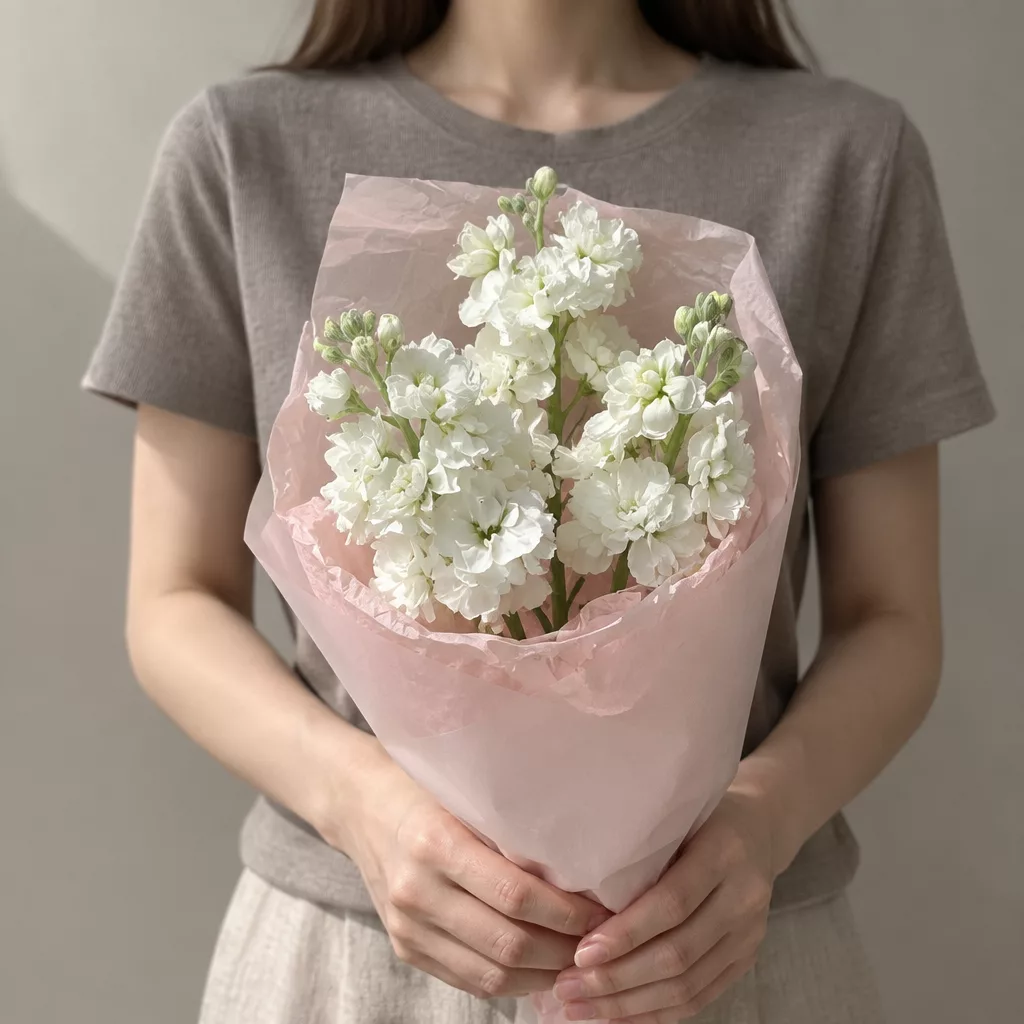
Matthiola incana is the botanical name for the flower most Russian florists simply call maттиола or левкой, the second name being the older Russian term that many older recipients will recognise immediately. It grows in tall, densely packed spikes — each stem carrying dozens of small four-petalled flowers in tight clusters. The colour range runs from pure white and soft cream through every shade of pink, lilac, violet, and deep burgundy. There are no true reds or oranges in the matthiola palette, which gives it a naturally romantic and slightly nostalgic character.
The fragrance is the defining quality. It is warm, spicy, and sweet at the same time — closer to cloves and vanilla than to the green freshness of a rose or the sharp brightness of a lily. In a closed room, a single stem can scent the entire space within an hour. This is not a subtle background note; it is a genuine presence. For a recipient who lives alone or spends a lot of time at home, that fragrance becomes a daily reminder that someone thought of them.
Florists value matthiola because it fills a bouquet visually without dominating it. The vertical spike shape adds height and texture that round flowers like roses or peonies cannot provide on their own. It is a structural flower and a fragrant one simultaneously, which is a relatively rare combination at its price point.
Bouquets we can deliver


When to Expect the Best Matthiola in Russian Flower Markets
Matthiola has two distinct seasons in Russia, and understanding them helps you set realistic expectations when ordering. The spring window runs roughly from late March through May. This aligns with the domestic growing cycle in southern Russian regions and with increased imports arriving ahead of major Russian holidays — International Women's Day on March 8 being the single largest flower-buying moment in the country. During this period matthiola is at its most abundant, freshest, and most competitively priced.
The second peak comes in September and October, the autumn flush that follows the summer heat. Russian summers are genuinely too hot for matthiola to perform well in transit or at room temperature, so July and August availability tends to be limited and the flowers arrive in compromised condition more often than not. If you are ordering in midsummer, your florist will likely steer you toward more heat-tolerant alternatives and that is good professional advice worth following.
Outside these two windows, matthiola is still available through import channels, primarily from Dutch auction houses and from Kenyan and Ecuadorian growers. The quality is generally reliable but the fragrance can be slightly more muted compared to freshly cut domestic spring stock. Temperature management during shipping matters enormously for this flower — matthiola held at the correct range of two to five degrees Celsius through the cold chain arrives fragrant and firm. Stock that has spent time above ten degrees, even briefly, loses fragrance quickly and the lower florets on the spike begin to drop within a day or two of delivery.
Choosing Matthiola for the Person and the Occasion
The fragrance of matthiola makes it an especially thoughtful choice for people who live in apartments — which describes the vast majority of recipients in Saint Petersburg and across Russian cities. A vase of matthiola on a kitchen table or a windowsill changes the atmosphere of a room in a way that purely visual flowers simply do not. Think about this when choosing for someone who has just moved into a new home, is recovering from illness at home, or works from home and spends long hours in the same space.
For milestone celebrations — birthdays, anniversaries, the arrival of a new baby — matthiola works best as part of a mixed bouquet rather than as a solo flower. On its own, a bunch of matthiola reads as simple and old-fashioned, which some recipients will love and others may find underwhelming. Paired with garden roses, ranunculus, or lisianthus, it becomes something genuinely beautiful and layered. The fragrance elevates the whole arrangement and the other flowers provide the visual drama.
Matthiola is also an excellent choice for teachers and colleagues, a gesture that is very common in Russian culture, particularly at the end of the school year in late May or at professional anniversaries. In these contexts a bouquet does not need to be extravagant, but it should feel considered. Matthiola achieves that feeling naturally — it is not a cheap filler flower in the way that chrysanthemums can sometimes feel; it carries its own identity and the recipient almost always notices the scent and comments on it.
How Matthiola Performs in Mixed Bouquets and Arrangements
The spike form of matthiola gives a florist something genuinely useful: a vertical line that creates movement and draws the eye upward through an arrangement. Most garden-style bouquets rely heavily on round forms — roses, peonies, ranunculus — and adding matthiola prevents that arrangement from becoming too uniform and static. Even two or three stems of matthiola distributed through a round bouquet change its silhouette significantly.
Colour pairing is straightforward once you understand the matthiola palette. The lilac and violet varieties pair beautifully with white lisianthus, dusty miller foliage, and soft pink garden roses — a combination that reads as romantic and slightly vintage, which suits anniversary and Valentine's Day orders well. The white and cream varieties work in almost any combination and are particularly effective alongside deep burgundy peonies or dark-toned tulips in spring. Pink matthiola sits comfortably with coral ranunculus and eucalyptus for a warmer, more contemporary feel.
One practical note for florists and recipients alike: matthiola stems are hollow and relatively soft. They need to be cut cleanly at an angle with a sharp knife rather than scissors, which can crush the stem wall and reduce water uptake. When building a bouquet, matthiola is usually added toward the end of the construction process because the spikes are fragile under the pressure of other stems being arranged around them. In a hand-tied bouquet, they are placed near the outer edges where they can stand freely rather than being compressed in the centre. This is not a difficult flower to work with, but it does reward a little care in handling.
Vase Life and Care: What the Recipient Should Know
Matthiola has a vase life of seven to ten days under good conditions, which is respectable for a flower at its price point. The key variables are water temperature, room temperature, and how the stems are prepared on arrival. Cold or cool water is essential — warm water accelerates bacterial growth in the hollow stems and shortens vase life noticeably. The recipient should change the water every two days and recut the stems at the same time, removing about a centimetre from the base at an angle.
Room temperature matters more for matthiola than for many other flowers. In a cool room — below eighteen degrees Celsius — the flowers will last toward the upper end of that range and the fragrance will be steady and long-lasting. In a warm room above twenty-two degrees, particularly in a sunny spot, the lower florets on the spike will begin to drop within four or five days and the fragrance, while initially more intense, fades faster. A windowsill that receives direct afternoon sun is the worst possible location for matthiola in summer.
The lower florets on the spike open first and will naturally fade before the upper buds have fully opened. This is normal and not a sign of poor quality. As the lower section fades, the recipient can remove those spent flowers and the stem will continue to look presentable as the upper portion opens. Some people trim the stem significantly at this point, placing it in a shorter vase, which extends the useful display life by several more days. Including a short care note with a delivery is a small gesture that makes a real difference in how long the recipient enjoys the bouquet.
Budget Considerations: Getting Real Value from Matthiola
Matthiola is one of the genuinely affordable fragrant flowers available in Russia, and that affordability makes it a smart choice when you want a bouquet to feel generous without spending at the top of your budget. The value comes not from its price alone but from what it contributes — fragrance, texture, and volume — relative to what it costs. A bouquet that includes matthiola alongside mid-range roses or spray carnations will feel more substantial and more interesting than the same budget spent entirely on a single flower type.
At a modest budget, a small bouquet of matthiola with complementary foliage — eucalyptus, ruscus, or pittosporum — is a complete and lovely gift on its own. It will not look sparse if the stems are selected well and the foliage is generous. This is a good option for a thoughtful gesture to a colleague, a neighbour, or a friend where the relationship calls for something warm but not extravagant.
At a mid-range budget, matthiola works best as a supporting element in a mixed bouquet. Three to five stems of lilac or white matthiola alongside five to seven roses and some textural foliage creates a bouquet that feels considered and professional. The fragrance from even a few stems will carry the entire arrangement. At a higher budget, matthiola can be used more generously — full spikes rather than shorter stems, combined with peonies or garden roses, in a larger format that makes a real impression on arrival. The flower scales well across budgets without losing its essential character.
Ordering Matthiola for Delivery Across Russia: Practical Notes
When ordering matthiola for delivery, timing relative to the season is the most important practical factor. During the spring and autumn peaks, same-day or next-day delivery of fresh, fragrant matthiola is straightforward. Outside those windows, it is worth asking your florist about current stock condition before committing to matthiola as the centrepiece of an arrangement. A good florist will tell you honestly if the available stock is not at its best and will suggest alternatives that will perform better for the recipient.
Delivery conditions matter particularly for this flower. Matthiola should travel in a cool environment and be kept out of direct sunlight during transit. For deliveries across Russia — to cities like Moscow, Kazan, Novosibirsk, or Vladivostok — the transit time and temperature management during shipping are critical. Turboflora delivers across Russia and manages the cold chain carefully, but recipients in warmer cities during summer should be aware that matthiola arriving in August in a city like Krasnodar will have a shorter display life than the same flower delivered in October.
If you are sending flowers to someone in Russia from abroad, or if you are unfamiliar with Russian gifting customs, know that flowers are given in odd numbers in Russia — this is a firmly held tradition and even numbers are associated with mourning. This applies to matthiola as it does to any other flower: order five stems, seven, nine, or eleven rather than four, six, or eight. Your florist will handle this automatically, but it is useful context if you are specifying quantities yourself when placing an order.
Matthiola earns its place in Russian floristry not through visual drama but through something more immediate and personal — the way it fills a room with fragrance the moment it arrives. For a recipient who will spend time with these flowers at home, that sensory quality is worth more than the most elaborate arrangement of scentless blooms. Choose matthiola when you want the bouquet to be noticed before it is even seen, when you want to give something that feels genuinely generous without being extravagant, and when the occasion calls for warmth rather than spectacle. Work with the seasons, care for the stems properly, and pair it with flowers that complement rather than compete, and matthiola will reliably be one of the most appreciated choices you can make. We deliver bouquets across Russia in 1–2 hours.
Frequently asked questions
Is matthiola available year-round for delivery in Russia?
Matthiola is available year-round but performs best in spring and autumn. During summer months, heat during transit can reduce fragrance and shorten vase life noticeably. If you are ordering in July or August, ask your florist whether current stock is in good condition or whether a more heat-tolerant flower would serve the recipient better.
How many stems of matthiola should I include in a bouquet?
In Russia, flowers are always given in odd numbers — five, seven, nine, or eleven stems. Beyond tradition, three to five matthiola stems are enough to scent an entire arrangement and add strong visual texture. More than seven stems in a mixed bouquet can overpower the other flowers visually, though the fragrance is always welcome.
Can matthiola be sent as the only flower in a bouquet, without other blooms?
Yes, and many recipients find a generous bunch of matthiola with simple foliage deeply charming. It reads as a natural, garden-style gift. Choose a single colour for a clean look, or mix two complementary shades such as white and lilac. Add eucalyptus or ruscus to give the arrangement body and prevent the stems from looking sparse.
Why does my matthiola lose its fragrance after a few days?
Warm room temperatures above twenty-two degrees Celsius and direct sunlight are the main causes of rapid fragrance loss. Moving the vase to a cooler spot and changing the water every two days will help preserve the scent. Flowers that have been stored above ten degrees during transit will also arrive with reduced fragrance that does not fully recover.
What flowers pair well with matthiola in a mixed bouquet?
Lilac matthiola pairs naturally with white lisianthus, soft pink roses, and dusty miller. White matthiola works alongside burgundy peonies or dark tulips for contrast. Pink varieties combine well with coral ranunculus and eucalyptus. Avoid pairing matthiola with strongly scented flowers like oriental lilies, as the two fragrances compete rather than complement each other.
Ready to send flowers?
Pick the city, choose the bouquet, and a local florist takes it from there.
Choose a city →