Matthiola in Russia: What Makes This Fragrant Stem Worth Knowing
There is a moment in early spring when a bouquet stops being just pretty and starts filling the whole room. That moment usually belongs to matthiola, the flower Russians call levkoy. It is soft-spiked, quietly colourful and carries one of the most genuinely sweet scents in the florist's calendar — a warm, clove-like perfume that clings to a room for days. If you are ordering flowers for someone who will actually live with the bouquet rather than just photograph it, matthiola deserves a place in your thinking.
What Matthiola Actually Is and Why Russians Love It
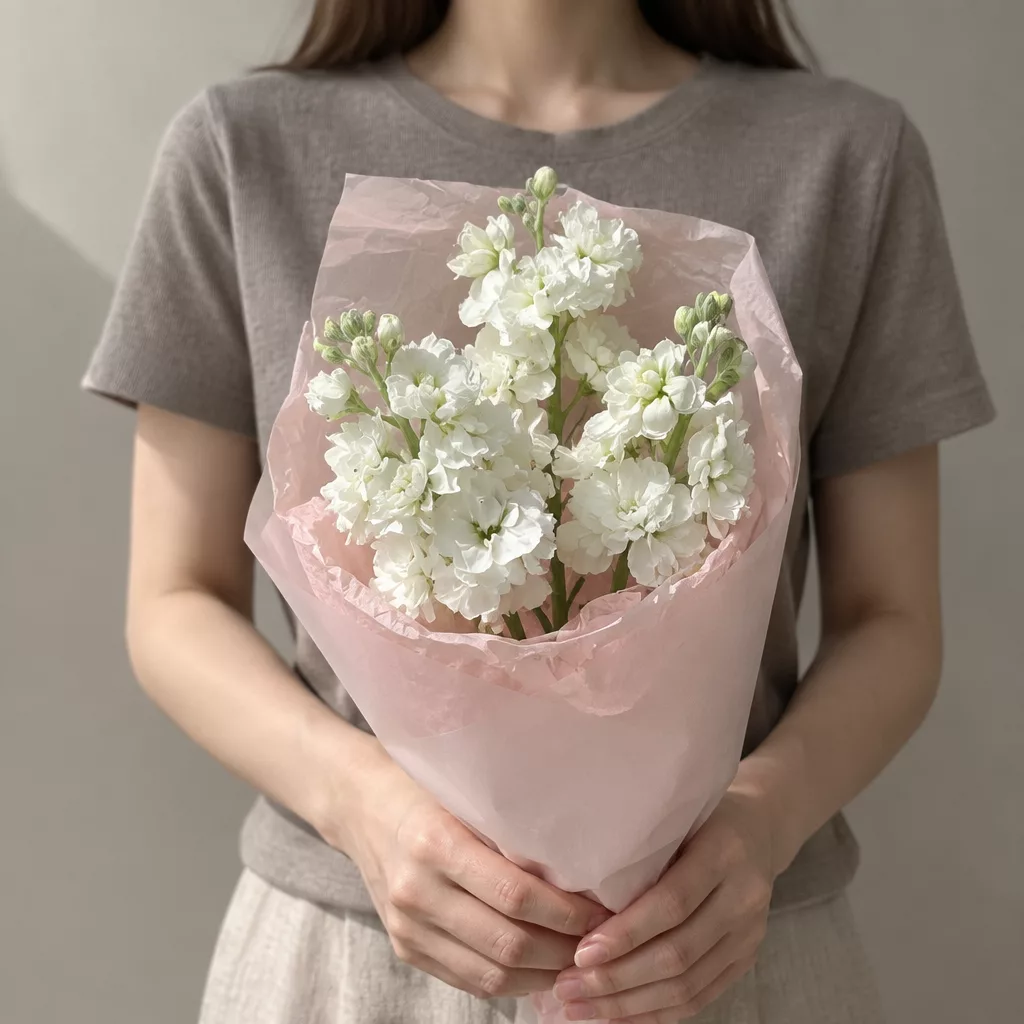
Matthiola incana is the botanical name; in Russian everyday speech it is almost always levkoy. It belongs to the cabbage family, which surprises people, but the flower itself is nothing like a cabbage — it produces tall, upright spikes of densely packed double blooms in colours ranging from pure white and cream through every shade of lilac, pink, burgundy and deep violet. The fragrance is the defining quality. It is strong without being sharp, closer to clove and vanilla than to rose or lily, and it intensifies in a warm room.
In Russia, matthiola has been a garden and cut flower since at least the nineteenth century, when it featured in the cottage gardens of dachas across the country. That long familiarity gives it a particular emotional warmth for Russian recipients — it is associated with grandmother's garden, with May holidays, with the kind of abundance that comes after a long winter. Sending matthiola to someone in Russia is not a neutral gesture; it carries genuine nostalgia and seasonal joy.
For the buyer, the appeal is practical as well as sentimental. Matthiola is one of the more affordable stems in the spring assortment, which means you can build a genuinely generous, fragrant bouquet without stretching the budget. A bunch of ten or twelve spikes, mixed in colour or kept to a single tone, creates immediate visual impact. The flower also pairs beautifully with other spring stems, which we will come to shortly.
Bouquets we can deliver


Peak Season in Russia: When to Order and When to Wait
Matthiola grown in Russia has a clear outdoor season that runs from late April through June, with the strongest availability in May. During these weeks, domestic greenhouse and open-field production is at its peak, stems are freshest and the fragrance is at its most pronounced. If you are planning a bouquet for a May birthday, a graduation, or the beloved Russian tradition of Teacher's Day gifts at the end of the school year, matthiola is almost perfectly timed.
Outside this window, the picture changes. From July onward, heat causes matthiola to bolt quickly both on the plant and in the vase, and domestic supply drops sharply. In winter, some imported matthiola arrives from Dutch auctions, but the cold chain and transit time reduce both fragrance and vase life noticeably. The stems that arrive in January or February are often paler in scent than their May counterparts — still beautiful, but not the same experience.
For buyers in Saint Petersburg specifically, the local climate means that May matthiola is genuinely local in character — grown not far away, cut at the right stage and delivered while the scent is still fully alive. When Turboflora sources matthiola for spring orders, the priority is cutting stage: spikes should have roughly one third of the florets open, with the rest still in tight bud. This ensures the bouquet continues to open over several days rather than peaking on arrival and declining fast. Ordering during peak season is simply the best decision for fragrance and longevity.
Choosing Matthiola for the Occasion and the Recipient
Matthiola suits occasions where warmth and sincerity matter more than drama. It is an excellent choice for a teacher, a colleague returning from maternity leave, a mother on her birthday, or a friend who has just moved into a new apartment and needs something that will make the space feel lived-in immediately. The scent does that work faster than almost any other flower.
Colour choice matters here. White matthiola reads as clean and celebratory — good for new beginnings, promotions, or welcoming someone home. Lilac and lavender tones feel gentle and affectionate, appropriate for older relatives or anyone you want to make feel cared for without overwhelming them. Deep pink and burgundy shades are more emphatic and pair well with roses or ranunculus when you want the bouquet to feel abundant and generous. Mixing three tones of matthiola — say, white, blush and violet — within a single bouquet creates a soft gradient effect that photographs well and feels considered.
For men, matthiola is less commonly chosen as a standalone but works very well as a supporting element in a larger arrangement. Its vertical spike shape contrasts nicely with round-headed flowers, and the scent adds a dimension that visual flowers alone cannot provide. If you are sending flowers to a man who appreciates fragrance or has a garden sensibility, a small number of matthiola spikes tucked into a mixed bouquet is a quiet, intelligent choice that most florists would recommend.
Budget Combinations That Make Matthiola Shine
One of matthiola's great strengths is that it elevates other flowers without competing with them. Because the stems are tall and vertical, they give structure to rounder blooms and prevent a bouquet from collapsing into a flat circle. Because the fragrance is dominant, you do not need expensive scented roses to make the whole arrangement smell beautiful — matthiola does that work for the whole bouquet.
A well-priced spring combination worth considering: matthiola spikes in two tones, tulips in a complementary colour, and a handful of muscari or grape hyacinth for depth and contrast. This combination is visually rich, intensely fragrant and seasonal in the best sense — everything in it belongs to the same few weeks of the Russian spring. It also holds its shape well during delivery because the stems are all robust.
For a slightly more elevated look without a large budget increase, add three to five stems of ranunculus. Their full, layered heads contrast beautifully with the spike form of matthiola and add a sense of luxury that customers often associate with more expensive flowers. Ranunculus and matthiola also share a similar vase life, which means the bouquet ages gracefully rather than losing one element while the other is still fresh.
For a minimal, modern aesthetic, matthiola alone in a single colour — particularly white or deep violet — arranged loosely in a tall cylindrical vase is striking and sophisticated. The repetition of the spike form creates rhythm, and the scent in a single-variety bouquet is particularly intense. This approach suits recipients with a clean, contemporary interior style.
Vase Life: Getting Seven to Ten Days from Your Matthiola
Matthiola has a genuine vase life of seven to ten days when handled correctly, which makes it one of the better-value spring stems available. The conditions that determine whether you reach seven days or ten are straightforward, but they are worth knowing because matthiola is slightly more sensitive than, say, a chrysanthemum.
Temperature is the most important factor. Matthiola prefers a cool room — ideally between sixteen and twenty degrees Celsius. In a warm apartment above twenty-two degrees, the vase life drops noticeably, sometimes to five or six days. Keeping the vase away from radiators, sunny windowsills and fruit bowls (which emit ethylene gas that accelerates ageing in cut flowers) makes a real difference. In a Russian apartment in May, when heating may still be running, this is worth thinking about.
Water management matters too. Change the water every two days and re-cut the stems at an angle each time, removing about a centimetre. Matthiola stems are hollow and can develop bacterial buildup quickly in stagnant water, which is the most common reason a bouquet fails earlier than expected. Remove any leaves that fall below the waterline on the first day — they decompose and cloud the water.
One thing that surprises people: matthiola continues to open from the base of the spike upward over several days. This means the bouquet actually looks more complete on day three or four than it does on arrival. Florists sometimes call this the second peak — the moment when all the buds have opened and the spike is fully expressed. If the recipient mentions the flowers look even better a few days in, this is why.
Common Mistakes When Ordering or Arranging Matthiola
The most frequent mistake buyers make is ordering matthiola for a very warm occasion in high summer and then wondering why the fragrance is weaker than expected. As noted, peak season is spring. A stem bought in August has usually been in transit longer, may have been stored at inconsistent temperatures and will simply not perform the way a May stem does. If fragrance is the main reason you want matthiola, season matters enormously.
A mistake florists see on the arrangement side is cutting the stems too short. Matthiola is a tall flower — spikes can reach fifty to sixty centimetres — and part of its visual character is that height. When florists trim matthiola to match shorter flowers in a mixed bouquet, it loses its architectural quality and becomes just another filler. The better approach is to let it stand tall and trim the other stems to create a layered, varied height profile.
Another common error is placing matthiola in a very wide, shallow vase. The stems need support along their length; without it, they lean and the spikes bend sideways under their own weight. A tall, narrow vase or a vase with a narrow neck provides the support the stems need. If you are using a wide vase, a floral grid of tape across the mouth helps hold stems upright.
Finally, some people strip too many leaves from matthiola, leaving bare stems. The lower leaves should be removed from the waterline down, but the upper foliage is part of the flower's character and should stay. It keeps the stem hydrated and adds a pleasant green texture to the bouquet.
Ordering Matthiola for Delivery Across Russia: What to Know
When you order matthiola for delivery to another city, the key variable is transit time and how the stems are packed. Matthiola is a relatively robust stem for a fragrant flower — it does not bruise as easily as a tulip or wilt as fast as a sweet pea — but it does need to be kept cool and upright during transport. Turboflora's one-to-two-hour delivery model is well suited to matthiola because the stems go from cool storage to the recipient quickly, without extended time in a warm vehicle.
For deliveries within Saint Petersburg and to cities across Russia where Turboflora operates, matthiola spikes are packed vertically with the heads protected and the stems in a water-retaining wrap for short journeys. This means the recipient receives stems that are still fully turgid and fragrant rather than slightly wilted from a long dry transit.
If you are ordering from outside Russia for a recipient inside the country, the seasonal timing advice above becomes even more relevant. Specify the occasion date clearly and let the florist advise on whether matthiola is available at peak quality for that date. In May, the answer will almost always be yes. In December, a conversation about alternatives or combinations is worth having.
One practical note for recipients who may be unfamiliar with matthiola: the flower is not edible and the foliage can cause mild skin irritation in sensitive people. This is not a common issue, but it is worth mentioning to anyone who handles the stems during arranging, particularly children.
Matthiola earns its place in the Russian spring calendar because it delivers something no visual flower can match on its own — a scent that changes the atmosphere of a room within minutes of arrival. For the person receiving it, that experience is immediate and genuinely memorable. For the person ordering, it is an affordable way to send something that feels generous, seasonal and considered. Whether you choose it as the centrepiece of a spring bouquet, a fragrant addition to roses and ranunculus, or a single-variety arrangement in white or violet, matthiola rewards the decision. Order it in May, keep it cool, change the water and let it open at its own pace — the bouquet will still be beautiful on day eight.
Frequently asked questions
Is matthiola available year-round in Russia or only in spring?
Domestic matthiola peaks strongly in May and June. Some imported stock arrives in winter from Dutch suppliers, but fragrance and vase life are noticeably reduced compared to fresh spring stems. If scent is your main reason for choosing matthiola, ordering between late April and mid-June gives the best result by a significant margin.
How should I store matthiola if I receive it before the event?
Place the stems immediately in cool, clean water in a tall vase and keep them in the coolest room available — ideally between sixteen and eighteen degrees Celsius. Avoid direct sunlight and heat sources. Matthiola can hold well for twenty-four hours this way before an event without losing fragrance or freshness, making it a reliable choice when timing matters.
Can matthiola be combined with roses without clashing in scent?
Yes, and it is a popular combination in Russian spring floristry. The clove-vanilla note of matthiola and the classic rose fragrance layer rather than compete, particularly when the roses are a light or mid-toned pink. The spike form of matthiola also contrasts well with the round rose head, creating visual balance. Keep colour palettes harmonious and the combination works beautifully.
Why does my matthiola bouquet smell stronger on day three than on day one?
This is normal and expected. Matthiola opens progressively from the base of the spike upward over several days. As more florets open, more scent is released. The fragrance also intensifies as room temperature rises during the day. A fully opened spike on day three or four is the flower at its expressive peak, not a sign that it is declining.
Is matthiola a suitable gift for someone with flower allergies?
Matthiola is not a common allergen trigger since it does not produce airborne pollen in the way grasses or some composite flowers do. However, the fragrance is strong, and people sensitive to heavy scents may find it overwhelming in a small, enclosed space. For recipients with known fragrance sensitivity, a single-tone arrangement in a well-ventilated room is a reasonable middle ground.
Ready to send flowers?
Pick the city, choose the bouquet, and a local florist takes it from there.
Choose a city →