Sending Flowers for Mother's Day in Russia: Dates, Traditions and the Best Bouquets
If you are planning to send flowers to a mother in Russia and you are working from a May calendar, you are likely looking at the wrong date entirely. Russia has its own Mother's Day, celebrated on a different day from the Western version, and getting the timing right is the first thing that will make your gift land with real meaning. This guide walks you through when to order, what Russian mothers genuinely love to receive, and how to put together a bouquet that feels personal rather than generic.
When Is Mother's Day in Russia — and Why It Is Not in May
Russia celebrates Mother's Day on the last Sunday of November. This was established by presidential decree in 1998, and it has become a firmly observed occasion across the country. The date shifts slightly each year depending on the calendar, so in some years it falls on the 24th of November, in others on the 29th or 30th. If you are used to the Western Mother's Day in May, this difference catches many people off guard.
International Women's Day on the 8th of March is actually the bigger flower-giving moment in Russia for mothers, grandmothers and female relatives of all ages. Many Russians honour their mothers twice — once in March with a grand seasonal bouquet, and again in November with something warmer and more intimate. Understanding this rhythm matters because the flowers available in late November are completely different from what grows in spring.
In November, the flower market in Russia leans heavily on greenhouse roses, chrysanthemums, alstroemeria, and imported tropical stems. Spring tulips and ranunculus are simply not in season. A florist who knows this will steer you toward what looks fresh and lasts well in cold weather, rather than what looks pretty on a website but arrives limp in a November frost. Delivery timing also shifts in winter — early morning orders tend to travel better when temperatures outside are already below freezing.
Bouquets we can deliver

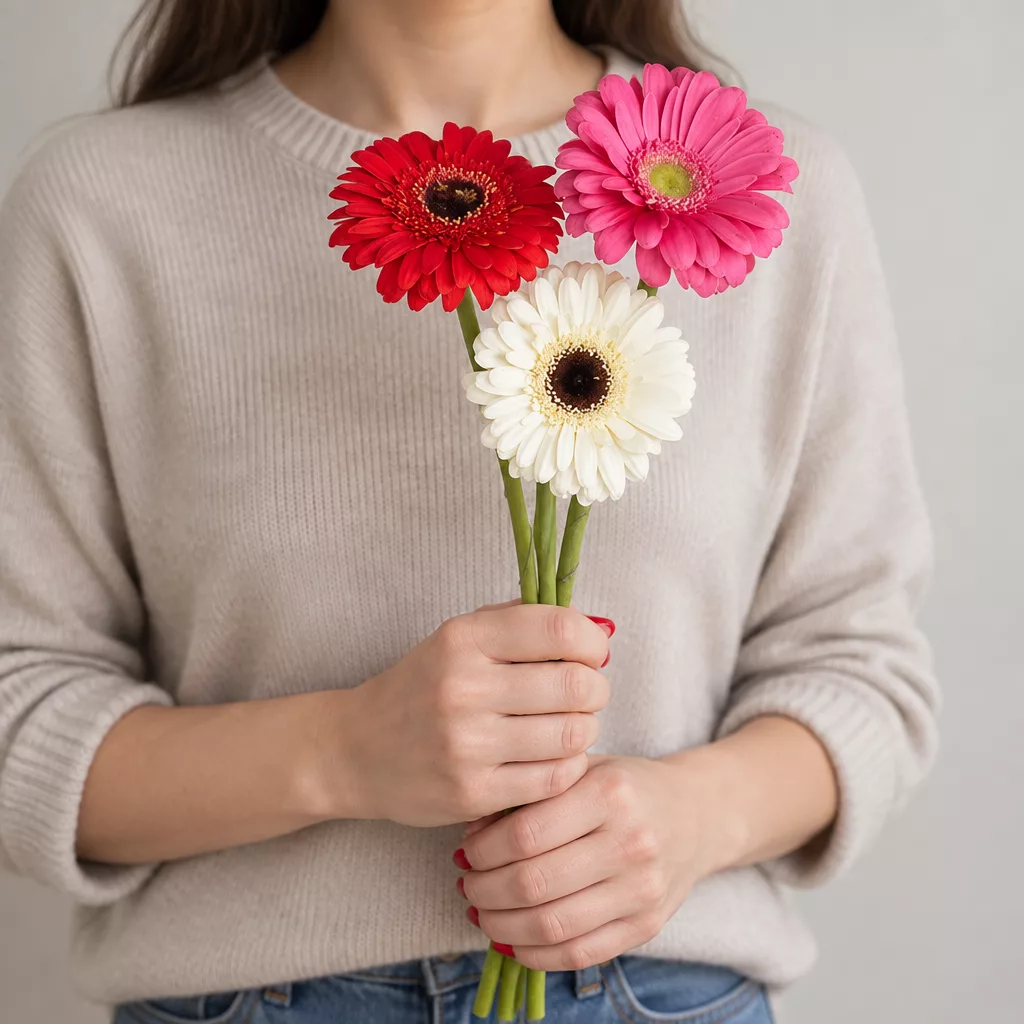

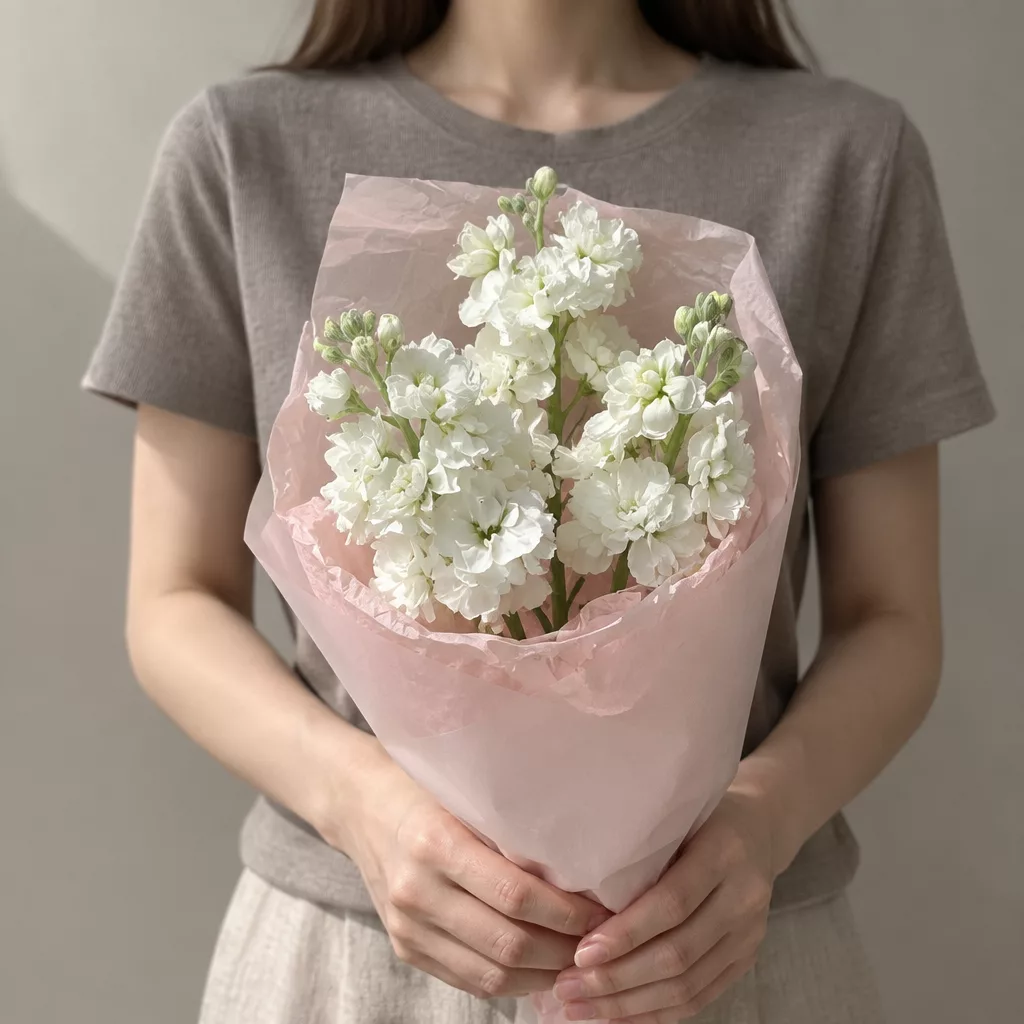
What Russian Mothers Actually Want to Receive
Russian flower culture has its own strong preferences, and they are worth understanding before you choose. Roses remain the most beloved flower across generations — not the tight, small-headed varieties, but full, open garden-style roses with generous petals and a visible centre. Varieties like David Austin-style roses, when available, consistently receive the warmest reactions. A bouquet of fifteen or twenty-five roses in a single warm colour reads as generous and sincere.
Chrysanthemums carry a complicated reputation in some European countries, but in Russia they are genuinely appreciated, especially the large spider and cushion varieties in white, cream and pale yellow. They last exceptionally well in cold weather and fill a vase beautifully. Mothers in their fifties and older often have a particular fondness for them.
Freesia is another flower that resonates deeply — it has a scent that many Russian women associate with Soviet-era perfume, and that emotional connection makes it a surprisingly powerful choice. Even a small bunch of freesia added to a larger bouquet changes how the whole arrangement is received. Peonies are adored but are genuinely seasonal; outside of May and June, what you see sold as peonies may have travelled very far and will not last more than two days. A good florist will tell you this honestly rather than simply sell them to you. For November specifically, roses, chrysanthemums, alstroemeria and lisianthus are the four families that reliably deliver on quality.
Choosing the Right Bouquet for the Occasion
The occasion itself should shape the bouquet before budget or flower type enters the conversation. Mother's Day in November has a different emotional register from March — it is quieter, more reflective, less about celebration and more about warmth. Bouquets that work well tend to be rounder in shape, softer in colour, and composed of fewer varieties rather than a busy mix of ten different stems.
If you are sending from abroad or from another city, think about what the bouquet will look like when it arrives indoors. In November, Russian homes are already heated for winter, which means flowers open faster than they would in spring. Tightly budded roses will bloom within twenty-four hours. Fully open roses may look spectacular on delivery but will start to drop petals by day two. Ask your florist to send stems that are half-open — this is the sweet spot for a gift that looks beautiful on arrival and continues to improve over the next day.
For a mother you know well, personalisation goes a long way. If she keeps a particular colour in her home, match the bouquet to it. If she prefers scent over visual drama, build around freesia and garden roses rather than anthuriums or tropical stems. A bouquet that feels considered — rather than simply expensive — is what creates the memory. Presentation matters too: a simple kraft paper wrap with a wide satin ribbon reads as tasteful and modern, while a box arrangement suits someone who lives alone and may not have a tall vase at home.
Bouquet Options Across Different Budgets
Regardless of what you are able to spend, the principle is the same: one focal flower done well beats a crowded mix of cheap fillers. At a modest budget, a monobouquet of fifteen spray roses or alstroemeria in two complementary shades — say, peach and cream — looks intentional and fresh. Alstroemeria lasts up to two weeks in a vase, which means the gift keeps giving long after the day itself.
At a mid-range budget, you can bring in a focal flower alongside supporting stems. Fifteen roses paired with white lisianthus and eucalyptus is a classic combination that photographs beautifully and suits almost any interior. The lisianthus adds texture without competing with the roses, and eucalyptus releases a gentle scent that fills a room without being overpowering. This is a combination that works across generations.
For a larger budget, think in terms of scale and layering. A bouquet of twenty-five to thirty-one roses — Russian tradition holds that odd numbers are for the living, even numbers for mourning, so always count before you order — in a gradient of blush to deep coral, wrapped in matte paper and finished with a velvet ribbon, makes an immediate impression. You can also add a small bunch of freesia as a separate accent piece, which gives the recipient two vases to arrange rather than one. Double arrangements like this feel genuinely celebratory without tipping into excess. The number matters: a bouquet of thirty roses is a cultural misstep, while thirty-one is generous and correct.
Timing Your Order: When to Place It and When to Expect Delivery
Turboflora delivers fresh flowers across Russia within one to two hours of ordering, which means same-day delivery is genuinely possible even if you remember the occasion late in the day. That said, the best results come from ordering before noon local time at the destination. This gives the team time to select stems at their peak condition rather than working through whatever remains at the end of the day.
For Mother's Day in November, demand spikes sharply on the Saturday before the last Sunday of the month and on the Sunday itself. Ordering on Friday evening or Saturday morning gives you the widest selection and the most relaxed delivery window. If you are sending to a city in a different time zone — Russia spans eleven time zones — calculate the local time at the destination before you place the order. A 10 a.m. order in Moscow is a 4 p.m. order in Vladivostok, which changes what is realistic.
Winter delivery has its own considerations. Flowers travelling in temperatures below minus ten degrees Celsius need to be wrapped in insulating sleeves, and any exposed water in the stems can freeze during transit. Turboflora handles this as standard practice in cold weather, but it is worth knowing that a bouquet arriving in winter packaging may look different from the arrangement photo until unwrapped indoors. Give the flowers thirty minutes at room temperature before cutting the stems and placing them in water — this prevents the thermal shock that causes premature wilting in cold-weather deliveries.
Keeping the Flowers Fresh: Care Advice That Actually Works
The most common mistake people make after receiving flowers is cutting too little off the stem. For roses, you need to remove at least two centimetres at a forty-five-degree angle using a sharp knife rather than scissors — scissors crush the vascular tissue and reduce water uptake immediately. Do this under running water or while the stem is submerged, and place the flowers directly into a clean vase without letting the cut end dry out for even a few seconds.
Water temperature matters more than most people realise. For roses and most soft-stemmed flowers, lukewarm water encourages faster hydration, while cold water slows it. In November, when flowers arrive from the cold, room-temperature water is the right choice for the first fill. Change the water every two days and re-cut the stems each time. Remove any leaves that sit below the waterline — they rot quickly and contaminate the water, which is the primary cause of early wilting.
Chrysanthemums and alstroemeria are more forgiving. They tolerate cooler water and do not need daily attention, but they do benefit from being kept away from direct heat sources. Russian apartments in winter are warm — often twenty-two to twenty-four degrees Celsius — which shortens vase life for all flowers. A cool corner of the kitchen, away from the radiator and out of direct sunlight, will extend a bouquet by three to five days compared to a warm windowsill. At night, some people move their bouquet to a cooler hallway, which genuinely helps roses last longer.
Making the Gift Feel Personal Beyond the Flowers
A bouquet is a complete gift on its own, but small additions change how it is received. A handwritten card is the most important one — not a printed message, but something written by hand, even if it is only two or three lines. In Russian culture, the written word carries weight, and a card tucked into the bouquet is often kept long after the flowers are gone. If you are ordering remotely and cannot write by hand, dictate your message carefully and ask that it be written out rather than printed.
Scent is the other dimension that a visual arrangement cannot provide on its own. If the mother you are sending to is someone who loves fragrance, ask for freesia, garden roses, or stocks to be included. Stocks — also called matthiola — are a cold-weather flower with a clove-like scent that is particularly well suited to November bouquets. They are not always available but are worth asking about.
The wrapping and presentation style also communicates something. A bouquet in a hat box suits a mother who appreciates modern aesthetics and may not have a large vase. A hand-tied bouquet in natural kraft paper suits someone more traditional. For a grandmother, a classic cellophane wrap with a bow may actually be the most welcome choice — it matches what she expects a bouquet to look like, and meeting that expectation is itself a form of care. Think about the person receiving the flowers, not just the flowers themselves, and the gift will always feel right.
Sending flowers to a mother in Russia is one of those gestures that lands differently when it is done with real attention — to the date, to the season, to the flowers that actually suit the weather and the woman. Whether you are ordering for the last Sunday of November, for the 8th of March, or simply because the moment calls for it, the details matter: the right number of stems, the right stage of bloom, the right temperature advice tucked into the card. Turboflora delivers fresh flowers across Russia within one to two hours, so the logistics are already handled. What you bring to the order is the thought — and that is always the part that is remembered. We deliver bouquets across Russia in 1–2 hours.
Frequently asked questions
When exactly is Mother's Day in Russia in 2025?
In 2025, Mother's Day in Russia falls on Sunday, the 30th of November. It is always the last Sunday of November. If you are also planning something for International Women's Day, that date is fixed: the 8th of March every year, and it is equally important for honouring mothers in Russian culture.
Is it appropriate to send an even number of flowers to a Russian mother?
No — in Russian tradition, even numbers of flowers are associated with mourning and funerals. Always send an odd number: eleven, fifteen, twenty-five, thirty-one. This applies to every celebratory occasion. If you are ordering online, count the stems in your bouquet before confirming the order, as this detail matters genuinely to Russian recipients.
Can I order flowers for delivery to a Russian city I have never visited?
Yes. Turboflora delivers across Russia and handles the logistics entirely. You need the recipient's full address including apartment number, their phone number so the courier can reach them, and the delivery time window. Placing the order before noon local time at the destination gives the best result in terms of flower freshness and delivery reliability.
Which flowers should I avoid sending to a Russian mother?
Avoid yellow flowers if you are unsure of the recipient's preferences — in some Russian families, yellow blooms are associated with separation or bad luck, though younger generations are less attached to this belief. Also avoid fully open peonies outside of their natural season in May and June, as they will not survive delivery. Calla lilies, while beautiful, are strongly associated with formal ceremonies and may feel out of place as a warm personal gift.
How long will a November bouquet last once it is delivered?
Roses delivered at half-open stage will last seven to ten days with proper care — fresh water every two days, re-cut stems, and a cool spot away from radiators. Alstroemeria and chrysanthemums can last up to two weeks. The biggest factor shortening vase life in Russian winter apartments is the heat, not the flowers themselves. Keep the bouquet away from direct warmth and it will last noticeably longer.
Ready to send flowers?
Pick the city, choose the bouquet, and a local florist takes it from there.
Choose a city →