Mother's Day vs. 8 March: When to Send Mum Flowers in Russia
If you grew up outside Russia and want to send your mother flowers on the last Sunday of November — the date most of the world calls Mother's Day — you may be surprised to find the occasion barely registers here. Russia has its own Mother's Day, but it lives quietly in the shadow of a much older and far more passionately celebrated date: the eighth of March. Understanding the difference is not just a matter of calendar trivia. It changes everything about when to order, what to choose, and how to make sure your flowers arrive before every courier in Saint Petersburg is already on the road.
Why 8 March Feels Like Mother's Day in Russia Even Though It Is Not
International Women's Day on the eighth of March is a public holiday in Russia, and it has been observed here since the early twentieth century. Over decades it absorbed the emotional weight that other cultures place on Mother's Day: it became the morning when children bring flowers to the kitchen table, when husbands queue outside florists before sunrise, and when offices fill with tulips and mimosa by nine o'clock. The holiday formally honours all women, not only mothers, but in practice the most meaningful bouquets go from children to their mothers and grandmothers.
This history matters when you are planning a delivery. If you wait until the Russian Mother's Day in late November to send something grand, your gesture will feel slightly out of step with local rhythm. Your mum's neighbours, colleagues and friends will all have received flowers in March. A bouquet arriving in November is still welcome — warmly so — but it will not carry the same cultural resonance unless you plan it thoughtfully.
The simplest way to think about it: treat 8 March as the primary occasion and Russian Mother's Day as a quieter, more personal second chance. Both dates deserve flowers, but they call for different moods and different varieties.
Bouquets we can deliver


What Russian Mother's Day Actually Is and When It Falls
Russia established its own Mother's Day by presidential decree in 1998. It falls on the last Sunday of November each year, which means the date shifts annually — it can land anywhere between the twenty-fifth and the first of December. This moveable quality is one reason it catches people off guard. Unlike 8 March, which is fixed and impossible to miss, Russian Mother's Day requires you to check the calendar every year.
The holiday is officially recognised and schools mark it, but it has not yet built the deep cultural rituals that surround 8 March. Flower demand on Russian Mother's Day is growing steadily, and that is genuinely good news for anyone who wants to send something meaningful without competing against the entire city for the last bunch of peonies. Delivery windows are more relaxed, florists have fuller stock, and your bouquet is more likely to arrive in perfect condition because couriers are not overwhelmed.
For families living abroad who want to honour their mothers in Russia, this date is actually an excellent opportunity. You can take more time choosing, the selection of roses, spray chrysanthemums, lisianthus and seasonal branches is broad in late November, and a same-day or next-day delivery feels personal rather than rushed. The gesture lands with extra warmth precisely because it is less expected.
Choosing Flowers for 8 March: Varieties That Belong to the Season
Early March in Russia is still deeply winter. Saint Petersburg averages temperatures well below freezing, and the ground will not show a single snowdrop for weeks. This is exactly why mimosa — the fluffy yellow branches of Acacia dealbata — became the signature flower of 8 March. It is imported, it is vivid, and against a grey February sky it feels like a promise of spring. If your mother is in Russia and you are ordering for 8 March, mimosa is never wrong.
Tulips are the other classic choice. They arrive in enormous volumes in the days before the holiday: single-colour bunches in red, pink, white and purple, as well as parrot tulips with their ruffled edges. A mixed bouquet of tulips with eucalyptus or wax flower gives structure without weight. Roses are popular too, though they face more competition at this time of year and prices reflect that.
For something that stands apart from the standard 8 March bouquet, consider ranunculus. Their layered petals read as luxurious and they hold well in a warm apartment. Hyacinths are another option — intensely fragrant, compact, and available in white, blue and deep pink. Whatever you choose, order at least two to three days ahead. By the sixth of March, same-day slots fill quickly and next-day delivery windows close faster than most people expect.
Choosing Flowers for Russian Mother's Day: What Works in Late November
Late November is a different floristry world entirely. The soft summer varieties are long gone, and the season belongs to flowers that travel well in cold and look at home against dark afternoons. Roses are excellent at this time of year — the cold chain keeps them firm, and garden-style roses with their cupped heads and gentle fragrance feel genuinely warm rather than formal. Pair them with dried pampas grass or eucalyptus for texture that suits the season.
Spray chrysanthemums are underrated for this occasion. They last ten to fourteen days in a vase, which means your mother will still have colour in her home nearly two weeks after the bouquet arrives. They come in white, bronze, pale yellow and deep burgundy — shades that feel right in November. Lisianthus adds a delicate ruffled layer that reads as thoughtful rather than showy.
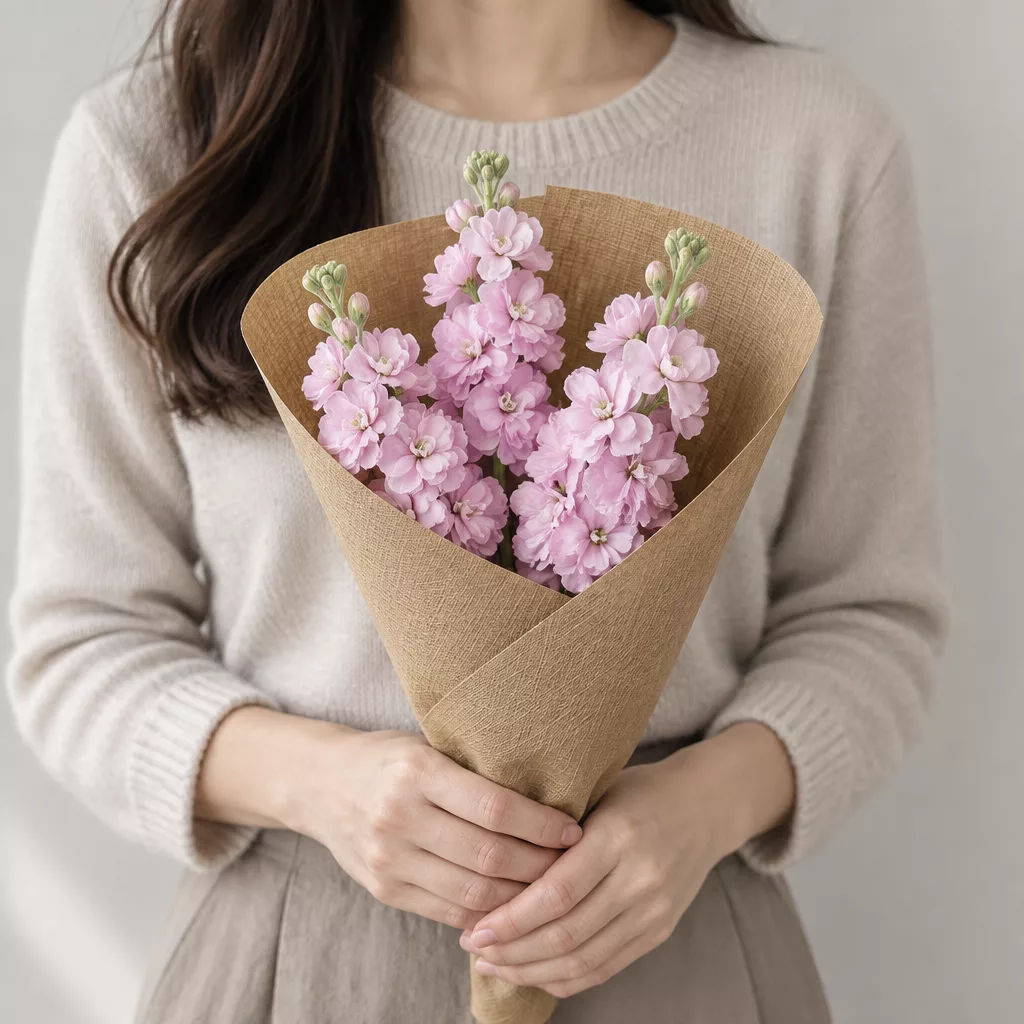
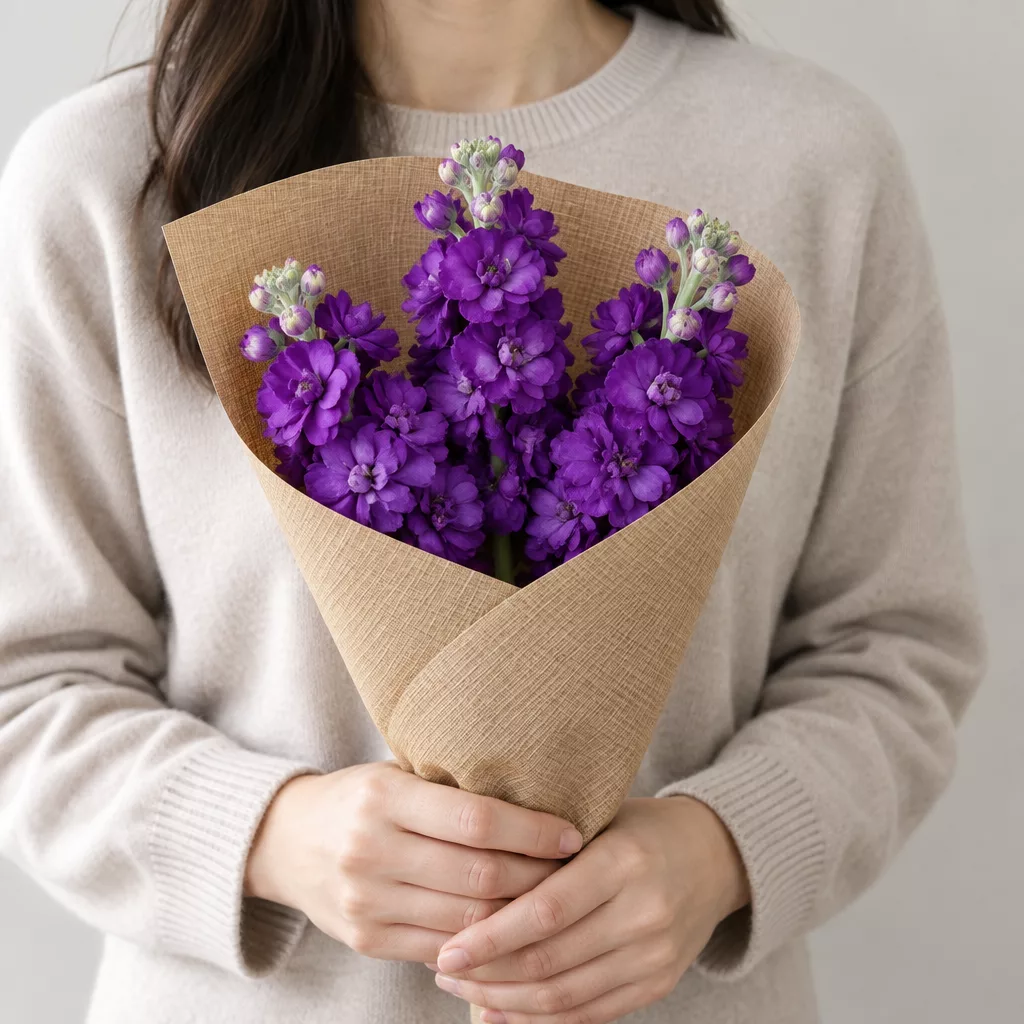
If your mother appreciates something with a longer life, a composition that includes alstroemeria alongside roses and greenery is a practical choice. Alstroemeria opens gradually over several days, so the bouquet looks different — and arguably better — on day four than on day one. For presentation, ask for the stems to be wrapped in kraft paper rather than cellophane in cold weather; it insulates better during the final courier journey and arrives looking intentional rather than hurried.
How to Time Your Order So Flowers Arrive on the Right Day
The single most common mistake people make when sending flowers across Russia for 8 March is ordering on the seventh. By that point, delivery slots for the eighth are often fully booked by mid-afternoon the day before. The florists who tell you to order early are not being dramatic — they are describing what actually happens when an entire city wants flowers within the same four-hour window on a public holiday morning.
For 8 March, place your order by the fifth at the latest if you want a specific morning delivery time. If you are ordering from abroad and the time zone difference means you are working in the evening, that effectively means placing the order on the fourth. Choose a delivery window between nine and noon — most recipients are home in the morning on a public holiday, and flowers that arrive before lunch feel like a proper celebration rather than an afterthought.
For Russian Mother's Day in November, the timing pressure is lighter but still real. Order two to three days ahead to guarantee variety selection. If you want a specific colour palette or a particular flower like garden roses or lisianthus, earlier is always better. Specify the delivery window clearly: late afternoon works well on a Sunday, when your mother is likely to be home and the day feels unhurried. A bouquet that arrives at four in the afternoon on a quiet November Sunday lands with a different warmth than one that rings the doorbell at eight in the morning.
Combining Both Dates: How to Make Each Bouquet Feel Different
If you want to honour your mother on both 8 March and Russian Mother's Day, the risk is that the second bouquet feels like a repeat. The way to avoid this is to let the season and the mood guide the choice rather than defaulting to the same flowers twice. Eight March calls for brightness and volume — mimosa, tulips, ranunculus in spring colours, a bouquet that announces itself from across the room. Russian Mother's Day in November calls for warmth and intimacy — garden roses, chrysanthemums, deep burgundy tones, something that suits a candlelit evening rather than a morning celebration.
Think about presentation as a way to differentiate as well. A spring 8 March bouquet wrapped in coloured tissue and tied with a wide ribbon feels festive and public. A November bouquet in kraft paper with a handwritten card feels private and considered. These are not just aesthetic choices — they signal to the recipient that you thought about the occasion specifically, not just flowers in general.
You can also vary scale intentionally. A generous statement bouquet in March and a smaller, more personal arrangement in November is a combination that works beautifully. The November bouquet does not need to compete with the March one — it just needs to arrive with a note that makes clear you remembered, again, that she is worth celebrating.
Vase Life and Care: Helping Your Mum Get the Most From Her Flowers
Flowers delivered in winter and early spring face specific challenges in Russian apartments. Central heating runs at full power from October through April, and indoor temperatures often reach twenty-two to twenty-four degrees Celsius. This is warm for cut flowers. Tulips in particular will open very fast — a tight bud on the eighth of March may be fully open by the ninth. This is not a flaw, it is how tulips behave in warmth, and it is part of their charm.
For 8 March bouquets, advise your mother to trim the stems diagonally with a sharp knife, change the water every two days, and keep the vase away from radiators and direct sunlight. Mimosa will dry naturally and look beautiful for weeks even after the water is gone — many people keep it as a dried arrangement. Ranunculus and hyacinths prefer cool rooms and will last significantly longer if kept away from heat sources overnight.
For November bouquets, roses benefit from a deep drink in cool water for the first two hours after delivery — this means filling the vase nearly to the top rather than just covering the stems. Spray chrysanthemums need very little attention beyond clean water and a cool spot. Remove any leaves that sit below the waterline on all varieties: submerged foliage rots quickly and shortens vase life noticeably. With basic care, a well-chosen November bouquet should stay beautiful for eight to twelve days.
Russia's flower calendar asks you to hold two dates in mind — the vivid, city-wide celebration of 8 March and the quieter, more personal warmth of Russian Mother's Day in late November. Each occasion has its own character, its own seasonal palette, and its own timing logic. When you plan ahead for both, you give your mother something most people manage only once: the feeling of being remembered twice, in two completely different seasons, with flowers that actually suit the moment. We deliver bouquets across Russia in 1–2 hours.
Frequently asked questions
Is 8 March a public holiday in Russia?
Yes, International Women's Day on 8 March is an official public holiday in Russia. Most businesses close, which means your mother is very likely to be at home to receive a delivery. It also means courier demand is extremely high, so placing your order two to three days in advance is strongly recommended to secure a specific delivery window.
When exactly does Russian Mother's Day fall this year?
Russian Mother's Day falls on the last Sunday of November, so the date changes every year. It can land anywhere between 25 November and 1 December. Check the calendar for the current year before you order. Unlike 8 March, it is not a public holiday, so your mother may be at work — a late afternoon delivery window on a Sunday is usually the safest choice.
Can I send the same flowers for both occasions?
You can, but varying the choice makes each bouquet feel more intentional. Bright spring varieties like tulips and mimosa suit 8 March beautifully. For late November, roses, spray chrysanthemums and lisianthus in warmer tones feel more appropriate to the season. Different wrapping and a personal note also help each delivery feel like a distinct celebration rather than a routine repeat.
How far in advance should I order for 8 March delivery?
Order by 5 March at the latest for a guaranteed morning slot on 8 March. If you are ordering from a different time zone, account for the difference and place the order even earlier. Delivery windows for the morning of 8 March fill completely by the evening of the seventh, and same-day ordering on the holiday itself is very unlikely to secure a precise time slot.
What flowers last longest in a warm Russian apartment in winter?
Spray chrysanthemums are the standout choice for longevity, lasting ten to fourteen days with basic care. Alstroemeria also holds very well and opens gradually over several days. Roses last well if the stems are trimmed and the water is changed regularly. Tulips open quickly in heated rooms but remain charming. Keep all bouquets away from radiators and direct sunlight to extend vase life.
Ready to send flowers?
Pick the city, choose the bouquet, and a local florist takes it from there.
Choose a city →