Muscari in Russia: Tiny Blue Bulb Flower with a Short Window
There is a moment in early spring when the flower market suddenly turns blue. Small, dense clusters of grape-like bells appear on every bucket stand, priced so low they seem almost accidental. That flower is muscari, and if you have never built a bouquet around it, you are missing one of the most charming and honest flowers the Russian season offers. It does not last long. It does not pretend to be grand. But placed in the right hands, a handful of muscari can say something a dozen roses simply cannot.
When Muscari Actually Appear in Russia
Muscari are a bulb flower, which means their window is dictated entirely by the ground, not by a greenhouse schedule. In the Moscow and Saint Petersburg regions, they typically surface at markets and flower shops between late March and the first two weeks of May. The exact timing shifts by a week or two depending on how cold February and March have been. After a hard winter, expect them closer to mid-April. After a mild one, they sometimes show up before Easter.
The season rarely stretches past six weeks in any given year. Once temperatures climb consistently above twelve or thirteen degrees Celsius during the day, the bulbs finish flowering and that is simply the end of it. No amount of demand changes that. Florists who work with seasonal material know to order muscari in volume the moment they arrive, because the next delivery might be the last one until the following spring.
In Russia, muscari are sold both as cut stems and sometimes as potted bulbs, though the cut version dominates the trade. The stems are short, typically eight to fourteen centimetres, which defines almost everything about how they are used. You cannot drop them into a tall vase and expect them to perform. They need low, wide vessels, small posies, or the company of other compact spring flowers that share their scale. Understanding that physical fact is the first step to working with them well.
Bouquets we can deliver


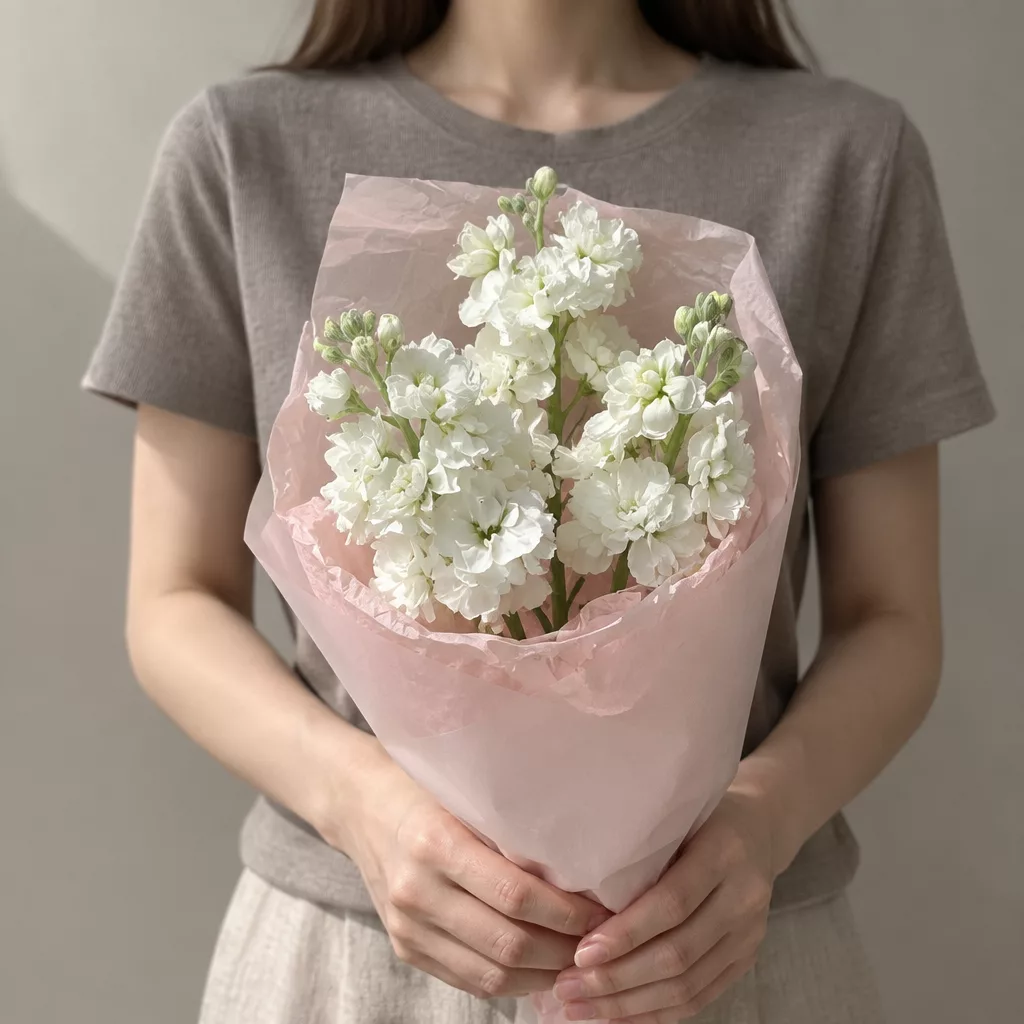
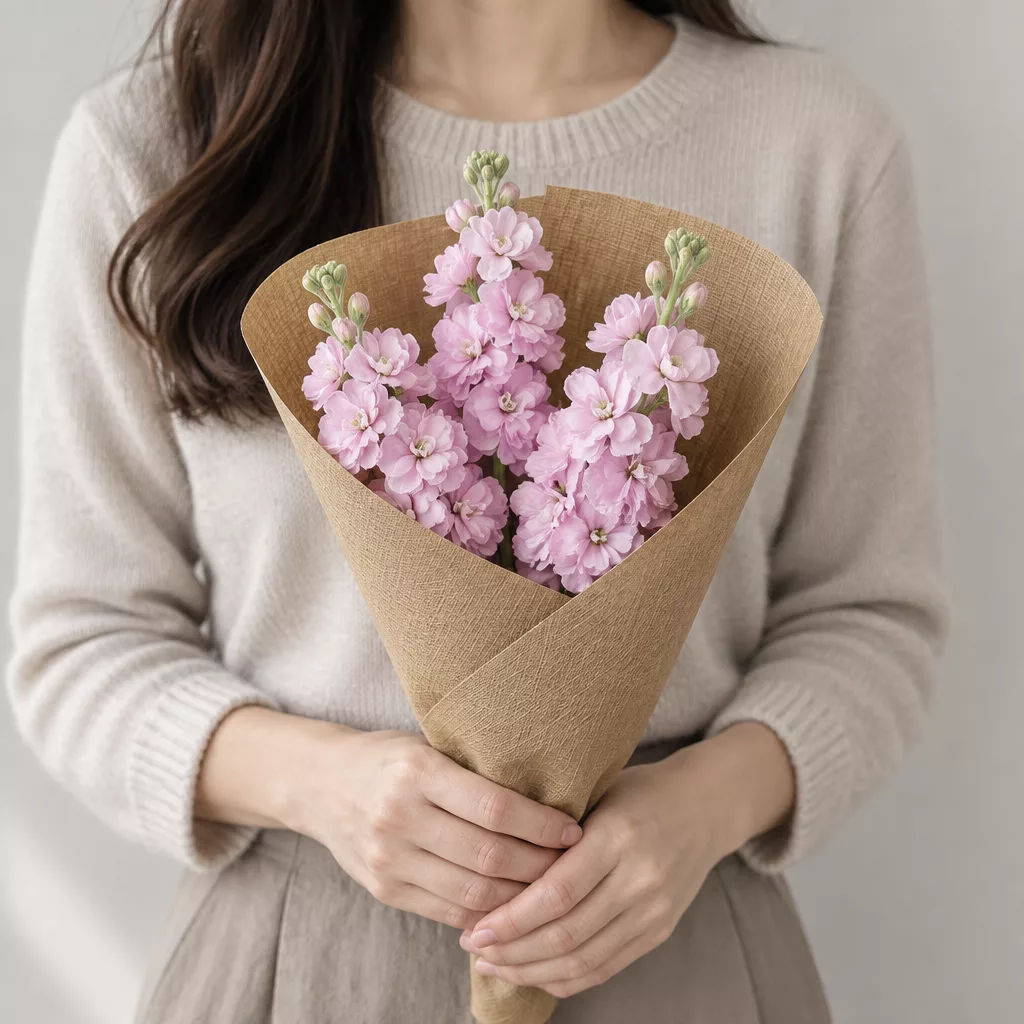
What Muscari Look Like Up Close and Why That Matters
The most common muscari you will find in Russian flower shops belong to the species Muscari armeniacum, the Armenian grape hyacinth. Its flowers are a deep cobalt blue with a thin white edge at the rim of each tiny bell. The colour is genuinely unusual in the cut flower world. Most blue flowers in a shop are actually violet or lavender when you examine them closely. Muscari armeniacum is one of the few that reads as true blue even in indoor light.
There is also Muscari latifolium, which carries two-tone spikes with darker buds at the tip and lighter florets below. It is less common in Russian markets but appears occasionally from domestic bulb growers. White muscari exist too, sold under the name Album, and they have a quiet, almost translucent quality that works beautifully in soft spring arrangements. However, blue remains by far the most available and most requested colour.
The fragrance is part of the identity. Muscari have a light, slightly sweet, almost fruity scent that is strongest in a warm room. It is nothing like the heavy perfume of hyacinth, which can overwhelm a small space. Muscari's scent is subtle enough that most people notice it only when they lean in, which makes it a pleasant surprise rather than an announcement. For a gift going into someone's home or office, that restraint is often exactly right. It adds without imposing, which is a quality worth appreciating in any flower.
Choosing Muscari for the Person and the Moment
Muscari work best when the occasion calls for sincerity over spectacle. They are a natural choice for a teacher, a colleague you genuinely like, a friend who grows things on their balcony, or a grandmother who still has a garden. In Russia, the period when muscari are available overlaps with several meaningful dates. Late April and early May bring Victory Day on the ninth, a national holiday with a strong emotional register. Muscari, being small and unpretentious, tend to feel appropriate for moments that call for warmth rather than grandeur.
For a romantic gesture, muscari work better as a supporting player than as the centrepiece. Pair them with ranunculus, white tulips, or pale anemones and they add a depth of colour that makes the whole arrangement feel considered and seasonal. On their own, a dense posy of muscari in a simple kraft paper wrap reads as something personal and thoughtful, not extravagant. That is not a weakness. Many people prefer receiving something that feels chosen over something that feels expensive.
For children's occasions, spring school events, or a simple thank-you, a small bunch of muscari tied with ribbon is exactly the right scale. It does not overwhelm. It does not arrive looking like an obligation. It arrives looking like someone paid attention to the season and picked something real. That quality is harder to manufacture than price suggests, and people who love flowers recognise it immediately. If you are sending to someone who keeps a garden or follows the seasons, muscari will land with particular resonance.
Building Combinations That Actually Work
The short stem length is the single most important thing to keep in mind when combining muscari with other flowers. Everything else in the arrangement needs to sit at a similar height, or the muscari will disappear beneath taller stems and contribute nothing visually. The flowers that pair most naturally with them are white or cream tulips, pale pink ranunculus, small-headed narcissus, grape hyacinth's close relative the hyacinth itself used sparingly, and the delicate sprays of forget-me-nots that appear at the same time of year.
Colour logic matters here. The deep blue of muscari armeniacum creates a strong contrast with yellow and white, a softer harmony with lavender and pale pink, and a surprisingly striking combination with coral or apricot tones. If you are working with a florist to design something specific, mentioning that you want muscari alongside apricot ranunculus will usually produce something that looks considered and slightly unexpected in the best way.
Greenery should be kept minimal and low. Moss, small sprigs of mint, or a few leaves of lily of the valley work well. Large tropical leaves or eucalyptus, which dominate so many modern arrangements, overwhelm muscari entirely and strip the composition of its spring character. The goal with a muscari arrangement is to make something that looks like it was gathered from a garden on a cool April morning, not assembled in a studio. That lightness of touch is what gives these small flowers their particular emotional effect. Restraint in the greenery is what makes the blue read clearly.
Vase Life and Care at Home
Muscari are honest about their limits. As a cut flower, they typically last between five and eight days in good conditions. That is shorter than roses or chrysanthemums, and it is worth knowing before you buy. The trade-off is that they are inexpensive, intensely seasonal, and genuinely beautiful for the days they last. Treating them well extends that window meaningfully.
The most important factor is temperature. Muscari prefer a cool room, ideally between sixteen and nineteen degrees Celsius. In a warm apartment, especially one heated through the Russian spring transition period when radiators are still running, they can decline noticeably faster. Keeping them away from radiators, sunny windowsills, and fruit bowls makes a real difference. Ethylene gas from ripening fruit accelerates petal drop in many flowers, and muscari are no exception.
Change the water every two days and cut a small amount from the base of each stem each time. The stems are thin and can seal quickly. A clean cut with a sharp knife at a slight angle keeps water uptake moving. Do not use scissors, which compress the stem. Avoid deep vases where the stems sit in several centimetres of water for days without changing, as the lower portion will rot and cloud the water, shortening the life of the flowers above.
If the muscari arrive with buds still closed at the top of the spike, that is a good sign. It means the flower has more to give. Those upper buds will open over the first two days, and the arrangement will look its best around day three or four. Plan accordingly if you are sending them as a gift for a specific evening.
Ordering Muscari for Delivery Across Russia
Because muscari have such a short national season and are genuinely fragile, delivery conditions matter more than with sturdier flowers. Temperature during transit is the critical variable. In late March and early April, outdoor temperatures in Saint Petersburg and most Russian cities are still low enough that cool transit is natural. By early May, warmer days mean that flowers need to travel in temperature-controlled packaging to arrive in good condition.
When you order muscari for same-day or one-to-two-hour delivery, the flowers should be packed so the stems are supported and the flower heads are not compressed. Muscari bells are small but they bruise, and a bouquet that arrives with crushed heads has lost its main appeal. A good florist packs them loosely with the heads protected, often in a box rather than wrapped flat, so the spikes stay upright.
If you are sending muscari to a city other than where you order from, ask specifically whether they are available and in season at the destination. Muscari are not imported in large volumes the way roses or chrysanthemums are, so availability depends almost entirely on the domestic season and local supply. Sending them within the same region during peak season is straightforward. Sending them in June is simply not possible, and any florist being honest with you will say so.
The best approach is to order muscari when you see them available and trust the season. They are one of those flowers that reward decisiveness. When they are there, they are beautiful and affordable. When the window closes, it closes completely until next spring.
Muscari are not a flower you plan months in advance. They are a flower you notice, decide quickly, and send with the confidence that the season itself is doing half the work for you. Their blue is real, their scent is honest, and the fact that they only appear for a few weeks each spring is precisely what makes them feel like something worth giving. If you are looking for a bouquet that says you pay attention to the world around you, a small arrangement built around muscari in April or early May will say it better than almost anything else on the shelf.
Frequently asked questions
How long do muscari last in a vase?
In a cool room between sixteen and nineteen degrees Celsius, with water changed every two days and stems re-cut each time, muscari typically last five to eight days. Warm apartments and nearby radiators shorten that window noticeably. If the flowers arrive with some buds still closed, expect them to look their best around day three or four as the upper bells open fully.
Can I order muscari outside of spring in Russia?
Not reliably. Muscari are a true seasonal bulb flower and their domestic availability in Russia runs from roughly late March to mid-May depending on the year's temperatures. They are not imported in significant commercial volumes the way roses or carnations are, so once the season ends, they are simply unavailable until the following spring. Order them when you see them listed.
Do muscari work as a standalone bouquet or do they need other flowers?
A dense posy of muscari on their own, wrapped simply in kraft paper, is a perfectly complete and charming gift. Their colour and texture are strong enough to carry a small arrangement without support. That said, they combine beautifully with white tulips, pale ranunculus, or small narcissus when you want something with a little more volume and variety.
Are muscari suitable for someone who is not a big flower person?
They are often ideal for exactly that person. Muscari are small, unpretentious, and inexpensive enough that they do not create the pressure a large bouquet can. Their light, slightly sweet scent is subtle rather than overpowering. People who find formal flower arrangements uncomfortable often respond warmly to something this honest and seasonal. They feel like a thoughtful gesture rather than a statement.
What vase shape works best for muscari?
Because muscari stems are short, typically eight to fourteen centimetres, low and wide vessels work far better than tall vases. A short glass tumbler, a ceramic bowl, or a small wide-mouthed jar keeps the flowers at the right height so the blue spikes are visible rather than buried. Tall vases leave muscari looking lost and prevent you from seeing the flowers at all.
Ready to send flowers?
Pick the city, choose the bouquet, and a local florist takes it from there.
Choose a city →