Nerine bulbs: a practical guide from planting to flowering
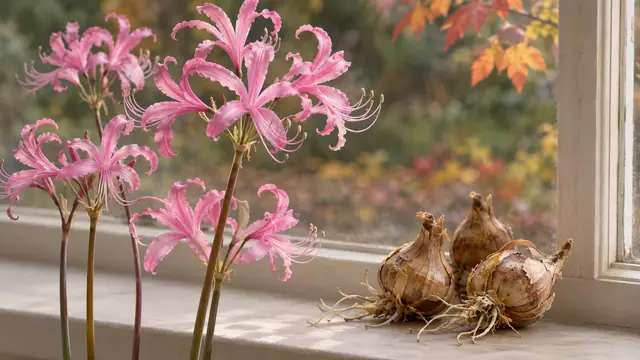
Nerine bulbs are perennial bulbs grown for clusters of narrow, curling flowers, often appearing in autumn. Plant them shallowly in a sunny position with freely draining soil, and choose care instructions for the named species: Nerine bowdenii and Nerine sarniensis have different growth cycles.
The most useful starting point is the label, rather than a photograph of the flowers. It tells you which nerine you are buying and helps you decide whether it belongs in a garden border or a pot with seasonal protection. This guide explains how to select healthy bulbs, plant them without burying their necks, manage watering and investigate a plant that produces leaves but no flowers.
Choose nerine bulbs by species and condition
Nerine bowdenii is a common choice for garden growing where conditions suit it. It generally carries leaves through spring and summer, then flowers towards autumn as the foliage begins to decline. Nerine sarniensis follows a different pattern, typically growing through the cooler part of the year and resting in summer. That distinction matters more than flower colour when you plan watering and shelter.
Look for bulbs that feel firm and substantial for their size, with no soft patches, wet decay or strong unpleasant smell. A loose, papery outer skin is normal and does not need to be stripped away. Some surface marks may be cosmetic; softness extending into the bulb is a more serious concern. If you can inspect the basal plate, check that it is intact rather than crumbling or rotten.
Check whether the supplier describes the bulbs as flowering size or as smaller offsets that need time to mature. Even a mature bulb may take time to settle after transport and planting, so a photograph of a flowering plant is not a promise of flowers in its first season. For more detail on the garden species, see our guide to Nerine bowdenii.
Plant shallowly and give water a clear way out
Choose a sunny position with soil that drains readily after rain. A sheltered border can work well, but avoid a low spot where water collects or soil that stays sticky and saturated. Before planting, assess the whole site: a little grit in the planting hole will not solve persistent waterlogging around it. Where drainage is doubtful, a container gives you more control over the root environment.
Set each bulb with its neck at or just above the soil surface, following any species-specific instructions supplied with it. Keep the bulb upright, settle soil gently around the roots and leave room for the clump to expand. Do not apply the usual deep-planting rule used for some other bulbs. A thick mulch piled over the neck can also leave it effectively buried and damp.
For a pot, use a container with unobstructed drainage holes and a free-draining potting mix intended for bulbs or suitable container plants. Avoid a very large volume of compost around a few small bulbs, because it can remain wet long after the roots have used the available water. Leave space below the rim for watering, while keeping the bulb necks exposed rather than covering them with a deep decorative layer.
Bouquets we can deliver




Match watering and feeding to the growth cycle
Water according to active growth, the condition of the compost and the named species. While leaves are growing, water thoroughly when needed, then allow excess water to escape. Check below the surface before watering again; a dry-looking top does not always mean the root zone is dry. Empty standing water from saucers, particularly when cool weather slows evaporation.
Reduce watering as foliage naturally yellows and the plant moves towards rest. Summer-dormant Nerine sarniensis needs different treatment from a leafy Nerine bowdenii at the same time of year, so a calendar reminder alone is a poor guide. Keep a simple note of when leaves emerge, when they decline and when flower stems appear. That record helps you recognise your plant's rhythm without forcing it into the wrong routine.
Feed modestly during active leaf growth, following the directions on a fertiliser suitable for flowering bulbs. Extra fertiliser cannot compensate for inadequate light or damaged roots, and excessive nitrogen can encourage foliage at the expense of flowers. Leave healthy leaves attached until they yellow naturally: they replenish the bulb's reserves. Remove spent flower stems without cutting away green foliage.
Give bulbs time to settle before dividing or moving
Planting time depends on the species, your climate and whether the bulb arrives dormant or already growing. Buy from a supplier who identifies the plant and gives a suitable planting window for your region. If a bulb arrives with live roots or leaves, handle them carefully and avoid leaving it out to dry while you wait for a generic date from an unrelated growing guide.
Nerines often benefit from remaining undisturbed while their roots establish and offsets develop. Do not lift a healthy clump every year simply because flowering has finished. Divide when crowding, pot condition or the need to propagate gives you a clear reason, and choose the appropriate resting period for that species. Separate offsets gently, retain healthy roots where possible and expect small bulbs to need further growth before flowering.
Winter care needs a local decision rather than a universal temperature claim. Identify the species, consider winter wet as well as cold, and ask a reputable nursery about your growing conditions. In a climate where outdoor survival is doubtful, a pot that can be moved to suitable protected conditions offers flexibility. Protection still needs adequate light when the plant is leafy and ventilation that prevents persistently damp conditions.
Work through common reasons for missing flowers
If your nerine has leaves but no flowers, begin with its history. A newly planted bulb, a recently divided clump or a small offset may need time to establish or reach flowering size. Check light next: a position shaded by summer foliage can be much darker than it looked when you planted. Also check planting depth, especially if repeated mulching has gradually covered the bulb necks.
Review the previous growing season rather than focusing only on the expected flowering month. Leaves removed while green, prolonged drought during active growth or roots sitting in wet compost can all reduce the resources available to the bulb. Correct the underlying care and watch the next cycle. Repeatedly lifting the bulb to inspect it can add disturbance without answering why it has not flowered.
A soft bulb, collapsing growth or an unpleasant smell calls for closer inspection of drainage and possible decay. Isolate an affected potted plant while you assess it, and clean tools before using them elsewhere. Do not assume every yellow leaf indicates disease: gradual yellowing at the normal end of a species' growing season is different from sudden collapse. Keep bulbs away from children and pets, as they are harmful if eaten.
Distinguish a growing gift from a bouquet for Russia
Nerine bulbs suit someone who enjoys growing plants and is happy to wait for a seasonal display. They are less suitable when the purpose of the gift is to provide open flowers on a particular date. For cut nerines, use a clean vase, remove foliage that would sit under water and recut the stems before arranging them. You can find more practical guidance in our nerine cut-flower care article.
If you want to send flowers to someone in Russia, browse our bouquets catalogue and choose from the options shown there. This growing guide does not establish that nerine bulbs or cut nerines are available to order. Contact a manager on WhatsApp for help choosing a bouquet and agreeing the address, timing and card text; you can also ask for a photo of the bouquet before delivery.
We deliver flowers across Russia. City delivery costs 500 RUB; an operator confirms the price for remote districts and suburbs when confirming the order. In large cities, express delivery is available in 1–2 hours after order confirmation. You can also arrange an exact time with a tolerance of 30 minutes, select a window of 09–12, 12–15, 15–18 or 18–21, or preorder 1–30 days ahead.
Delivery is anonymous by default: the courier does not name the sender, and a card with your text is free. The courier calls the recipient about 15 minutes before arrival. If the recipient is absent, we agree a second delivery that day or, with the sender's consent, hand the flowers to a neighbour or concierge. Online checkout uses CloudPayments; check the payment options displayed there, as acceptance of every foreign card cannot be guaranteed. Availability and timing of delivery across Russia are confirmed for the chosen city, address, date and bouquet.
Frequently asked questions
How deep should I plant nerine bulbs?
Plant shallowly, with the bulb neck at or just above the soil surface, and follow the instructions for the named species. Avoid covering the neck with a thick layer of mulch or decorative material.
Why are my nerine bulbs producing leaves but no flowers?
Possible causes include immature bulbs, recent disturbance, insufficient sun or planting too deeply. Check whether the leaves stayed healthy through the previous growing season, and allow an established care routine time to work.
Can nerine bulbs grow in pots?
Yes, provided the container has drainage holes and a freely draining potting mix. Choose a manageable pot size and adjust watering to the species' active growth and resting periods.
Should I water nerines during summer?
It depends on the species and whether it is actively growing. Nerine sarniensis typically rests in summer, whereas Nerine bowdenii generally has summer foliage, so they should not automatically receive the same watering routine.
Can I order nerine bulbs for delivery in Russia through this article?
This article provides growing advice and does not confirm that bulbs are available for sale. For a flower gift in Russia, check the bouquets catalogue and ask a manager about the options available for your delivery details.
Ready to send flowers?
Pick the city, choose the bouquet, and a local florist takes it from there.
Choose a city →