Nerine lily: what it is and how to care for it
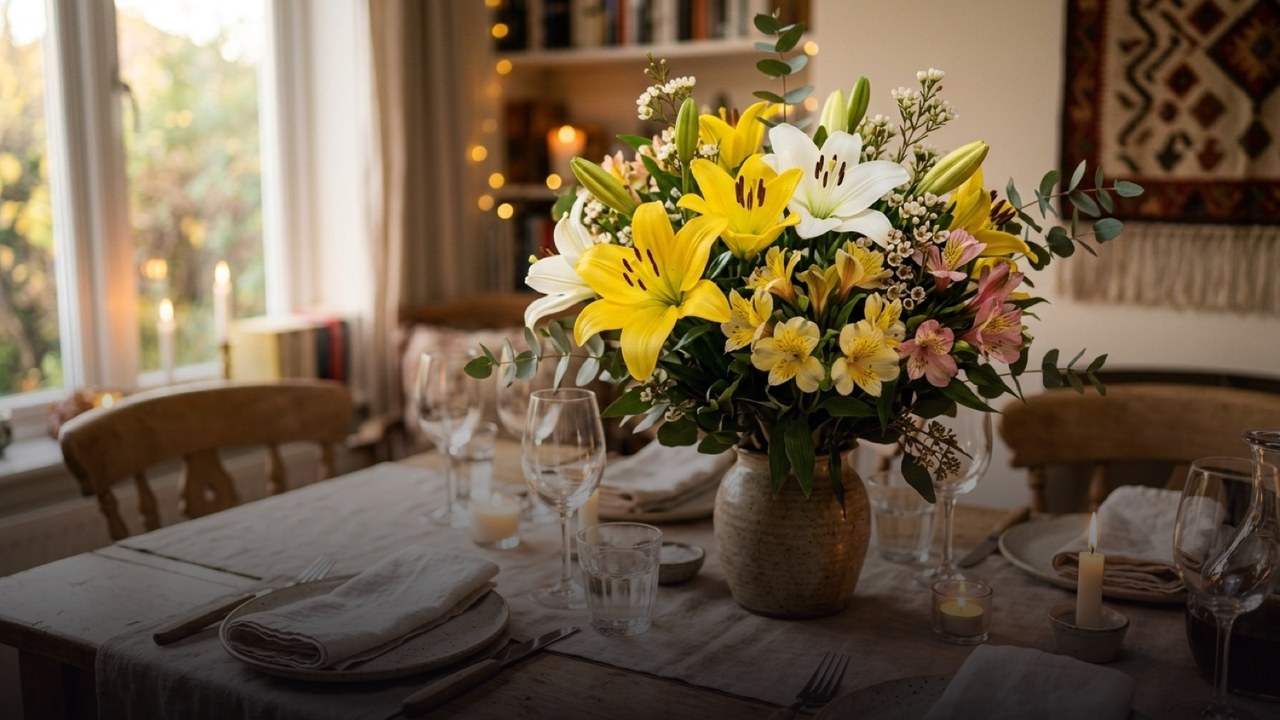
A nerine lily is a bulbous flowering plant in the genus Nerine, recognised by clusters of slender, curling petals and prominent stamens held above a bare stem. Despite its common name, it belongs to the amaryllis family, not the true lily genus Lilium. Many familiar garden nerines flower in autumn, bringing pink, red or white flowers when much of the garden is fading.
For you as a gardener or flower buyer, that distinction matters: a nerine needs different treatment from a true lily, and its airy flower head creates a different effect in a vase. Start by identifying the species or cultivar, then choose care that suits a growing bulb or a cut stem. If you are planning a gift to Russia, ask about availability before building your message or occasion around this particular flower.
How to recognise a nerine lily
Look at the whole flower head rather than a single bloom. Several individual flowers spread out from the top of one leafless stalk, each with six narrow petal-like segments that often curl backwards or ripple along their edges. The visible stamens give the cluster a fine, open outline. It is a lighter, more intricate shape than the broad trumpet of many familiar lilies.
Nerine bowdenii is a familiar garden species, usually associated with pink autumn flowers. Nerine sarniensis and its hybrids are also grown for their flowers, including vivid red and orange shades. Their cultivation needs are not interchangeable, particularly where winter conditions are concerned. Our guide to Nerine bowdenii explores that species in more detail.
Common names can cause confusion. The name Guernsey lily is associated with Nerine sarniensis, while spider lily is used for several different plants and cannot reliably identify a nerine. When buying bulbs, check the botanical name on the label. For a cut-flower request, send a reference image and ask whether the proposed stems match the flower you have in mind.
Growing nerine bulbs: light, drainage and patience
Begin with the species name and your growing conditions. Nerine bowdenii is commonly grown in sunny, well-drained positions; a sheltered spot helps protect its tall flower stems. Avoid ground where water collects after rain. If your soil stays wet or winter protection is difficult, a container gives you more control over drainage and where the plant spends the colder months.
For Nerine bowdenii, plant with the bulb's neck exposed at the soil surface, following any specific instructions supplied with the bulbs. Use a pot with drainage holes and a freely draining growing mix. Do not assume that burying the bulb more deeply will protect it: planting depth, persistent moisture and the suitability of the site all affect its performance.
Water in response to active growth and the condition of the growing mix, rather than keeping it permanently wet. Leave green leaves in place so they can replenish the bulb, and remove them once they have withered naturally. Newly planted or recently divided nerines may need time to settle before flowering; repeated lifting to investigate can disturb that process.
A bulb producing leaves without flowers is not automatically dying. Check whether it receives enough light, whether its leaves were cut prematurely, and whether it was recently moved or divided. Avoid treating extra fertiliser as a universal cure. For a different species, consult its own growing requirements; Nerine sarniensis deserves particular attention to its seasonal growth cycle.
Bouquets we can deliver




How to care for cut nerine flowers
Unwrap the stems carefully and support the flower heads as you separate them. The individual blooms can catch on packaging or neighbouring stems, so avoid pulling a tightly packed bunch apart by its tops. Prepare a clean vase first, then trim the stem ends with a clean, sharp tool before placing the flowers in water. Remove any foliage that would sit below the waterline.
If cut-flower food is supplied, mix it according to the packet instructions. Keep the vase out of direct sunlight and away from radiators, heaters and ripening fruit. An arrangement beside a bright window may look attractive in a photograph, but direct heat and sun increase water loss. Choose a position where the flowers have room without being brushed as people pass.
Check the water daily, top it up as needed, and replace it when it becomes cloudy, cleaning the vase at the same time. Remove spent individual flowers gently while leaving healthy blooms undisturbed. Vase life varies with the maturity and condition of the stems and the room environment, so a fixed number of days is less useful than watching water quality and flower condition.
Choosing a bouquet and a message that suit the occasion
Nerine works well when you want a delicate, sculptural effect. Its flower heads need visible space: too many dense blooms pressed against them can hide their curled petals. In a mixed arrangement, ask for a balance between fuller flowers and open areas. If the bouquet will sit on a dining table, consider its height and width as well as how it looks when carried.
There is no single, universally accepted meaning for a nerine lily. You can choose it for its autumn flowering, its colour or a personal association, without presenting a symbolic interpretation as a rule. For a birthday or thank-you gift, a specific message about the recipient will usually communicate more clearly than an unexplained claim that the flower represents a particular virtue.
When sending flowers across cultures, ask about the recipient's preferences instead of assuming that English-language flower symbolism will transfer directly. In Russian gifting customs, an odd number of flowers is traditional for celebratory bouquets when the stems are readily counted; even numbers are associated with mourning. For an occasion where etiquette matters, discuss the intended bouquet and message before ordering.
Planning a flower delivery to Russia
If nerine is central to your gift, start by asking whether it is available for the intended date and destination. A guide to the flower does not establish current stock. You can browse the bouquets catalogue for ideas, then contact a manager on WhatsApp for help choosing a bouquet and agreeing the time, address and card text. You can also discuss a photo of the bouquet before delivery.
We deliver flowers across Russia. City delivery costs 500 RUB; for remote districts and suburbs, the operator confirms the delivery price when confirming your order. Express delivery in large cities is available within 1–2 hours after confirmation. For a planned occasion, you can pre-order 1–30 days ahead, giving you time to agree the details before the intended delivery day.
Other timing options include delivery at an exact time with a margin of plus or minus 30 minutes, or the windows 09–12, 12–15, 15–18 and 18–21. When ordering from abroad, state the intended date and clarify the recipient's local time with the manager. Choose a window that fits their routine, especially if they may be commuting, attending an event or away from the address.
Recipient contact, a personal card and checkout
Delivery is anonymous by default: the courier does not name the sender. A card with your text is free, so include your name in the message if you want the recipient to recognise the gift immediately. Read the wording once as the recipient would see it, checking names, dates and any private reference. A short, clear note is often enough to make an unfamiliar flower feel personal.
The courier calls the recipient about 15 minutes before arrival, so allow for that contact when planning a surprise. If the recipient is absent, we agree a second delivery the same day or, with the sender's consent, hand the flowers to a neighbour or concierge. Share useful address details when arranging the order, and consider which option you would prefer if the recipient cannot receive the bouquet.
Online checkout uses CloudPayments. If you are paying from abroad, check the payment options displayed at checkout; acceptance of every foreign card is not guaranteed. Review the bouquet, destination and agreed timing before completing payment. The delivery and payment information is a useful reference while you organise the gift, particularly when the sender and recipient are in different countries.
Frequently asked questions
Is a nerine lily a true lily?
No. Nerine belongs to the amaryllis family, while true lilies belong to the genus Lilium in the lily family. The common name describes a resemblance rather than a close botanical relationship.
When do nerine lilies flower?
Many commonly grown nerines, including Nerine bowdenii, flower in autumn. The timing depends on the species, cultivar and growing conditions, so check the identity of your bulbs before expecting a particular flowering period.
Why does my nerine have leaves but no flowers?
Possible causes include insufficient light, recent planting or division, and removing green leaves before they have replenished the bulb. Review its position and care, then allow it time to establish rather than repeatedly lifting it.
Can I order a nerine bouquet for someone in Russia?
Ask the manager to confirm nerine availability for your date and destination before choosing a bouquet around it. We deliver flowers across Russia, and the manager can help agree the bouquet, address, delivery time and free card text.
Can I pay for flowers to Russia with a foreign card?
Online checkout uses CloudPayments, and you should check the options displayed there. Acceptance of every foreign card is not guaranteed.
Ready to send flowers?
Pick the city, choose the bouquet, and a local florist takes it from there.
Choose a city →