New Year Flowers in Russia: Beyond the Christmas Tree
In Russia, New Year's Eve is the celebration of the year — bigger than any other holiday, louder than any dinner party, and full of flowers that most people outside the country never expect. If you are sending a bouquet to someone in Saint Petersburg or anywhere across Russia before midnight on December 31, knowing what to choose and when to order makes the difference between a gift that lands perfectly and one that arrives after the toast.
Why New Year Is the Biggest Flower Day in Russia
Russians celebrate New Year with the same warmth and ritual that many other cultures reserve for Christmas. The table is set, the television is on, Grandfather Frost is expected at the door, and flowers are absolutely part of the scene. This is not a secondary holiday with leftover decorations — it is the main event of the winter calendar, and bouquets are given between close friends, romantic partners, colleagues, and family members all through the final days of December.
The tradition has deep Soviet roots. During the Soviet era, Christmas was not publicly celebrated, so New Year absorbed all the warmth and gift-giving energy of the season. That emotional weight never left. Today, December 31 is when florists in Russia see their highest single-day demand of the entire year, surpassing even March 8, which is International Women's Day and another enormous flower occasion.
For someone sending from abroad, this context matters. Your recipient is not simply getting flowers on a quiet winter evening. They are receiving them in the middle of the most anticipated night of their year. The bouquet needs to feel festive, generous, and alive — not understated. A small posy that might be charming in May reads as an afterthought on New Year's Eve. Think in terms of volume, warmth, and color that competes happily with a decorated tree.
Bouquets we can deliver

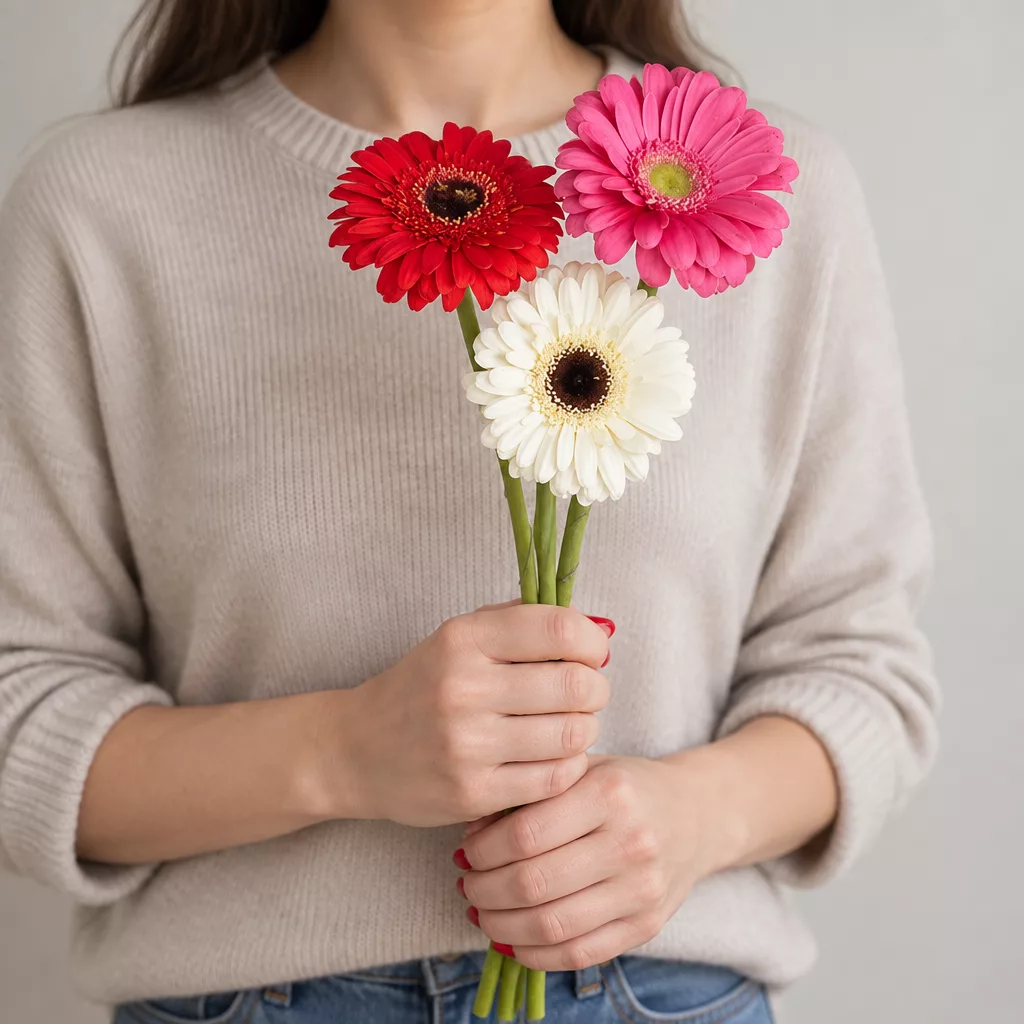
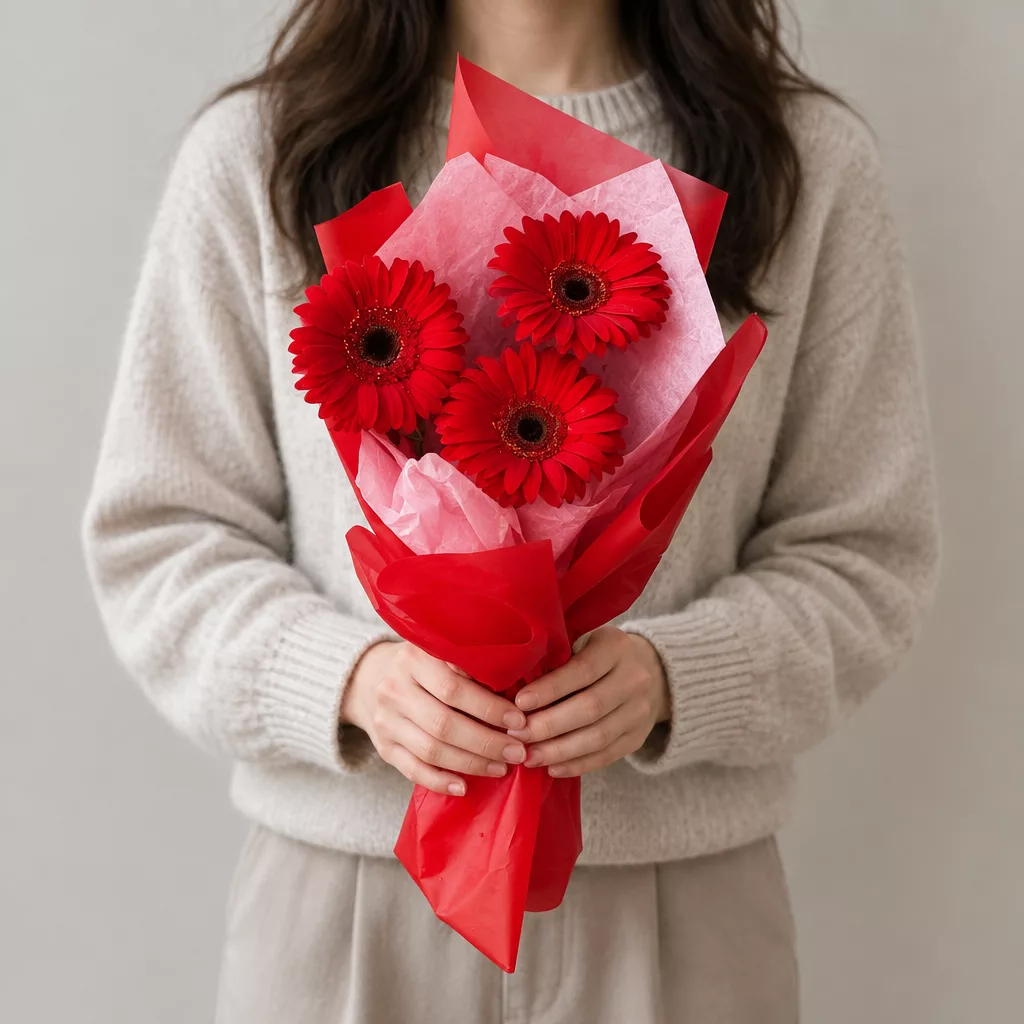
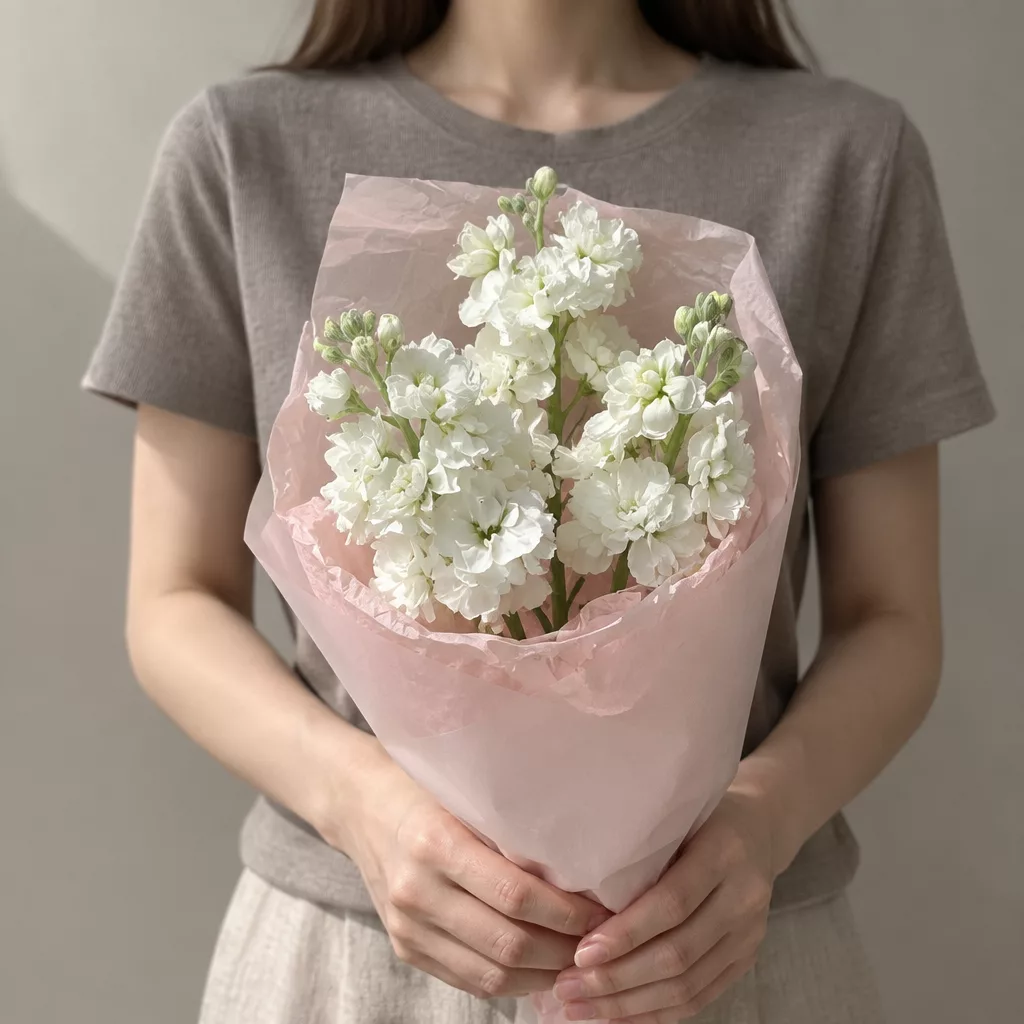
The Flowers Russians Actually Choose for New Year's Eve
The most popular flower for Russian New Year celebrations is the rose, but not the single-stem variety. Buyers choose large, full-headed roses in deep red, burgundy, white, or rich coral — colors that read as festive under the warm light of a December apartment. Spray roses in cream and blush are often layered in for texture without overwhelming the arrangement with a single hue.
Red and white tulips appear heavily in late December because Dutch imports arrive reliably by this time and the stems are long enough to hold their shape through a long evening. Tulips in Russia carry a springlike energy that people consciously bring into the New Year as a symbol of renewal — they are not considered out of season even when snow is thick on the ground outside.
Chrysanthemums in white, champagne, and deep burgundy are a staple of winter arrangements. They last exceptionally well in heated Russian apartments, which is a practical reason florists reach for them. Alstroemeria adds affordable volume and a range of warm tones. For premium bouquets, peonies and ranunculus create a lush, romantic density that photographs beautifully against New Year table settings.
Eucalyptus, ruscus, and silver-leafed dusty miller are the greenery of choice because they suggest frost and winter without being cold. Florists sometimes add dried cotton stems or silver-sprayed branches for a subtle festive shimmer. The overall palette that feels most Russian for this holiday sits in reds, whites, champagne tones, and deep greens — rich and warm rather than icy or minimalist.
Choosing the Right Bouquet for Who Is Receiving It
Think about the person opening the door before you think about the flowers. A grandmother celebrating with her family in a small apartment wants something she can place on the table without rearranging the dishes — a compact, round bouquet of roses and chrysanthemums in festive red and white fits naturally into that picture. She will appreciate that it smells good and that it lasts into the first week of January.
A younger woman in her thirties celebrating with friends responds differently. She is likely to photograph the bouquet and she notices presentation — the wrapping, the ribbon, the way stems are arranged. For her, a loose, garden-style arrangement with ranunculus, spray roses, and eucalyptus in a kraft paper wrap feels personal and considered rather than generic. Add a few white tulips to keep the New Year energy without making it look like a Valentine's arrangement.
For a couple, think about scale and romance. A large bouquet of long-stemmed roses in a single deep color — burgundy or red — with minimal greenery and a satin ribbon is the classic choice, and it remains classic because it works. It sits on the table and changes the whole atmosphere of the room.
For a colleague or a professional contact, white and champagne tones are safer and more universally appreciated. A bouquet of white roses with silver eucalyptus and a few cream alstroemeria is elegant without being too intimate, which matters when the relationship is warm but not personal. Whatever the recipient, avoid arrangements that look sparse — New Year's Eve in Russia calls for generosity.
Timing an International Order: What You Need to Know
The single most important thing to understand about ordering flowers for New Year's Eve delivery in Russia from abroad is that December 31 is an extremely high-demand day and delivery windows fill up quickly. If you want your bouquet to arrive before midnight — which is the only meaningful deadline on this night — you need to place your order no later than December 29, and December 28 is better.
Saint Petersburg is in UTC+3. If you are ordering from Western Europe, that is two or three hours ahead of you. From the United States East Coast, it is eight hours ahead. This means that what feels like the morning of December 31 in New York is already the afternoon in Saint Petersburg, and afternoon slots on that day are the first to sell out. Placing an order on the morning of December 31 from a different time zone is a genuine risk.
For a delivery timed to arrive in the early evening — say, between 6 and 9 p.m. Saint Petersburg time — you should select that window explicitly when ordering and confirm that the address is complete, including apartment number, floor, and an active phone number for the recipient. Russian addresses require the building number, the korpus if applicable, and the apartment number. A missing apartment number on New Year's Eve, when everyone is home and the intercom is ringing constantly, causes real delays.
If you want the flowers to be a surprise, note that in your order. The florist can call the recipient's door directly without revealing the sender beforehand.
Budget Ranges and What Each One Gets You
Flowers for New Year's Eve in Russia span a wide range, and the difference between price points is mostly about volume, stem count, and the premium flowers used. Understanding what each level delivers helps you choose without overspending or undershooting the occasion.
At the entry level, you get a genuine, well-made bouquet — typically seven to nine stems of roses or tulips with simple seasonal greenery. It is a real gift that any recipient will be happy to receive, and it works well for colleagues, neighbors, or acquaintances. The presentation is clean and the flowers are fresh, but the arrangement is modest in size.
In the mid range, the stem count rises to fifteen or more, and the composition becomes more interesting. This is where spray roses combine with alstroemeria and eucalyptus, or where tulips are mixed with ranunculus for texture. The wrapping improves — kraft paper with a wide satin ribbon, or a structured round bouquet in a box. This is the right level for close friends, parents, and partners when you want to be generous without going to a grand gesture.
At the upper end, you are looking at large arrangements built around premium flowers: peonies, garden roses, ranunculus, and long-stemmed hybrid tea roses with full heads. These bouquets are visually dramatic and fill a room. They are the right choice for a romantic partner, a parent you see rarely, or a host who has invited you to their New Year's table. On December 31, a bouquet at this level genuinely changes the atmosphere of the evening it arrives into.
Keeping New Year Flowers Fresh in a Russian Winter Apartment
Russian apartments in winter present a specific challenge for cut flowers: central heating runs continuously and the indoor temperature is often between 22 and 25 degrees Celsius, which is warm for flowers. The dry air accelerates water loss through the petals, and stems drink faster than they do in a cooler environment. A bouquet that might last ten days in a temperate European home may last six or seven days in a centrally heated Russian flat without proper care.
The most important step is changing the water every day or every other day and trimming one centimeter from each stem at an angle before returning them to the vase. This keeps the stem ends open and drinking. Tap water in Saint Petersburg is safe for flowers and does not need filtering — just make sure it is at room temperature rather than cold, which shocks the stems.
Keep the vase away from radiators, which are typically positioned under windows in Russian apartments. The window sill itself — a popular spot for flowers because of the light — is actually cold glass on the outer side and warm radiator air rising from below, which creates an uneven environment. A table in the center of the room or a sideboard away from heat sources is better.
Tulips continue to grow in the vase and will lean toward light. Rotating the vase by a quarter turn each morning keeps them upright. Roses benefit from removing the outer guard petals — the slightly tighter outer petals — once they begin to look papery, which reveals fresh petals underneath and extends the life of the bloom by several days.
Small Details That Make a New Year Bouquet Feel Considered
The flowers themselves are only part of what the recipient experiences. The wrapping, the card, and the moment of delivery all contribute to how the gift lands, and on New Year's Eve these details carry extra weight because the evening is already charged with emotion.
Wrapping for a Russian New Year bouquet should feel festive but not costume-like. Deep green florist paper with a wide burgundy or gold ribbon is a classic combination that feels appropriate without being kitsch. White kraft paper with a simple satin bow in ivory or champagne works beautifully for a more modern aesthetic. Avoid cellophane wrapping alone — it looks like a supermarket purchase and undercuts even excellent flowers.
A handwritten card is noticed and kept. If you are ordering from abroad and writing in English, that is completely fine — the personal message in your own language is often more meaningful than a translated phrase. Keep the message warm and specific to the person rather than generic seasonal greetings. Something that references a shared memory or a specific wish for their year ahead takes thirty seconds to write and makes the bouquet memorable.
Timing the delivery for early evening — between 6 and 9 p.m. on December 31 — means the flowers are present on the table when the celebration peaks. Deliveries before noon are sometimes done as a surprise while the recipient is still preparing, which can also work beautifully if you know they will be home. Avoid aiming for the hour immediately before midnight: that window is the busiest and most emotionally loaded part of the evening, and a doorbell at 11:45 p.m. interrupts the countdown.
New Year's Eve in Russia is a night when flowers are not decoration — they are part of the celebration itself. Choosing the right bouquet means thinking about the person receiving it, the warmth of the room they are standing in, and the scale that matches the occasion. Ordering early, giving the address in full, and picking a delivery window in the early evening turns a good idea into a gift that actually arrives before the clock strikes midnight. Whether you are in Saint Petersburg, sending from London, or placing an order from New York in the morning, the logic is the same: the flowers should be there when the evening begins, not scrambling to catch up with it.
Frequently asked questions
What is the most popular flower for New Year's Eve in Russia?
Roses are the most popular choice, particularly in deep red, burgundy, and white. Tulips are a strong second because they carry a sense of renewal that Russians consciously associate with the new year. Chrysanthemums are widely used in arrangements because they last well in warm, centrally heated apartments throughout the holiday period.
Can I order flowers for delivery in Saint Petersburg from another country?
Yes. You can place an order through turboflora.com from anywhere in the world. The key details you need are the full Russian address including apartment number, an active local phone number for the recipient, and your preferred delivery window. Pay attention to the time difference — Saint Petersburg is UTC+3, which is significantly ahead of most Western time zones.
How far in advance should I order for New Year's Eve delivery?
Order by December 28 or 29 at the latest. December 31 is the busiest flower delivery day of the year in Russia, and early evening slots fill up first. Ordering two to three days ahead lets you choose your preferred delivery window and ensures the bouquet is prepared with the best available flowers rather than whatever remains at the end of a peak day.
Are there flowers I should avoid for New Year's in Russia?
Yellow flowers are sometimes associated with separation or bad luck in Russian folk tradition, though younger generations are generally less concerned with this. If you are unsure about your recipient's views, staying with reds, whites, pinks, and champagne tones is the safe choice. Single-stem bouquets also tend to feel too small for the occasion — New Year's Eve calls for generosity in volume.
How long will New Year flowers last in a Russian apartment?
Expect five to eight days with proper care. Russian apartments are warm and dry due to central heating, which shortens vase life compared to cooler homes. Change the water every one to two days, trim the stems at an angle, and keep the bouquet away from radiators and direct heat sources. Chrysanthemums and alstroemeria tend to outlast roses and tulips in these conditions.
Ready to send flowers?
Pick the city, choose the bouquet, and a local florist takes it from there.
Choose a city →