Sending New Year Flowers to Russia? Here Is Everything You Need to Know
In Russia, New Year's Eve is the biggest celebration of the year — bigger than Christmas, louder than birthdays, and far more flower-filled than most people outside the country expect. If you want to send flowers to someone in Saint Petersburg or anywhere across Russia for January 1st, the customs, the timing, and the right choice of blooms are all a little different from what you might be used to. This guide walks you through all of it, from the meaning behind the tradition to the exact moment you should place your order.
Why Flowers Matter So Much at Russian New Year
Russians celebrate New Year's Eve on the night of December 31st with the same intensity that many Western cultures reserve for Christmas. The holiday carries decades of Soviet-era tradition behind it: the decorated fir tree, the champagne at midnight, the Grandfather Frost figure arriving with gifts. Flowers fit into this picture as a gesture of warmth and personal attention, something that says you thought specifically about the person rather than simply sending a card.
For women especially, receiving a bouquet on New Year's Eve or on the morning of January 1st is genuinely meaningful. It is not an obligatory ritual the way flowers at a graduation might feel — it is a genuine expression of affection. Men give flowers to their mothers, partners, daughters, and close female friends. Colleagues send arrangements to people they respect. The gesture lands with weight.
What makes this different from, say, sending Valentine's Day roses is the atmosphere around it. The mood is festive and forward-looking rather than romantic in a narrow sense. People want arrangements that feel celebratory, a little theatrical, and seasonally appropriate. A single-variety bunch of carnations reads as an afterthought. A thoughtfully composed arrangement with texture, color, and a sense of occasion reads exactly right. Understanding that distinction is the first step toward choosing something your recipient will genuinely love.
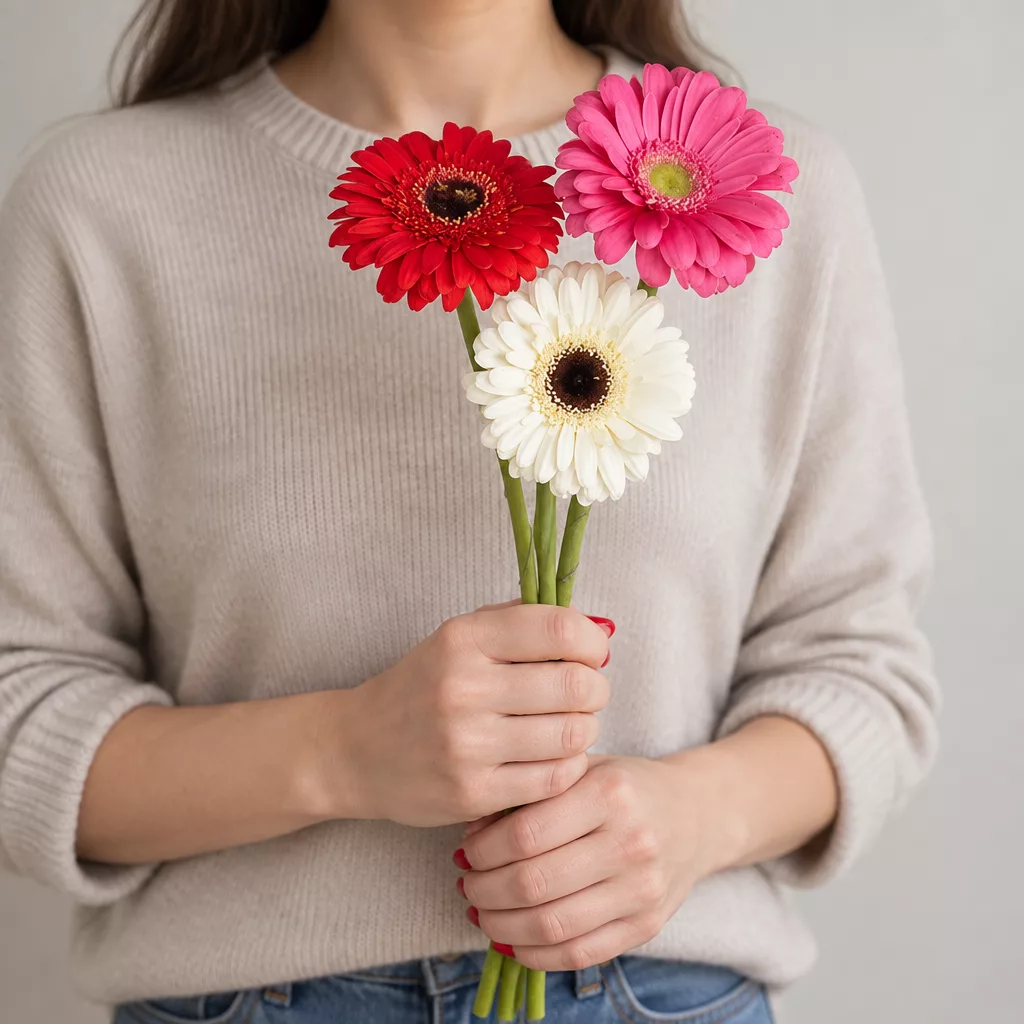
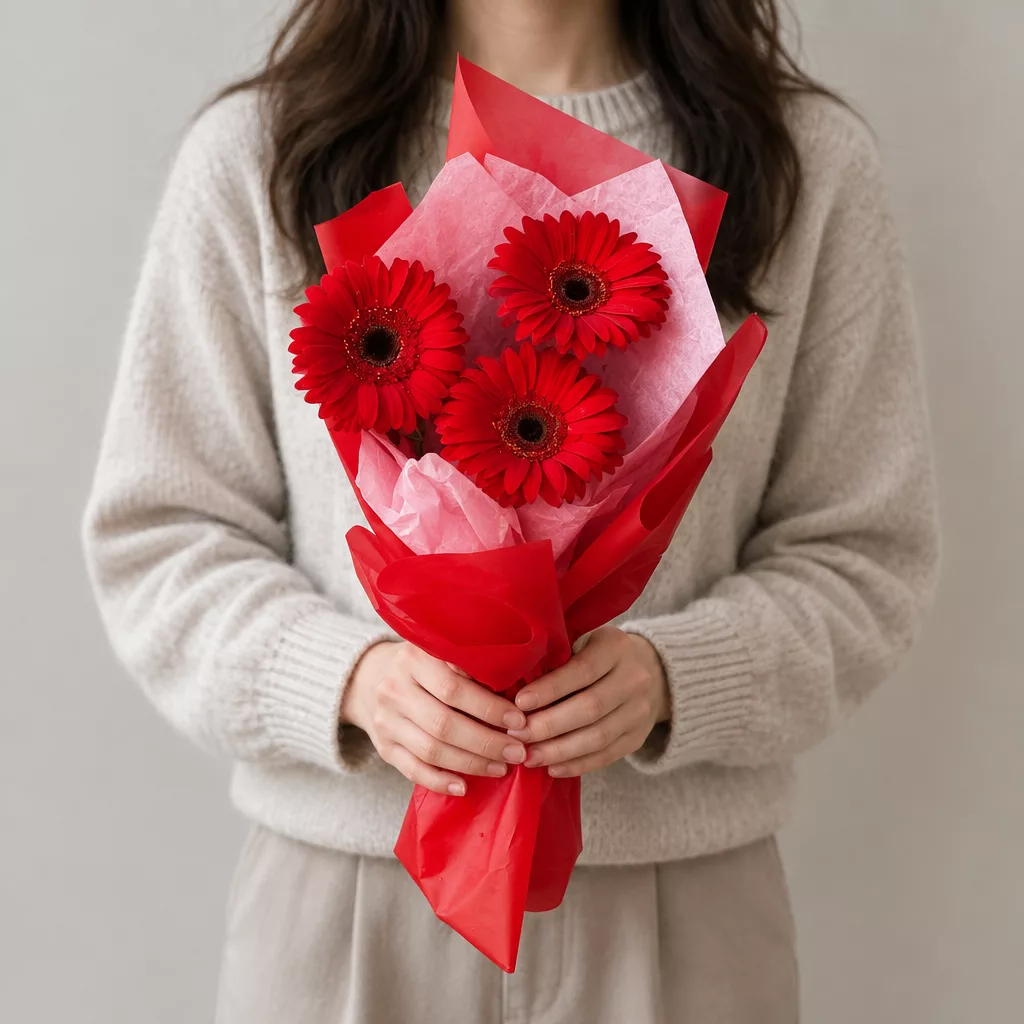
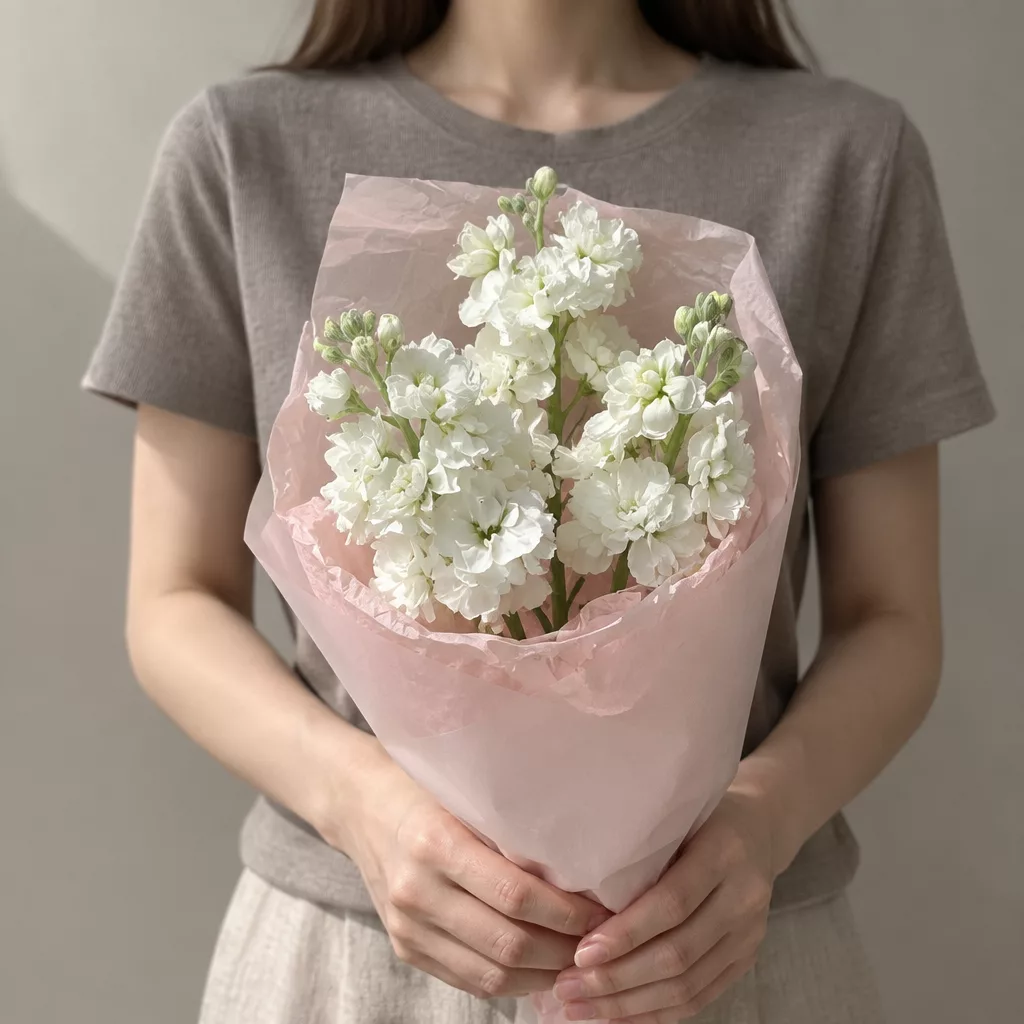
Bouquets we can deliver

Which Blooms Actually Survive a Russian Winter Delivery
Winter delivery in Russia is not simply a logistical challenge — it is a temperature challenge. January in Saint Petersburg averages around minus five to minus ten degrees Celsius, and a bouquet exposed to that air for even fifteen minutes without proper wrapping will suffer. Knowing which flowers hold up matters as much as knowing which ones look beautiful.
Roses are the most reliable choice, and for good reason. Dutch and Ecuadorian roses with tight, firm buds travel well in cold, open slowly in a warm apartment, and last seven to ten days with basic care. Spray roses add volume and a slightly softer look if you want something less formal. Chrysanthemums are another strong performer: they are cold-tolerant, long-lasting, and available in a wide range of colors from cream and white to deep burgundy and bronze, all of which suit the New Year palette.
Tulips are beloved in Russia and feel genuinely seasonal because they are associated with the transition toward spring — a hopeful note for a holiday that is all about the year ahead. They are more delicate in transit than roses, but a professional florist wraps them carefully to prevent freezing and bruising. Alstroemeria works well as a supporting bloom: it adds movement and color without wilting quickly. Avoid open tropical flowers like anthuriums or orchid sprays for standalone bouquets in deep winter, as they are sensitive to cold shock and the dramatic temperature shift from delivery van to doorstep can mark the petals visibly.
Colors and Combinations That Feel Festive Without Being Cliché
The obvious New Year palette — red and gold — works, but only when it is executed with some restraint. A bouquet that is entirely red roses with gold ribbon can tip into feeling generic. The more interesting approach is to anchor one strong color and build around it with texture and contrast.
Deep red roses paired with white spray chrysanthemums and a few stems of eucalyptus create a combination that is festive, clean, and modern. The greenery matters more in winter than in any other season because it reinforces the idea of the decorated fir tree, of something living and fragrant in the middle of the cold. Cotton stems, if you can include them, add a wintery texture that photographs beautifully and surprises people who have not seen them used in arrangements before.
Burgundy and blush together feel sophisticated rather than seasonal in a predictable way — a good choice for someone whose taste runs more understated. White and silver-green arrangements with white roses, white tulips, and silvery eucalyptus read as elegant and wintry without leaning on holiday clichés. For someone who loves bold color, consider a monochromatic arrangement in deep violet or fuchsia: it stands out dramatically against the grey and white of a Russian January and photographs brilliantly, which matters because recipients almost always share bouquet photos with family.
Presentation details like the wrapping paper and ribbon color carry more meaning than people realize. Matte kraft paper with a velvet ribbon in forest green or midnight blue elevates even a simple bouquet into something that feels considered and complete.
Timing Your Order: The Window That Makes or Breaks Delivery
This is where most people ordering from abroad make their critical mistake. They assume that placing an order on December 31st will result in a same-day delivery, and sometimes it does — but the margin for error disappears completely. Demand on December 30th and 31st is the highest of the entire year for any flower delivery service in Russia. Order volumes spike, and the flowers that were available on December 28th may simply not be there two days later.
The safest approach is to place your order between December 27th and December 29th, specifying a delivery date of December 31st. This gives the florist time to source the exact varieties you want, build the arrangement properly rather than under pressure, and schedule your delivery slot before the morning rush of the 31st fills up. Morning delivery on December 31st — between nine and noon — is the most appreciated timing. Your recipient has the flowers for the whole day of celebration, can photograph them, arrange them in a vase, and enjoy them before the evening begins.
If you are ordering from a different time zone, calculate carefully. Saint Petersburg is UTC plus three. A midnight order placed in New York on December 30th arrives as a 7 AM order on December 31st in Saint Petersburg — still workable, but cutting close. An order placed at 6 PM New York time on December 29th arrives at 1 AM Saint Petersburg time on December 30th, giving the florist a full working day to prepare. That is the window to aim for. Turboflora delivers within one to two hours of your chosen time slot across Saint Petersburg and ships fresh flowers to cities across Russia.
What to Write in the Card: Getting the Message Right Across a Language Gap
A bouquet without a card is a missed opportunity, especially when the sender is overseas. Your recipient will want to know who sent the flowers, and they will want to feel the thought behind them. If you are writing in English for a Russian-speaking recipient, ask the florist to translate or transliterate the message — most professional flower services can do this, and Turboflora handles card messages in multiple languages as part of the order.
Keep the message warm and specific rather than generic. Instead of writing Happy New Year, try something that references the year you have shared together or the year ahead. Russians are sentimental about New Year in a way that values personal reflection — the holiday is tied to the idea of leaving the old year behind and stepping into something new with hope. A message that acknowledges that spirit lands far better than a stock phrase.
If you want to include a few words in Russian, the phrase S Novym Godom (С Новым Годом) means Happy New Year and is universally understood and appreciated. Zhelayu tebe schastya v novom godu means I wish you happiness in the new year — a phrase that will genuinely move most Russian recipients coming from someone who made the effort. Even a phonetic attempt shows care. Pair it with your own words in English and the card becomes something the recipient will likely keep long after the flowers have faded.
Caring for Winter Bouquets: What to Tell Your Recipient
When a bouquet arrives in deep winter, it has been through a significant temperature journey — from a temperature-controlled florist environment, into cold outdoor air, and then into a warm apartment. That transition needs a moment of adjustment. The best advice for your recipient is to unwrap the flowers in a cool room rather than immediately in the warmest part of the apartment, and to let them sit for ten to fifteen minutes before placing them in water.
Cut the stems at an angle, about two centimeters from the base, using a sharp knife rather than scissors. Scissors compress the stem tissue and reduce water uptake. Fill the vase with cool — not cold, not warm — water, and add a sachet of flower food if one is included with the arrangement. Change the water every two days and re-cut the stems each time. Keep the vase away from the heat sources that are everywhere in a Russian winter: radiators, underfloor heating panels, and south-facing windowsills that catch surprising amounts of winter sun.
Roses in a properly maintained vase will last seven to ten days. Tulips typically last five to seven days but will continue to grow and open beautifully, which many people find charming. Chrysanthemums are the longest-lasting option and can hold well for two weeks with attentive care. If your recipient is the type who will follow these instructions, a mixed arrangement with chrysanthemums as the base will give them the longest enjoyment. If they are more spontaneous, roses are forgiving enough to look beautiful even with minimal attention.
Beyond the Bouquet: Other Floral Gifts That Work for New Year
A classic hand-tied bouquet is never wrong, but it is worth knowing what other floral options land well for Russian New Year if you want to give something a little different. A flower box — blooms arranged in a rigid gift box rather than wrapped stems — has become increasingly popular in Russia over the past decade. It photographs exceptionally well, which matters in a culture where celebrations are shared widely on social media, and it does not require the recipient to have a vase immediately available.
A hat box arrangement filled with roses, ranunculus, and seasonal greenery feels luxurious and works well as a gift for someone whose home you know is already beautifully decorated — it adds to the atmosphere rather than competing with it. For a recipient who loves plants as well as cut flowers, a potted cyclamen or a miniature fir tree in a decorative pot makes a gift that outlasts the holiday itself. Cyclamens are cold-tolerant, widely loved in Russia, and bloom through the winter months.
If you are sending flowers to a family rather than an individual, consider a larger centerpiece arrangement designed to sit on the New Year table. Russians set elaborate tables for the New Year celebration — it is a central part of the tradition — and a floral centerpiece that fits the table scale becomes part of the evening itself. Discuss this option directly with the florist when ordering, specifying the size of the table if you know it, so the arrangement is proportioned correctly and does not overwhelm the food or the guests.
Russian New Year is one of the most flower-filled moments of the year, and getting it right comes down to three things: choosing blooms that suit the winter season and the festive mood, placing your order early enough to guarantee the delivery slot you want, and adding the personal detail — a card, a specific color, a meaningful combination — that makes the gesture feel like it came from you rather than from a template. The flowers themselves are just the beginning. What your recipient remembers is the feeling of being thought of, specifically and warmly, on the biggest night of the Russian year.
Frequently asked questions
Is it normal to send flowers on New Year's Day rather than New Year's Eve in Russia?
Both are common, but New Year's Eve delivery — arriving on the morning of December 31st — is considered more celebratory because the recipient has the flowers throughout the day and evening of the main event. January 1st delivery is a warm gesture too, often used when the sender wants to mark the new year itself rather than the countdown.
Can roses really survive being delivered outdoors in minus ten degrees Celsius?
Yes, when wrapped correctly. Professional florists use insulating sleeve wrapping and transport flowers in temperature-managed vehicles. The exposure to outdoor cold during handoff is brief. Problems arise when flowers are left unattended outside a door in winter, which is why someone should be home to receive the delivery or a concierge arrangement should be confirmed in advance.
What is the latest I can place an order and still guarantee New Year's Eve delivery in Saint Petersburg?
For morning delivery on December 31st, placing your order by the evening of December 30th is the practical cutoff, though availability of specific flowers cannot be guaranteed that late. Ordering between December 27th and 29th gives you full choice of varieties, better scheduling options, and removes the pressure of last-minute sourcing during the busiest floral week of the year.
Are there flowers I should definitely avoid for a New Year gift in Russia?
Yellow flowers are traditionally associated with separation or jealousy in Russian culture, so a bouquet of purely yellow blooms can send an unintended message. Even-numbered bouquets are associated with mourning, so always order an odd number of stems. Beyond those cultural points, avoid highly delicate tropical blooms that are vulnerable to cold shock during winter transit.
How do I order flowers for someone in Russia if I am based overseas and do not speak Russian?
Turboflora's ordering process is available in English and the team handles international orders regularly. You can specify the recipient's address, your preferred delivery time, the arrangement style, and your card message in English. The florist will handle translation, local delivery logistics, and any coordination needed to reach the recipient — you simply confirm the details and the order is managed from there.
Ready to send flowers?
Pick the city, choose the bouquet, and a local florist takes it from there.
Choose a city →