Want Your Words to Arrive With the Flowers? Here Is How to Do It Right
A bouquet lands at the door and the first thing the recipient reaches for is the card. That small piece of paper — sometimes no bigger than a business card — carries the entire emotional weight of the moment. If you are sending flowers to someone in Russia from abroad, or simply want your message to feel warm and personal rather than generic, getting the note right matters as much as choosing the right roses. This guide walks you through every step, from what to write to how it is printed and handed over.
Why the Message Card Does More Work Than You Think
In Russia, receiving flowers without any accompanying words can feel slightly cold, even when the bouquet itself is spectacular. The card is not a formality — it is the voice behind the gesture. For a birthday it sets the celebratory tone; for an anniversary it signals that the sender remembered the date and thought carefully about it. Recipients often keep cards long after the petals have dropped.
This is especially true when the sender is not physically present. If you are in London or New York and the flowers are arriving in Saint Petersburg or Novosibirsk, the card is the only part of the gift that speaks directly from you. A generic printed message — 'Congratulations' with no name — feels like a placeholder. A specific, warm sentence or two feels like a hug from across the distance.
The emotional impact also shapes how the recipient talks about the gift to others. When a colleague asks 'Who sent those beautiful peonies?', the answer almost always includes something from the card. The note becomes part of the story of the occasion, repeated and remembered. Florists who have delivered thousands of bouquets will tell you that the cards people cry over are rarely long — they are precise and personal. Two honest sentences beat a paragraph of polite phrases every single time.
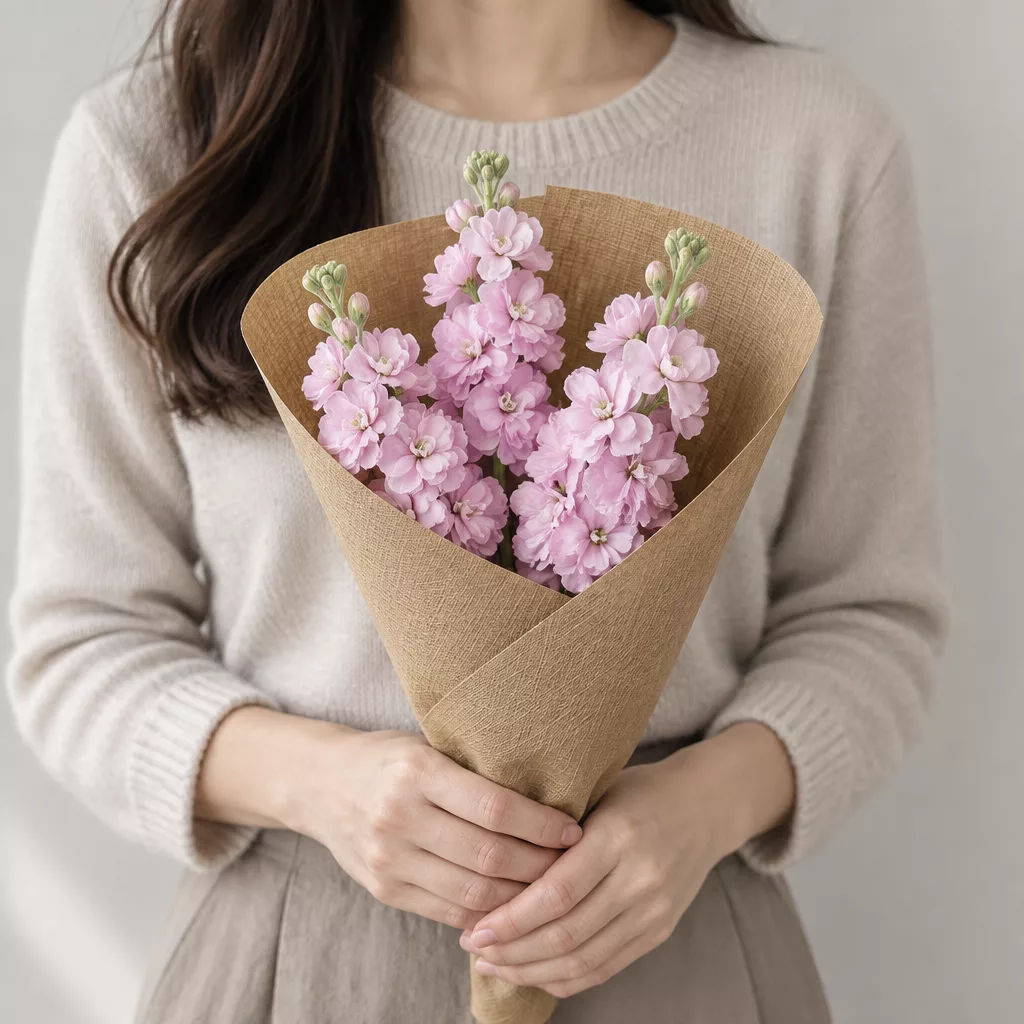
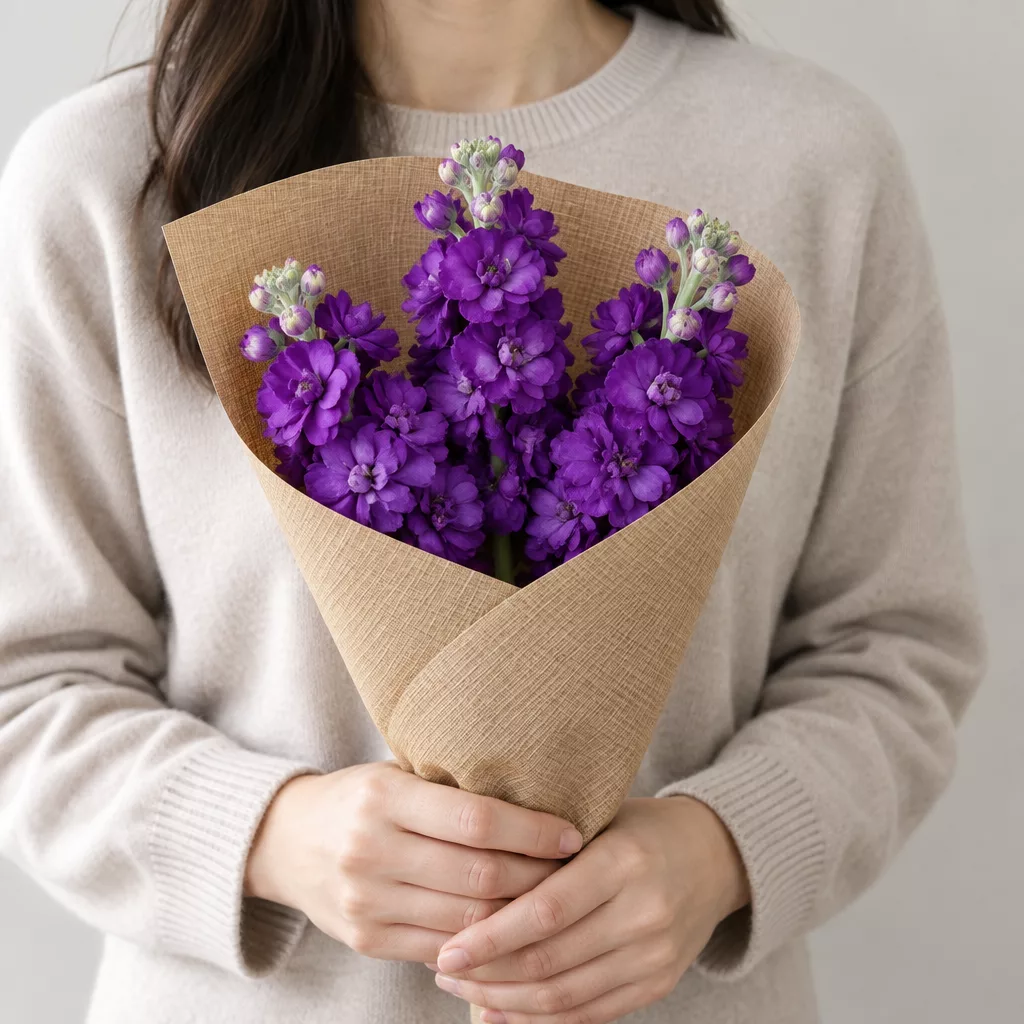
Bouquets we can deliver


Choosing Between Russian and English for Your Message
If you are a non-Russian speaker sending flowers inside Russia, the question of language is the first practical decision to make. The honest answer is that it depends on your relationship with the recipient. A close friend who is fluent in English will treasure a heartfelt note in your native language — it is authentically you. A colleague's grandmother celebrating her seventieth birthday may not read English at all, and a card she cannot understand will confuse rather than delight.
For recipients who may not read English comfortably, writing your message in English and asking for a Russian translation in the order notes is the most reliable approach. A good florist team can render a short personal message accurately. Keep the original simple and direct — avoid idioms, slang, or cultural references that do not translate cleanly. 'I am so proud of everything you have achieved' translates beautifully. 'You absolutely smashed it' does not.
If you want to write in Russian yourself and you have some knowledge of the language, that effort is always noticed and appreciated. Even a simple 'С днём рождения, я думаю о тебе' — Happy Birthday, I am thinking of you — carries warmth precisely because it required effort. If you are unsure of your spelling, type the message in a translation tool, then paste the Russian text directly into the order form. The florist will print exactly what you submit, so double-check the text before confirming. A small typo in a name is the most common and most avoidable mistake.
What to Actually Write: Phrases That Land Well
The most effective message cards share three qualities: they name the occasion, they name the person, and they include one specific detail that only the sender would know. 'Happy Birthday, Masha — I still think about that summer in Sochi' will mean infinitely more than 'Wishing you all the best on your special day.' Specificity is the difference between a message that moves someone and one that is forgotten by evening.
For birthdays, lead with warmth rather than formality. Russian birthday culture is exuberant — wishes are expected to be generous and heartfelt, not understated. Something like 'May this year bring you everything you have been quietly hoping for' works well because it is personal without being intrusive. Avoid the English habit of ironic understatement; it rarely translates and can read as indifference.
For professional occasions — a promotion, a business opening, a work anniversary — keep the tone celebratory but measured. Acknowledge the achievement specifically: 'Opening your own studio took courage and years of work. Today that deserves flowers.' This kind of message respects the professional relationship while still feeling human.
For romantic occasions, shorter is almost always better. A single sentence that is completely true will outlast a paragraph of borrowed poetry. If you are stuck, try finishing this sentence honestly: 'I am sending these because...' Whatever comes after that word 'because' is usually exactly right. Write that, and nothing more. The flowers themselves carry the rest of the feeling — your words just need to confirm who sent them and why.
How to Enter Your Message When Placing the Order
When you place a flower delivery order with Turboflora, there is a dedicated field for the card message during checkout. This is not the same as the delivery instructions field — that one is for the courier, covering details like gate codes or which entrance to use. The message card field is specifically for the text that will be printed on the card and placed inside the bouquet wrapping. Using the wrong field is the most common technical mistake and means your personal words may never reach the recipient.
Type your message exactly as you want it to appear. Punctuation, line breaks, and capitalisation will all be reproduced. If you want the card to read across two lines — a greeting on the first, your name on the second — use a line break in the text field. If you want a comma after the recipient's name, include it. The florist prints the message as submitted and does not edit for style or grammar unless you have specifically asked for a translation.
If you are submitting text in Cyrillic and your keyboard is set to a Latin layout, copy and paste from a separate document to avoid accidental character substitution. Some browsers auto-correct Cyrillic input in unexpected ways. After submitting the order, check the confirmation email — the message text is usually included there, giving you one final chance to spot an error. If you notice a mistake, contact the team immediately. Orders for same-day delivery move quickly, and the card is often printed within the first hour of confirmation.
Card Format, Printing, and How It Is Presented
The physical card that accompanies a Turboflora bouquet is a small kraft-paper or white card, typically tucked into an envelope that is sealed before the courier picks up the order. This matters for privacy — the recipient opens the envelope themselves, which means the message is genuinely personal and not read by the courier during transit. For many senders, especially those delivering a surprise, this confidentiality is important.
The text is printed cleanly in a legible font. Cards are not handwritten by default, but the printed format looks intentional and professional rather than impersonal. If the occasion is particularly significant — a proposal, a major anniversary — and you want to write the card yourself and photograph it to send as an image file, that option can be discussed when placing the order. A handwritten card from a photograph adds another layer of intimacy that printing cannot replicate.
The card is attached to the bouquet in a way that survives the journey. In winter, when deliveries across Saint Petersburg can involve temperatures well below zero, the card travels inside the insulated packaging alongside the flowers rather than clipped to the outside. Roses and tulips are particularly sensitive to cold shock below minus five degrees Celsius, and the packaging is designed to protect both the blooms and the paper. By the time the bouquet is unwrapped, the card is dry, intact, and exactly as you submitted it — which is why getting the text right before you confirm the order is so much easier than trying to correct it afterwards.
Timing Your Message for Surprise Deliveries
A surprise delivery adds a layer of planning that a straightforward gift does not require. If the recipient is not expecting anything, the message card carries even more weight — it is the moment they understand what is happening and who thought of them. The phrasing should acknowledge the surprise rather than assume the recipient already knows the context. 'I wanted today to feel special, so I sent these ahead of calling you' is better than a message that presupposes a conversation that has not happened yet.
For surprise deliveries, avoid including information in the card that reveals the delivery time or address — this sounds obvious but matters if someone other than the recipient might be present. A card that reads 'I hope you are home right now!' can feel awkward if the flowers are accepted by a flatmate or family member before the intended recipient returns.
Timing the delivery itself is part of the message. Flowers that arrive at nine in the morning on a birthday say something different from flowers that arrive at six in the evening. Morning deliveries feel like the sender woke up thinking about the occasion. Evening deliveries feel like a celebration at the end of the day. If you are in a different time zone, calculate carefully — a delivery scheduled for what feels like mid-morning to you might land at midnight in Russia. Turboflora delivers across Russia with a one-to-two hour window, so you can be precise about when the moment happens. The card you have written will land at exactly the right time if you plan the slot with the same care you gave the words.
Common Mistakes and How to Avoid Them
The single most frequent mistake is leaving the message field blank with the intention of 'sorting it later.' There is no later once the order is confirmed and the bouquet is being assembled. If you are genuinely unsure what to write, place a draft message — even a simple one — and refine it before you confirm payment. A placeholder is always easier to improve than an empty field is to fill after the fact.
The second common mistake is writing the recipient's name incorrectly. In Russian naming conventions, people have a first name, a patronymic, and a family name. In casual and personal contexts, the first name alone is perfectly warm and appropriate. In more formal contexts — sending flowers to a senior colleague or someone you do not know well — using the first name and patronymic together is respectful. If you are unsure of the patronymic, the first name is always safe. What is not safe is misspelling the name entirely, which happens when senders type quickly and do not review.
A third mistake is writing a message that is intended for one person but could be misread by another. If the flowers might be accepted by a family member, a colleague, or a building concierge before reaching the recipient, consider whether the card text is appropriate for unexpected eyes. This is particularly relevant for romantic messages. The sealed envelope provides privacy, but not every delivery situation guarantees the envelope reaches the intended person first. A warm, clearly addressed message — 'For Elena, from Mikhail' — removes any ambiguity without sacrificing warmth.
The flowers you send across Russia will be unwrapped, admired, and placed in water. Within a week, even the hardiest chrysanthemums and alstroemerias will have finished their time on the table. But a card that says exactly the right thing — personal, honest, addressed to the right person for the right reason — gets tucked into a drawer or propped on a shelf. People keep the ones that made them feel seen. That is entirely within your control, and it costs nothing extra. Write something true, check the spelling of the name, use the correct field when you order, and let the flowers do the rest. We deliver bouquets across Russia in 1–2 hours.
Frequently asked questions
Can I write my message card in English if the recipient is in Russia?
Yes, and for recipients who read English comfortably it is a lovely personal touch. If the recipient may not read English well, write your message in English and add a note requesting a Russian translation. Keep the original simple and literal so the meaning carries across cleanly. Avoid idioms or cultural references that do not translate directly.
What if I make a mistake in the message after placing the order?
Contact Turboflora immediately after spotting the error. Same-day orders move quickly — the card is often printed within the first hour of confirmation — so speed matters. Include your order number and the corrected text in your message. If the card has already been printed and the bouquet is with the courier, correction may not be possible for that delivery.
Is the message card shown to the courier or anyone else before delivery?
No. The card is placed inside a sealed envelope that is tucked into the bouquet packaging before the courier collects the order. The recipient opens the envelope themselves. This ensures your message remains private during transit, which is particularly important for surprise deliveries or romantic occasions where confidentiality matters.
How long should my message card text be?
Two to four sentences is the sweet spot for most occasions. The card is small, and text that is too long becomes dense and hard to read in the moment of unwrapping. One specific, honest sentence often has more impact than a lengthy paragraph. If you have a great deal to say, save the longer message for a call or letter and let the card carry the essential feeling.
Can I use a name and patronymic on the card if I want to be formal?
Absolutely, and it is a thoughtful choice for professional occasions or when sending to someone older or senior in status. The format is first name followed by patronymic — for example, 'Для Натальи Ивановны.' If you are unsure of the patronymic, using the first name alone is always appropriate and warm. Never guess at a patronymic, as an incorrect one can feel more jarring than omitting it entirely.
Ready to send flowers?
Pick the city, choose the bouquet, and a local florist takes it from there.
Choose a city →