Sending Flowers to Russia With a Personal Note That Lands Right
The bouquet arrives at the door, the ribbon is perfect, the roses are still cool from transit — and then the recipient reads the card. That moment is the one you planned for. Getting the message exactly right, in the right language, formatted so it prints cleanly, matters just as much as choosing between blush peonies and deep-red spray roses. This guide walks you through every step so nothing gets lost between your keyboard and that front door in Moscow, Saint Petersburg, or anywhere else across Russia.
Why the Card Matters More Than You Might Think
In Russian gift culture, a written message carries real weight. Flowers arrive at birthdays, anniversaries, graduations, and professional milestones, and the card is often kept long after the petals have dropped. Recipients read it more than once. Family members may ask what it said. That context means a vague or generic note — 'Happy Birthday, cheers' — can feel like a missed opportunity, even when the bouquet itself is stunning.
The card also does practical work. When a courier hands over a large arrangement of garden roses, lisianthus, and eucalyptus to someone at an office reception, the card confirms who sent it and why. Without that clarity, the moment of recognition — the smile, the surprise — is delayed or diluted.
There is another reason to take the card seriously: translation errors travel with the flowers. If you type a message in English and assume an automatic rendering into Russian will handle tone and tenderness, you risk the opposite. Machine-translated Russian can sound cold, formal, or simply odd. A note that reads naturally in English does not always convert word-for-word into something that feels warm in Russian.
Turboflora lets you write the card yourself, in the language of your choice, so you keep control of the tone from start to finish. Understanding your options before you place the order means the message you imagined is the message that gets printed.
Bouquets we can deliver

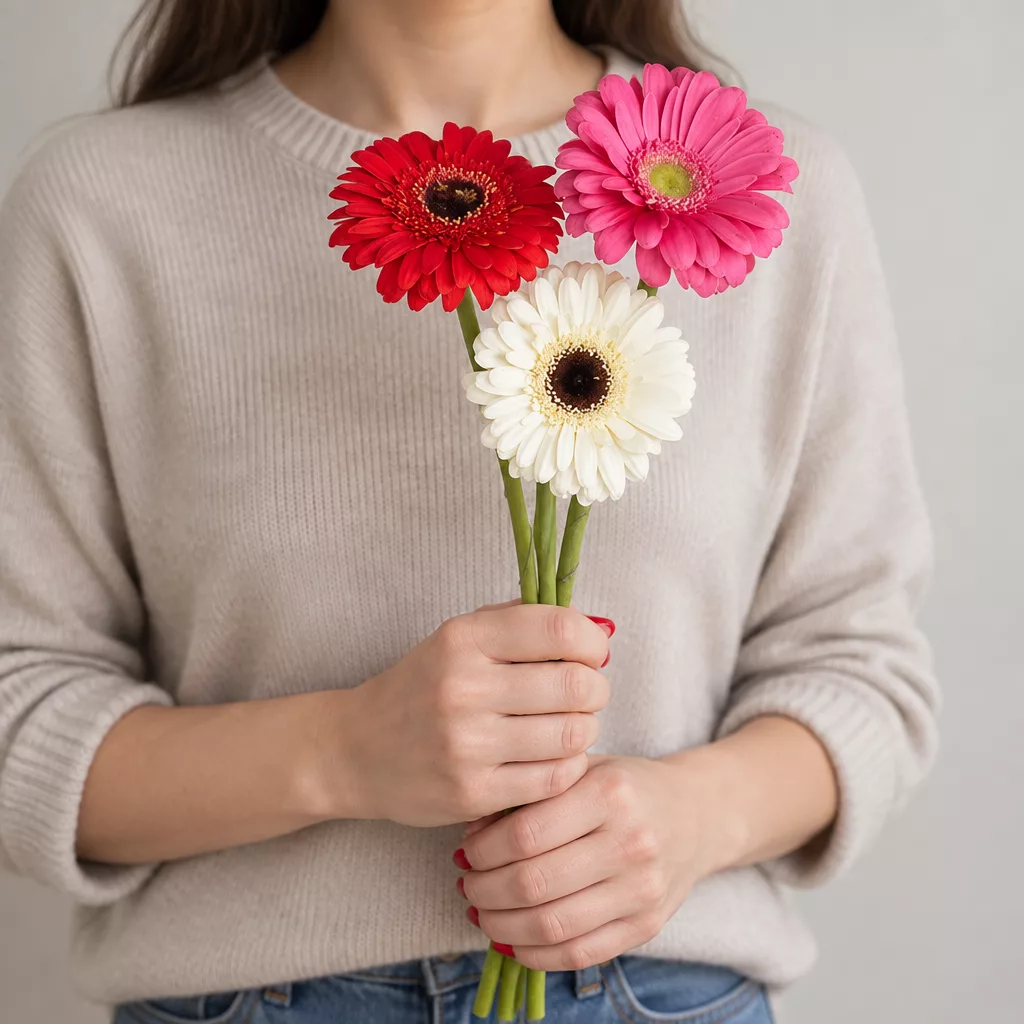
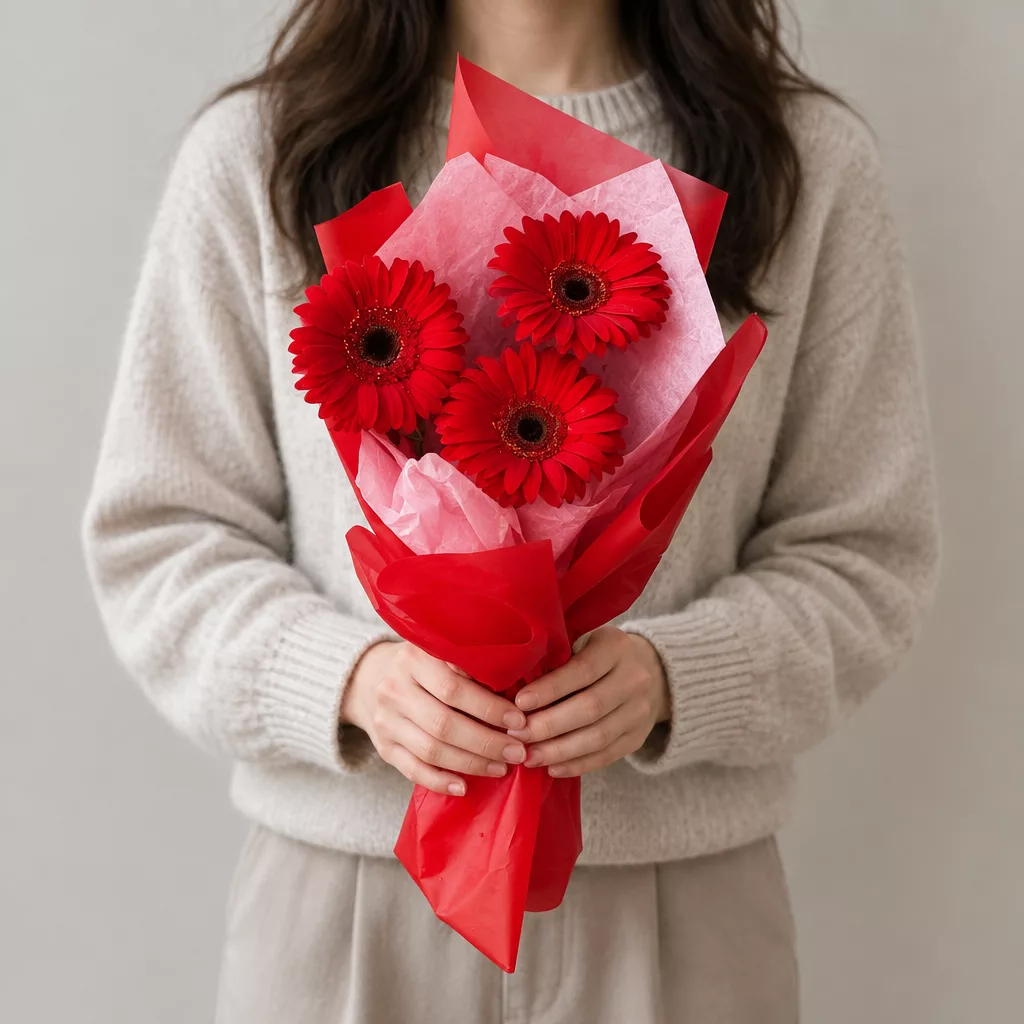
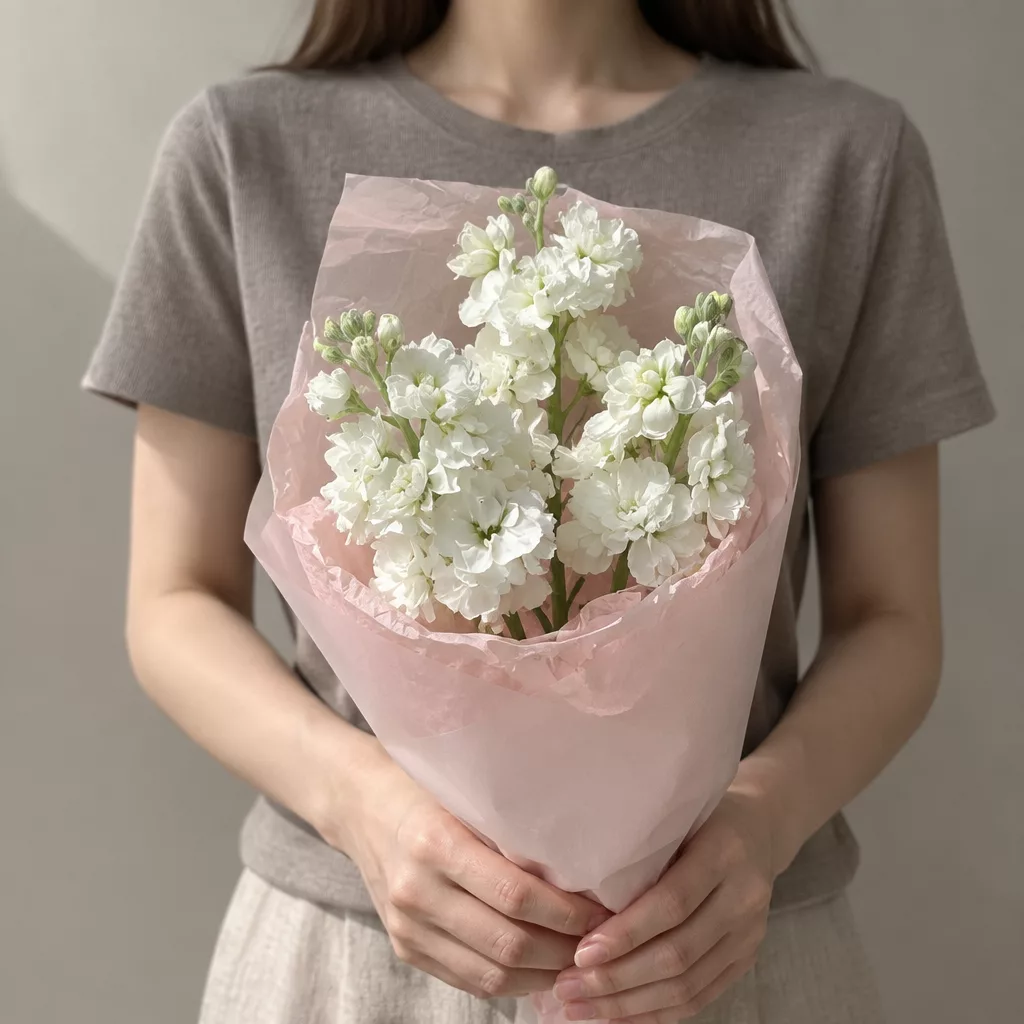
Card Formats Available When You Order Through Turboflora
When you place an order on turboflora.com, the card field appears during checkout. You type your message directly into that field, and it is printed onto a small card that travels with the bouquet. The card is attached to the packaging in a way that keeps it visible but protected — it will not blow off in transit or get soaked if the wrapping picks up condensation on a cold Saint Petersburg afternoon.
The standard card is compact, which means the printed text needs to fit within a defined space. Turboflora supports messages of up to 250 characters including spaces. That is roughly three to four short sentences, which is usually enough for a heartfelt note without crowding the card. If you find yourself editing down, treat it like writing a telegram: every word should earn its place.
You can also leave the card field blank and select the anonymous delivery option if the surprise element matters more than a written message. The flowers still arrive beautifully packaged, and the recipient simply does not know who sent them — which can itself be a statement.
For longer dedications, some customers type a short card message and then follow up with a personal message sent directly to the recipient by phone or email after delivery is confirmed. That combination works well for milestone events like a fortieth birthday or a work anniversary, where the bouquet of white and blush hydrangeas is the opening act and the longer letter is the main event.
Choosing the Right Language for Your Message
Turboflora prints the card exactly as you type it. That means you can write in Russian, English, or any language that uses a standard keyboard. If your recipient is fluent in English and you are writing from abroad, an English message is perfectly fine and will feel personal rather than distant. Many recipients across Russia's major cities read English comfortably, particularly in professional environments.
If you want to write in Russian but are not confident in the language, the safest approach is to draft the message in your own language first, then ask a native speaker to translate it before you paste it into the order form. This takes an extra ten minutes and makes an enormous difference. A line like 'I am thinking of you every day' translates into Russian with warmth when done carefully, but can come out stiff or ambiguous through an automated tool.
If you do use a translation tool, read the result aloud in your head and ask whether it sounds like something a person would actually say. Russian is a language where word order and diminutives carry emotional colour. 'Pozdravlyayu' is congratulations, formal and correct. 'Ot vsego serdtsa' means from the whole heart and lands very differently. These small choices shape how the card feels.
For messages to older recipients or those in smaller cities where English is less common, a Russian-language card is always the warmer choice. Even a simple phrase typed correctly in Cyrillic — or in transliterated Russian if Cyrillic is not available on your keyboard — will be appreciated more than a polished English paragraph that requires effort to decode.
What to Actually Write: Tone and Structure That Work
Russian card messages tend to be warmer and slightly more formal than equivalent English notes. Where an English card might say 'Happy Birthday! Hope your day is amazing,' a Russian equivalent often opens with a wish for health, happiness, and success — in that order. Health first is a cultural reflex, not a cliché. For someone's birthday, wishing them zdorovya (health) before anything else signals genuine care.
For a bouquet of garden roses sent to mark a colleague's promotion, a message that acknowledges the achievement specifically — 'Your dedication made this happen, and everyone around you knows it' — lands better than a generic congratulations. Specificity is the difference between a card that gets pinned to a board and one that gets politely set aside.
For romantic occasions, restraint often works better than extravagance on the card itself. A simple 'You make every room brighter' paired with a striking arrangement of deep-burgundy ranunculus and dusty miller says more than a paragraph of superlatives. Let the flowers carry the visual weight; let the card carry the feeling.
Avoid jokes that depend on shared cultural references if you are not certain they will translate. Humour is wonderful in the right context, but a pun that requires three layers of English wordplay will land flat in Russian. Save the wit for a follow-up call and use the card for something clear and true.
If the occasion is a new baby or a housewarming, short and joyful is exactly right. 'Welcome to your beautiful new home' paired with a mixed arrangement of white tulips and soft-yellow freesia is complete on its own.
Timing the Message Alongside the Delivery
Turboflora delivers within one to two hours across Saint Petersburg and to cities across Russia, which means you can time a card message with real precision. If you want the flowers to arrive at ten in the morning on a birthday, before the recipient leaves for lunch with friends, you can schedule that. The card message is part of that timing — it reads differently at ten in the morning than it does at seven in the evening.
Think about where the recipient will be when the flowers arrive. An office delivery means the card will likely be read in front of colleagues. A home delivery is more private. That context should shape your tone. A deeply personal note is beautiful at home; at an open-plan office, something warm but slightly less intimate might feel more comfortable for the recipient.
If you are sending from a significantly different time zone — from New York or London, for example — double-check the delivery window against local Russian time. Turboflora's checkout uses Moscow time as the reference. A delivery scheduled for nine in the morning Moscow time is not nine in the morning in your city, and getting that wrong means the flowers arrive at an unexpected hour, which changes the whole experience.
If you are marking an exact moment — the hour someone defends a thesis, the moment a performance ends — coordinate the delivery window tightly and keep the card message short and immediate. 'You did it. I knew you would.' is enough. The flowers and the timing together do the rest of the work.
Common Mistakes to Avoid When Writing the Card
The most frequent mistake is writing the card as an afterthought, in the final seconds before clicking confirm. The message ends up shorter and vaguer than intended, and the sender immediately wishes they had said more. Treat the card as a first draft: write it somewhere else, read it once, then paste it into the order form.
Another common error is using the recipient's name inconsistently. Russian names have diminutives that signal closeness — Natasha for Natalya, Sasha for Alexander, Masha for Maria. If you know which form the person uses in daily life, use that. Using the formal full name on a card from a close friend can feel oddly distant, while using a diminutive you have never actually used before can feel presumptuous.
Avoiding all punctuation because you are unsure how it will print is unnecessary. Turboflora's card printing handles standard punctuation correctly — commas, periods, exclamation marks, and ellipses all render as expected. Write the message as you would write it naturally.
Do not leave the sender name off the card if you are sending anonymously in a playful way and then planning to reveal yourself later. Make sure the recipient has a way to connect the flowers to you within a reasonable time — particularly if they will need to thank you in a professional context or if the delivery happens at a shared address where more than one person might be expecting flowers that day.
Finally, proofread for autocorrect errors. A message typed on a phone is especially vulnerable. 'I miss you so much' becoming 'I miss you so mush' is a small thing that nonetheless distracts from the moment.
Making the Card and the Bouquet Work Together
The best card messages echo something in the flowers themselves. This is not a rule, but it is a habit that experienced florists notice. A bouquet built around pale-lilac lisianthus and white veronica has a quiet, thoughtful quality. A card that says 'I have been thinking about you a lot lately' matches that mood. A card that says 'Congratulations on smashing your targets!' does not, and the mismatch is subtle but real.
When you are choosing the arrangement on turboflora.com, read the description and look at the palette. Then write the card with that palette in mind. Bright sunflowers and orange gerbera carry energy and optimism — the card can afford to be bold and cheerful. Soft garden roses in blush and ivory suggest something more tender — the card should match.
The presentation of the bouquet also sets a stage. Turboflora wraps arrangements carefully, and the unwrapping itself is part of the experience. The card is typically the first thing the recipient sees before the flowers are fully revealed. That means the card sets the emotional register for the whole moment. A card that opens with the recipient's name — 'For Marina, who deserves every one of these flowers' — is already doing something generous before a single stem is unwrapped.
Think of the card and the bouquet as a single gift, not two separate elements. When they speak the same language — visually, emotionally, and literally — the person receiving them feels it. That coherence is what makes a flower delivery memorable rather than simply pleasant.
Sending flowers to Russia is not complicated, and neither is writing the card that goes with them. The character limit keeps you focused, the language choice is yours to make, and the tone should simply sound like you at your most genuine. Give the card the same few minutes of care you give to choosing the right bouquet, and the whole gift arrives as one complete, considered thing. Turboflora handles the transit, the timing, and the presentation — your job is just to say what you mean, clearly and warmly, in the space provided.
Frequently asked questions
Can I write the card message in English if my recipient lives in Russia?
Yes. Turboflora prints the card exactly as you type it, so English is perfectly fine. If your recipient reads English comfortably, an English message feels personal and direct. For recipients who are less confident in English, particularly older family members or those in smaller cities, a Russian-language message will feel warmer and more immediate.
What is the character limit for a card message on turboflora.com?
The card field supports up to 250 characters including spaces. That is typically three to four short sentences — enough for a genuine, specific message without crowding the printed card. Write the message somewhere else first, count the characters, then paste it into the order form to avoid last-minute cutting.
Can I send flowers anonymously without including any card at all?
Yes. You can leave the card field blank and select anonymous delivery. The bouquet arrives beautifully packaged with no indication of the sender. Some customers combine this with a personal message sent directly by phone or email after delivery is confirmed, so the surprise lands first and the explanation follows shortly after.
Will punctuation and special characters print correctly on the card?
Standard punctuation — commas, periods, exclamation marks, question marks, and ellipses — prints correctly. Cyrillic characters also render as expected if you type them directly into the field. Avoid unusual symbols or formatting characters, and always proofread on a desktop browser rather than a phone to catch autocorrect errors before confirming the order.
Is there a way to include a longer message if 250 characters is not enough?
The printed card is limited to 250 characters, so for a longer dedication, write a concise card message for the bouquet and send a fuller personal letter separately by email or message after delivery is confirmed. Many customers use this two-step approach for significant milestones — the card opens the moment, and the longer message deepens it.
Ready to send flowers?
Pick the city, choose the bouquet, and a local florist takes it from there.
Choose a city →