Receiving Flowers in Russia: What Happens at the Door
You have chosen the flowers, placed the order, and tracked the courier to the address. Now comes the moment you cannot see — the door opens, and someone you care about is standing there holding a bouquet. If you have never been in that room, the next few minutes might surprise you. Russian flower-receiving customs are warm, specific, and quietly meaningful, and understanding them helps you choose better and give more confidently.
The First Seconds: Why Russians Do Not Tear Into the Wrapping
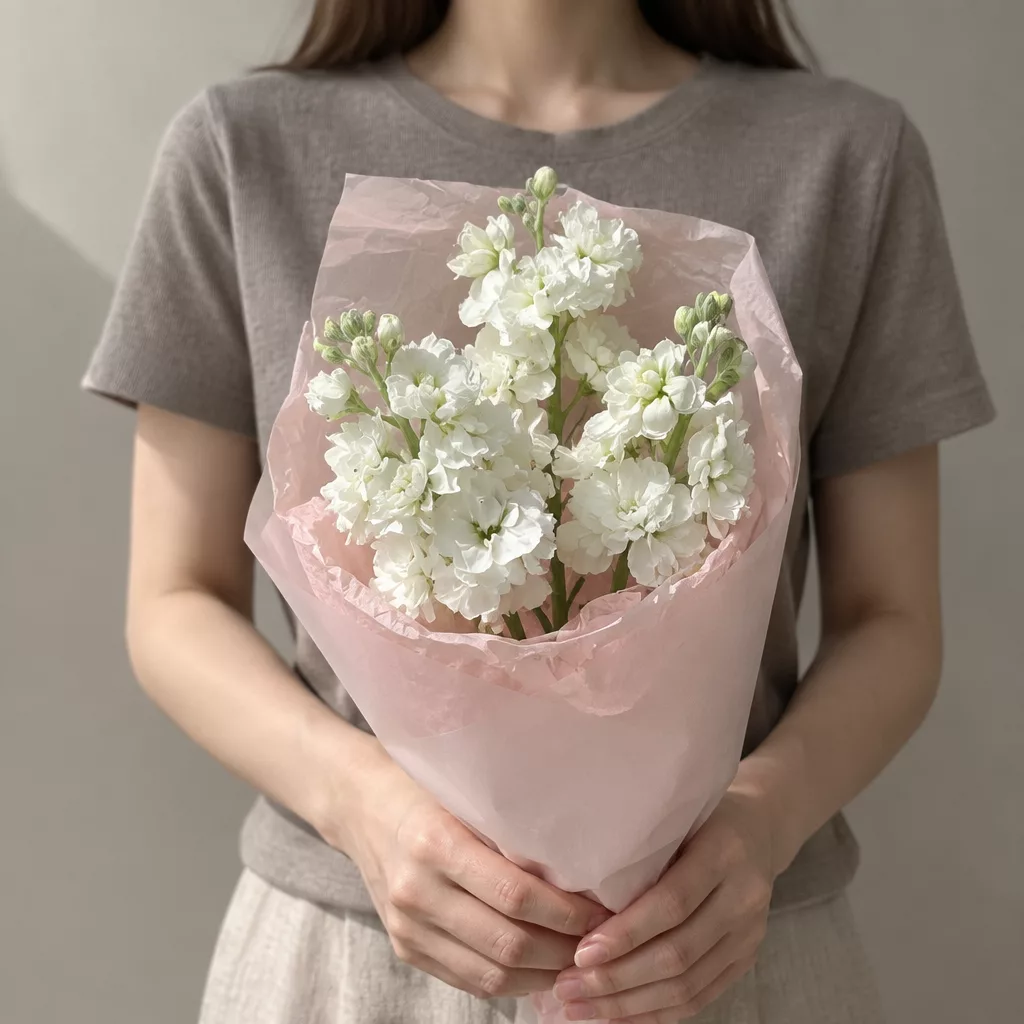
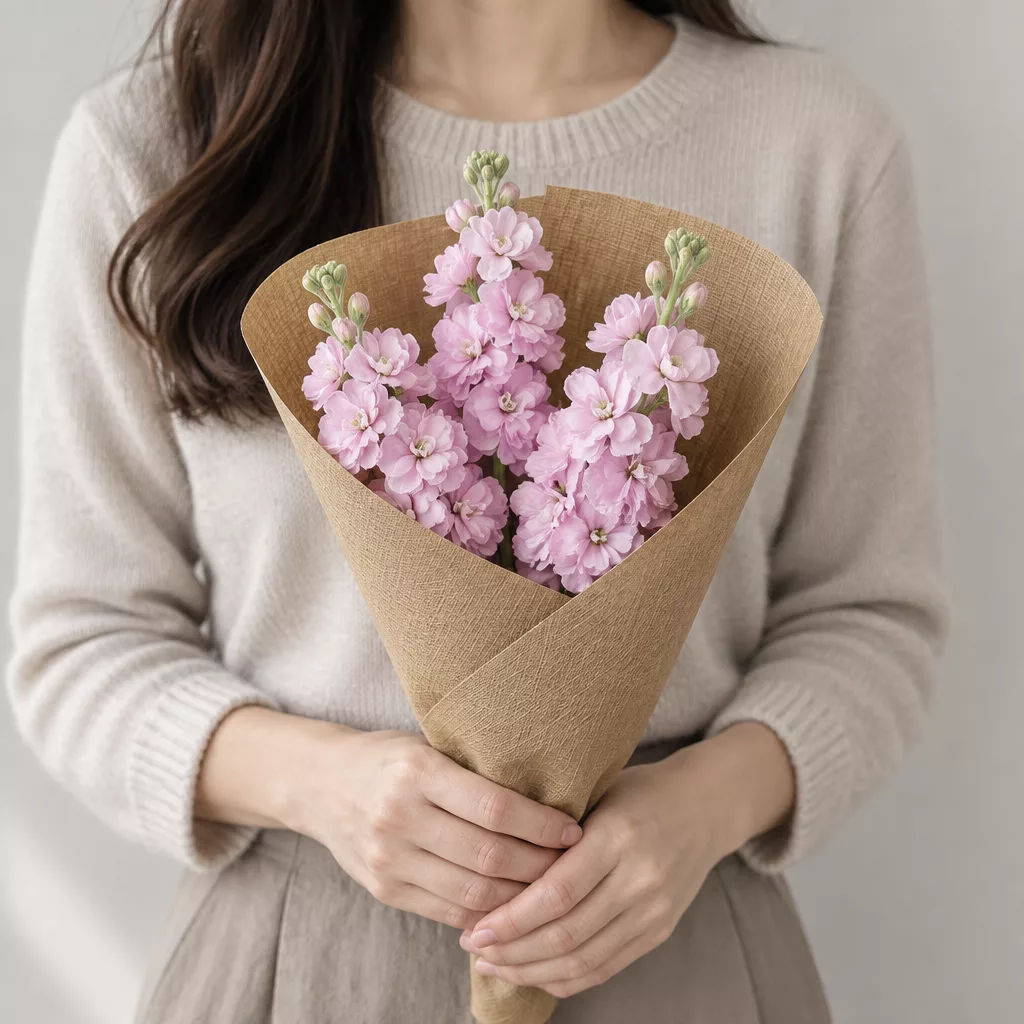
In many Western countries, unwrapping a bouquet immediately feels natural — you want to see what is inside, and doing so shows enthusiasm. In Russia, the instinct runs differently. Most recipients will hold the bouquet for a moment, look at it as a whole composition, and take in the colours and the overall shape before anything else. The wrapping itself is considered part of the gift. A well-dressed bouquet in kraft paper, satin ribbon, or a structured box signals that thought went into the presentation, and opening it too quickly can feel almost disrespectful to that effort.
This does not mean the recipient is indifferent. Quite the opposite — they are reading the bouquet. Roses in deep red communicate one thing; a loose arrangement of garden ranunculus and eucalyptus communicates another. The pause is attentive, not passive. Many recipients will smell the flowers through the wrapping before they say a word, particularly if peonies, freesias, or garden roses are involved, because fragrance is the first real confirmation that these are fresh.
If you are sending flowers with a message card, that card will almost always be read privately, away from the courier. Russians tend to treat written sentiments as personal, not performative. The courier will hand over the bouquet, the recipient will thank them, and the card will be read once the door is closed. Plan your message accordingly — it does not need to be brief just because no one else will hear it.
Bouquets we can deliver


What a Russian Recipient Will Actually Say Out Loud
The verbal response to receiving flowers in Russia follows a recognisable pattern, even if the exact words vary. The most common immediate reaction is some version of 'Kakaya krasota' — roughly, 'What beauty' or 'How beautiful.' It is not a formal phrase; it is a genuine reflex, and you will hear it whether the recipient is a grandmother receiving tulips from her grandchildren or a colleague accepting a corporate arrangement. The word 'krasota' — beauty — carries real weight in Russian culture, and using it about a bouquet is a sincere compliment.
After that first moment, the recipient will almost always ask who sent the flowers, even if they suspect the answer. This is not coyness. It is part of the ritual of receiving — the acknowledgement that someone chose them, specifically, and took the time. If the bouquet arrives as a surprise from a distant sender, this question carries particular warmth.
Thank-you messages sent back to the giver tend to arrive within the hour. Russian recipients are conscientious about this. If you are sending flowers from abroad or from another city, expect a photograph of the bouquet to land in your messages alongside the thanks — often taken in natural light, near a window, with the wrapping still on. This photograph is the Russian equivalent of a handwritten thank-you note. It tells you the flowers arrived in good condition, that they made an impression, and that the person wanted you to see what you gave them.
The Unwrapping Ritual and Getting Flowers Into Water
Once the initial moment has passed, the recipient moves to the practical side, and this is where the care you put into your order actually shows. A bouquet that has been handled well during delivery — stems wrapped in damp tissue, temperature maintained — will look as fresh on the kitchen counter as it did in the shop. Flowers that have been in transit for more than two hours without proper conditioning will show it immediately: drooping heads, split stems on roses, closed buds on lilies that feel stiff rather than yielding.
Russian households almost universally own at least one tall vase, because flowers are given and received often enough to make it a practical necessity. The recipient will cut the stems — usually at an angle, usually under running water — and arrange the bouquet themselves. This rearranging is not a criticism of the florist's work. It is a way of engaging with the gift, of making it theirs. Many people will separate the flowers by type before reassembling them, which is why combinations that look good both together and apart are worth thinking about when you order.
Tulips go into cold water and a cool room; they will last five to seven days that way. Roses prefer room-temperature water and a clean vase rinsed with a little vinegar beforehand. Peonies, if they arrive as tight buds, can be placed in warm water for an hour to encourage them to open. Sharing these small tips in your message card — or asking us to include a care note with the order — is something Russian recipients genuinely appreciate.
Odd Numbers, Even Numbers, and What Russians Actually Count
If you have read anything about Russian flower customs, you have almost certainly encountered the rule about odd numbers. Bouquets given to the living are traditionally odd-numbered — one, three, five, seven, eleven, fifteen. Even numbers are associated with mourning and are not given as celebratory gifts. This rule is taken seriously enough that a recipient will often count the stems, consciously or not, particularly if they are of an older generation.
In practice, this means your order should never be a bouquet of ten roses or twelve tulips presented as a personal gift. Round dozens feel like a purchasing decision rather than a considered gesture. An arrangement of eleven or thirteen stems signals that someone thought about it. Modern recipients in their twenties and thirties are somewhat more relaxed about this, especially with mixed bouquets where counting individual stems is less obvious, but the instinct to notice is still there.
The size of the bouquet also communicates something. A single large peony or a trio of garden roses can be as meaningful as a grand arrangement, provided the flowers are exceptional quality. Conversely, a very large bouquet of mediocre flowers reads as effort without attention. Russian recipients are perceptive about this distinction — they notice stem quality, freshness at the petal edges, and whether the greens look hydrated or tired. This is not snobbery; it is familiarity. Flowers are part of everyday life in Russia in a way that makes people genuinely knowledgeable about them.
When Flowers Arrive at the Office or a Public Place
Workplace deliveries carry their own particular energy. When a courier arrives at an office with a bouquet, the entire room tends to notice. Colleagues will comment, ask questions, and admire the flowers — this is expected and welcomed, not intrusive. The recipient will display the bouquet on their desk or a shared surface, and it becomes a small social event for the afternoon. Choosing something visually striking for an office delivery pays off in this context: spray roses in coral or peach, lisianthus in deep violet, or a structured arrangement with solidago and hypericum berries will attract more genuine admiration than a conventional red-rose dozen.
The recipient in an office setting will typically not read the message card in front of colleagues. They will slip it into a drawer or pocket immediately. If you are sending a professional congratulation — a promotion, a work anniversary, a successful project — the message can be warm and direct without being personal. If the flowers are romantic in any way, keep the card understated, because the recipient will be aware that curious eyes are nearby.
Deliveries to shared spaces like reception desks or building lobbies should always include a clear name and sometimes a flat or office number. In large residential complexes in Saint Petersburg and other Russian cities, courier access can require a code or intercom confirmation, and we handle this as part of every delivery. What matters for the recipient is that the flowers arrive looking as though they have just been assembled — not as though they have spent an hour waiting in a lobby.
Making the Moment Last: Vase Life and What Recipients Do Next
The bouquet has been unwrapped, placed in water, and admired. What happens over the following days matters more than most senders realise, because a bouquet that lasts ten days leaves a much longer impression than one that wilts by day three. Russian recipients are attentive caretakers of cut flowers, partly out of practical habit and partly because the flowers represent someone's thought and money.
The standard routine in a Russian household is to change the water every two days, recut the stems slightly each time, and keep the vase away from direct sun and radiators. In winter, when central heating makes indoor air very dry, this is particularly important — radiators can shorten the life of roses and ranunculus by two or three days. A cool hallway or a kitchen windowsill away from heat sources is often the best spot.
As individual flowers fade, recipients will often remove them and rearrange what remains. A bouquet of mixed flowers — say, garden roses with waxflower and eucalyptus — will outlast its roses by several days once the stems are separated. The eucalyptus and waxflower will continue looking fresh long after the roses have given their best. This is one reason combination bouquets feel generous over time: they keep giving in stages.
When the last flower finally goes, many Russian recipients dry a favourite stem or press a petal, particularly if the occasion was significant — a birthday with a round number, a first meeting, a long-distance reunion. The bouquet becomes a small archive of a moment. Choosing flowers that dry well, like statice, lavender, or gypsophila, is a quiet way of extending that feeling for weeks beyond the delivery.
Sending flowers to someone in Russia is an act that lands in a specific cultural context — one that values presentation, considers numbers, and treats the moment of receiving as something worth pausing for. When you understand how a Russian recipient reads a bouquet, you make better choices: the right stem count, the right combination, a message card written for private reading, flowers fresh enough to last and fragrant enough to notice. The gesture you planned becomes the experience they actually have.
Frequently asked questions
Should I always send an odd number of flowers to a Russian recipient?
Yes, for any celebratory or personal gift, odd numbers are the strong convention in Russia. Even numbers are associated with mourning occasions. Eleven, thirteen, or fifteen stems are all perfectly natural choices. With large mixed arrangements where individual stems are less obvious, the rule is less strictly applied, but it is always safer to stay odd.
Will a Russian recipient unwrap the bouquet in front of the courier?
Usually not fully. Most recipients will accept the bouquet, thank the courier, and close the door before unwrapping. The wrapping is considered part of the presentation. Expect the full appreciation to happen privately, followed by a photograph and message sent to you within the hour.
How long will the flowers last after delivery in a typical Russian home?
With proper care — fresh water every two days, stems recut at an angle, kept away from radiators and direct sunlight — roses typically last seven to ten days, tulips five to seven, and peonies five to eight depending on how open they were on arrival. Mixed bouquets with eucalyptus or waxflower often look presentable for up to two weeks as elements are removed.
Is it appropriate to send flowers to someone's workplace in Russia?
Absolutely. Office deliveries are warmly received and create a positive moment for the whole team. Choose something visually striking since it will be admired by colleagues. Keep any personal message on the card understated, as the recipient will be aware of their surroundings and will read it privately rather than aloud.
What should I write on the card if I am sending flowers from abroad?
Write naturally and personally — the card will be read in private, so there is no need to keep it brief or formal. Mention the occasion, say what you would say in person, and if you like, include a small care tip for the flowers. Russian recipients appreciate the detail. A warm, genuine note matters more than a perfectly worded one.
Ready to send flowers?
Pick the city, choose the bouquet, and a local florist takes it from there.
Choose a city →