Russian Birthday Flower Etiquette: Rules You Should Know
Sending flowers to someone in Russia for their birthday feels like a generous, straightforward gesture — and it is. But a few local customs shape how a bouquet is received, and knowing them in advance means your gift arrives feeling thoughtful rather than accidental. Whether you are ordering from abroad for a friend in Saint Petersburg or choosing flowers for a Russian colleague, these unwritten rules are easy to follow once someone explains them plainly.
Why the Number of Stems Matters More Than You Might Expect
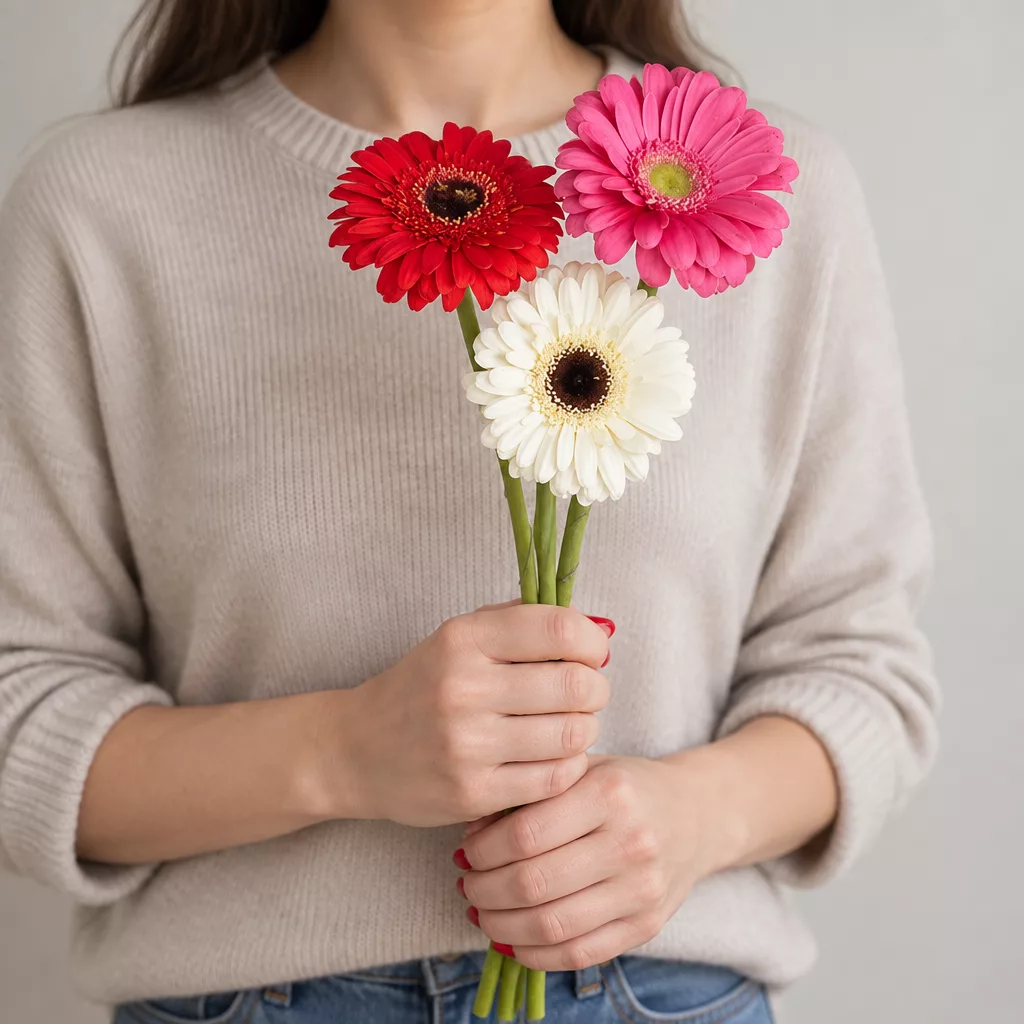
The single most important rule in Russian flower-giving is the odd-number rule. Bouquets for living celebrations — birthdays, anniversaries, graduations — are always built with an odd number of stems: three, five, seven, eleven, fifteen, and so on. Even numbers are reserved for mourning, and arriving at a birthday party with a bouquet of ten roses or twelve tulips carries an association most Russians will notice immediately, even if they are too polite to say so.
This is not a superstition that is fading with younger generations. It remains genuinely observed across age groups and across the country, from Saint Petersburg to Vladivostok. If you are ordering online and the shop allows you to specify stem count, always choose an odd number.
The rule does apply to mixed bouquets as well, though it is counted by the total number of flower heads rather than the number of varieties. A bouquet of five roses, three lisianthus stems and three alstroemeria branches would be counted differently depending on how the stems are cut, so the safest approach is to let your florist know you want an odd count and allow them to compose accordingly. At Turboflora, every birthday bouquet is assembled with this in mind by default, so you do not need to specify it separately — but it is still worth understanding why the rule exists so you can feel confident in the choice.
Bouquets we can deliver



Colours That Celebrate and Colours That Complicate
Colour carries meaning in Russian flower culture, and birthday bouquets lean strongly toward warm, vivid, celebratory tones. Red roses remain the most classic birthday choice for romantic relationships, while bright pinks, corals, oranges and yellows read as festive and joyful for friends, family members and colleagues. Soft whites and creams are elegant and widely accepted, particularly for older recipients or formal occasions.
Yellow flowers occupy a complicated middle ground. In some older Russian traditions, yellow blooms — particularly yellow roses — are associated with separation or infidelity. This belief is less universal than the odd-number rule, and many younger Russians do not hold it at all. However, if you are unsure of the recipient's background or age, mixing yellow with other warm tones rather than sending a purely yellow bouquet is a simple way to sidestep any ambiguity. A sunflower arrangement with orange gerberas and white chrysanthemums, for instance, reads as cheerful and unambiguous.
White flowers on their own can sometimes feel austere to Russian recipients, particularly white lilies or white chrysanthemums in large quantities. Used in combination — white roses paired with pink peonies, white lisianthus woven through a coral arrangement — they are completely appropriate and very beautiful. The principle is that a birthday bouquet should feel warm and alive in its overall impression, whatever palette you choose. Think about the feeling the colours create together, not just each stem individually.
Flowers That Russians Typically Avoid for Birthdays
Beyond colour, certain flower types carry associations that make them less suitable for birthday gifts in Russian culture. Chrysanthemums are the most commonly cited example. In many parts of Russia, particularly among older generations, chrysanthemums are strongly associated with funerals and cemetery visits. A large white chrysanthemum bouquet delivered to someone's home on their birthday may cause genuine discomfort, even if the sender had no such intention.
This does not mean chrysanthemums are universally banned. Small spray chrysanthemums in vivid pinks or purples, used as filler in a mixed arrangement, are far less loaded with that association and are used by florists regularly. The issue arises mainly with large single-headed white or yellow chrysanthemums in prominent arrangements.
Carnations sit in a similar position. Plain red or pink carnations are perfectly acceptable, but all-white carnation bouquets have a formal, memorial quality in Russian perception that makes them an unusual birthday choice. Mixed bouquets that include carnations alongside roses or alstroemeria are entirely fine.
Iris and gladiolus, on the other hand, are enthusiastically received at birthdays — particularly for older recipients, for whom a tall gladiolus arrangement feels genuinely celebratory. Peonies, ranunculus, tulips, freesias and garden roses are all strongly associated with celebration and carry no ambiguous meaning. When in doubt, these varieties are the safest and most warmly received choices for a Russian birthday recipient.
Choosing by Relationship: Who You Are Giving to Changes Everything
The relationship between giver and recipient shapes the bouquet as much as any etiquette rule. For a romantic partner, red roses in odd numbers — eleven or fifteen for a more lavish gesture — remain the dominant choice and are received exactly as intended. Deep burgundy roses or a mix of red and white are also popular for romantic occasions, though the white-with-red combination is sometimes associated with romance specifically, so use it deliberately.
For a mother or grandmother, soft pinks, peach tones and lilac shades feel particularly appropriate. Peonies in late spring and early summer are an exceptional choice for older female relatives — they feel generous, fragrant and unmistakably celebratory. Freesias add fragrance without bulk and are often appreciated by recipients who find large arrangements difficult to manage in a small apartment.
For a colleague or professional acquaintance, a restrained but well-composed bouquet in neutral tones — cream roses, white lisianthus, pale green eucalyptus — is appropriate without being overly intimate. The size should be modest enough that carrying it on public transport is not an ordeal. Russians do frequently carry flowers on the metro, and a bouquet that is too large or too unwieldy creates a practical problem for the recipient.
For a male recipient, the tradition of giving flowers to men is more accepted in Russia than in many Western countries. A structured arrangement of bold single-variety flowers — sunflowers, large-headed roses or gladiolus — tends to feel appropriately masculine and is genuinely appreciated.
Timing and Freshness: When the Bouquet Arrives Matters
In Russian birthday culture, flowers are typically given at the moment of celebration — at the party itself, at the door when guests arrive, or delivered to coincide with the morning of the birthday. Sending flowers the day before a birthday is considered slightly off in Russian custom, as the celebration has not yet begun. The day of the birthday, or the evening of a birthday gathering, is the right window.
Freshness is taken seriously. Russians are experienced flower recipients and will notice immediately if roses are already opening too wide, if tulips are drooping, or if leaves are yellowing. A bouquet that arrives in tight bud and opens over the following two or three days is considered the ideal. This means the condition of the flowers at the point of assembly and the speed of delivery both matter enormously.
In warm weather — anything above eighteen degrees Celsius — cut flowers deteriorate quickly in transit if not handled correctly. Roses and tulips are particularly sensitive to heat. A florist who assembles the bouquet and delivers it within one to two hours is providing a meaningful quality advantage over a bouquet that has sat in a warehouse or travelled across the city for half a day.
Winter delivery in Saint Petersburg presents the opposite challenge: flowers must be protected from frost, particularly at temperatures below minus five Celsius. Tulips and gerberas are especially vulnerable to cold damage, which appears as translucent, water-soaked patches on the petals. Proper wrapping and fast delivery protect against this entirely.
Presentation and Wrapping: The Russian Expectation
Russians place considerable value on the visual presentation of a bouquet, often more so than recipients in some other countries. The wrapping, ribbon and overall silhouette of the arrangement are considered part of the gift, not an afterthought. A beautifully wrapped bouquet handed over with care signals that the giver put genuine thought into the gesture.
Kraft paper wrapping has become fashionable in Russia over the past decade, particularly for garden-style bouquets with ranunculus, anemones and lisianthus. Satin ribbon and cellophane wrapping remain popular for more classic rose arrangements. The important point is that the presentation should look finished and intentional — not simply flowers bundled together.
Many Russian recipients keep the wrapping on the bouquet for some time after receiving it, particularly if it is being photographed or displayed at a party. This means the wrapping needs to hold its shape and look good even as the flowers are being admired. Florists who use quality materials and take time with the finishing make a visible difference to how the gift is perceived.
For deliveries to a home or office, the bouquet should arrive in a condition that requires no adjustment by the recipient. Stems should be cut cleanly, leaves removed from the lower portion so they do not sit in water and rot, and any damaged outer petals removed before wrapping. These small details are what distinguish a professional arrangement from something assembled carelessly, and Russian recipients — who often receive flowers regularly throughout their lives — notice the difference without needing to articulate it.
Vase Life and Care: What to Tell the Birthday Recipient
A birthday bouquet that lasts well is a gift that keeps giving, and passing on a few simple care tips along with the flowers is a genuinely kind gesture. Most Russians are familiar with basic flower care, but a small note or a verbal reminder is always welcome.
Cut stems at an angle — about two centimetres from the base — before placing them in water. This increases the surface area through which the flower draws water and makes a measurable difference to vase life. Use a clean vase with fresh, cool water. Flower food sachets, when included, genuinely extend vase life by providing nutrients and inhibiting bacterial growth; they are not a gimmick.
Keep the vase away from direct sunlight, radiators and fruit bowls. Ripening fruit releases ethylene gas, which accelerates the ageing of cut flowers — tulips and roses are particularly sensitive to this. In a Russian apartment in winter, the air near a radiator can be very dry and warm, which shortens vase life significantly. A cooler spot in the room, or even a cool hallway overnight, extends freshness noticeably.
Change the water every two days and re-cut the stems each time. Roses typically last seven to ten days with good care. Tulips last five to seven days and will continue to grow and move in the vase, which many people find charming. Alstroemeria and lisianthus are among the longest-lasting cut flowers and can remain beautiful for two weeks with attentive care. Peonies, when received in tight bud, open gradually over three to five days and are spectacular at their peak.
Russian birthday flower customs are not complicated once you understand the logic behind them — they are about making the recipient feel celebrated, not accidentally sombre. An odd number of stems, warm and vivid colours, varieties that carry no ambiguous associations, and a bouquet that arrives fresh and beautifully presented: these four principles cover almost every situation you will encounter. The relationship and the personality of the recipient do the rest of the work. When you order with these things in mind, the flowers arrive not just as a nice gesture but as a genuinely thoughtful one — and in Russian culture, that distinction is noticed and remembered.
Frequently asked questions
Is the odd-number rule really still followed in Russia today?
Yes, consistently and across all age groups. It is one of the most universally observed flower customs in Russia. Even recipients who would not consciously think about it may feel something is slightly off if they receive an even number of stems. Ordering an odd count is a simple, costless way to ensure your bouquet feels right from the moment it is received.
Can I send yellow flowers for a Russian birthday?
You can, but with care. A purely yellow bouquet — especially yellow roses — carries an old association with separation in Russian culture that some recipients, particularly older ones, still hold. Mixing yellow tones with orange, coral or white removes the ambiguity entirely and creates a warm, festive impression. Sunflowers in a mixed arrangement are always cheerful and unproblematic.
Are chrysanthemums completely off-limits for Russian birthdays?
Not entirely, but use them carefully. Large white or yellow chrysanthemums in a prominent arrangement are strongly associated with funerals in Russian culture and are best avoided for birthdays. Small spray chrysanthemums in vivid pinks or purples, used as filler in a mixed bouquet, carry far less of that association and are used regularly by florists without causing concern.
What flowers work well for a Russian man's birthday?
Giving flowers to men is more culturally accepted in Russia than in many Western countries. Bold, structured arrangements tend to feel appropriate — sunflowers, large-headed roses, gladiolus or a simple arrangement of a single striking variety. Avoid anything that reads as overly delicate or fussy. A confident, generous bouquet with clean lines is usually very well received by a male recipient.
How long before the birthday should I place the delivery order?
Aim for delivery on the day of the birthday itself, timed to coincide with the celebration or the morning of the occasion. Sending flowers the day before is considered slightly premature in Russian custom. For same-day delivery within Saint Petersburg, ordering a few hours in advance is sufficient — Turboflora delivers within one to two hours of the order being placed.
Ready to send flowers?
Pick the city, choose the bouquet, and a local florist takes it from there.
Choose a city →