Sending Flowers to Russia? Here Is How to Write the Card in Russian
You have chosen the bouquet, you know what you want to say, and then you hit a wall: the card needs to be in Russian, and you have never typed a single Cyrillic letter in your life. This happens more often than you might think — a son in London ordering for his mother in Saint Petersburg, a business partner in Berlin wanting to congratulate a colleague in Moscow, a husband working abroad who still wants the card to feel personal and warm. The message matters as much as the flowers, and getting it right in the recipient's own language turns a lovely gesture into something genuinely touching. This article gives you ready phrases, honest guidance on tone, and a simple way to pass your message to us so we handle the rest.
Why the Language of the Card Matters More Than You Expect
In Russia, receiving flowers is already a meaningful event. Flowers are given at almost every celebration — birthdays, anniversaries, graduations, the first day of school in September, International Women's Day on the eighth of March, and many professional holidays that do not exist in Western calendars. The card that arrives with the bouquet is read carefully, often kept, and sometimes shown to family members. A card written in English is not offensive, but it can feel slightly distant, as though the sender copied something from a template without quite reaching across the language gap.
When the card is written in Russian — even a short, simple line — it signals effort and warmth. Russian speakers notice immediately that someone cared enough to find the right words in their language. It does not need to be poetic or elaborate. A single sincere sentence in Russian lands more deeply than a long paragraph in a language the recipient may not read fluently.
There is also a practical side. Many recipients, particularly older women who are often the ones receiving flowers in Russian culture, may have limited English. A card they cannot read is a small but real disappointment. Giving them words they can actually absorb and share with their family completes the gift in a way that a foreign-language note simply cannot. The flowers speak visually; the card speaks personally.
Bouquets we can deliver

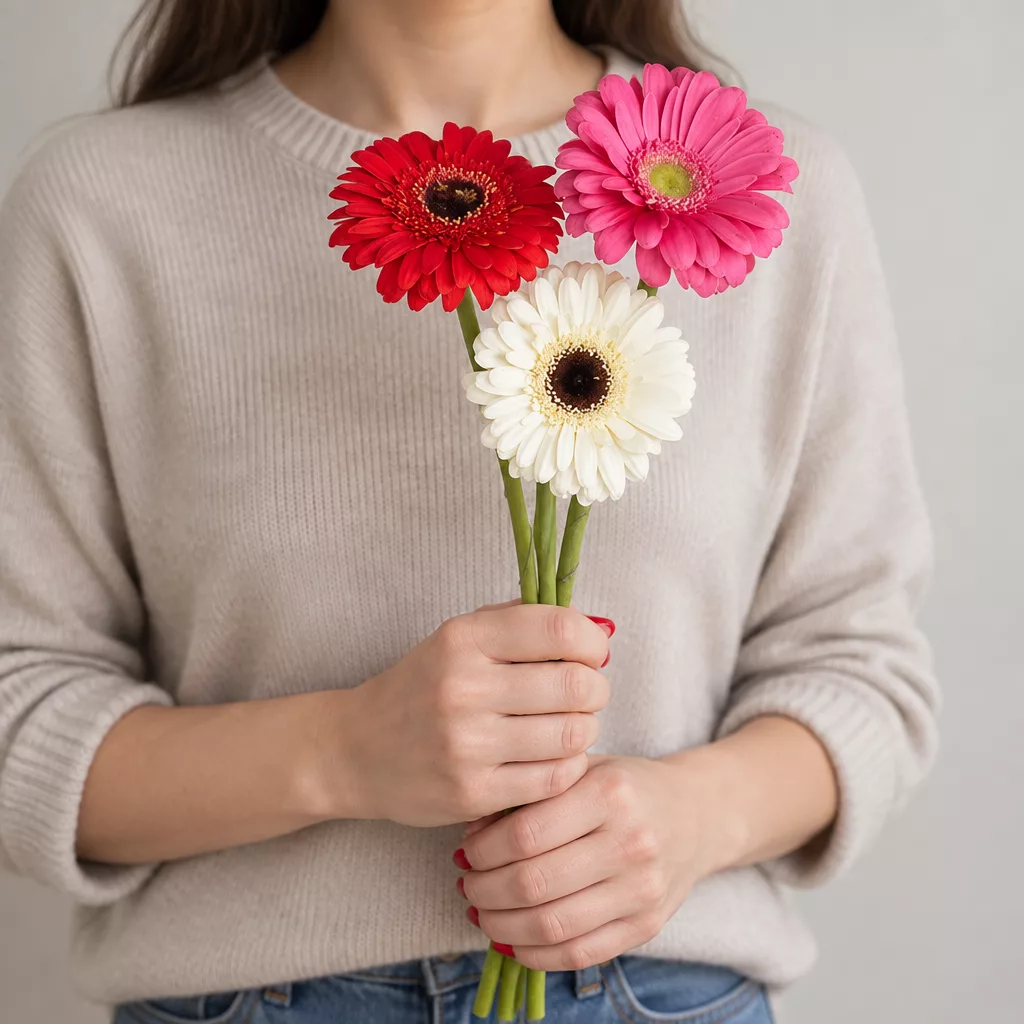

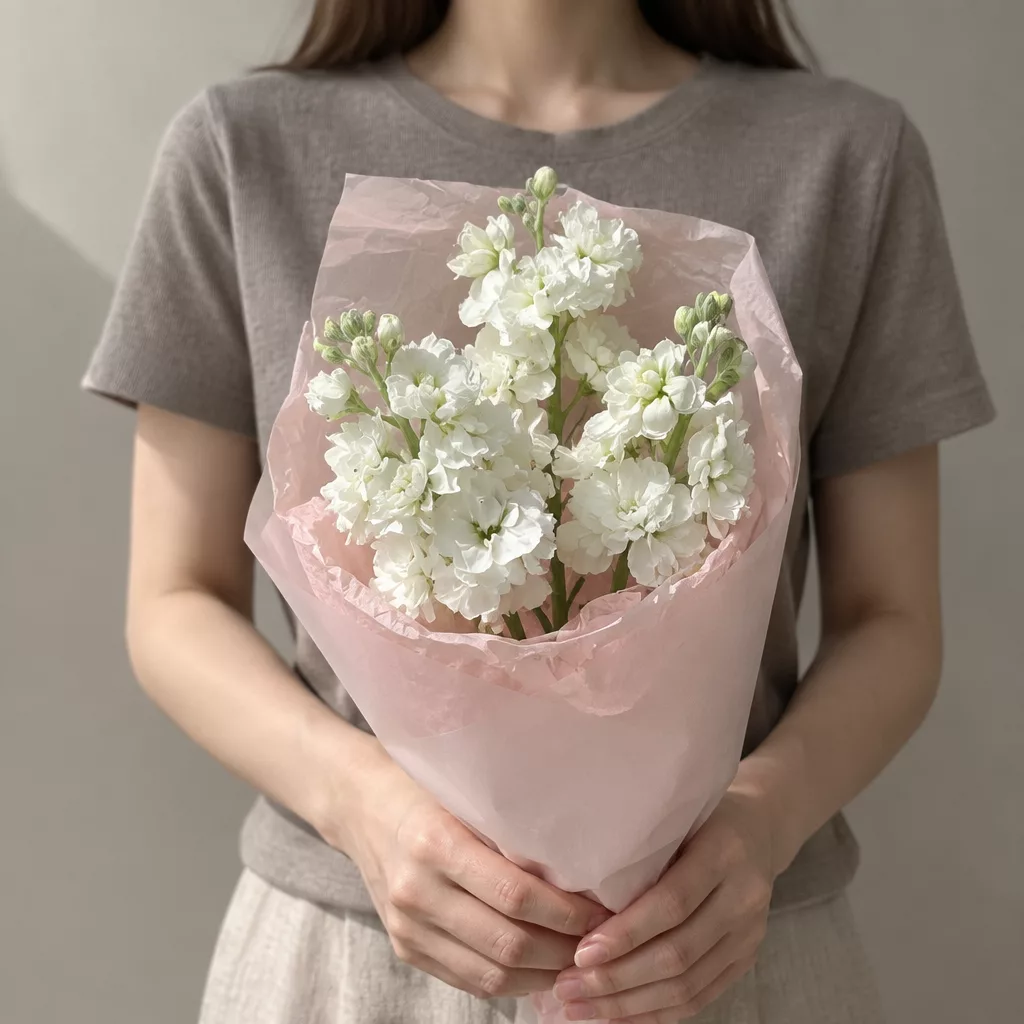
The Phrases Russians Actually Use on Flower Cards
Russian card messages tend to be warmer and slightly more formal than their English equivalents, even between close friends. The language has two registers of address — the informal "ty" and the formal "vy" — and most printed card messages use the formal version by default, which is safe for nearly any recipient and any relationship.
For a birthday, the most natural phrase is "S dnem rozhdeniya" followed by a warm wish. Written in Cyrillic it is: С днём рождения! Желаю тебе здоровья, счастья и любви. This translates as "Happy birthday! I wish you health, happiness, and love." It is the single most common birthday card message in Russia and will always feel appropriate.
For congratulations on any achievement or holiday, "Pozdravlyayu" is the all-purpose word. С праздником! Поздравляю от всего сердца. Means "Happy holiday! I congratulate you with all my heart."
For expressing love or deep affection: Ты очень важна для меня. Люблю тебя. "You are very important to me. I love you." This works between romantic partners or from a child to a parent.
For a simple thank-you with flowers: Спасибо за всё. Эти цветы — для тебя. "Thank you for everything. These flowers are for you."
For a colleague or professional contact, keep it brief and respectful: Желаю вам успехов и вдохновения. "I wish you success and inspiration." The formal "вам" keeps an appropriate distance without feeling cold.
You do not need to memorise any of these. Simply tell us which occasion it is and what feeling you want to convey, and we will choose the phrasing that fits naturally.
How to Send Us Your Message Without Typing Cyrillic
You do not need a Russian keyboard, a transliteration tool, or any special software. There are several completely straightforward ways to pass your message to us, and all of them work reliably when you place your order.
The simplest method is to write your message in English in the order notes. Write exactly what you want to say — "Happy birthday Mama, I love you and miss you so much" — and add a note that you would like it translated and written in Russian on the card. We read every order note before preparing the bouquet, and our team will render your message naturally in Russian rather than running it through a mechanical translation.
Alternatively, if you already have a Russian phrase you found online and want to verify it, paste it into the notes in Latin letters (romanised Russian, sometimes called transliteration) and tell us what it is supposed to mean. We will check whether it reads naturally and correct any awkward phrasing before it goes on the card. Machine-translated Russian can sound stiff or use the wrong grammatical case, and a florist's card is not the place for a grammar error.
If you have a Russian-speaking friend who helped you draft something in Cyrillic, you can paste the Cyrillic text directly into the order form — most modern browsers and mobile keyboards support Unicode input even if your main keyboard is Latin. But truly, the English description is enough. Tell us the relationship, the occasion, and the feeling, and we will write something that sounds like it came from you, in Russian.
Matching the Tone of the Message to the Relationship
The biggest mistake non-Russian senders make is choosing a message that is either too casual or unexpectedly formal for the relationship they are describing. Russian has clear social signals built into its grammar, and a message that uses the wrong register can feel odd even if every word is technically correct.
For a mother, grandmother, or close female relative, warmth and tenderness are expected. Words like "родная" (darling, dear one) or "любимая" (beloved) are completely normal in a card from a child to a parent and do not sound excessive. "Дорогая мамочка, с днём рождения! Ты лучшая мама на свете." — "Dear Mama, happy birthday! You are the best mother in the world." — is simple, heartfelt, and exactly right.
For a romantic partner, Russian card messages can be quite direct and emotional. Phrases like "ты моя жизнь" (you are my life) or "я скучаю по тебе" (I miss you) are used without irony and received as genuine.
For a professional relationship — a colleague, a business partner, a manager — brevity and formality are correct. A single line of congratulation without personal endearments is appropriate and will be appreciated precisely because it respects professional distance.
For a friend who is closer than a colleague but not family, the middle ground works well: warm but not intimate, personal but not effusive. Something like "Желаю тебе только хорошего" — "I wish you only good things" — is friendly, genuine, and universally understood. When you place your order, describing the relationship in plain English gives us everything we need to calibrate the tone correctly.
Occasions That Call for a Card in Russia (and What to Write)
Russian culture has a rich calendar of flower-giving occasions, and some of them will be unfamiliar to senders from other countries. Knowing which occasion you are marking helps us write a card that resonates rather than one that simply sounds generic.
International Women's Day on the eighth of March is one of the largest flower-giving days of the year in Russia. It is celebrated by nearly every woman — mothers, grandmothers, colleagues, teachers, friends. The card message for this day is usually brief and celebratory: С 8 марта! Желаю весны в душе и улыбок каждый день. "Happy Women's Day! I wish you spring in your heart and smiles every day."
New Year in Russia is celebrated on the first of January and is culturally larger than Christmas. Flowers and cards on New Year's Eve are common. С Новым годом! Пусть всё задуманное сбудется. "Happy New Year! May everything you wish for come true."
Teacher's Day falls on the fifth of October, and it is customary for students and parents to bring flowers to teachers. A card for a teacher should be respectful and warm: Дорогой учитель, спасибо за ваш труд и терпение. "Dear teacher, thank you for your work and patience."
Birthdays remain the single most common occasion. Unlike in some Western cultures, Russians often celebrate name days as well, though this varies by family. If you are unsure which occasion your recipient marks, a birthday message is always the safe and welcome choice. Tell us the date and we will advise if a different greeting might be more fitting.
Small Details That Make a Russian Card Feel Genuine
Beyond the words themselves, a few small presentation choices signal that the card was written with real care rather than assembled quickly from a list of phrases.
Using the recipient's name or a term of endearment at the opening of the card is standard in Russian. Cards that begin with "Дорогая Наташа" (Dear Natasha) or "Милая бабушка" (Sweet grandmother) feel personal immediately. If you know the recipient's name, share it with us when you place the order and we will open the message with it naturally.
Handwritten cards carry significantly more weight than printed ones in Russian culture. At Turboflora, every card is written by hand before being attached to the bouquet. This means the physical appearance of the Cyrillic letters will look authentic — not like a font, not like a label, but like someone actually wrote it. That detail matters to recipients who know what handwritten Russian looks like.
Avoid the temptation to make the message too long. Russian card culture favours short, warm phrases over paragraphs. Three or four lines are generous; a single well-chosen sentence is often more powerful than a full page. The flowers carry the emotional weight; the card is the signature on that feeling.
Finally, consider the closing. Russian cards often end with a simple wish rather than a signature phrase like "sincerely" or "best regards." Something like "С любовью" (with love) or "С уважением" (with respect) followed by the sender's name closes the card in a way that feels entirely natural to the recipient. Tell us how you want to sign it and we will place it correctly.
What Happens to Your Message Between the Order and the Door
When your order comes in with a card message request, it does not go straight to print. A member of our team reads the note, checks the occasion, considers the relationship you have described, and drafts the Russian text. If you have written the message in English, we translate it with attention to tone rather than word-for-word accuracy, because the goal is a card that sounds like a real person wrote it, not like a dictionary exercise.
If anything in your note is ambiguous — for instance, if it is unclear whether you want a formal or informal register, or if the occasion could be interpreted in more than one way — we use the safest and warmest option available for that type of relationship. We do not delay the order to ask clarifying questions when the delivery window is tight, so giving us a little context upfront ("this is for my girlfriend's thirtieth birthday, we have been together four years") genuinely helps.
The card is then written by hand in Cyrillic on the card stock that accompanies the bouquet. It is attached to the flowers before the courier collects the order, so the recipient receives everything together as a single, complete gift.
Delivery across Saint Petersburg typically takes one to two hours from order confirmation. If you are ordering for a specific time — say, to arrive before a birthday dinner at seven in the evening — note the preferred window when you order. We work around real timing, not approximations, and the card is part of that commitment. A bouquet that arrives at the right moment, with a card in the right language, is the whole point.
Sending flowers across a language barrier is not as complicated as it feels in the moment. You already know what you want to say — you just need someone to say it in the right language, in the right hand, on the right card. Write your message in plain English, tell us who it is for and what they mean to you, and we will take care of every Cyrillic letter from there. The recipient will hold a bouquet of fresh flowers and read words that feel like they came directly from you, because in every way that matters, they did.
Frequently asked questions
Can I just write my message in English and ask you to translate it into Russian?
Yes, absolutely. Write your message in English in the order notes and tell us you would like it on the card in Russian. We translate with attention to tone and relationship rather than word for word, so the result sounds natural to a Russian speaker. You do not need to provide any Russian text yourself.
What if I already have a Russian phrase from the internet — will you check it for me?
Yes. Paste the phrase into your order notes, tell us what it is supposed to mean, and we will review it before writing it on the card. Machine-translated Russian often uses the wrong grammatical case or sounds stiff, and we correct those issues as a standard part of preparing your order. A small check takes seconds and makes a real difference.
Is it rude to send a card in English to a Russian recipient?
It is not rude, but it can feel slightly impersonal, particularly for older recipients who may not read English comfortably. A card in Russian signals that you made an extra effort, which amplifies the warmth of the flowers themselves. For close family members or significant occasions, a Russian card is always the more touching choice.
How do I address a woman formally on a Russian card if I only know her first name?
Using her first name with "Дорогая" (Dear) before it is warm and respectful without being overly familiar. If you know her patronymic — the middle name derived from her father's first name — including it alongside her first name is the most formally respectful form of address in Russian. If you only have her first name, that is entirely fine for a flower card.
Are there any phrases I should avoid on a Russian flower card?
Keep the message positive and occasion-specific. Avoid phrases that reference illness, difficulty, or loss even if intended sympathetically, as flowers in Russia are strongly associated with celebration and affection. Very casual English-style phrases like "You rock" or "No worries" do not translate meaningfully into Russian and are best replaced with a simple warm wish.
Ready to send flowers?
Pick the city, choose the bouquet, and a local florist takes it from there.
Choose a city →