Russian Wedding Flower Traditions: What the Groom Should Bring
In Russia, the flowers a groom brings on his wedding day are not a small detail — they are read by everyone in the room. The bride's mother notices the quality of the stems. The grandmother counts the blooms. The bride herself will remember the scent long after the photographs fade. If you are planning a Russian wedding or marrying into a Russian family, understanding these customs will help you arrive not just on time, but exactly right.
Why Flowers Matter More at a Russian Wedding Than You Might Expect
Russian wedding culture places enormous symbolic weight on flowers. They are not simply decoration — they are a public statement about how seriously the groom takes the occasion and how well he knows his bride. Guests will notice whether the bouquet looks assembled with thought or grabbed in haste, and that impression travels fast in a close-knit celebration.
Historically, flowers at Russian weddings carried folk meaning tied to fertility, loyalty, and prosperity. While most modern couples are not thinking about folk symbolism during the ceremony, the underlying expectation of abundance and beauty remains very much alive. A sparse or wilted bouquet reads as carelessness, whereas a full, fragrant arrangement signals that the groom has invested genuine attention.
The groom typically presents flowers at two distinct moments: when he arrives to collect the bride from her family home before the civil registration, and again as a formal gift during the celebration itself. These are separate presentations with different emotional weights, and treating them as one errand is a common mistake. Planning both in advance, ideally ordering the day before so blooms can hydrate overnight in cool water, makes the difference between flowers that hold up through a long day and ones that droop before the first toast.
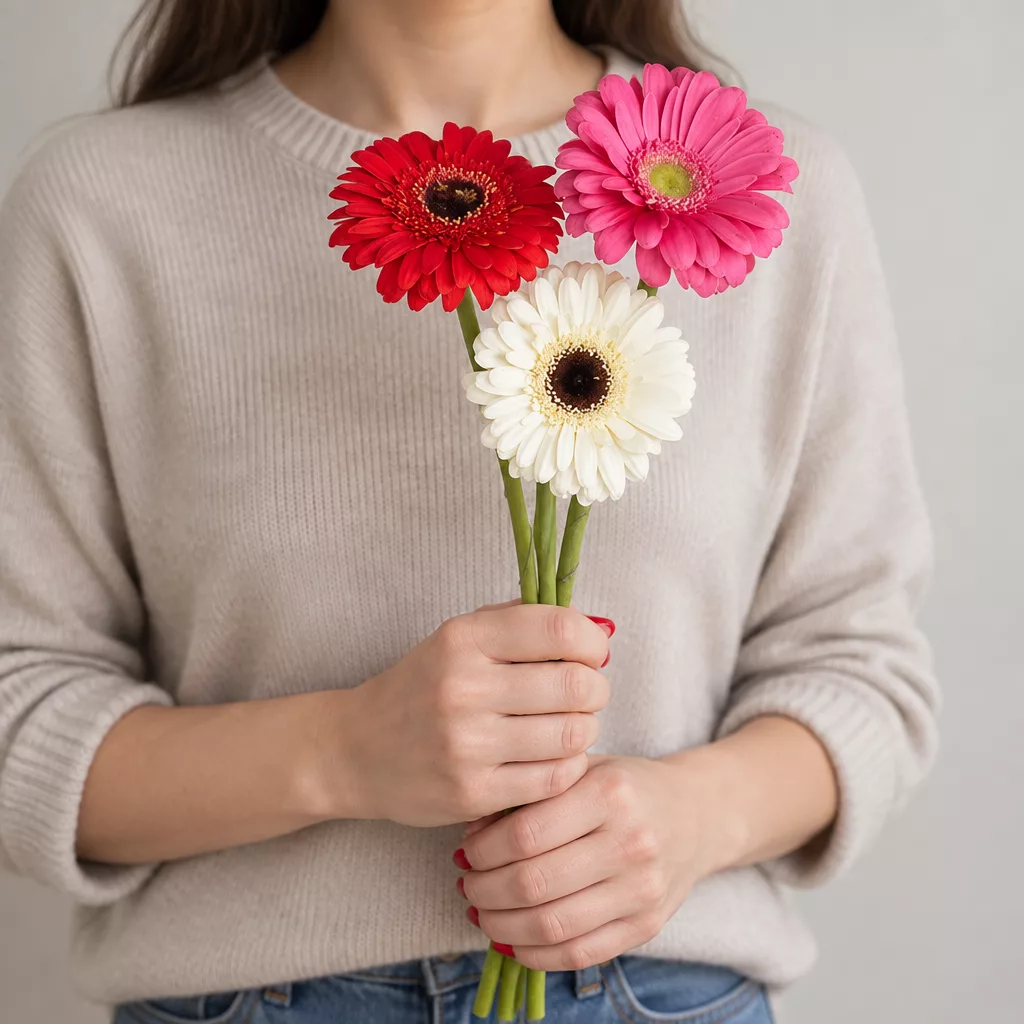
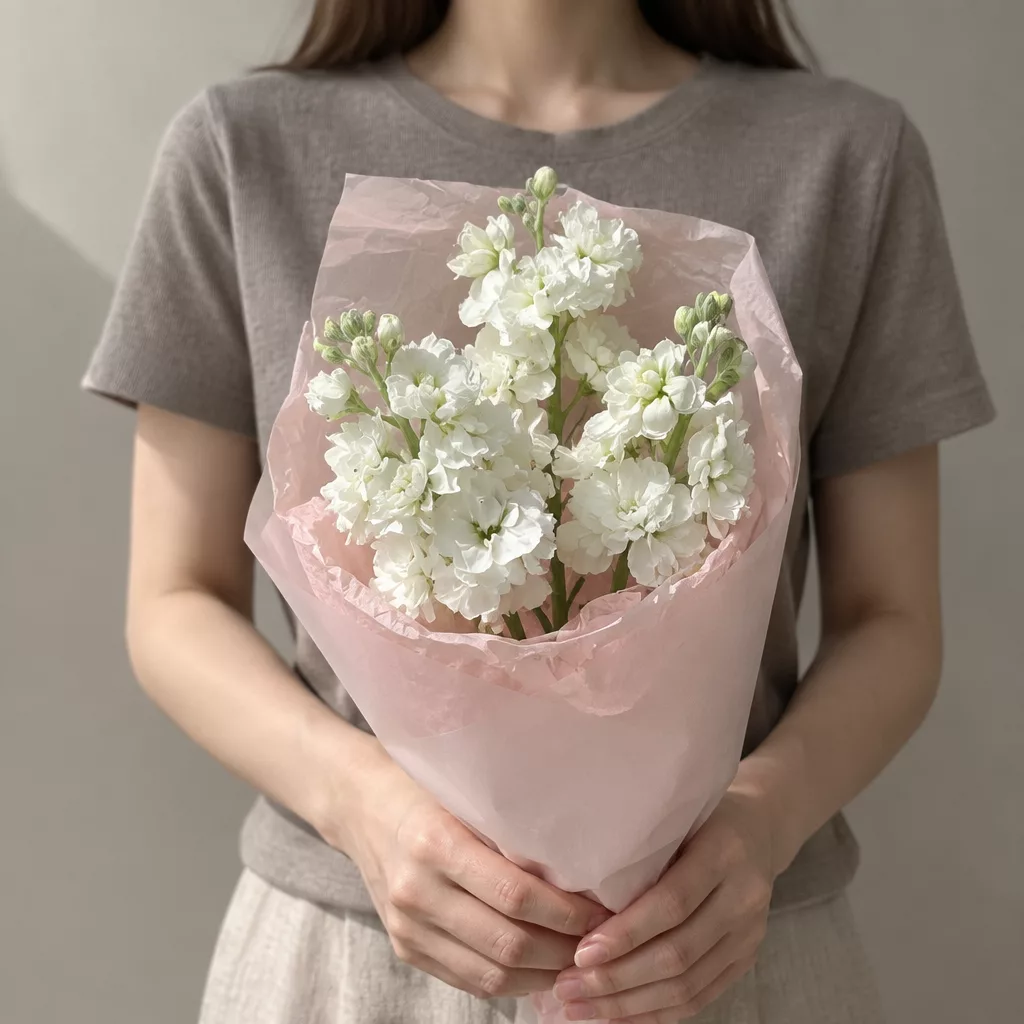
Bouquets we can deliver


The Bride's Bouquet: What She Carries Down the Aisle
The bridal bouquet in Russia is almost always chosen by the bride herself or together with the groom, but it is the groom who pays for it and, in many families, who presents it. This matters because it shifts the bouquet from a personal accessory into a gift, and gifts in Russian culture are expected to feel generous and considered.
Round cascade bouquets remain the most popular shape at Russian weddings, built around a tight central cluster that fans slightly downward. Peonies, garden roses, and ranunculus are the most requested flowers, prized because they open fully over the course of a day and look increasingly lush in photographs taken hours after the ceremony. Spray roses add texture without overwhelming the main bloom, and eucalyptus or ruscus provides a soft green frame that photographs cleanly against white dresses.
White and blush tones dominate Russian bridal bouquets, though deep burgundy and dusty rose have grown steadily more popular over the past decade. Stark red is generally avoided for the bridal bouquet itself — it is bold enough that it can compete with the dress rather than complement it. The bouquet should be wrapped at the stem with satin ribbon, not left bare or finished with raffia, which reads as too casual for a formal ceremony. Keep the finished bouquet in cool water right up until the moment it is handed over — room temperature shortens vase life by hours.
The Presentation Bouquet: What the Groom Brings to the Door
Before the ceremony begins, the groom arrives at the bride's family home for a tradition called vykup nevesty — the bride's ransom. This is a playful ritual where the groom must pass a series of tasks or games set by the bridesmaids and family before he is allowed to see his bride. He arrives at the door carrying flowers, and this bouquet is separate from the bridal bouquet.
The presentation bouquet at the door is typically given to the bride as the first gift of the day. It should feel celebratory and warm rather than formal. Bright garden roses in soft pink or coral work beautifully here, as do tulips in spring weddings and lisianthus, which mimics the fullness of a peony at a fraction of the cost and holds its shape remarkably well in warm interiors. The arrangement can be slightly looser and more relaxed in style than the ceremony bouquet.
An odd number of flowers is essential. This is one of the most firmly held customs in Russian flower-giving: even numbers are reserved for mourning, and arriving with twelve or twenty roses would be noticed immediately and remembered uncomfortably. Eleven, fifteen, nineteen, or twenty-one stems are all excellent counts for a presentation bouquet. The stems should be cut at a diagonal before placing in water the night before, and the groom should ideally pick them up no more than two hours before arrival to keep them fresh through the excitement of the morning.
Flowers for the Mothers: A Gesture That Is Never Forgotten
One of the most meaningful flower customs at a Russian wedding is the presentation of bouquets to both mothers — the bride's mother and the groom's mother — during the reception. This moment often happens after the main toasts, and it carries genuine emotional weight. In many families, it is the moment that draws the most tears.
The groom is expected to initiate this gesture, and in many ceremonies the couple presents the bouquets together. Choosing flowers that suit the mothers' personalities rather than simply defaulting to whatever is left over from the wedding palette shows a level of thoughtfulness that both families will notice. Chrysanthemums, alstroemeria, and freesia are reliable choices because they are long-lasting, fragrant, and available year-round — practical qualities that matter when the bouquet will sit on a table through a long evening.
Lilies are popular with older generations in Russia, particularly white and cream varieties, though it is worth checking that neither mother has a sensitivity to pollen before choosing them. Gladioli carry a slightly old-fashioned charm that some mothers love and others find dated — when in doubt, a compact arrangement of roses in a warm peach or apricot tone is universally received well. Wrapping each bouquet in cellophane with a satin bow, rather than leaving stems bare, signals that the flowers were prepared specifically as gifts rather than pulled from a general arrangement. This small detail matters more than it might seem to someone unfamiliar with Russian gifting customs.
Flowers That Signal Good Taste and Flowers That Miss the Mark
Not all flowers read the same way at a Russian wedding. Certain varieties have accumulated associations over generations, and arriving with the wrong choice can undermine an otherwise well-planned gesture. Understanding these associations does not require deep knowledge of Russian folk tradition — a few practical rules cover most situations.
Carnations are the most important variety to avoid in formal wedding contexts. They are strongly associated with Soviet-era commemorations and carry a funereal or institutional tone that sits awkwardly at a celebration. Single-stem carnations gifted at a wedding are genuinely unusual and will be noticed. Chrysanthemums are fine for the mothers' bouquets but feel too casual for the bridal bouquet. Yellow flowers have historically been associated with separation or jealousy in Russian folk tradition — while younger couples often dismiss this, older family members may react with visible discomfort, so it is generally safer to avoid a predominantly yellow arrangement.
What signals genuine good taste is a combination of freshness, abundance, and coherence. Flowers should be fully hydrated with no browning at the petal edges. The arrangement should feel intentional — varieties chosen to complement each other in colour and scale rather than mixed at random. Garden roses combined with ranunculus and soft greenery like pittosporum or Italian ruscus consistently read as elegant and modern. Scent matters too: a bouquet that releases fragrance as the bride moves through the room is always remembered more vividly than one that is purely visual. Asking specifically for fragrant varieties when ordering is worth the extra instruction.
Seasonal Choices and How Russian Weddings Are Timed
Russian weddings cluster heavily in late spring and early summer, with a second peak in September and October. This timing is partly cultural and partly practical — summer weddings benefit from long daylight hours and outdoor photography, while autumn weddings carry a golden warmth that photographs exceptionally well. Each season brings different flowers into their natural peak, and working with the season rather than against it produces better results at lower cost.
For May and June weddings, peonies are the defining flower and should be used freely. They are at their most abundant and affordable during this window, they open beautifully over the course of a wedding day, and their fragrance is distinctive enough to become a sensory memory tied to the occasion. Ranunculus and sweet peas are also excellent in this period. By July and August, dahlias begin to appear and offer extraordinary variety in form and colour, from tight pompom shapes to the broad dinner-plate varieties that make a statement in large arrangements.
September and October weddings benefit from a rich palette: deep burgundy roses, terracotta dahlias, and the first appearance of hypericum berries, which add texture and a jewel-like quality to autumn arrangements. Winter weddings, which are less common but genuinely beautiful in Russia, rely on amaryllis, white anemones, and branches of eucalyptus to create a spare, elegant aesthetic. Whatever the season, ordering flowers one to two days ahead and storing them overnight in a cool room — ideally between eight and twelve degrees Celsius — ensures they arrive at their best possible moment.
Practical Timing: When to Order and How to Keep Flowers Fresh
The most common mistake grooms make is treating flowers as a same-morning errand. On a wedding day, mornings are already compressed and emotionally charged, and flowers picked up in haste from whatever is available will show it. Ordering the day before the wedding gives blooms time to hydrate properly after being cut and transported, which means they open to their fullest and hold through a day that typically runs from mid-morning until well past midnight.
For the bridal bouquet specifically, the florist should condition the stems by cutting them at a forty-five-degree angle and placing them in clean, cool water for at least eight hours before the arrangement is completed. This is standard practice at a professional level, but it is worth confirming when you order. Flowers that have been properly conditioned can withstand being out of water for four to six hours during the ceremony and photographs without visible deterioration.
On the wedding morning itself, keep all bouquets and arrangements away from direct sunlight and heat sources. Car interiors in summer can reach temperatures that will wilt even well-hydrated flowers within thirty minutes. Wrapping stems in damp tissue and placing bouquets in a cool room or air-conditioned space until the last moment makes a measurable difference. Turboflora delivers across Russia with same-day and one-to-two-hour delivery windows, which means you can schedule the bridal bouquet to arrive at a specific time rather than managing it yourself on a day when your attention needs to be elsewhere entirely.
A Russian wedding is a long and layered celebration, and the flowers you bring carry meaning at every stage — from the door of the bride's family home to the moment you hand her mother a bouquet in front of everyone she loves. Getting these details right does not require you to be a florist. It requires you to plan a day ahead, choose varieties with intention, count your stems carefully, and understand that in Russian wedding culture, abundance and freshness are never wasted on the people who matter most. The flowers you bring will be in every photograph. More than that, they will be remembered by the people in the room.
Frequently asked questions
How many flowers should the groom bring to a Russian wedding?
Always an odd number. Even numbers of flowers are associated with mourning in Russian tradition, and an even-numbered bouquet at a wedding will be noticed by older family members. Eleven, fifteen, nineteen, or twenty-one stems are all appropriate counts for a presentation bouquet. The bridal bouquet, being a composed arrangement rather than a stem count, is not subject to this rule in the same way.
Are there flowers the groom should avoid at a Russian wedding?
Yes. Carnations carry strong associations with Soviet commemorations and funerals and should be avoided entirely in wedding contexts. Yellow flowers are traditionally linked to separation or jealousy and can make older relatives visibly uncomfortable. Predominantly yellow arrangements are best saved for other occasions. Chrysanthemums are acceptable for mothers' bouquets but feel too informal for the bridal bouquet.
Does the groom need to buy separate bouquets for both mothers?
In most Russian wedding families, yes. Presenting bouquets to both mothers — typically during the reception after the main toasts — is a deeply meaningful tradition. The groom initiates this gesture, and many couples present the bouquets together. Choosing flowers suited to each mother individually, rather than using identical arrangements, is a detail that families notice and appreciate for a long time afterward.
What is the best flower for a Russian bridal bouquet?
Peonies are the most beloved choice for spring and early summer weddings and are considered the most romantic option in Russian floral culture. Garden roses are a strong alternative year-round. Ranunculus adds fullness and texture without overpowering the main bloom. For autumn weddings, dahlias offer exceptional variety. All of these hold well through a long wedding day when properly conditioned the night before.
When should the groom order wedding flowers in Russia?
Order at least one day before the wedding. This gives flowers time to hydrate and open properly after being cut, so they look their best during the ceremony and throughout the evening. Same-morning orders are possible with a fast delivery service, but blooms ordered in advance will be noticeably fuller and more resilient over a twelve-to-fourteen-hour wedding day. Store all flowers in a cool space away from sunlight until the moment of presentation.
Ready to send flowers?
Pick the city, choose the bouquet, and a local florist takes it from there.
Choose a city →