Sending Flowers to Chegem from Abroad: Your Practical Starting Point
You are somewhere far from Russia — another country, another time zone, possibly another season entirely — and you want flowers to arrive at a door in Chegem feeling fresh, personal and genuinely felt. That gap between you and the recipient does not have to show in the bouquet. With the right choices and a florist who knows the route, what lands on that doorstep can feel as though you handed it over yourself.
What Chegem Is Like and Why It Matters for Your Order
Chegem is a town in the Kabardino-Balkarian Republic, sitting in the foothills of the North Caucasus. The landscape is striking, the community is close-knit, and gestures like sending flowers carry real social weight here. When a bouquet arrives, people notice — neighbours, family members, colleagues passing through. That means presentation matters as much as the flowers themselves, and a loosely wrapped bunch handed over without thought will feel out of place.
The climate in this part of Russia shifts noticeably across the year. Summers are warm and dry, winters are cold with occasional frosts. This directly affects which flowers travel well and how long they will last once they arrive. In July or August, delicate garden roses with many open petals can wilt faster than you expect. In January, tropical stems like anthuriums and orchids need careful temperature management during transit. Knowing the season you are ordering in helps you pick varieties that will genuinely thrive.
Delivery to Chegem from Saint Petersburg means a coordinated logistics chain, and Turboflora manages that chain directly. The florist who assembles your order knows what the flowers will go through before they reach your recipient. That knowledge shapes every decision about stem selection, water tubes, wrapping layers and timing. You are not guessing — you are working with people who have thought this through already.
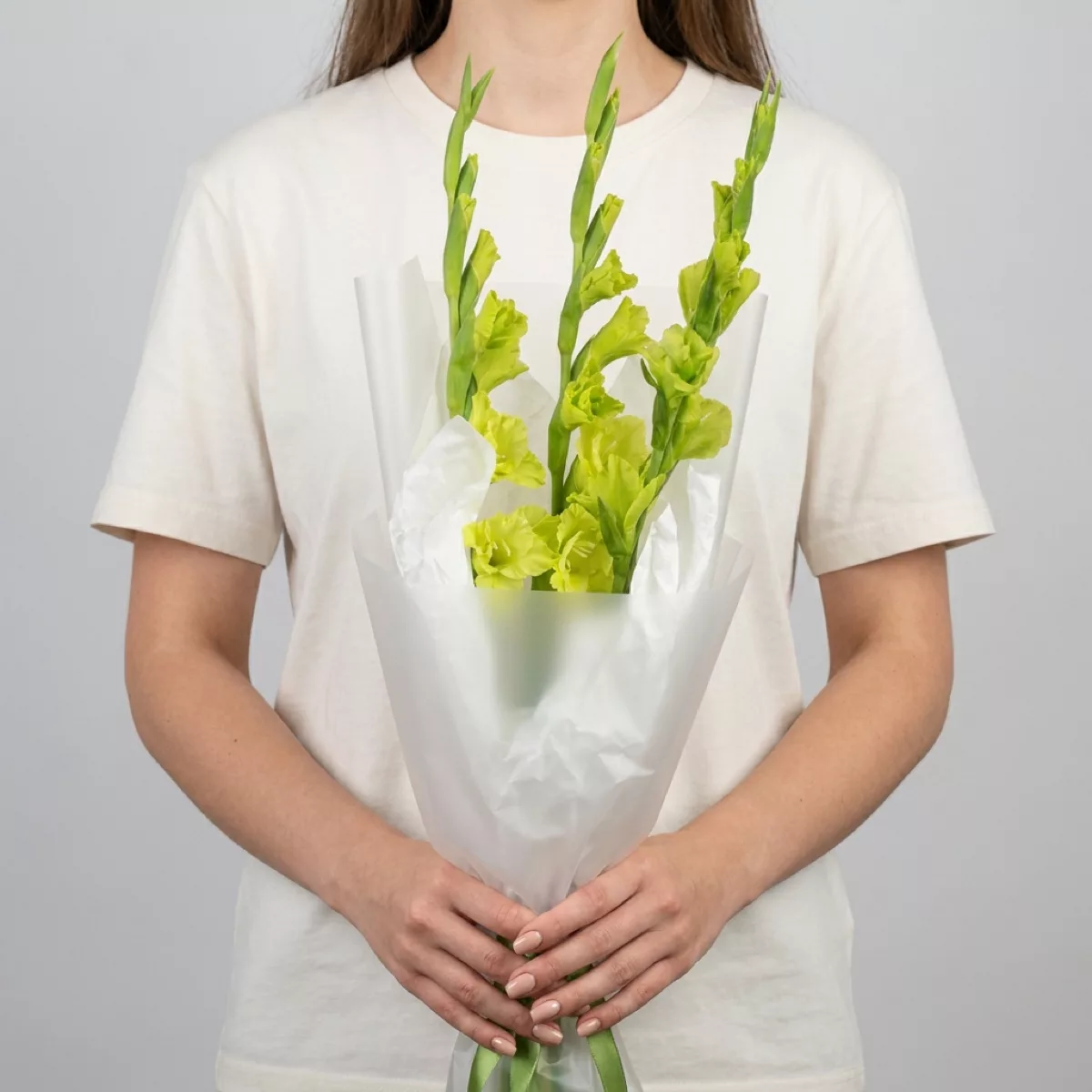
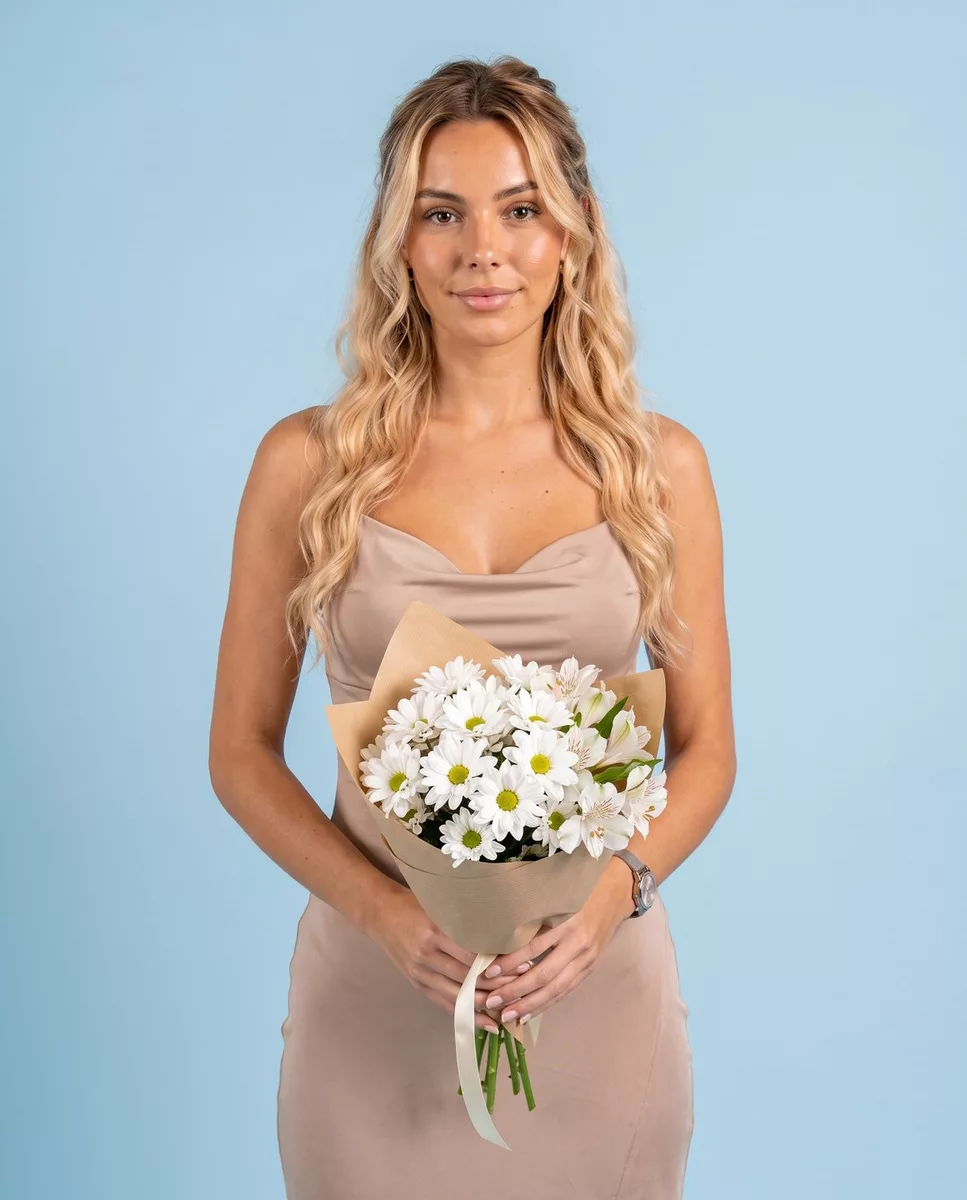
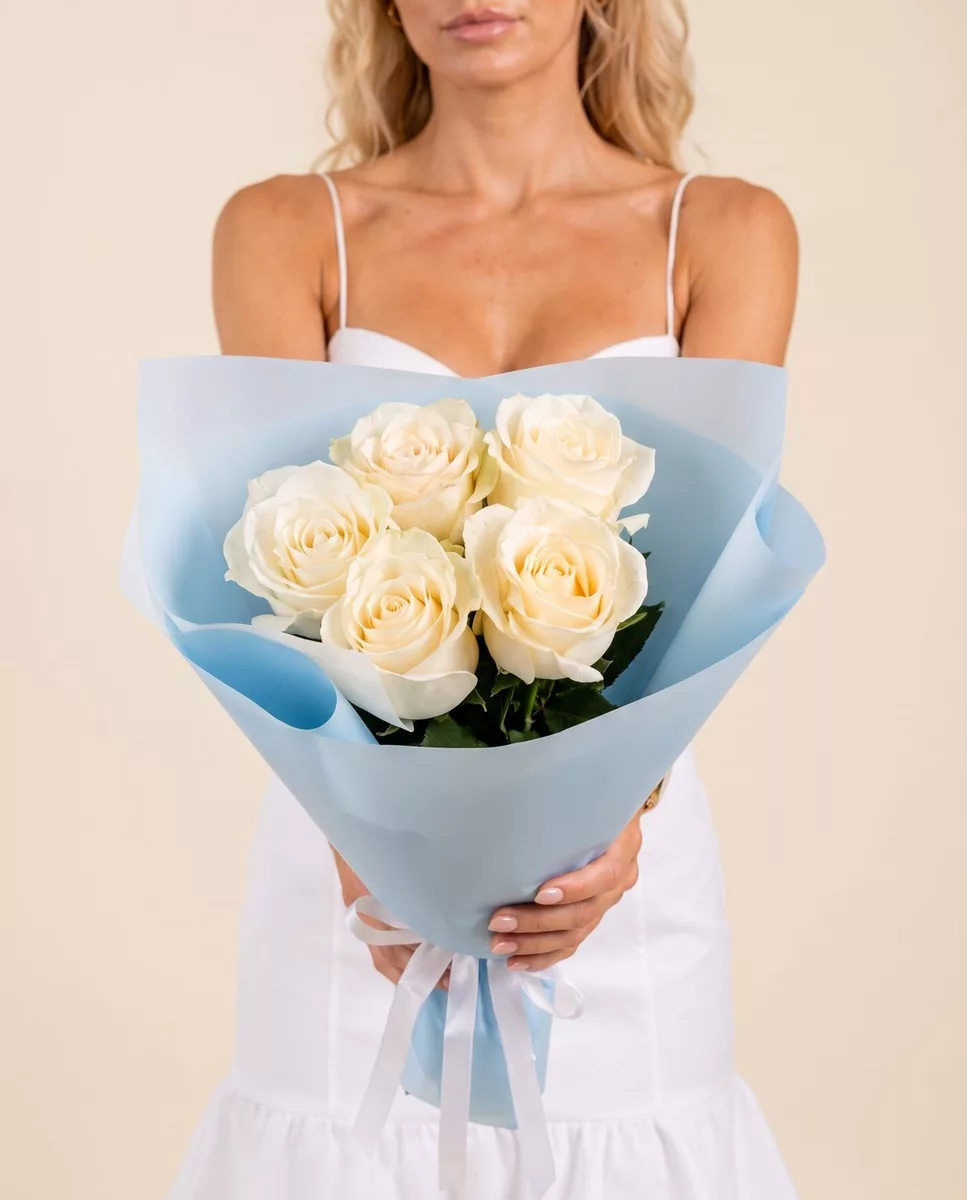
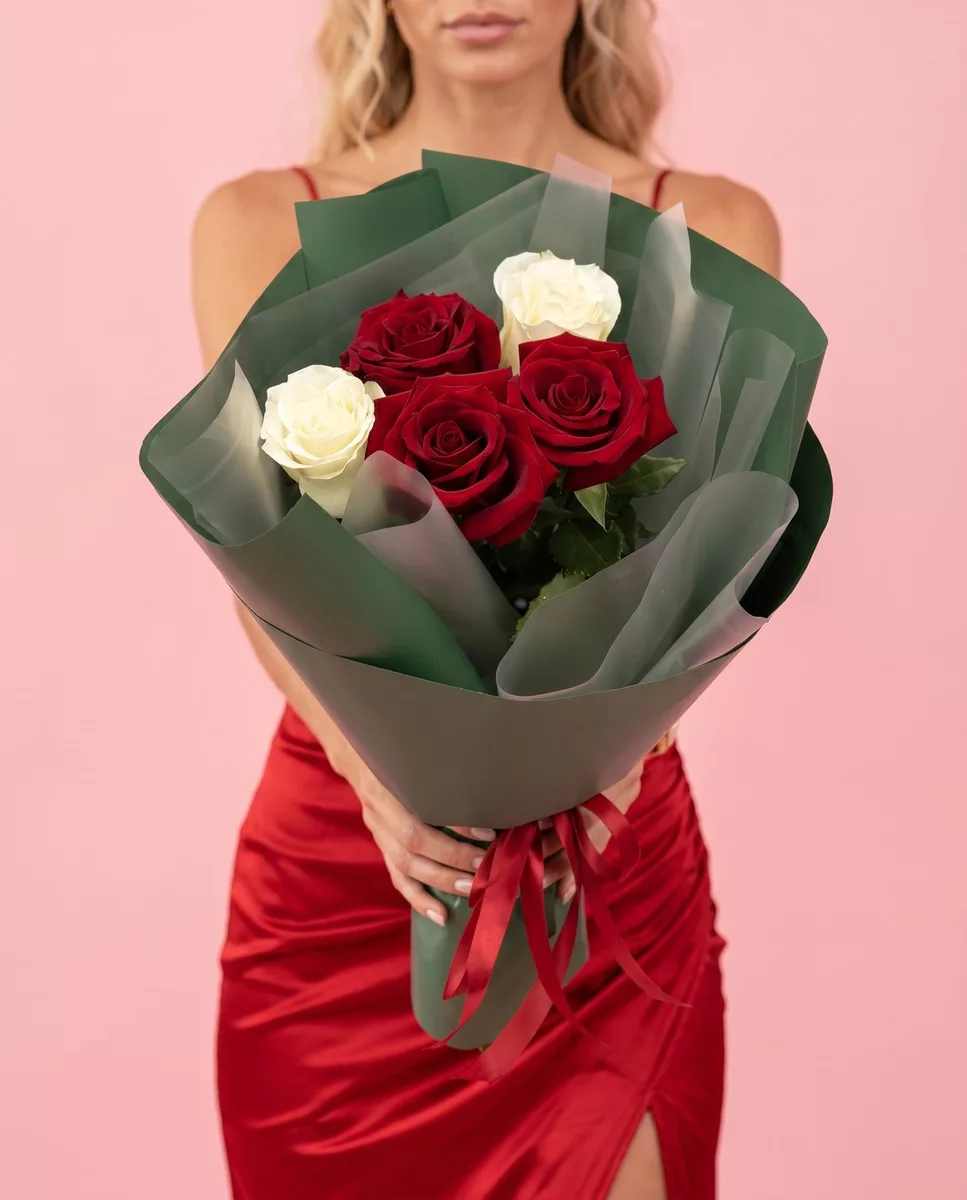
Bouquets we can deliver
Timing Your Order Across Time Zones Without Getting It Wrong
This is where most international senders make their first mistake. You are sitting in Berlin, Toronto or Dubai, and you place an order thinking about your local clock. But Chegem runs on Moscow Time, which is UTC+3. If you are in Western Europe, that is already two hours ahead of you. If you are on the US East Coast, Moscow Time is eight hours ahead. Place an order at 10 in the morning your time on a weekday and you may find it is already late afternoon in Chegem — not ideal for a surprise delivery to a workplace.
For birthdays, the emotional peak is usually the morning of the day itself. Aim to place your order the evening before your local time, or at the very latest, early in the morning. For anniversaries or celebrations tied to a specific event, think about when the recipient will actually be home and in a state to receive something. A bouquet left with a neighbour because the person was out loses half its impact.
Turboflora delivers within one to two hours of order confirmation, which gives you a useful window to plan. Once you know the delivery slot you want in Chegem local time, count backwards through your own time zone to find when you need to place the order. Write it down. It sounds obvious, but the number of last-minute calls from senders who miscounted the hours is significant. A little arithmetic before you order saves a lot of disappointment.
Choosing Flowers That Suit the Person and the Occasion
Start with the recipient, not the catalogue. A grandmother celebrating her seventieth birthday in Chegem will feel something different receiving soft garden-style peonies or fragrant alstroemeria than she would receiving a minimalist single-variety arrangement. A young woman on her first job anniversary might love the clean geometry of white calla lilies or a spray of lisianthus in lilac tones. The flower should feel like it came from someone who knows them.
For celebrations in Kabardino-Balkaria, abundance reads as respect. A generous arrangement — full, layered, with complementary greenery like eucalyptus or ruscus — signals that the sender took the occasion seriously. Sparse bouquets can feel understated in a cultural context where hospitality and generosity are visible values. That does not mean overspending; it means choosing combinations that look full and considered rather than minimal.
Roses remain the most universally understood choice, and for good reason. Red roses for romantic occasions, cream or blush roses for family milestones, coral or orange roses for a friend's achievement. Chrysanthemums are popular across Russia for everyday celebrations and hold up extremely well in transit — a practical advantage for long-distance orders. Sunflowers bring warmth and work beautifully in summer months. Tulips are a spring favourite but need cooler temperatures to stay upright, so timing your order matters more with them than with hardier stems.
Budget Ranges and What They Actually Get You
International senders sometimes underestimate what a meaningful bouquet requires, and sometimes overthink it. The honest truth is that a well-chosen arrangement at a modest budget will outperform an expensive one that was assembled without thought. What you are paying for is stem quality, composition skill and the care taken at every stage from cutting to delivery.
At an entry level, you are looking at a single-variety bouquet — perhaps seven to nine stems of spray roses, chrysanthemums or alstroemeria, wrapped cleanly with ribbon and a card. This is entirely appropriate for a colleague's birthday or a thank-you gesture. It arrives looking intentional and fresh.
Moving up, you enter the territory of mixed arrangements: roses combined with lisianthus, or tulips layered with wax flower and soft greens. These bouquets have more visual depth and tend to photograph better, which matters because your recipient will almost certainly send you a photo. At the higher end, you get premium roses — varieties like David Austin-style garden roses with dense, many-petalled heads — combined with seasonal fillers and elegant wrapping. These are the bouquets that get kept in a vase for a week and talked about.
For milestone occasions like a significant anniversary or a major birthday, a hat box arrangement or a flower box adds a presentation layer that makes the gift feel even more considered. The structure of the box protects the flowers in transit and looks striking when opened. For someone receiving flowers from abroad, that extra visual moment lands with real warmth.
Seasonal Flowers and What Travels Well to Chegem
The flowers available to you and the flowers that will survive the journey are not always the same list. Understanding which varieties are genuinely suited to long-distance delivery saves you from a beautiful arrangement arriving with drooping heads.
Chrysanthemums are the dependable workhorses of Russian floristry. They come in dozens of forms — single-stem pompons, spray varieties, button types — and they hold water well, resist wilting and last up to two weeks in a vase. If you are ordering in summer heat or winter cold and you want certainty, chrysanthemums belong in your bouquet. Carnations are similarly hardy and have had a cultural revival in Russia; modern varieties in blush, terracotta and deep burgundy look nothing like the carnations of twenty years ago.
Roses travel well when they are cut at bud stage, which is how professional florists prepare them for delivery. Avoid requesting fully open roses for long-distance orders — they are past their peak before they arrive. Peonies are glorious but seasonal, available mainly from late spring through early summer, and they are sensitive to heat. Order them in May or June and they are spectacular; order them in August and you are taking a risk.
Orchids — particularly Phalaenopsis — are a smart choice for someone who wants something long-lasting. A single stem in a box arrangement can stay beautiful for weeks. Anthuriums are similarly resilient and add a sculptural quality that stands out. For a recipient who does not have much time to care for flowers, these low-maintenance options are genuinely thoughtful rather than just impressive.
Vase Life and Care Instructions to Pass Along
One of the kindest things you can do as a sender is make sure your recipient knows how to keep the flowers alive. Most people in Russia are comfortable with flowers, but specific care habits vary. Passing along a few simple notes with your card message — or asking the florist to include care instructions — extends the life of the arrangement significantly.
The first thing to do when flowers arrive is cut the stems at an angle, about two centimetres from the bottom, using a sharp knife rather than scissors. Scissors crush the stem tissue and reduce water uptake. Then place the stems immediately in clean, cool water. Room temperature water is fine for most varieties; cold water is better for tulips, which prefer to stay crisp.
Change the water every two days and re-cut the stems each time. Remove any leaves that sit below the waterline, because submerged foliage rots quickly and clouds the water with bacteria that shorten vase life. Keep the arrangement away from direct sunlight, radiators and fruit bowls — ripening fruit releases ethylene gas, which accelerates petal drop in roses and carnations.
In Chegem's summer heat, a cool room makes a real difference. Roses and lisianthus will last noticeably longer in a room at eighteen to twenty degrees than in one at twenty-six. If the recipient has air conditioning, the flowers should go there. In winter, keep them away from heating vents. With basic care, roses last five to seven days, chrysanthemums up to fourteen, and orchid stems even longer. Sharing this with your recipient turns a beautiful delivery into a lasting one.
Russian Flower Customs Worth Knowing Before You Order
If you have not sent flowers inside Russia before, a few traditions are worth understanding so your order feels culturally fluent rather than accidentally awkward.
The most important one: always send an odd number of stems. In Russian tradition, even numbers of flowers are associated with mourning and are brought to cemeteries. An arrangement of ten roses or eight tulips would read as a strange signal to a Russian recipient. Odd numbers — seven, nine, eleven, fifteen — are celebratory. Florists at Turboflora follow this automatically, but if you are specifying a stem count yourself, keep this in mind.
Yellow flowers carry mixed associations in Russia. Older generations sometimes associate yellow roses with separation or infidelity, though this is less of a concern among younger recipients. If you are unsure of your recipient's age or background, choosing another colour for roses is the safer and simpler choice. Yellow sunflowers, however, are universally cheerful and carry no such association — the colour meaning is flower-specific rather than universal.
Presentation matters enormously. A bouquet handed over in quality wrapping with a ribbon and a handwritten card feels like a gift. One that arrives without wrapping or with a generic note feels like a transaction. When ordering from abroad, take the time to write a personal message in the card field — even a short one. Turboflora can include it with the delivery. For a recipient in Chegem receiving flowers from someone overseas, that personal note is often what they remember most.
Sending flowers to Chegem from abroad is not complicated when you know what shapes the experience — the time zone arithmetic, the seasonal logic, the cultural details that make a bouquet feel right rather than just adequate. The distance between you and your recipient shrinks considerably when the flowers arrive fresh, the stem count is odd, the wrapping is generous and the card says something real. Turboflora handles the route from Saint Petersburg to Chegem directly, which means every decision about the arrangement is made by people who know what it takes to get flowers there in one to two hours, looking exactly as they should.
Frequently asked questions
Can I order flowers for Chegem if I do not speak Russian?
Yes. Turboflora's website and order process are accessible to international senders, and you can write your card message in any language. If you want to include a Russian-language note for your recipient but are not sure how to phrase it, a brief message in English with a request for translation help in the order notes is a reasonable approach.
How far in advance should I place a flower order for Chegem from abroad?
Placing your order at least a few hours before your desired delivery window in Chegem local time gives the best results. For morning deliveries, ordering the evening before your local time is ideal. Last-minute orders are often possible given the one-to-two-hour delivery window, but accounting for time zone differences early prevents the most common mistakes international senders make.
Are there flowers I should avoid sending to a recipient in Chegem?
Even numbers of stems are associated with mourning in Russian tradition and should be avoided for celebrations. Yellow roses can carry unwanted connotations for older recipients. Otherwise, most flowers are appropriate — the key variables are the season, the transit temperature and the recipient's personal taste rather than strict cultural prohibitions.
What happens if my recipient is not home when the flowers arrive?
Turboflora will contact the recipient before delivery to confirm availability. When you place your order, providing an accurate phone number for the recipient is essential. If timing needs to shift slightly to match when the person will be home, the delivery window can usually be adjusted. Including a backup contact in the order notes is always a useful precaution.
Which flowers last longest for someone receiving a delivery in Chegem?
Chrysanthemums consistently offer the longest vase life, often reaching twelve to fourteen days with basic care. Carnations and alstroemeria are similarly durable. Orchid stems are exceptional for longevity. Roses last five to seven days when properly cared for. If your recipient travels frequently or has a busy schedule, choosing hardier varieties ensures the flowers are still beautiful when life slows down enough to enjoy them.
Ready to send flowers?
Pick the city, choose the bouquet, and a local florist takes it from there.
Choose a city →