Sending Flowers to a Colleague in Russia: Office-Safe Choices
A bouquet arriving at someone's desk is a small event in the whole office — people notice, the recipient feels seen, and the moment either lands warmly or creates a quiet awkwardness. Getting it right means thinking about the person first, the setting second, and the message last. This article walks you through exactly that, whether you are sending from across town or from another country entirely.
Why the Office Context Changes Everything
Flowers sent to a home address carry a different weight than flowers delivered to a workplace. At home, a bouquet is private and personal. At the office, it becomes a shared moment — colleagues will see it on the desk, ask about it, and form impressions both of the recipient and of the sender. That visibility is not a reason to hold back, but it is a reason to be thoughtful.
In Russian workplace culture, gestures of recognition carry real meaning. Colleagues celebrate birthdays, professional milestones, retirements, and the birth of a child with flowers far more routinely than in many Western offices. A bouquet is not seen as excessive or old-fashioned — it is expected and appreciated. What matters is that the arrangement reads as generous without crossing into romantic territory or feeling so grand that it embarrasses the recipient in front of their team.
The safest approach is to think about scale and colour before variety. A compact, structured arrangement in soft or neutral tones says warmth and professionalism simultaneously. An enormous red-rose cascade says something else entirely. You want the recipient to smile when it arrives, not feel they need to explain it to every person who walks past their desk for the rest of the afternoon. Start from that image — a comfortable, pleased expression — and work backwards to the flowers.
Bouquets we can deliver


Colours and Combinations That Work at a Desk
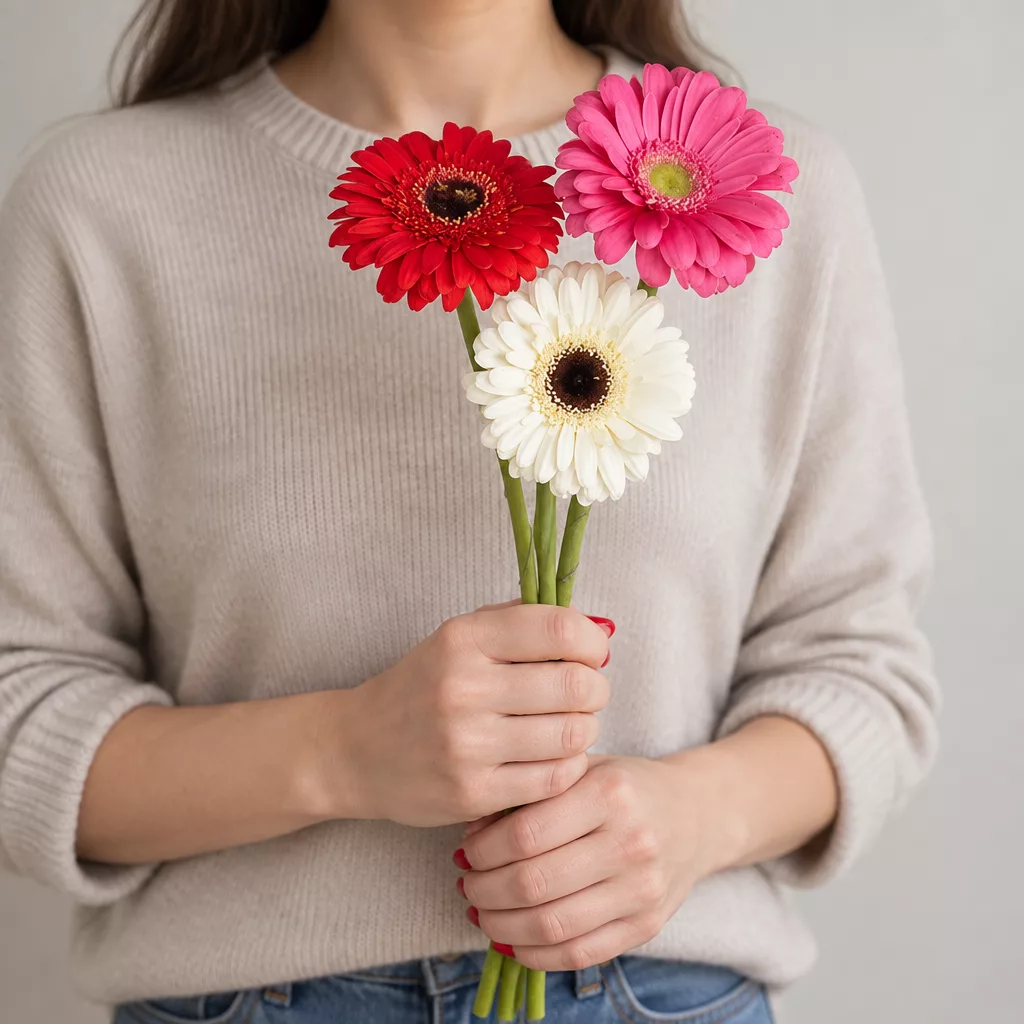
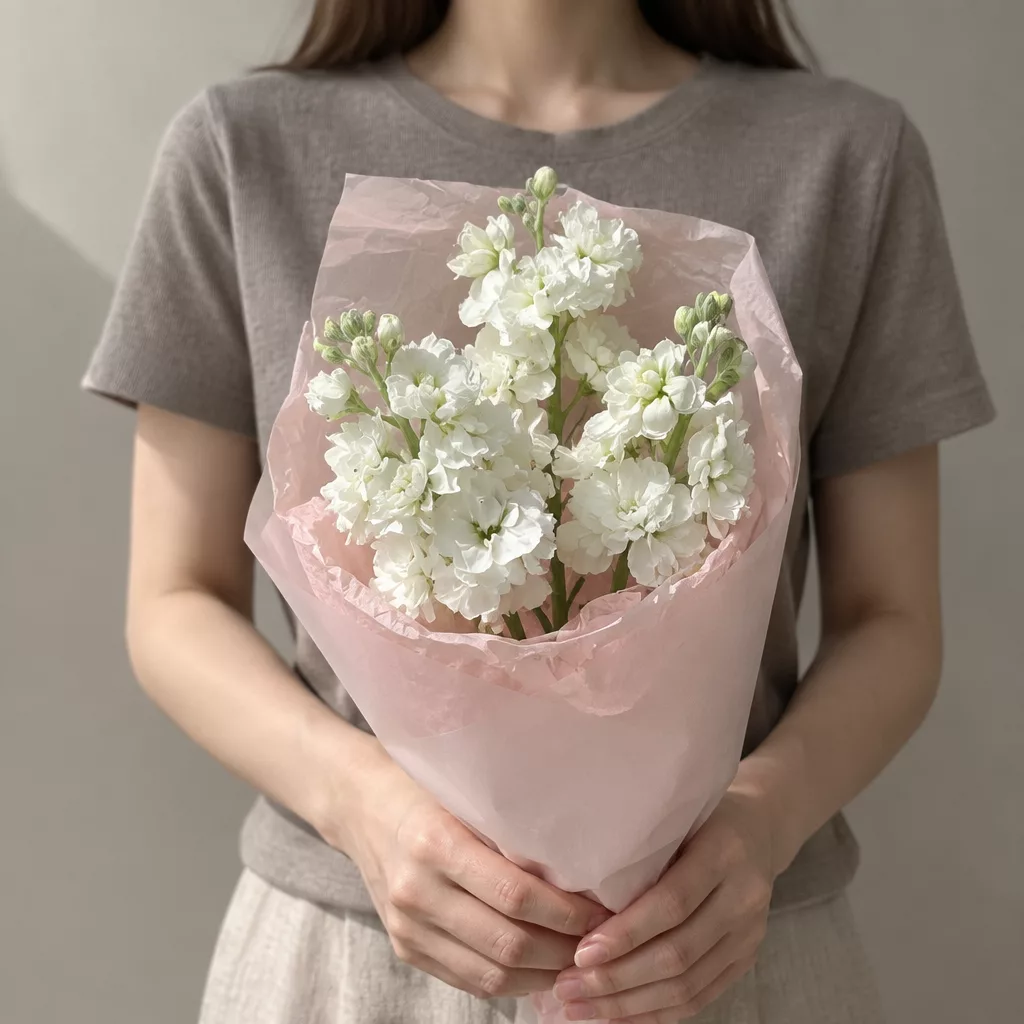
Colour is the first thing anyone notices, and in a professional setting it does the heaviest lifting before a single petal is examined closely. White, cream, soft yellow, lavender, and pale peach are all colours that read as gracious without being intense. They photograph well against an office background, they do not dominate a small desk, and they sit comfortably alongside the visual noise of monitors, papers, and coffee cups.
Soft pink spray roses paired with white lisianthus and a few stems of eucalyptus is a combination that works almost universally in an office setting. The spray roses add warmth, the lisianthus gives a slightly ruffled, generous texture, and the eucalyptus keeps the whole thing feeling fresh rather than fussy. Another reliable pairing is white alstroemeria with pale green chrysanthemum pompons — both varieties last exceptionally well in the dry, heated air that most Russian offices maintain through the long winter months.
Avoid deep red roses as the centrepiece of a colleague arrangement unless you know the relationship is close and the occasion is significant, such as a retirement after many years together. Avoid white chrysanthemums on their own — in Russian tradition they carry an association with mourning and funerals, so they should always be mixed with other colours and varieties rather than presented alone. Orange and yellow tulips in spring are cheerful and completely appropriate, and they tend to open beautifully over two to three days on a warm desk, which gives the recipient something pleasant to watch through the week.
Occasions That Call for a Bouquet at Work
The most common occasion is a birthday, and in Russia the convention is to give flowers on the day itself rather than the day before. Arriving early matters — a bouquet delivered before noon means the recipient has it on their desk for the whole working day, which is part of the pleasure. If you are sending from a distance and cannot control the exact hour, aim for a morning delivery window and communicate that preference clearly when placing the order.
Professional milestones are the second most common trigger: a promotion, the successful close of a big project, a work anniversary, or the defence of a dissertation. These occasions welcome something slightly more structured and considered than a birthday bouquet — a hand-tied arrangement with a visible compositional logic, rather than a loose, casual bunch. It signals that you understood the significance of what they achieved.
Welcoming a new colleague or saying farewell to one who is leaving are both occasions where flowers from the team, rather than from a single individual, are very common. In that case, a larger arrangement is appropriate because it is a collective gesture. The card wording changes too — more about the group's feelings than a personal note. The birth of a child to a colleague is also celebrated with flowers, typically in pink or blue depending on the baby's sex, though soft yellow or white works well if you are uncertain and want to avoid the cliché. Whatever the occasion, the act of sending rather than handing over in person is entirely normal and does not reduce the warmth of the gesture.
Arrangements by Budget: What Each Level Looks Like
A modest arrangement for a colleague does not need to be sparse or apologetic. At the lower end of the budget range, a single-variety bouquet of seven or nine stems — spray roses, alstroemeria, or freesia — in a consistent colour tells a clean, intentional story. Odd numbers are the Russian convention for living recipients, so seven or nine stems is always the right choice. Freesia in particular carries a beautiful fragrance without being overwhelming, and it lasts well when the stems are cut cleanly and the water is changed every two days.
In the middle range, a mixed bouquet opens up. This is where combinations like lisianthus with ranunculus, or tulips layered with muscari in early spring, become possible. A mixed arrangement reads as more considered and personal, because someone made choices about what goes together. It also tends to photograph more interestingly, which matters to recipients who will share it on social media or in a family chat.
At the higher end, a box arrangement or a structured hat-box design is a strong choice for significant occasions. These designs travel well and sit neatly on a desk without needing a vase — a practical advantage in an office where finding a suitable container can be an unexpected problem. Roses, garden-style ranunculus, and soft peonies in season make a box arrangement feel genuinely luxurious. If the occasion warrants it, adding a small plant — a compact orchid phalaenopsis, for example — alongside a bouquet gives the recipient something that will last for months, long after the cut flowers have finished.
Wording the Card for a Russian Workplace
The card is where many senders hesitate, especially when writing across a cultural or language gap. The good news is that sincerity is understood in any language, and a short, genuine message is always better than a long, carefully hedged one. In a Russian workplace context, the tone should be warm but measured — more like a thoughtful speech at a team meeting than a private letter.
For a birthday, something like: 'Wishing you a wonderful day and everything good in the year ahead' is perfectly pitched. It is personal without being intimate, and it works whether the relationship is close or collegial. For a professional milestone: 'Congratulations on this achievement — it is well deserved' is direct and respectful. Avoid anything that could be read as flattery about appearance, and avoid jokes that depend on shared context the recipient might not remember in the same way.
If you are writing in English to a Russian-speaking colleague, that is entirely fine — many Russian professionals read English comfortably, and a card in English from an international colleague is natural and appreciated. If you want to include a phrase in Russian, 'Pozdravlyayu' (Pozdravlyayu) means 'Congratulations' and is universally appropriate for positive occasions. 'S dnyom rozhdeniya' (S dnyom rozhdeniya) is 'Happy Birthday.' These two phrases cover most situations and show a small effort that colleagues will notice warmly.
Keep the card short — three sentences at most. Sign with your name and, if the relationship is more formal, your role or company. A card that is too long risks feeling like a speech rather than a greeting.
Delivery Timing and Office Logistics in Russia
Most Russian offices operate from nine in the morning to six in the evening, Monday through Friday, with a lunch break that varies by company. Delivery before noon is ideal for a birthday — it gives the recipient the full afternoon with flowers on their desk and avoids the awkward situation of a bouquet arriving just as everyone is leaving. For a farewell or a celebration tied to a specific event, try to coordinate delivery to arrive roughly an hour before the moment itself.
Office buildings in larger Russian cities often have a reception desk or a security checkpoint at the entrance. The delivery person will need to state the recipient's name and sometimes their department. When placing your order, include the full name of the recipient, the company name, the floor or office number if you know it, and a contact phone number for the recipient. This detail is not bureaucratic fussiness — it genuinely speeds up delivery and prevents the flowers from sitting at a reception desk for an hour while someone tries to locate the right person.
Temperature is worth thinking about in Russian winters. From November through March, outdoor temperatures in many Russian cities drop well below freezing. A reputable florist will wrap arrangements in insulating paper or a protective sleeve for transit, but the flowers should move from the delivery vehicle into the warm building within minutes. Delicate varieties like anemones or garden roses are more sensitive to cold shock than robust ones like chrysanthemums or alstroemeria, so if you are ordering in deep winter, it is worth choosing varieties that handle temperature transitions more gracefully.
Keeping the Flowers Fresh at an Office Desk
An office is not the easiest environment for cut flowers. Central heating runs high in Russian buildings through the winter — temperatures of twenty-two to twenty-four degrees Celsius are common — and that warmth shortens vase life noticeably compared to a cool home. Direct sunlight through a window, which many desk workers enjoy, is also hard on petals. Knowing this in advance lets you choose varieties that perform well under those conditions.
Alstroemeria, lisianthus, and chrysanthemums are the most reliable performers in a warm office. They can last seven to ten days with basic care. Tulips will open quickly in the warmth — sometimes within a day — and they are beautiful when fully open, but they will not last as long as the sturdier varieties. Roses sit in the middle: three to five days in a warm room, longer if the stems are recut and the water changed every two days.
The most common mistake office recipients make is forgetting to change the water. A small card with the arrangement noting two simple steps — recut the stems at an angle, change the water every two days — is a practical addition that some florists include automatically. If there is no vase available, a tall glass or even a clean water bottle works perfectly well. The flowers do not need a formal container to thrive; they need clean water, a fresh cut, and a spot away from direct heat sources like radiators and computer vents. Passing these tips along in the card message or a separate note is a small kindness that extends the life of your gesture considerably.
Sending flowers to a colleague in Russia is one of the more straightforward ways to show that you noticed something important about their life or their work. The conventions are clear, the expectations are warm, and the gesture is almost always received well when the choice is thoughtful. Pick colours that suit the office setting, choose varieties that will last in a heated room, word the card with sincerity and brevity, and make sure the delivery details are complete. Everything else follows from those four decisions, and the result is a moment your colleague will remember long after the petals have dropped.
Frequently asked questions
Is it appropriate to send flowers to a male colleague in a Russian office?
Yes, entirely. In Russia, men receive flowers on professional occasions such as birthdays and retirements without any awkwardness. Choose a structured, less delicate arrangement — compact spray roses, alstroemeria, or a mixed green-and-white combination — and keep the colour palette cooler rather than soft pink. The gesture is normal and will be appreciated.
How many stems should a colleague bouquet have?
Russian convention is to give an odd number of stems to living recipients — seven, nine, or eleven is typical for a colleague arrangement. Even numbers are associated with mourning in Russian tradition, so they are avoided for celebratory occasions. Most florists follow this automatically, but it is worth confirming when you place the order.
Can I send flowers to a colleague in a Russian city I have never visited?
Absolutely. You do not need to know the city. What you need is the recipient's full name, the company address including floor or office number if possible, and a contact phone number. Turboflora delivers across Russia within one to two hours, so distance from you to the recipient is not a factor in the freshness or timing of the arrangement.
What should I avoid putting in the card message for a Russian workplace?
Avoid comments about the recipient's appearance, jokes that rely on shared private context, and anything that could read as romantic if seen by a third party. Also avoid vague phrases like 'thinking of you,' which carry a more personal tone than is comfortable in a professional setting. Stick to the occasion, keep it to two or three sentences, and sign clearly.
Which flowers last longest in a warm Russian office during winter?
Alstroemeria, lisianthus, and standard chrysanthemums are the strongest performers in heated office environments, lasting up to ten days with basic care. Spray roses are a good middle option at five to seven days. Tulips open quickly in warmth and are beautiful but shorter-lived. Avoid anemones in winter as they are sensitive to the temperature changes during cold-weather delivery.
Ready to send flowers?
Pick the city, choose the bouquet, and a local florist takes it from there.
Choose a city →