Sending Flowers to Dedovsk from Abroad? Here Is Everything That Matters
You are sitting in another country, thinking about someone in Dedovsk — a birthday, an anniversary, a moment you simply do not want to let pass unnoticed. The distance feels enormous, but the gesture does not have to. Sending fresh flowers across that gap is entirely possible, and when you understand a few practical things about timing, seasons and Russian floral customs, it becomes straightforward and genuinely moving for the person who opens the door.
Why Dedovsk Is Easier to Reach Than You Might Think
Dedovsk sits in the Moscow Oblast, roughly thirty kilometres northwest of central Moscow. That location matters enormously for flower delivery from abroad, because it places the town well within the service radius of a Moscow-based florist operating fast urban logistics. There is no need to route an order through a distant regional hub or accept a two-day delay as the standard.
For someone placing an order from London, Berlin, New York or Tel Aviv, the practical reality is this: you choose the flowers, confirm the address, and delivery happens within one to two hours of the bouquet being assembled. The town has clear street addressing, and most residential buildings follow the standard Russian format of street name, building number and apartment number — information you will want to confirm with your recipient before ordering.
The time difference is the first thing to calculate. Moscow Standard Time runs UTC plus three hours year-round, with no daylight saving adjustment. Someone in Toronto placing an order at nine in the morning local time is reaching Moscow at four in the afternoon — still a perfectly workable window for same-day delivery. Someone in Tokyo ordering in the early evening local time may already be looking at the following Moscow morning. Getting the arithmetic right before you place the order saves frustration and ensures the flowers arrive when the moment calls for them.
Bouquets we can deliver

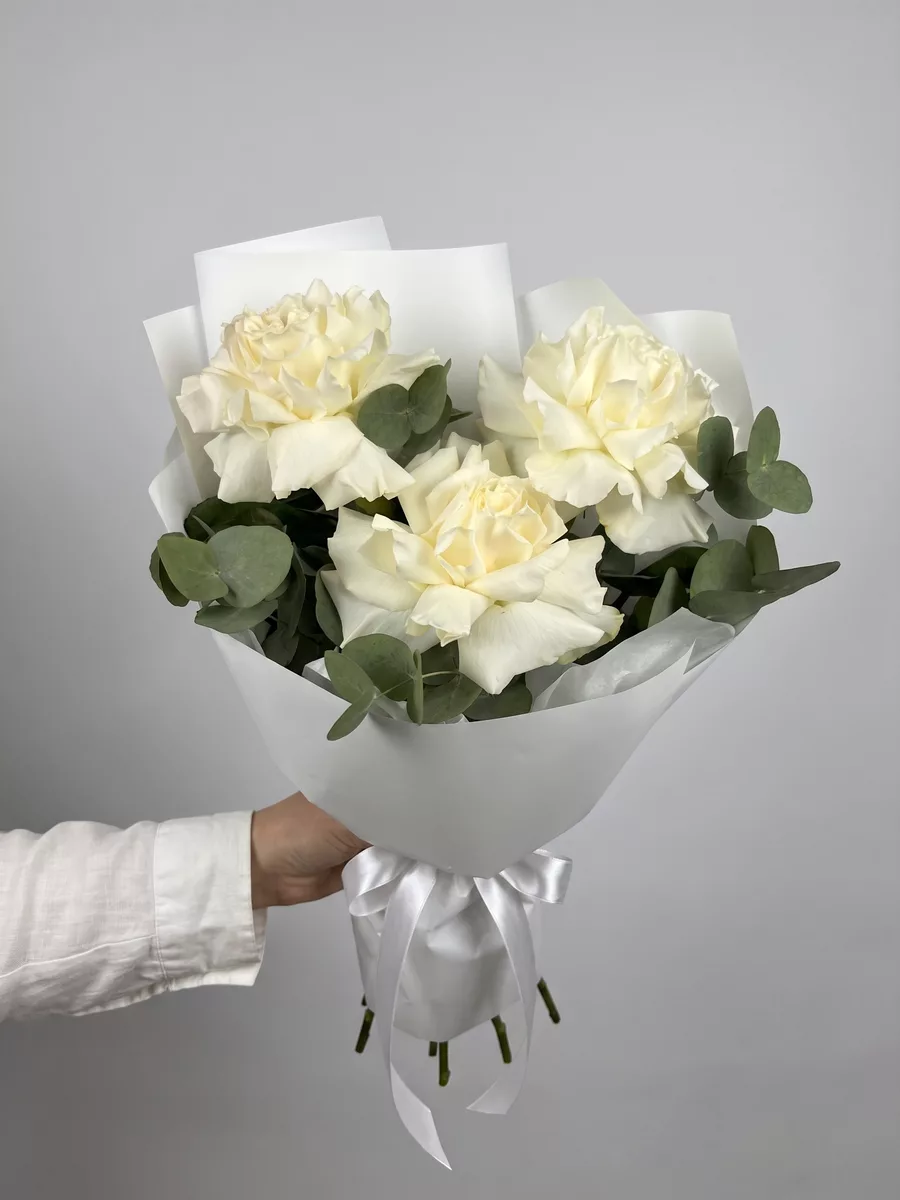
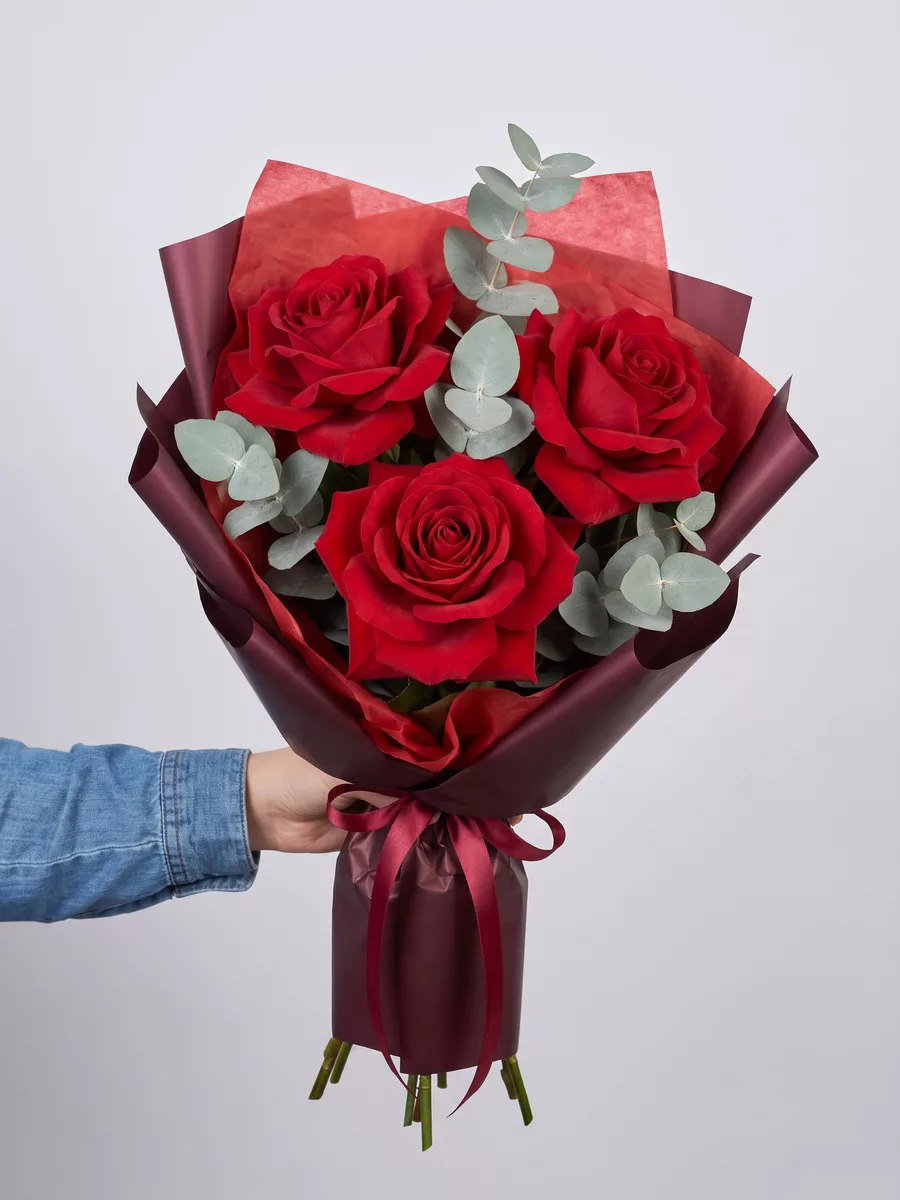
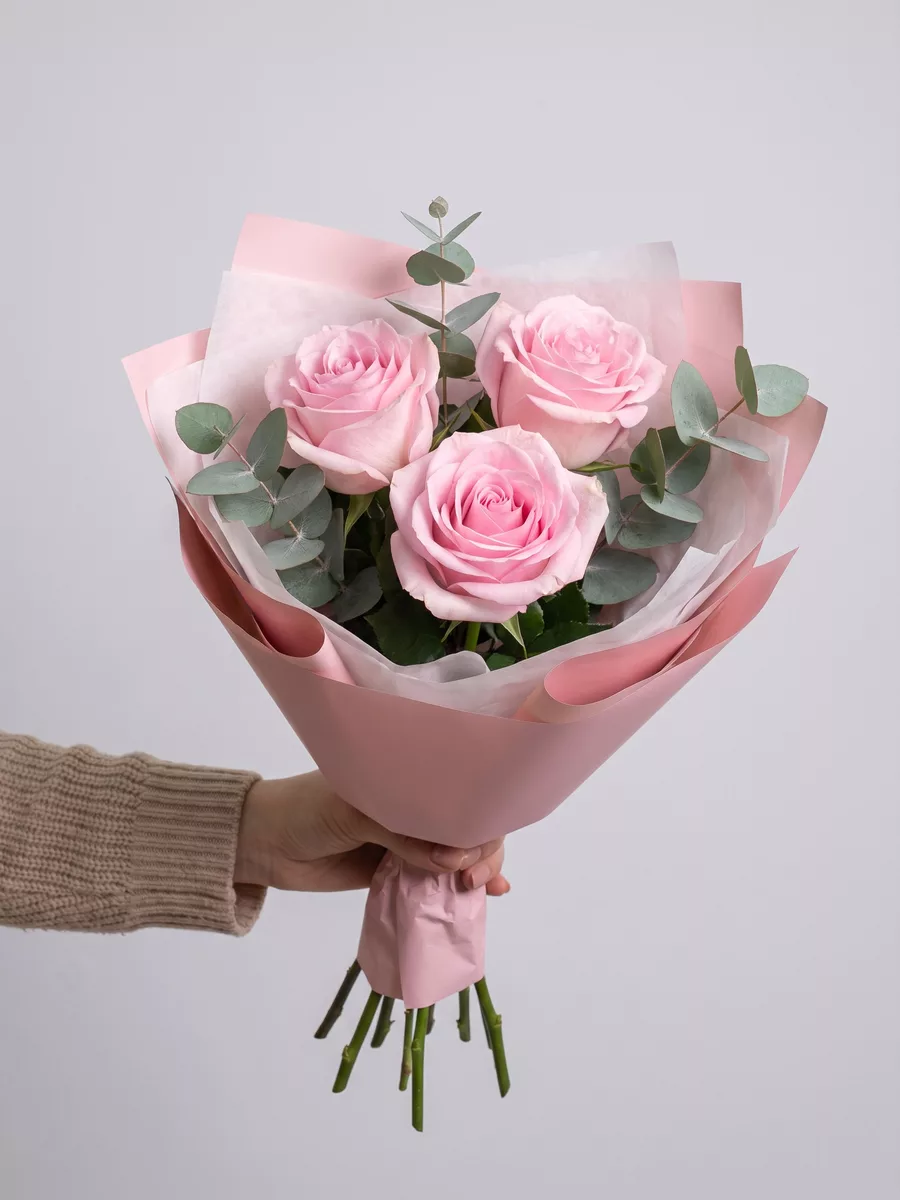
Reading the Occasion Before You Choose the Flowers
Russian floral culture has a few conventions that differ from what buyers in Western Europe or North America might expect, and knowing them makes your gift land more warmly. The most important one is the odd-number rule. Bouquets given as celebrations — birthdays, anniversaries, graduations, new baby arrivals, housewarming gifts — traditionally contain an odd number of stems. This is not a superstition you need to follow rigidly, but it is deeply familiar to Russian recipients, and a bouquet of eleven roses or fifteen tulips simply feels right in a way that twelve or fourteen does not.
The second thing to read is the relationship. A grandmother celebrating her seventieth birthday responds to warmth and softness — think garden roses in blush or cream, fragrant freesias, or a lush arrangement with lisianthus and eucalyptus. A younger woman marking a professional achievement might love something more graphic and contemporary: sculptural anthuriums, tropical bird-of-paradise stems, or a tightly composed bouquet of ranunculus in a single saturated colour.
For a couple celebrating an anniversary, red roses remain a classic that carries genuine emotional weight in Russian culture, but deep burgundy peonies in season or a rich combination of garden roses with dark-berried branches can feel more personal and unexpected. Think about what the recipient actually has in the room where they live — their aesthetic, their vase, their kitchen table — and let that guide the composition more than any default category.
Seasonal Realities: What Grows When and Why It Matters
The Moscow Oblast experiences genuine seasons, and that affects both flower availability and how long your bouquet will last after delivery. Dedovsk winters are cold — January temperatures regularly drop below minus ten Celsius — and a bouquet assembled in a warm studio and driven through that cold needs to be wrapped correctly to survive even a short transit. A professional florist accounts for this automatically, using insulating paper and timing the unwrapping for indoors, but it is worth knowing so you understand why certain delicate varieties are handled differently in winter months.
Spring, roughly March through May, is when tulips, ranunculus, anemones and hyacinths are at their freshest and most affordable. These are the flowers of the Russian spring calendar, which includes International Women's Day on the eighth of March — the single busiest floral date in the country. If you are ordering around that date, place your order at least forty-eight hours ahead.
Summer brings peonies, which Russians adore, along with lush garden roses, sunflowers, dahlias and lavender. Autumn is the season for chrysanthemums, roses with deeper tones, and mixed arrangements with seasonal foliage. Winter calls for robust varieties: roses, alstroemeria, carnations, tropical stems, and arrangements that use dried or preserved elements for texture. Knowing the season helps you order something that looks genuinely abundant rather than a bouquet fighting its own timing.
Budgeting When You Are Paying in Foreign Currency
Ordering from abroad means you are dealing with a currency conversion, and the exchange rate on the day of your order affects what your budget delivers in terms of stems and presentation. The most useful approach is to think in tiers of visual impact rather than trying to convert a specific foreign amount into a precise number of flowers.
A modest but genuinely beautiful arrangement — seven or nine stems of a single variety, well-chosen and properly wrapped — makes a stronger impression than a larger bouquet assembled carelessly from whatever fills the price bracket. A medium arrangement that combines a focal flower with complementary foliage and a secondary bloom creates something that looks considered and generous. A large arrangement with twenty or more stems, mixed textures and a premium focal flower such as garden roses, peonies or orchids reads as a significant occasion gift.
When you place an order, be specific about the occasion and the recipient rather than just the budget. A florist who knows they are making a bouquet for a forty-year-old woman who loves plants and lives in a bright apartment will make different choices than one who only knows the spend. The more context you give, the better the result. Also factor in any delivery fee, which is typically calculated by zone from the assembly point — Dedovsk's distance from Moscow means it may carry a slightly higher delivery cost than a central Moscow address, and it is better to know that before you confirm.
How to Write the Card Message Across a Language Gap
The card is often the part that international senders overthink. You do not need to write in Russian. A message in English, French, German or any other language carries warmth perfectly well, especially when the recipient knows you and knows which language you share. What matters is that the message is specific rather than generic — it should reference something real about the person or the occasion.
If you do want to include a Russian phrase, a few simple ones translate beautifully: pozdravlyayu means congratulations, s dnem rozhdeniya means happy birthday, and ya skuchayu means I miss you. These land with warmth even when the rest of the card is in another language, because they show effort. Avoid translation software for longer messages — it often produces something technically correct but tonally flat, which is the opposite of what a card should do.
Keep the message short enough to be read in one breath. Two or three sentences that say something true about the recipient, acknowledge the occasion and express a feeling are more powerful than a long paragraph. If you are ordering for a colleague or a professional contact rather than a close friend or family member, a simple and warm congratulation without excessive personal detail is the right register. The flowers themselves carry the emotional weight — the card just needs to confirm who sent them and why.
Coordinating Delivery When You Cannot Be There
Delivery coordination is the practical heart of sending flowers from abroad, and a few steps make it significantly smoother. The most important is confirming the recipient's address in full Russian postal format before you order. This means the street name in Russian transliteration or Cyrillic, the building number, the apartment number, the entrance number if the building has multiple entrances, and the floor. Russian apartment buildings often have a code-locked door at the entrance, called a domofon, and if your recipient is not home to buzz the courier in, delivery becomes complicated.
The cleanest solution is to let the recipient know a delivery is coming — not necessarily what it is, but that they should be available during a window. This preserves most of the surprise while eliminating the logistical problem. If you want to keep it completely secret, make sure the phone number you provide with the order is one the courier can actually reach, and that the person on that number can give access instructions.
For workplace deliveries in Dedovsk, confirm that the building allows external deliveries and that the recipient will be at that location on the day. Office surprises are wonderful when they work and awkward when the person is working from home that particular day. A quick check — even a vague one — is worth it. Same-day delivery within the one-to-two hour window means you can place the order in the morning and have reasonable confidence about the afternoon.
Helping Your Flowers Last: Care Advice to Pass Along
Part of a thoughtful gift is making sure it lasts, and a short note of care advice tucked into the order — or sent separately as a message — adds a layer of consideration that recipients genuinely appreciate. Fresh flowers arriving in Dedovsk in winter will have been through a cold environment during transit, and they need a few minutes to adjust before being placed in water. Unwrapping them indoors and letting them come to room temperature before arranging them helps the stems open properly.
The single most important care step is a clean cut. Using a sharp knife or scissors, cut the stems at an angle under running water or in a basin, removing about two centimetres. This opens the vascular tissue and allows the stem to drink properly. Removing any leaves that would sit below the waterline prevents bacterial growth, which is the main reason flowers die early.
Water temperature matters more than most people realise. Lukewarm water encourages closed blooms like roses and ranunculus to open. Cold water slows the process and is better for flowers that are already fully open and you want to preserve. Change the water every two days and recut the stems each time. Keep the arrangement away from direct sunlight, radiators and fruit bowls — ethylene gas from ripening fruit shortens vase life noticeably. Roses, alstroemeria and chrysanthemums typically last seven to twelve days with good care. Tulips and ranunculus are shorter at five to seven days but are so beautiful in their prime that the brevity feels worth it.
Sending flowers to Dedovsk from another country is a real act of presence across a real distance, and the person who receives them understands exactly what went into it. You thought of them, you figured out the logistics, you chose something specific rather than something generic. That intention is visible in every part of the bouquet — the variety, the colour, the card, the timing. When the door opens and the flowers are there, the kilometres between you collapse entirely.
Frequently asked questions
Does the Moscow Oblast location of Dedovsk affect how fresh the flowers will be when they arrive?
Because Dedovsk sits within the fast logistics radius of Moscow, bouquets are assembled locally and delivered within one to two hours of preparation. You are not waiting for flowers to travel from a distant hub. That short window between assembly and doorstep is what keeps petals firm and stems properly hydrated when your recipient opens the door.
Which seasons make it hardest to send flowers to Dedovsk from abroad, and how should I plan around them?
Russian winters limit what grows locally, so January and February orders rely more heavily on imported stems, which can affect availability and price. Spring and summer offer the widest seasonal choice. If you are ordering for a winter occasion, confirm with the florist what is genuinely in stock rather than selecting from a full catalogue image that may not reflect current supply.
How does Moscow Standard Time staying fixed year-round change how I should time my order?
Because Moscow does not observe daylight saving, the offset from your location shifts when your own country changes its clocks. A London sender who orders comfortably in the morning during winter may find that same habit cuts close to the delivery window in summer. Check the current UTC plus three offset against your local time before assuming your usual ordering hour still gives the florist enough working time.
Are there particular bouquet styles or flower combinations that feel natural for Russian recipients in Dedovsk?
Russian floral culture tends to favour full, generous arrangements over minimalist ones, and roses remain a consistently well-received choice across occasions. Combining roses with seasonal fillers like eucalyptus or waxflower reads as considered rather than plain. Avoid arrangements that feel sparse, as volume and warmth in presentation carry more meaning than a single dramatic stem would in some other traditions.
What address details do I actually need to complete a delivery to a Dedovsk residential building?
You need the street name, building number and apartment number, which is the standard Russian address format used throughout Dedovsk. If your recipient lives in a building with a separate entrance code or intercom number, include that too. A phone number for the recipient is genuinely useful, not optional, because it allows the courier to coordinate arrival without the delivery stalling at a locked entrance.
Ready to send flowers?
Pick the city, choose the bouquet, and a local florist takes it from there.
Choose a city →