Sending Flowers to Divnogorsk from Abroad
You are sitting in Berlin, Toronto or Dubai, and someone you love is in Divnogorsk — a quiet city on the Yenisei River in Siberia, far from the nearest international airport. You want to send flowers that arrive fresh, look generous and feel personal. The distance is real, but it does not have to be a problem. What matters is knowing how delivery to Divnogorsk actually works, what the climate does to flowers, and which choices will make the person on the receiving end genuinely happy.
Why Divnogorsk Is Different from Sending Flowers to Moscow
Divnogorsk sits about 30 kilometres upstream from Krasnoyarsk, deep in the Krasnoyarsk Krai. It is a small city by Russian standards, surrounded by taiga and shaped by the Siberian climate. When you order flowers for someone in Moscow or Saint Petersburg, you are working with a dense urban infrastructure. Divnogorsk is different — it requires a florist with genuine reach into the region, not just a city-centre operation.
The Yenisei corridor creates its own microclimate. Winters are long and sharp, with temperatures regularly dropping below minus 20 Celsius between November and March. Summers are short but genuinely warm, sometimes reaching 30 Celsius in July. Both extremes affect which flowers survive the journey and how they look on arrival.
From abroad, the practical challenge is time zones. Divnogorsk runs on Krasnoyarsk Time, which is UTC plus 7. If you are placing an order from Western Europe, you are 9 or 10 hours behind. From the US East Coast, the gap is 14 hours. This means your idea of "ordering in the morning" may arrive as an instruction in the middle of the Siberian night. Plan your order at least a day ahead whenever you can, and always specify the delivery window in local Divnogorsk time, not your own.
Bouquets we can deliver

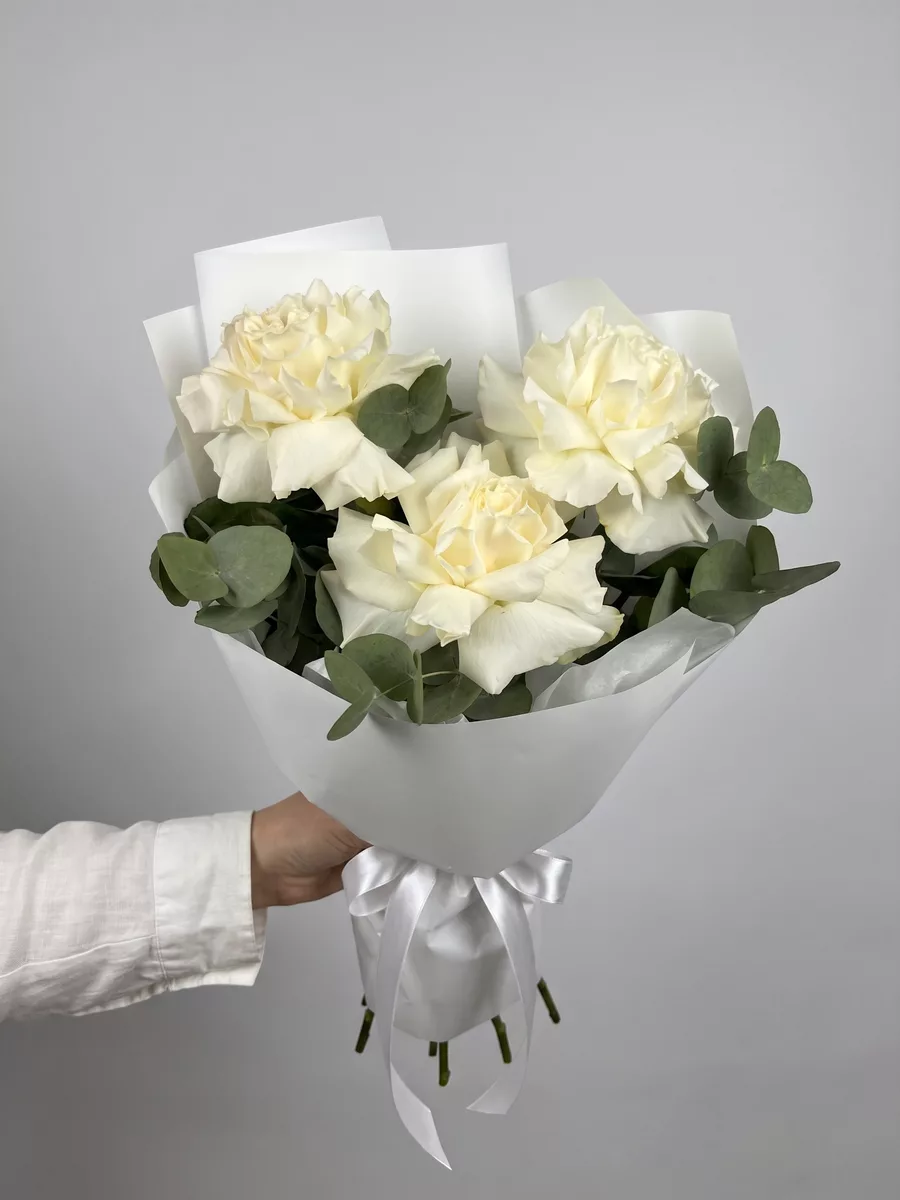
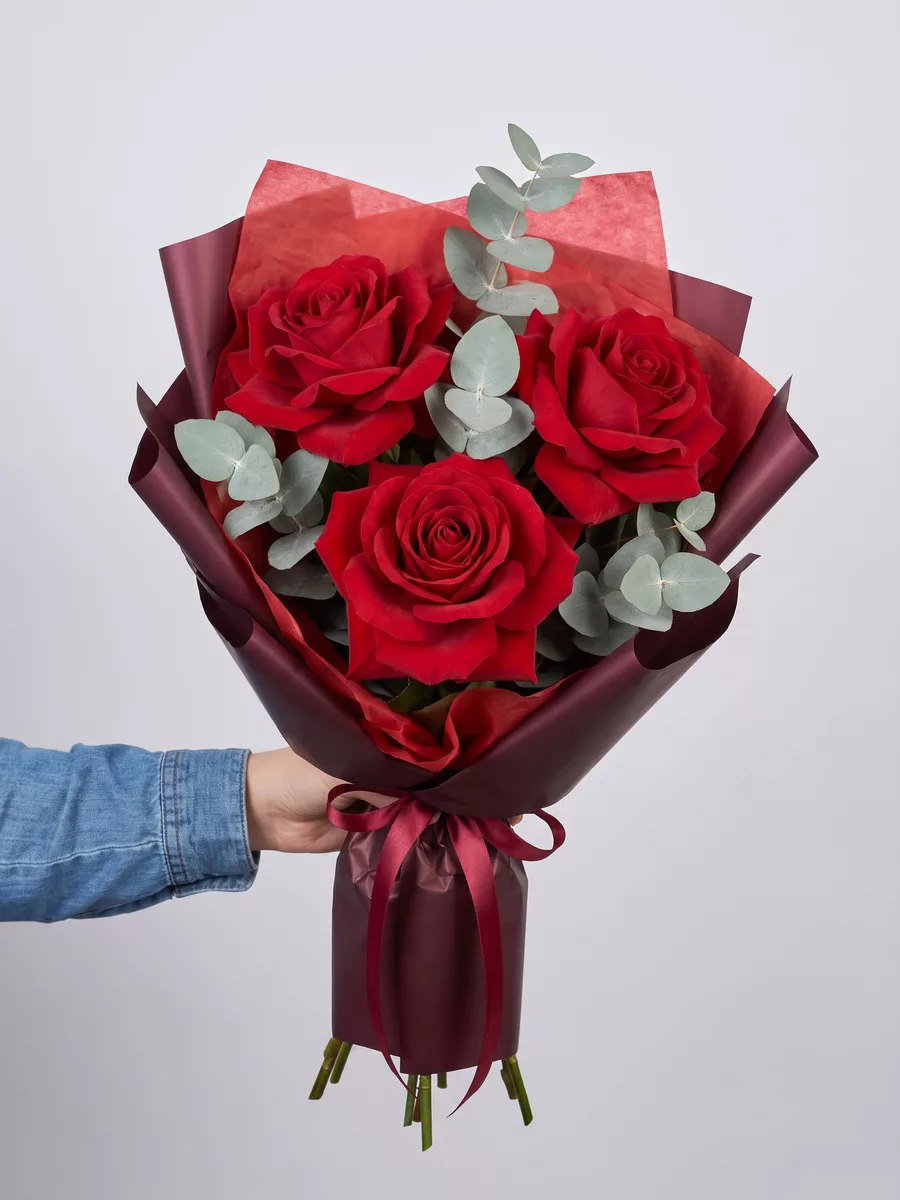
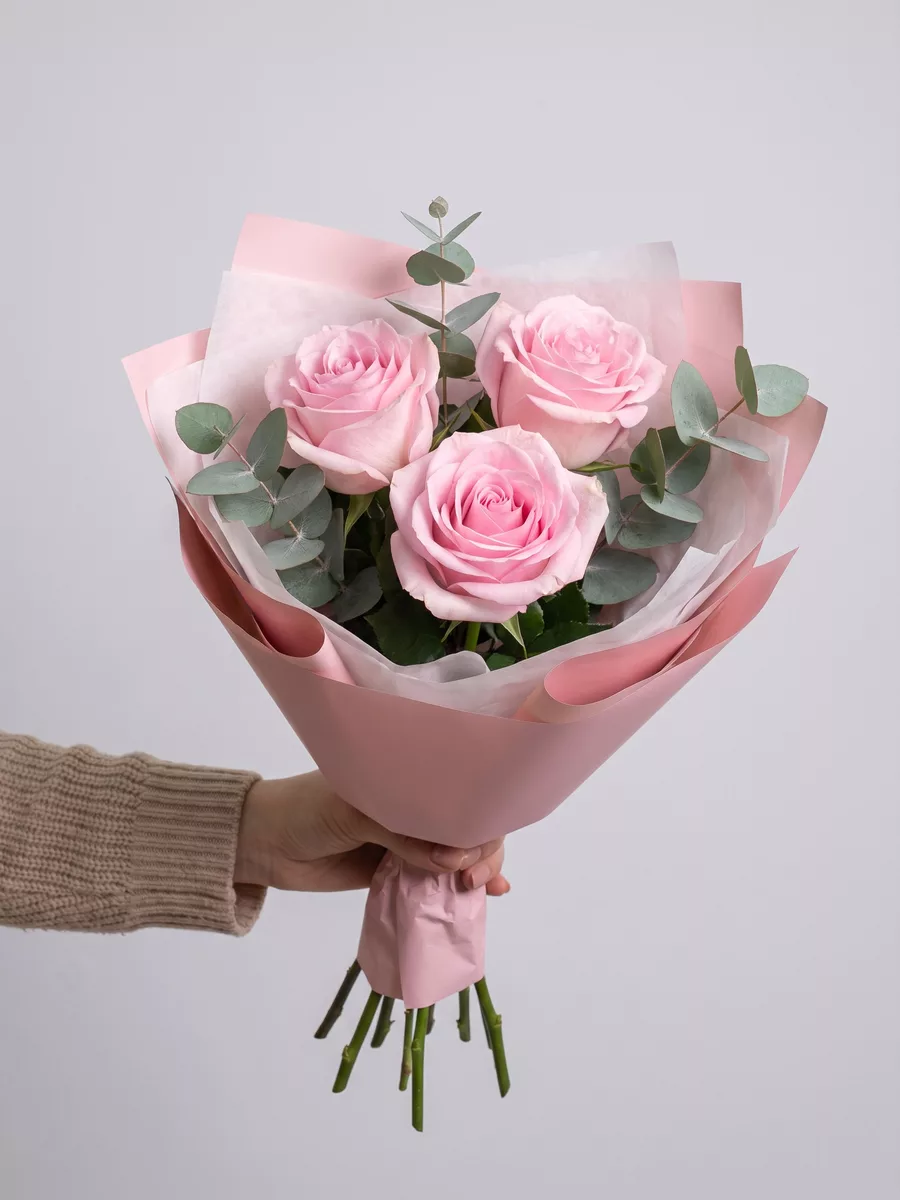
Choosing Flowers for the Occasion, Not Just the Season
Before you think about which flowers to choose, think about who is receiving them and what you want them to feel. A colleague celebrating a promotion needs something confident and structured — think roses in a single bold colour, spray chrysanthemums, or a tight arrangement of lisianthus. A mother on her birthday deserves softness: garden roses, alstroemeria, or a mixed bouquet where the colours tell a story rather than shout.
For romantic occasions, red roses remain the clearest statement, but a sender from abroad who wants to show real thought might choose burgundy or deep peach roses combined with eucalyptus — it reads as considered rather than automatic. White flowers in Russia carry associations with purity and celebration, not mourning, so white tulips or white freesia are entirely appropriate for happy occasions.
If the recipient has a named day — Russians celebrate name days, known as imeniny, alongside birthdays — a bouquet is always welcome. The custom is similar to a birthday gift in terms of warmth expected. For anniversaries, odd numbers of flowers are traditional in Russia for living recipients; even numbers are reserved for different contexts entirely. As a sender from outside Russia, this is one of the most important customs to know: always choose an odd number — five, seven, nine, eleven stems — when ordering a counted bouquet.
For a new baby, soft yellows, peach tones and white work beautifully. Avoid anything too dark or heavily scented for a household with a newborn.
What the Siberian Climate Means for Your Flower Choice
Siberian winters are not a small consideration. At minus 20 Celsius or colder, a delicate bouquet left outside for even five minutes can suffer frost damage — petals go translucent, stems lose their structure and the whole arrangement can look wilted before it is even unwrapped. This is not a failure of the florist; it is physics.
The flowers that handle Siberian winter best are those with firm, waxy petals and strong stems. Roses, chrysanthemums, carnations and alstroemeria all travel well in cold conditions when properly wrapped. Tulips and ranunculus are more vulnerable — they are beautiful but soft, and in deep winter they need extra insulation during transit. A good florist will wrap the bouquet in several layers of kraft paper and sometimes add a thermal sleeve in the coldest months.
In summer, the challenge reverses. Divnogorsk can be genuinely hot, and flowers that sit in a warm car or on a doorstep in July heat will fade quickly. Succulents and tropical varieties like anthuriums actually hold up better in summer heat than you might expect. Delicate garden roses, on the other hand, need to reach the recipient quickly and go straight into water.
When ordering from abroad, mention the season and ask for the florist's recommendation for that specific weather window. A working florist will know what is arriving fresh at the market that week and what will actually look good when it opens the door in Divnogorsk.
Options Across Different Budgets: What You Actually Get
Budget shapes what is possible, but it does not have to limit what feels generous. A smaller arrangement done with skill and the right flowers for the season will always outperform a large bouquet assembled without thought.
At a modest budget, a single-variety bouquet is often the strongest choice. Seven or nine stems of a good seasonal flower — tulips in spring, chrysanthemums in autumn, spray roses in winter — presented in clean kraft wrapping with a card looks intentional and warm. The key is choosing one flower that is genuinely in season and at peak quality rather than mixing several varieties that are fighting each other.
In the mid range, combinations open up. A florist can bring together roses with lisianthus, or alstroemeria with waxflower and eucalyptus, creating a bouquet with texture, depth and a longer vase life. Mixed bouquets at this level also allow for colour coordination, which matters more than most senders realise — a bouquet where the tones work together reads as a gift from someone who paid attention.
At a higher budget, you move into premium roses — varieties like David Austin-style garden roses with their full, layered heads — or large statement arrangements with orchids, peonies when in season, or amaryllis. These are the bouquets that get photographed and remembered. If you are marking a significant occasion from far away, this is also where presentation upgrades like a hatbox or a ceramic vase become available, which matters because the recipient in Divnogorsk may not have a suitable vase at hand.
How to Place the Order Smoothly from Outside Russia
Ordering from abroad introduces a few practical friction points that are easy to resolve once you know about them. The first is payment. Russian bank transfers from foreign cards have been complicated by sanctions since 2022. Turboflora accepts international payment methods through its website, so check the checkout options before you start building your order — it will save you frustration.
The second is the recipient's address. Russian addresses follow a specific format: city, street, building number, apartment number, and sometimes a building entrance code (podezd) or intercom code. If you are sending to an apartment building, which is common in Divnogorsk, the entrance code is genuinely important — without it, the courier cannot reach the door. Ask the recipient casually for their full address, or find a reason to get it from a family member.
The third is the message card. If you want the card written in Russian, most florists can transliterate or translate a short message. If you write it in English, be aware that the recipient may not read English. A short, warm phrase in Russian — even just "S dnem rozhdeniya" for happy birthday — means a great deal more than a message the recipient has to photograph and run through a translation app.
Finally, provide a working Russian mobile number for the recipient. Couriers in Russia routinely call ahead before delivery, especially in smaller cities. Without a reachable number, the delivery can be delayed or missed entirely.
Vase Life and Care: What to Tell the Recipient
One of the kindest things you can do as a sender is include care instructions with the bouquet, because not everyone knows how to make flowers last. In Divnogorsk, tap water is hard in some areas, which shortens vase life if flowers are not given a little help.
The basics are simple. Stems should be cut at an angle with a sharp knife or scissors — not torn or cut straight across — and placed immediately in clean, cool water. About two centimetres off the bottom is enough. The water should be changed every two days, and the stems re-cut each time. Remove any leaves that sit below the waterline, because submerged foliage rots quickly and clouds the water.
Roses benefit from being placed in water up to their necks for the first hour after arrival, especially if they have been in transit. This deep conditioning helps them open properly. Tulips, on the other hand, should be kept in shallow water and away from direct sunlight — they will lean toward the light and lose their shape otherwise.
In a warm Divnogorsk apartment in summer, flowers last longer if kept away from radiators, sunny windowsills and fruit bowls. Ripening fruit releases ethylene gas, which shortens the life of cut flowers noticeably. A cool corner of the room, or even a cool hallway overnight, extends vase life by several days.
Roses and alstroemeria typically last seven to ten days with good care. Chrysanthemums can go two weeks. Tulips are shorter-lived at five to seven days but are so cheerful in that time that most recipients do not mind.
Making the Moment Feel Personal Across the Distance
Sending flowers from abroad carries its own emotional weight. The recipient in Divnogorsk knows that you thought of them specifically, made an effort across time zones and currencies, and chose something that would arrive in their hands rather than in their inbox. That context already makes the gift meaningful before the door is even opened.
What elevates it further is personalisation. A specific flower that has a story — the same roses you gave at a wedding, the tulips that were at a favourite café — tells the recipient that you remembered. If you do not have that kind of detail, colour is the next best lever. Choosing a colour the recipient loves, or one that matches their home, shows attention.
The card message is worth more time than most senders give it. Three honest sentences beat a generic phrase every time. Say what the occasion means to you, say something specific about the person, and say something about the distance — acknowledge it rather than ignore it. "I wish I could be there" is a sentence that lands.
Presentation also carries the message. A bouquet that arrives in beautiful wrapping, with a real card rather than a printed slip, feels like it came from someone who cared. If you are ordering for a significant occasion — a major birthday, a new home, a graduation — consider adding a small extra: a box of good chocolates, a candle or a small plant. These additions are available through the same order and mean the recipient has something to keep after the flowers have faded.
The distance between you and Divnogorsk is fixed. The feeling of being remembered is not.
Divnogorsk is not the easiest city to reach from outside Russia, but it is entirely reachable with the right preparation. Know the time zone, respect the odd-number rule, give the florist a real address with an entrance code, and choose flowers that suit both the occasion and the season. When you do all of that, what arrives at the door in Divnogorsk is not just a bouquet — it is proof that someone on the other side of the world was thinking about the person who opens it.
Frequently asked questions
How far in advance should I order flowers for Divnogorsk from abroad?
Order at least 24 hours ahead to account for the time zone difference and to give the florist time to source the best seasonal flowers. For major occasions like significant birthdays or anniversaries, 48 hours is more comfortable. Last-minute orders are sometimes possible, but the selection of premium varieties is narrower and there is less flexibility on delivery timing.
Is it true that I should always send an odd number of flowers in Russia?
Yes, and it matters. In Russian tradition, even numbers of cut flowers are associated with mourning contexts, while odd numbers are for living recipients and celebrations. Always choose five, seven, nine, eleven or any other odd count when ordering a counted bouquet. This single custom is the one most frequently missed by senders from outside Russia, and it is easy to get right.
What flowers hold up best in Divnogorsk's winter cold during delivery?
Roses, chrysanthemums, carnations and alstroemeria are the most cold-resilient cut flowers for Siberian winter delivery. They have firm petals and strong stems that tolerate brief exposure to very cold temperatures when properly wrapped. Tulips and ranunculus are more delicate and need extra insulation. Ask the florist to use thermal wrapping in November through March.
Can I write the card message in English for a recipient in Divnogorsk?
You can, but a message in Russian will mean far more to most recipients. You do not need to write it yourself — simply tell the florist what you want to say and ask them to write it in Russian. Even a short phrase transliterated phonetically shows effort. If the message must be in English, keep it very short so the recipient can translate it easily.
What information do I absolutely need from the recipient before ordering?
You need the full address including apartment number, the building entrance code or intercom number if it is an apartment block, and a working Russian mobile phone number. Couriers in Russia call recipients before arriving, especially in smaller cities like Divnogorsk. Without a reachable number, delivery can be delayed. The entrance code is equally critical — without it, the courier cannot reach the apartment door.
Ready to send flowers?
Pick the city, choose the bouquet, and a local florist takes it from there.
Choose a city →