Sending Flowers to Dudinka from Abroad? Read This First
Dudinka sits above the Arctic Circle on the Yenisei River, and sending flowers there from London, Berlin, Dubai or New York feels like an act of pure devotion. The distance is real, the logistics are specific, and the cold is not a detail — it is the central fact of every bouquet that arrives at a door in this city. But people do it, and when it works, the effect is extraordinary. A fresh arrangement landing in one of Russia's most remote cities tells the recipient something that a message simply cannot.
Why Dudinka Is Different from Any Other Russian Delivery
Most Russian cities that receive flower deliveries sit in temperate climate zones where a standard bouquet travels without special handling. Dudinka is not one of those cities. It is the administrative centre of the Taymyr Peninsula, and temperatures in winter regularly fall to minus thirty-five or even minus forty degrees Celsius. That single fact changes everything about how a bouquet must be packaged, timed and handed over at the door.
The recipient is almost always indoors when the order arrives, which is good — flowers should never wait outside in that cold, even for a few minutes. Packaging must be insulated, and the transition from cold air to warm interior needs to be managed carefully. A bouquet that goes from minus thirty to plus twenty-two in seconds will sweat and stress, so the recipient needs simple guidance on letting the arrangement acclimatise before unwrapping it fully.
For the sender abroad, the key insight is this: you are not just choosing flowers, you are choosing a delivery system that understands Arctic conditions. Turboflora handles the cold-weather logistics from the Saint Petersburg side, coordinating the journey so that the bouquet arrives in the best possible state given the environment. Your job is to choose the right occasion, the right flowers for that climate, and to give accurate delivery details. Everything else can be managed when you place the order with clear instructions.
Bouquets we can deliver
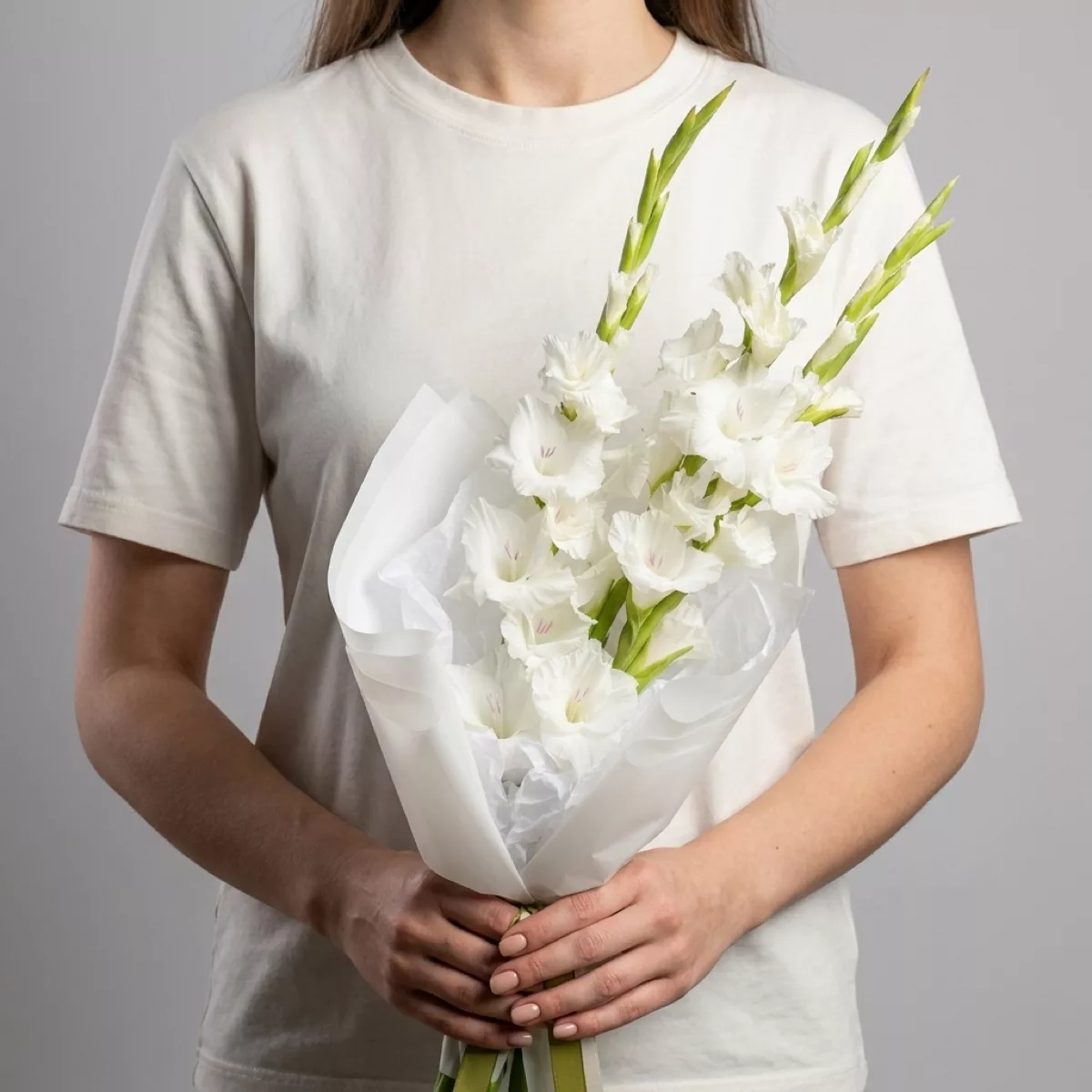
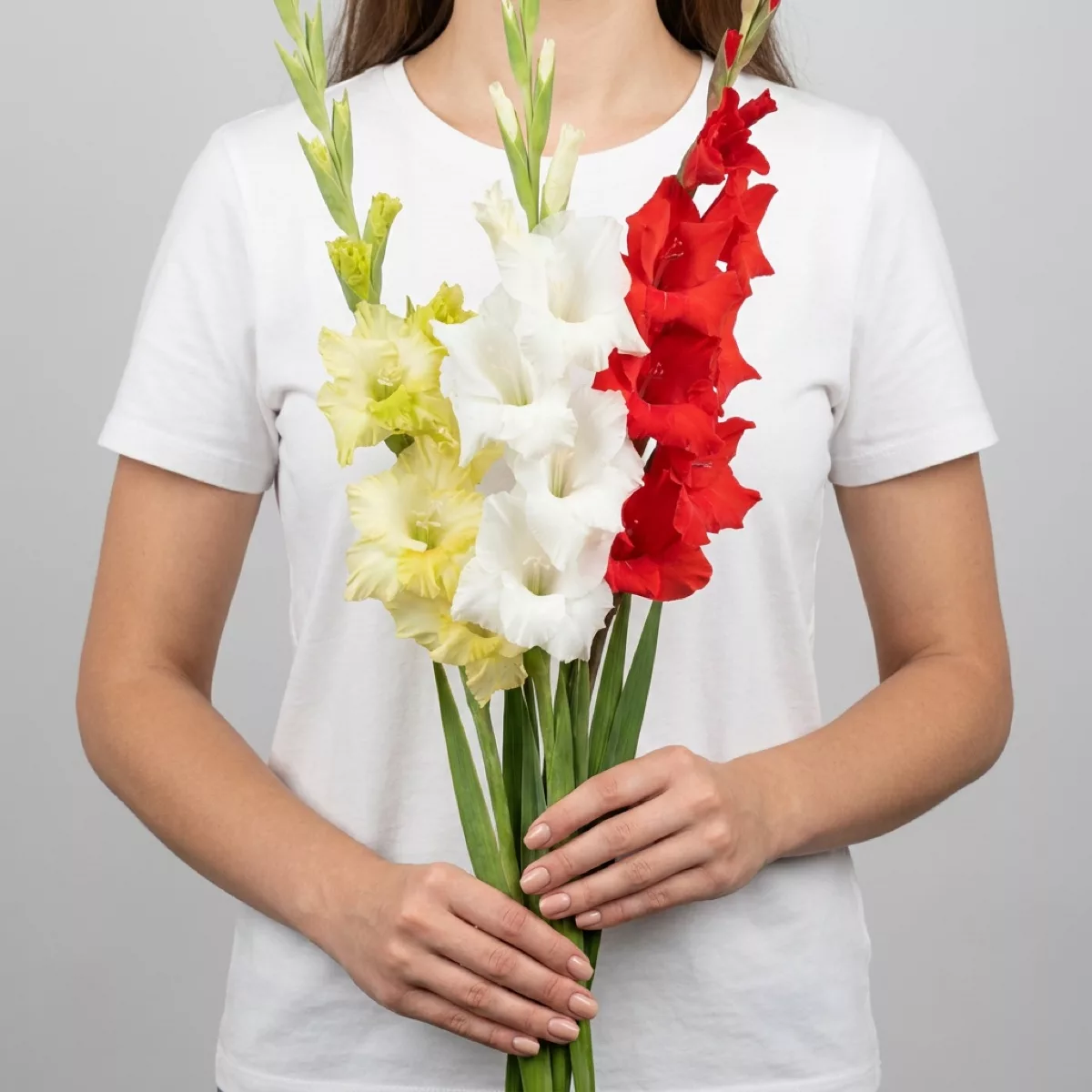
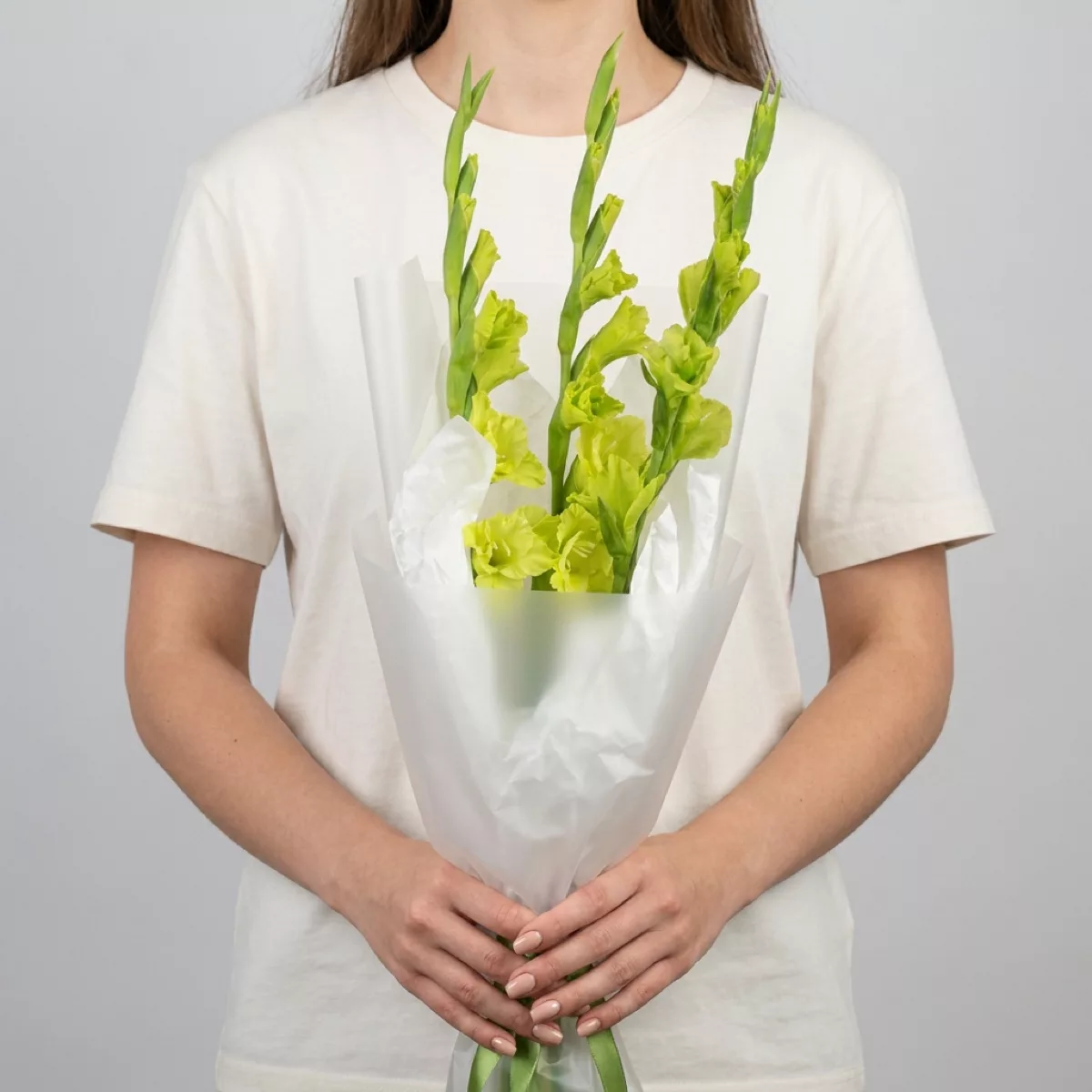
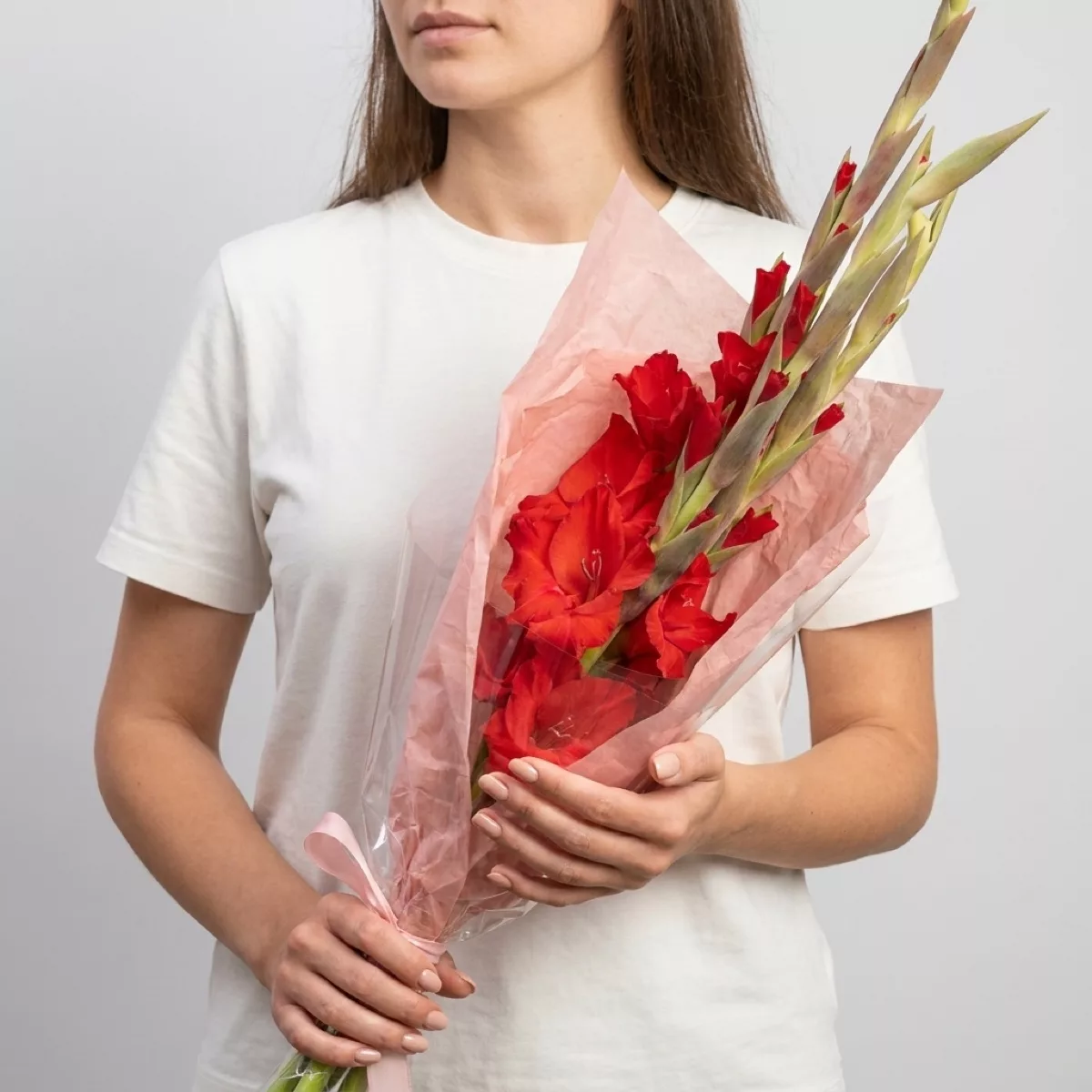
Choosing Flowers That Survive the Arctic Journey
Not every flower is suited to Dudinka, and a florist who knows the route will tell you this honestly. Delicate open blooms with thin petals — anemones at full bloom, garden roses with very large heads, fully open peonies — are at higher risk during cold transit. They are beautiful, but they need more careful handling and a shorter window between cutting and delivery.
The most reliable choices for this route are spray roses, alstroemeria, chrysanthemums, carnations, and closed or semi-open standard roses. These varieties have a natural resilience. Their petals are denser, their stems hold water efficiently, and they tolerate temperature fluctuation better than many alternatives. Tulips travel well when they are still closed and the stems are kept hydrated. Lilies in bud are another strong option — they will open beautifully in the warmth of the recipient's home over two or three days, which actually makes the bouquet feel like it is giving twice.
Greenery matters more in this context than people often expect. Ruscus, eucalyptus, and pittosporum add structure and protect the blooms during transit by acting as a physical buffer. A well-constructed bouquet with good foliage arrives looking intentional and cared-for rather than battered. When you are ordering from abroad, describe the occasion clearly and let the florist guide the variety selection — that conversation is the most important part of the process.
Understanding Russian Flower Customs Before You Order
If you are sending flowers from outside Russia, a few cultural details will help you avoid unintentional missteps and make the gift land exactly as you intend. The most important rule, and the one most often unknown to international senders, is the odd-number convention. Bouquets in Russia are traditionally given in odd numbers — one, three, five, seven, nine, eleven stems and so on. Even numbers are associated with mourning and are used at funerals. This is a deeply held convention across Russian culture, and a recipient will notice immediately if the count is wrong.
Colour carries meaning too, though it is more flexible than the number rule. Red roses are romantic and direct — they say exactly what they look like. Yellow flowers have a complicated reputation in some parts of Russian culture, with an old association to separation or unfaithfulness, though this is fading among younger generations and in urban contexts. White flowers are elegant and appropriate for almost any occasion. Mixed colours in a well-composed bouquet sidestep the question entirely and tend to be universally well received.
A handwritten card or a printed message attached to the bouquet is genuinely appreciated. Russians place real value on a personal note, and if you can write even a few words in Russian — or ask the florist to include a transliterated message — it will be noticed and remembered. The gesture of effort matters as much as the flowers themselves in many cases.
Timing Your Order Across Time Zones and Seasons
Dudinka operates on Krasnoyarsk Time, which is UTC plus seven. If you are in Western Europe, that is a nine or ten hour difference depending on daylight saving. From the east coast of the United States, you are looking at a twelve-hour gap. This matters practically: if you want flowers to arrive in the afternoon local Dudinka time, you need to place your order well before noon your own time, sometimes the day before.
Seasonal timing adds another layer. In winter, which in Dudinka runs from October through April in practical terms, delivery windows are tighter because of daylight and weather. Summer in Dudinka is genuinely warm — July temperatures can reach eighteen to twenty degrees Celsius — and this is actually the easiest time to send flowers. The city is accessible, the recipients are often outdoors and celebratory, and the flowers face no cold-transit risk.
For birthdays, anniversaries, and professional milestones, placing the order twenty-four to forty-eight hours in advance is wise when you are coordinating across multiple time zones. This gives the florist time to source the right varieties and prepare the arrangement properly rather than rushing. Last-minute orders are possible, but the variety selection may be more limited. A sender in Dubai or New York who plans a day ahead will almost always get a better result than one who orders three hours before the desired delivery time.
What Information You Must Provide for a Successful Delivery
Remote delivery to any city requires precise information, and Dudinka is less forgiving of vague addresses than a large metropolitan area would be. The city is not enormous, but its street numbering and building codes follow the Russian system, which uses a building number, corpus number and sometimes an apartment number as separate fields. If your recipient has given you their address, make sure you have all three components before you place the order.
A working Russian mobile phone number for the recipient is essential. The delivery driver will call ahead, and without a reachable number the delivery cannot be completed. If the recipient does not know they are receiving flowers — perhaps it is a surprise — you need to think about this carefully. A surprise delivery works best when someone is confirmed to be at home and reachable. If the person works unusual hours or is often out, consider coordinating with a family member who can be present without spoiling the surprise entirely.
Specify the occasion in your order notes. This is not just about the card message — it helps the florist make better decisions about variety, colour palette, and presentation. A birthday bouquet for a woman turning sixty looks different from a congratulations arrangement for a young professional receiving a promotion. The more context you give, the more the bouquet will feel personal when it arrives. Include any known preferences: favourite colours, allergies, or flowers the recipient has mentioned loving.
How to Care for Flowers After Arrival in a Cold Climate
Once the bouquet arrives at the door in Dudinka, the recipient's first instinct will be to unwrap it immediately and put it in water. That is the right instinct, but with one modification: if the flowers have come in from extreme cold, let the outer packaging sit in a cool room — not the warmest room in the apartment — for ten to fifteen minutes before fully unwrapping. This gradual acclimatisation prevents condensation from forming inside the petals and reduces thermal shock to the stems.
Once unwrapped, the stems should be cut at a diagonal with a sharp knife or scissors — not torn or crushed — and placed immediately into a clean vase with fresh, cool water. Lukewarm water is actually better than ice-cold water for most cut flowers, as it is absorbed more easily. The vase should be rinsed clean because bacteria in residue from previous arrangements will shorten vase life significantly.
In a centrally heated Russian apartment, which in winter is typically kept at twenty-two to twenty-four degrees Celsius, flowers dry out faster than people expect. Keep the vase away from radiators, which are powerful in northern Russian homes, and away from direct sunlight. Change the water every two days and re-cut the stems each time. Spray roses and alstroemeria can last ten to fourteen days with this care. Standard roses will give seven to ten days. Chrysanthemums are the longest-lasting option, sometimes reaching two weeks in good conditions.
Making the Bouquet Feel Personal from Thousands of Kilometres Away
The distance between a sender abroad and a recipient in Dudinka is not just geographic — it is emotional. The bouquet you send is doing work that you cannot do in person, and that means the details of presentation carry more weight than they would if you were handing flowers over yourself. A thoughtful card message, a specific colour choice that references something the recipient loves, or a variety that connects to a shared memory — these things transform a purchase into a gesture.
Think about the occasion from the recipient's point of view. A woman working as a nurse in Dudinka who receives flowers on her birthday is having a different experience than a colleague in Moscow would. The rarity of the gesture in a remote northern city amplifies its meaning. Knowing this, you can lean into the presentation: ask for the bouquet to be wrapped elegantly, request a specific ribbon colour if the florist offers this, and write a message that acknowledges the distance directly. Something as simple as acknowledging that you wished you could be there yourself gives the card real weight.
For significant occasions — a major anniversary, a professional achievement, a milestone birthday — consider a larger arrangement rather than a single bouquet. A tall vase arrangement with lilies, roses and structured greenery makes a statement in a living room and stays beautiful for longer. It also photographs well, and the recipient is almost certain to send you a photograph, which closes the loop and makes the entire experience feel shared despite the thousands of kilometres between you.
Sending flowers to Dudinka from abroad is one of the more demanding flower orders you can place, and it is also one of the most meaningful ones. The recipient knows what it took. They live in a city where fresh flowers do not simply appear on every corner, and they understand that someone on the other side of the world made a deliberate choice to reach them. When the logistics are handled well — the right varieties, the right packaging, the accurate address, the timed delivery — what arrives at the door is not just a bouquet. It is proof that distance is a practical problem, not an emotional one.
Frequently asked questions
Can I send flowers to Dudinka in January when temperatures are extreme?
Yes, winter delivery to Dudinka is possible and we manage it with insulated packaging designed for Arctic temperatures. We recommend hardier varieties like spray roses, chrysanthemums and closed tulips for this season. The key is accurate recipient contact details and a confirmed delivery window so the bouquet is never left waiting in the cold outside the door.
How far in advance should I order from a different country?
For international senders, ordering twenty-four to forty-eight hours ahead is strongly recommended. Time zone differences between Western Europe, the Americas or the Middle East and Dudinka's UTC plus seven can be significant. Ordering a day in advance ensures the florist has time to prepare the right arrangement and that you are not rushing the logistics across a ten-to-twelve hour time difference.
Is it true that I should never send an even number of flowers in Russia?
Yes, this is a genuine and widely observed convention. Even numbers of flowers are associated with mourning in Russian culture and are used at funerals. Always send an odd number — three, five, seven, nine, eleven or more. When you order through Turboflora, we apply this rule automatically, but it is good to know the reason behind it so you can explain it to the recipient if they ask.
What if the recipient is not home when the delivery arrives?
Our driver will call the recipient's Russian mobile number before arriving. If there is no answer and no one is home, we will coordinate a second delivery attempt. This is why a working, reachable phone number is essential when ordering. For surprise deliveries, consider sharing a trusted family member's number as a backup contact so the bouquet is never left undelivered.
Which flowers last the longest once delivered to Dudinka?
Chrysanthemums are the most durable cut flower and can last up to two weeks with proper care. Alstroemeria and spray roses follow closely at ten to fourteen days. Standard roses give seven to ten days. In a heated Russian apartment, changing the water every two days and keeping the vase away from radiators makes a significant difference to vase life regardless of variety.
Ready to send flowers?
Pick the city, choose the bouquet, and a local florist takes it from there.
Choose a city →