Sending Flowers to Dzhankoy from Abroad? Start Here
You are somewhere outside Russia — maybe in Berlin, Dubai, or New York — and you want to send flowers to someone in Dzhankoy. Perhaps it is a birthday, an anniversary, or simply a moment when distance feels too wide and you want to close it with something real and fragrant. The logistics sound complicated, but they do not have to be. This article walks you through everything a sender abroad needs to think about: timing across time zones, what grows well in Crimea's climate, how to present a bouquet in a way that feels genuinely warm to a Russian recipient, and how to make sure petals arrive looking like they were cut that morning.
Understanding the Distance: Time Zones and Order Windows
Dzhankoy sits in Crimea and operates on Moscow Standard Time, which is UTC plus three hours. If you are placing an order from Western Europe, you are two hours behind in winter and one hour behind in summer. From the US East Coast you are eight hours behind Moscow time, and from the Gulf region you are one hour ahead. These gaps matter more than people expect when you are trying to hit a specific delivery moment.
The practical rule is simple: place your order at least three to four hours before the moment you want flowers to arrive. For morning deliveries — before noon Dzhankoy time — you will often need to confirm the order the evening before, especially if you are calling from a very different time zone. Our customer service team is reachable in Russian and English, and we can confirm a precise delivery window once the address is verified.
Do not assume that a same-day order placed at midday your local time will reach someone by early afternoon their time. Do the conversion first. A small calculation protects you from the disappointment of flowers arriving two hours after the birthday dinner ended. When in doubt, schedule for the following morning — a bouquet waiting at the door when someone wakes up is often more memorable than one rushed in at the last minute of a celebration.
Bouquets we can deliver

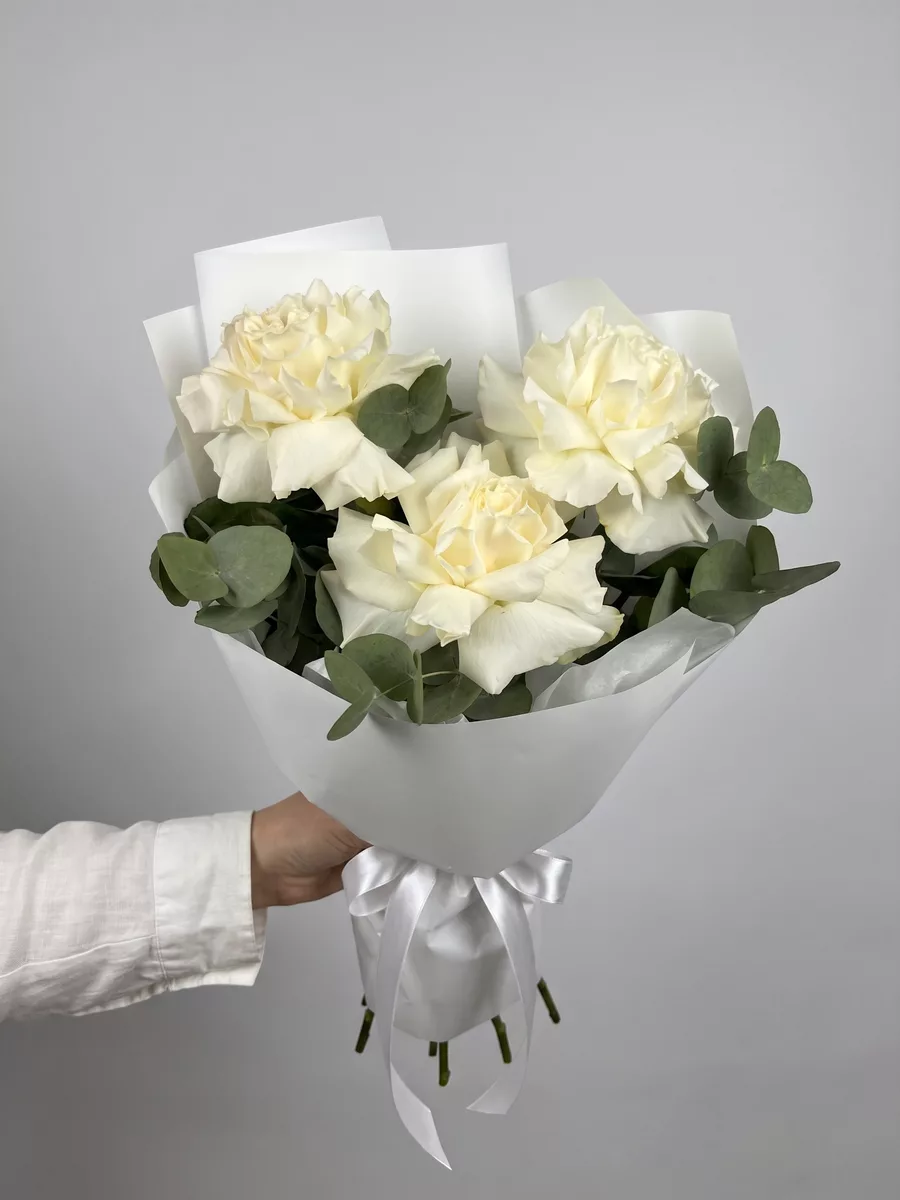
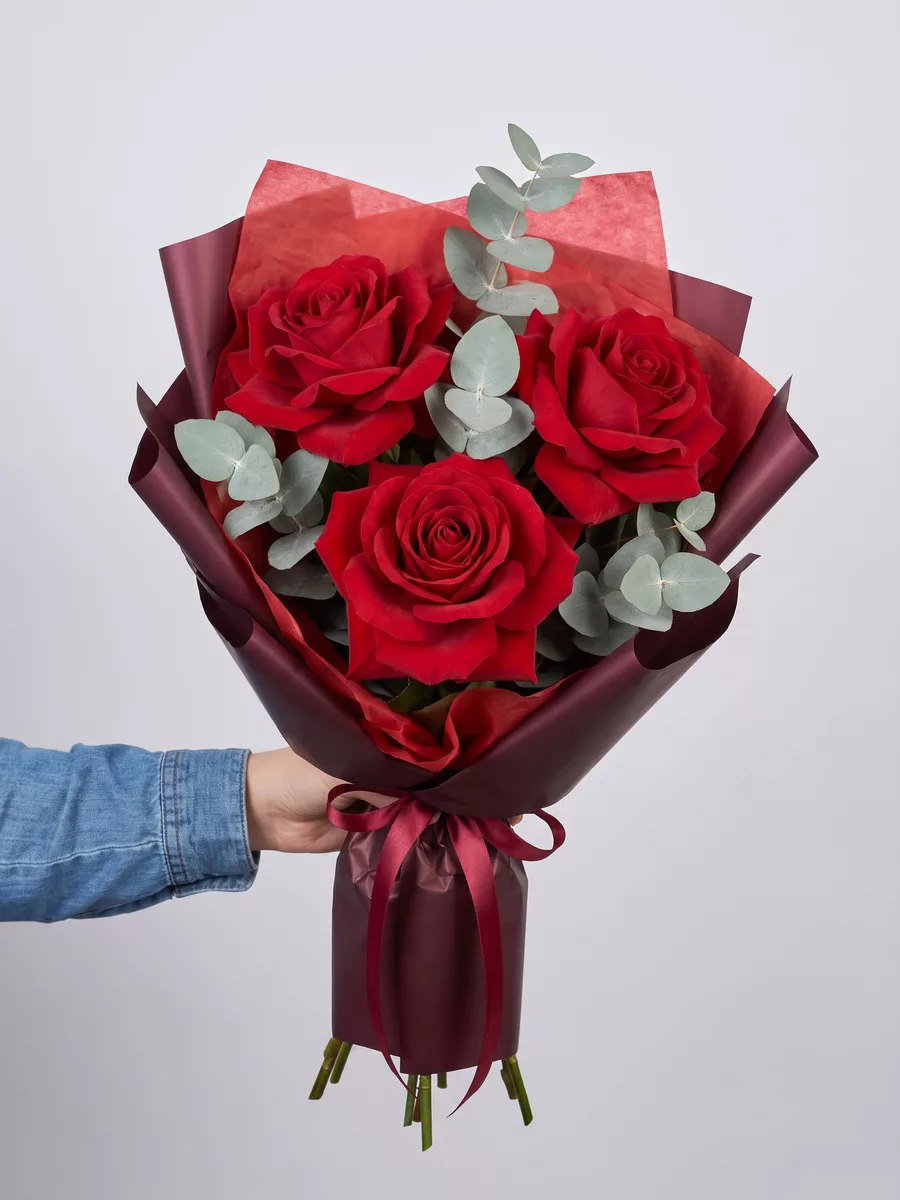
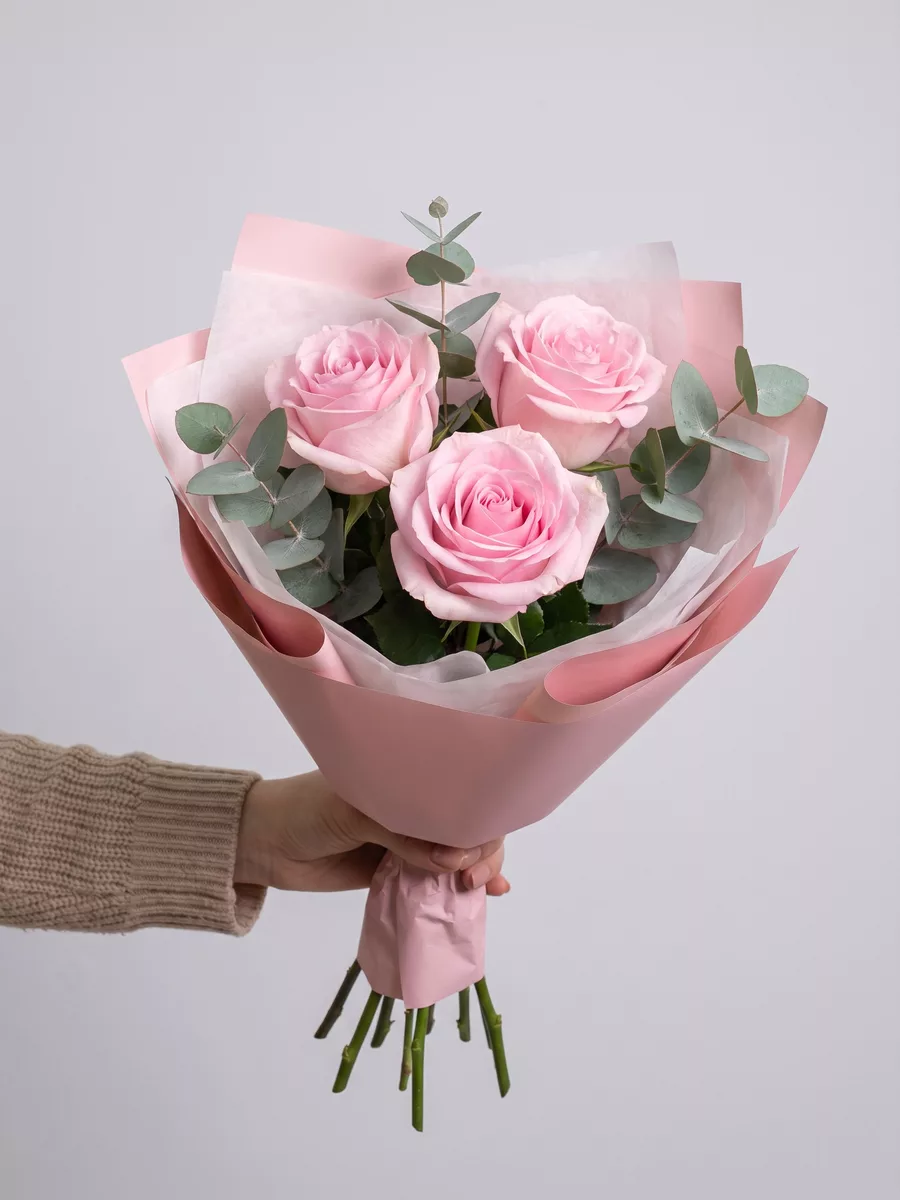
What Dzhankoy's Climate Means for Your Flower Choice
Dzhankoy is a small city in the northern part of Crimea, and its climate is drier and more continental than the southern coast. Summers are hot and winters are cold, which affects how flowers travel and how long they last once delivered. In July and August, outdoor temperatures regularly exceed thirty degrees Celsius. Roses and tulips can wilt within hours in that heat if left on a doorstep, so timing the delivery to coincide with someone being home is genuinely important during summer months.
In winter, from December through February, temperatures drop below freezing. Delicate tropical blooms like anthurium or strelitzia can suffer cold damage during even a short outdoor transit. For winter sending, hardy varieties hold up better: spray roses, chrysanthemums, alstroemeria, and sturdy single-stem roses with tight buds that open slowly indoors. These are not compromise choices — they are the right choices for the season.
Spring and autumn are the most forgiving seasons for sending flowers to Dzhankoy from abroad. Temperatures are moderate, and a wide range of varieties travel well: ranunculus, lisianthus, freesia, gerbera, and peonies when they are in season. If you are sending in April or May, peonies are a genuinely beautiful option — they are beloved in Russia and they open dramatically over two to three days, extending the gift. Ask us about what is arriving fresh that week, because seasonal availability changes quickly and we will always tell you honestly what is at its best.
Choosing the Right Bouquet for the Occasion
Russian gifting culture has its own rhythms, and understanding them helps you choose something that will feel right to the recipient rather than just look nice on a screen. Odd numbers of flowers are given to the living; even numbers are reserved for funerals. This is a deeply held convention, and it matters — a bouquet of twelve roses, however beautiful, will read as wrong to many Russian recipients. Always confirm your bouquet is composed of an odd number of stems.
For birthdays, Russians tend to appreciate abundance. A generous arrangement of nineteen or twenty-five roses in a single rich colour — deep red, coral, or cream — signals that the sender took the occasion seriously. For women celebrating a birthday, large-headed garden roses or lisianthus in soft pinks and whites feel elegant without being too formal. For men, succulent-accented arrangements, tropical leaves, or bold single-variety bouquets in white or burgundy tend to land well.
For romantic occasions like anniversaries or Valentine's Day, red roses remain the clearest and most universally understood gesture in Russia. A bouquet of twenty-five or thirty-one long-stemmed red roses is a classic that never reads as lazy — it reads as intentional. If you want something more unusual, consider a mixed bouquet built around garden roses and eucalyptus, which has become genuinely popular in Russian cities over the last several years. For a new baby, soft yellows, whites, and peach tones feel celebratory without being overpowering. Avoid white-only arrangements for celebrations, as all-white can carry a more solemn association.
Budget Ranges and What They Actually Look Like
When you are ordering from abroad, you are working without a physical reference point, which makes it easy to either overspend on something modest or underspend and feel disappointed by the result. Thinking in terms of what a budget produces, rather than a number on a screen, gives you a clearer picture.
A modest budget produces a neat single-variety bouquet: seven or nine roses, a small bunch of freesia, or a mixed seasonal arrangement with filler greens. These are genuine, cheerful gifts — not afterthoughts. They suit a thank-you, a get-well gesture, or a friendly birthday where the relationship is warm but not deeply intimate.
A mid-range budget opens up real options. You can now work with premium rose varieties like David Austin-style garden roses, add texture with ranunculus or lisianthus, and request a specific colour palette. The presentation improves too: craft paper wrapping, ribbon, and a handwritten card rather than a printed slip. This is the range where most senders from abroad land, and it produces the kind of bouquet that gets photographed and shared.
A generous budget lets you go large — a statement arrangement of thirty or more stems, mixed varieties, a structured composition with seasonal blooms, eucalyptus or ruscus greenery, and premium wrapping. These arrangements make an entrance. They are appropriate for milestone birthdays, significant anniversaries, or any moment when you want the recipient to feel genuinely celebrated from across the world. Whatever your budget, tell us the occasion and the person, and we will build something that fits both.
How to Write the Card Message Across a Language Gap
The card is the part of the gift that does the emotional work, and when you are sending from abroad to someone whose first language is Russian, it deserves more thought than a last-minute line typed into a checkout box. You have two good options: write in your own language if the recipient reads it, or write in Russian with our help.
If your recipient speaks English, French, German, or another language you share, writing in that language is entirely personal and appropriate — it reflects the relationship authentically. Many recipients in Dzhankoy, particularly younger people, read English comfortably. A sincere message in your own words will always outperform a translated phrase that sounds stiff.
If you want to write in Russian but do not speak it, we can help you translate a short message accurately. Please send us the text in your language when you place the order, and we will render it naturally rather than literally. Machine translation tends to produce phrases that sound odd in Russian — formal where you meant warm, or awkward where you meant playful. A florist who knows the language will catch those moments.
Keep the message focused on the person and the occasion rather than on the logistics of sending from abroad. Something like 'I am thinking of you from London today' is touching. A paragraph explaining international delivery timelines is not. The card should feel like a whisper, not a memo. Limit yourself to three or four sentences, and end with something personal — a shared memory, a private joke, or a simple and direct expression of feeling. That is what the recipient will read twice.
Delivery Practicalities: Address, Access and Confirmation
Dzhankoy is a mid-sized city with a straightforward street layout, but address details still matter enormously for a smooth delivery. Russian addresses follow a specific format: the street name comes before the building number, and apartment numbers are listed separately. If your recipient lives in a multi-storey building, you will need the apartment number, the entrance number (called a podyezd), and sometimes the floor. Without these details, a courier can arrive at the right building and still be unable to complete the delivery.
If you are not certain of the full address, ask the recipient directly — or ask a family member who can provide it without spoiling the surprise. Alternatively, you can ask us to call the recipient to confirm the address, which we do discreetly without revealing the sender if you prefer. Many senders from abroad use this option when they only have a phone number.
For surprise deliveries, make sure the recipient will actually be home or reachable. We will call ahead before arriving, which is standard practice, so a complete and active phone number is essential. If the recipient is at work during the delivery window, we can deliver to a workplace address — just provide the office name and any access instructions such as a gate code or reception desk location.
In summer, please avoid scheduling deliveries for the hottest part of the day, roughly between one and four in the afternoon, unless the recipient will be indoors immediately. Heat stress on a bouquet during that window can shorten vase life significantly, and we want the flowers to look their best when the door opens.
Keeping the Flowers Fresh: What to Tell Your Recipient
One of the kindest things you can do as a sender is pass along a few care instructions, because a beautiful bouquet can lose days of vase life from a single avoidable mistake. If you include these as part of your message or in a follow-up text, the flowers will last noticeably longer and the recipient will associate that longevity with your thoughtfulness.
The first step is cutting the stems. About two centimetres from the bottom, cut at a forty-five-degree angle under running water or while the stem end is submerged. This prevents an air bubble from forming at the cut, which would block water uptake. Use a sharp knife rather than scissors, which can crush the vascular tissue. Repeat this every two days.
Water temperature matters more than most people realise. Cool or room-temperature water suits almost all cut flowers. Very cold water from the refrigerator slows water uptake; very warm water encourages bacterial growth. Change the vase water every two days and rinse the vase itself each time.
Place the bouquet away from direct sunlight, radiators, and fruit bowls. Ripening fruit releases ethylene gas, which accelerates wilting in roses, tulips, and lisianthus particularly. A cool spot away from windows is ideal, especially in Dzhankoy's hot summers.
With proper care, roses typically last seven to ten days, alstroemeria can reach twelve to fourteen days, and chrysanthemums often go two weeks. Tulips are shorter-lived at five to seven days but open dramatically and look spectacular while they last. Knowing this helps the recipient enjoy each stage of the bouquet rather than feeling disappointed when the first petals drop.
Sending flowers to Dzhankoy from abroad is genuinely possible, and when it is done with a little preparation it produces something the recipient will remember. The time zone calculation, the seasonal variety choice, the odd-number rule, the careful card message — none of these are complicated once you know them, and together they turn a remote gesture into something that feels close and considered. Turboflora delivers fresh flowers to Dzhankoy within one to two hours of your order being confirmed, and our team is available to help you navigate every detail from address format to card translation. Distance is real, but it does not have to feel that way.
Frequently asked questions
What time zone should I use when scheduling a delivery to Dzhankoy from abroad?
Dzhankoy runs on Moscow Standard Time, UTC plus three hours. Before placing your order, convert your local time to MSK and check the gap. From Western Europe you are roughly two hours behind in winter, from the US East Coast about eight hours behind. Do the conversion before you confirm, not after — flowers arriving two hours late feel very different from flowers that open a morning.
Is a morning delivery or an afternoon delivery better for a birthday in Dzhankoy?
Morning deliveries tend to land harder emotionally — a bouquet at the door before the day begins sets the tone for everything that follows. They also give cut flowers the cooler part of the day to settle after transit. The trade-off is that you often need to confirm the order the evening before, especially if you are ordering across a large time difference. Plan for morning when the occasion matters most.
How does Dzhankoy's dry continental climate affect which flowers I should choose?
Dzhankoy summers are genuinely hot and the air is dry, which shortens vase life for delicate varieties like garden roses and sweet peas faster than in coastal cities. Sturdier choices — spray chrysanthemums, alstroemeria, and sunflowers — handle the heat better and stay presentable longer. In winter the cold is the challenge, so ask your florist to wrap stems well for transit and have the recipient unwrap them indoors rather than on a doorstep.
What seasonal flowers are actually available in Dzhankoy rather than just listed online?
Availability shifts with the season and with what reaches a smaller Crimean city from regional suppliers. Tulips and ranunculus are reliable in spring, sunflowers and solidago through summer, and chrysanthemums dominate autumn. Roses arrive year-round but vary in quality. When you order, tell us the date and we will confirm what is genuinely in stock rather than what looks good in a catalogue photograph.
Can I include a message in Russian even if I do not write the language myself?
Yes. When you place your order, write your message in English and our team will translate it naturally into Russian before it is printed on the card. If you have a specific phrase you want preserved — a nickname, a line from a song, something that matters between you and the recipient — flag it and we will work around it rather than replace it.
Ready to send flowers?
Pick the city, choose the bouquet, and a local florist takes it from there.
Choose a city →