Sending Flowers to Irkutsk from Abroad: Timing, Seasons and the Best Bouquets
Irkutsk sits seven time zones ahead of Moscow and nearly five thousand kilometres from the nearest European border, yet the person waiting there deserves flowers just as fresh and thoughtfully chosen as anything you might hand-deliver yourself. Ordering from London, Berlin, Dubai, or New York feels complicated until you understand a few simple things about timing, local seasons, and what actually travels well in Siberian weather. This guide walks you through every step, so the bouquet that arrives at a door near Lake Baikal says exactly what you intended.
Understanding Irkutsk Before You Order
Irkutsk is a city of just over six hundred thousand people, proud of its history as a gateway to Lake Baikal and Siberia beyond. It has a sharply continental climate: winters are long and genuinely cold, with January temperatures regularly dropping to minus twenty-five Celsius or below, while summers are warm and surprisingly sunny. That range matters enormously when you are choosing flowers from a distance.
The city is in UTC+8, which means when it is noon in London it is already eight in the evening in Irkutsk. When you sit down to place an order in the morning from a Western European city, the recipient's day is already drawing to a close. Keep this in mind when selecting a delivery window, because an evening delivery on a weekday may catch someone at home, while a midday slot might miss them entirely.
Russian gift-giving culture places a great deal of meaning on the bouquet itself — the number of flowers, the colour palette, and the wrapping all carry weight. An odd number of stems is the warm, celebratory convention for living recipients. Even numbers are reserved for mourning, so always confirm that your florist counts carefully. Beyond that, Russians tend to appreciate generous, lush arrangements over minimalist single-stem designs; a bouquet that looks abundant signals that the sender genuinely cared enough to go further.
Bouquets we can deliver


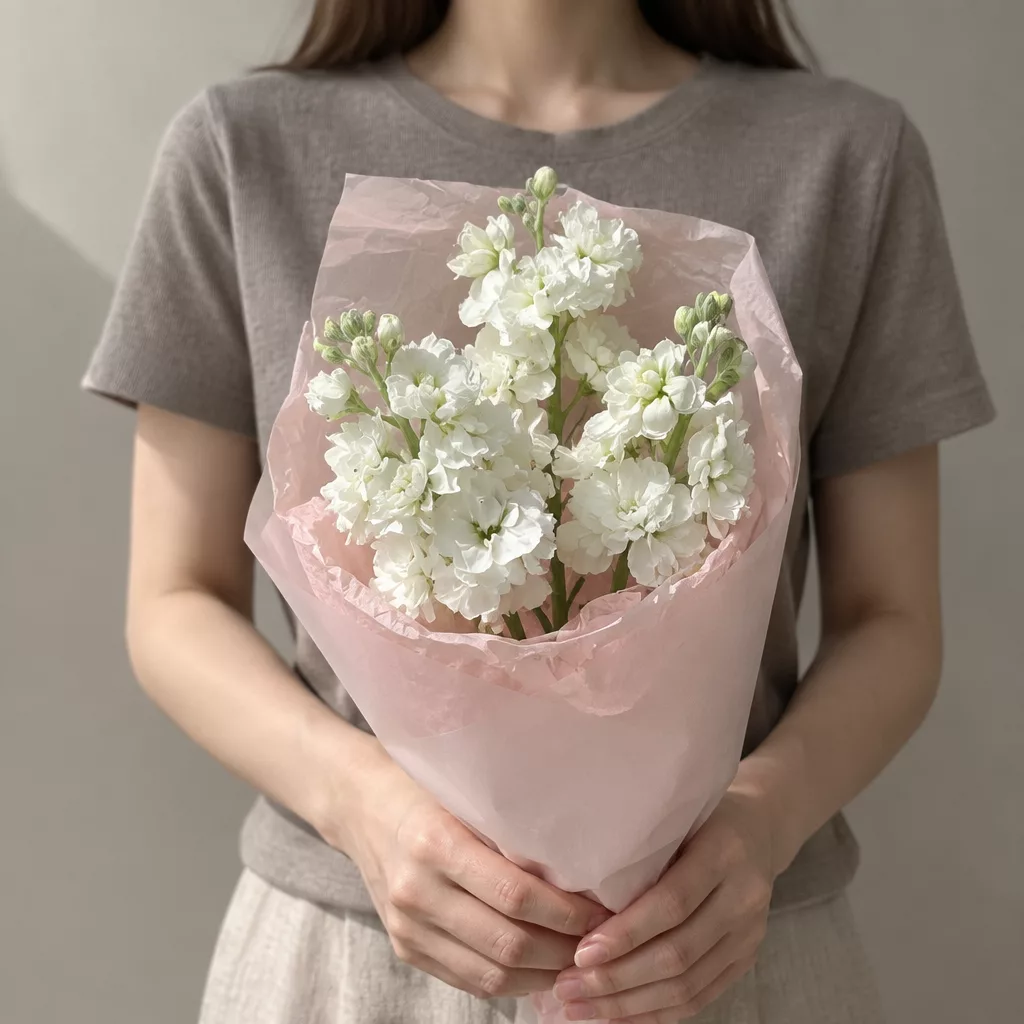
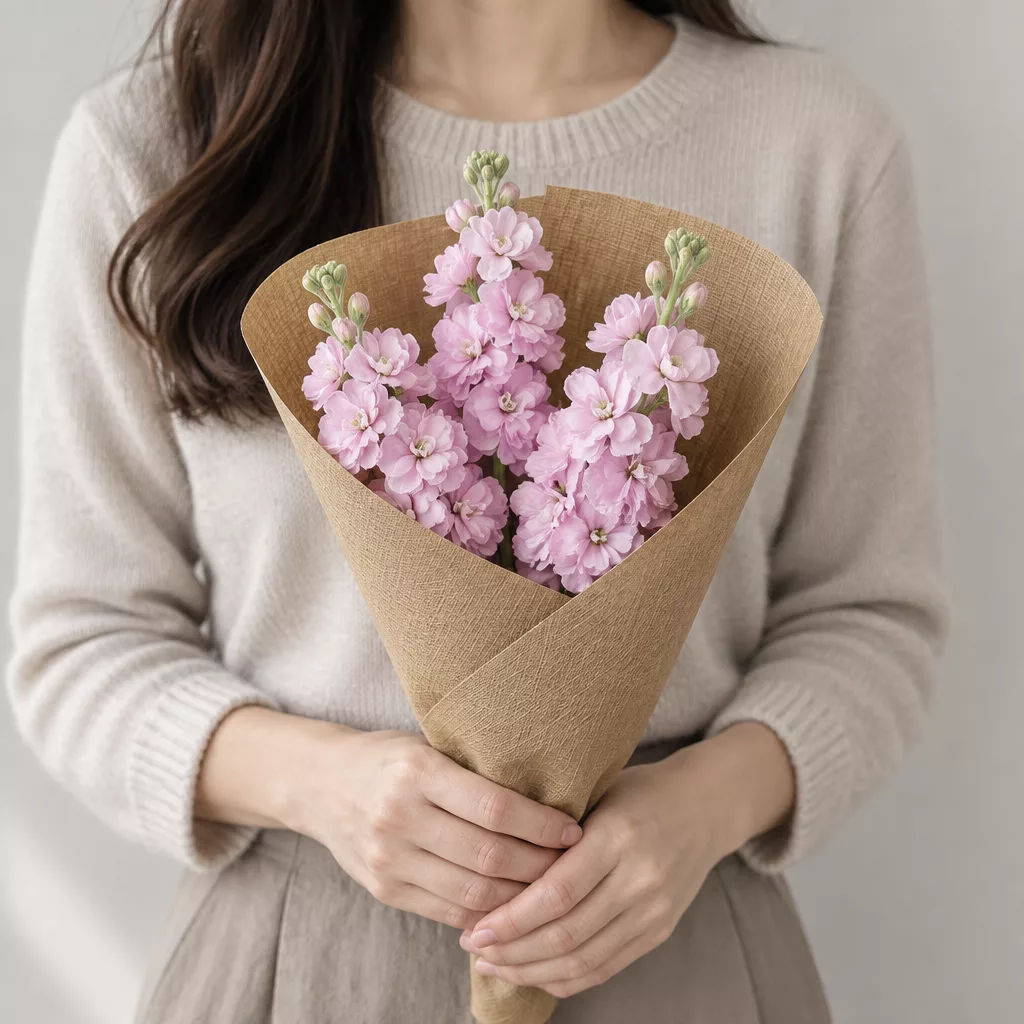
Choosing Flowers for the Siberian Climate
Cold weather is not the enemy of fresh flowers — in fact, a crisp Irkutsk winter can actually extend vase life once the bouquet is indoors. The real challenge is the transition: a bouquet carried from a warm delivery vehicle into minus-twenty air, even briefly, can suffer. Delicate petals on open garden roses or single-layer ranunculus may bruise or blacken within seconds of exposure to extreme cold.
For winter orders — roughly November through March — lean toward varieties with denser, more protective petal structure. Spray roses, alstroemeria, chrysanthemums, and hypericum berry branches all handle cold transitions far better than fully open peonies or sweet peas. Calla lilies in bud form travel extremely well in low temperatures and open beautifully once indoors. Tulips, counterintuitively, are resilient in cold if they are still in bud and wrapped properly.
In summer, the opposite concern applies. Irkutsk can reach thirty Celsius in July, and a bouquet left in direct sunlight for even twenty minutes will wilt visibly. For warm-weather deliveries, choose flowers with strong stems and waxy petals: gerberas, lisianthus, solidago, and standard roses in tight bud. Sunflowers are a wonderful summer choice — they are cheerful, robust, and deeply associated with warmth and affection in Russian culture.
Spring and autumn are transitional seasons where a mixed bouquet combining foliage, filler flowers like waxflower or statice, and one or two focal blooms gives the arrangement resilience whatever the weather does on delivery day.
Timing Your Order Across Time Zones
The seven-hour gap between Moscow and Irkutsk, combined with your own time zone, creates a layered puzzle that is easy to solve once you map it out. Turboflora operates from Saint Petersburg and delivers across Russia, so all order times on the website are calibrated to Moscow time. Before you click anything, convert your local time to Moscow time and then add seven hours to picture what the clock says in Irkutsk at the moment you want the flowers to arrive.
If you are in New York, you are ten hours behind Moscow. Ordering at nine in the morning New York time means it is seven in the evening in Moscow and already two in the morning in Irkutsk — not the delivery window you want. The practical solution is to order the evening before by your local clock if you need a morning delivery in Irkutsk, or to order first thing in your morning for an Irkutsk afternoon or evening slot.
Same-day delivery within one to two hours is available in Irkutsk, which is genuinely useful for last-minute occasions. If you realise mid-afternoon in Paris that tomorrow is a birthday in Irkutsk, there is still time to place a next-day morning order. The key is to be precise about the delivery address and to have a working local phone number for the recipient — the courier will call ahead, which is standard practice across Russia and helps enormously in a city where apartment buildings can have multiple entrances.
For significant occasions like anniversaries or major celebrations, ordering twenty-four hours in advance gives the most flexibility in bouquet composition.
What the Occasion Actually Calls For
Russians celebrate a wide range of occasions with flowers, and knowing which occasion you are marking helps you choose the right combination rather than a generic bouquet. Birthdays are the most common reason to send flowers, and here you have full creative freedom — bright colours, favourite flowers if you know them, and a generous size all read as warmth and celebration. A mono-bouquet of fifty tulips in a single vivid colour is a classic Russian birthday gift that never feels ordinary.
International Women's Day on the eighth of March is the single busiest flower day in Russia, far surpassing Valentine's Day in cultural significance. If someone you care about lives in Irkutsk and you are abroad, sending flowers for the eighth of March is one of the most meaningful things you can do. Mimosa — the bright yellow acacia blossom — is the traditional flower of this day, though it is not always available outside its short season; tulips, roses, and hyacinths are all equally appropriate.
New Year in Russia (the first of January) and the Orthodox Christmas on the seventh of January are both occasions where flowers accompany gifts and family gatherings. White and cream arrangements with evergreen accents feel festive without being heavy-handed. Valentine's Day is celebrated, though with less intensity than in Western Europe — red roses remain the obvious choice, but a soft pink and white combination with lisianthus and eucalyptus reads as more personal and considered.
For congratulations on a new job, graduation, or a professional achievement, structured bouquets with architectural flowers like anthurium, orchid stems, or calla lilies convey respect and admiration alongside affection.
Practical Details Senders Often Miss
The most common mistake made by senders outside Russia is leaving the delivery address incomplete. Russian addresses follow a specific format: city, street, building number, sometimes a corpus or section number, then apartment number. If the recipient lives in a large residential complex, the corpus number is essential — without it, a courier can spend twenty minutes at the wrong entrance. When in doubt, ask the recipient casually for their full postal address before placing the order, framing it as something you need for a letter.
A local mobile number for the recipient is not optional — it is genuinely necessary. Russian couriers call ahead as standard practice, partly because intercom systems vary wildly between buildings and partly because it is considered polite. If you only have the recipient's foreign number or no number at all, the delivery becomes significantly harder to complete. If you want the flowers to be a surprise, you can provide the number of a trusted person nearby — a neighbour, a family member, or a colleague — who can quietly coordinate without spoiling the moment.
Card messages in Russian are always appreciated but never required. Writing your message in English is completely fine; the sentiment travels across the language. If you would like a Russian translation of a short phrase, simply include your original message in English in the order notes and ask for it to be rendered in Russian — a simple gesture that recipients in Irkutsk genuinely find touching.
Finally, confirm the recipient will be reachable on the delivery date. Public holidays in Russia do not always align with those abroad, and some are unique to the Russian calendar.
Helping the Flowers Last Once They Arrive
A bouquet that arrives in Irkutsk after crossing Russia deserves the best possible care on arrival, and a short note with the flowers can make a real difference to how long they last. The basics are universal but worth stating plainly for a recipient who may not think about them immediately: trim the stems at an angle under running water, remove any leaves that would sit below the waterline, and change the water every two days.
In Irkutsk's dry continental winters, indoor heating systems run at full intensity and the air inside apartments can become very dry — drier than in most European cities. This accelerates wilting noticeably. Placing the vase away from radiators and out of direct sunlight extends vase life considerably. A cool spot near a window — but not a draughty one — is ideal.
Different varieties have different expectations. Alstroemeria and chrysanthemums regularly last ten to fourteen days with proper care. Standard roses in bud will give seven to ten days. Tulips open quickly in a warm room and are best enjoyed for five to seven days; cutting them short and placing them in a shallow vase as they open wide gives them a second, beautiful phase. Gerberas need clean water more than almost any other flower — bacteria build up on their hollow stems quickly, so daily water changes make a visible difference.
If the bouquet includes a flower food sachet, encourage the recipient to use it — it is not a gimmick. The combination of sugar for energy, acidifier for water clarity, and biocide for bacteria genuinely extends bloom time by several days, which matters when the flowers have travelled a long way to be there.
Sending flowers to Irkutsk from abroad is less complicated than the distance suggests, and the reward — knowing that something beautiful and fragrant arrived at a door seven time zones away because you arranged it — is completely disproportionate to the effort. The things that matter most are simple: get the time zone right, provide a complete address with a local phone number, choose varieties suited to the season, and trust that the occasion you are marking deserves a real bouquet, not a token gesture. Irkutsk is a city that takes warmth seriously, perhaps because the winters demand it. A well-chosen arrangement arriving on time says more about care and attention than almost any other gift you could send from across the world.
Frequently asked questions
Can I order flowers for Irkutsk delivery if I do not speak Russian?
Yes, completely. The Turboflora website and order process work in English, and your card message can be written in any language. If you would like your message translated into Russian for the recipient, simply note this in the order comments. The courier and the recipient will handle everything from there without any language barrier on your side.
How far in advance should I order flowers for a specific time in Irkutsk?
For a precise delivery window, placing your order at least twelve to twenty-four hours ahead is ideal, especially when ordering across multiple time zones. Same-day delivery within one to two hours is available, but you need to account for the UTC+8 time difference in Irkutsk when calculating whether same-day still applies to your order.
What flowers are available in Irkutsk in winter?
Roses, spray roses, alstroemeria, chrysanthemums, tulips, and calla lilies are reliably available and travel well in cold weather. Hypericum berries and eucalyptus add texture and hold up beautifully in low temperatures. Fully open peonies and delicate garden varieties are harder to source and more vulnerable to cold exposure during delivery in deep winter months.
Is it acceptable to send flowers to a man in Russia?
Absolutely. Flowers for men are common for birthdays, professional achievements, and significant life events. The style tends toward structured, less overtly romantic arrangements — think bold sunflowers, tropical foliage, anthurium, or a graphic mono-bouquet of a single strong variety. Avoid anything that reads as exclusively romantic unless that is precisely the message you intend.
What if the recipient is not home when the flowers are delivered?
The courier will call the recipient's local number before arriving, which is standard Russian delivery practice. If there is no answer, a second attempt is made. Providing a backup contact — a neighbour or family member — in your order notes helps ensure the bouquet reaches someone promptly rather than waiting. This is especially useful if you want the delivery to be a surprise.
Ready to send flowers?
Pick the city, choose the bouquet, and a local florist takes it from there.
Choose a city →