Sending Flowers to Kameshkovo from Abroad? Read This First
You are somewhere far from Russia — another country, another time zone — and someone you love is in Kameshkovo. Maybe it is her birthday, maybe it is an anniversary you cannot be there for, or maybe you simply want her to open the door and feel remembered. The distance is real, but the gesture does not have to feel remote. With the right florist and a little advance knowledge, fresh flowers can reach a doorstep in Kameshkovo within hours of your order, looking exactly as you imagined them.
Why Kameshkovo Is Different from Ordering to a Big City
Kameshkovo is a small town in the Vladimir Oblast, roughly 200 kilometres east of Moscow. It has the quiet, close-knit character of provincial Russia, where a flower delivery is genuinely noticed — by the recipient, by neighbours, sometimes by the whole building. That is worth knowing, because presentation and timing matter more here than in a city where deliveries are routine and anonymous.
The town is not isolated, but it is also not Moscow. Road conditions through the Vladimir region vary by season, and winter deliveries — roughly November through March — require a florist who understands cold-chain logistics. Flowers that leave a warm van into minus-fifteen air for even a few minutes can bruise or blacken at the petals. A reliable florist accounts for this with insulated packaging and fast handoff.
From an international sender's perspective, the key difference is lead time. Ordering for same-day delivery to Saint Petersburg or Moscow is straightforward even from abroad. For Kameshkovo, placing your order before noon Moscow time gives the best chance of a same-day or early-next-day arrival. The Moscow time zone is UTC+3, so if you are in New York, that means placing your order by 4 a.m. local time — which is why many international senders plan a day ahead. Building in that buffer removes almost all the anxiety from the process.
Bouquets we can deliver

What Russian Gifting Customs Mean for Your Flower Choice
If you have not sent flowers inside Russia before, a few customs are worth understanding plainly. The most important one: always send an odd number of flowers. Even numbers — two roses, four tulips — are associated with mourning and funerals in Russian tradition. A bouquet of eleven roses, seven tulips or fifteen mixed stems is festive. A bouquet of ten is not. This rule applies regardless of the occasion and is taken seriously by recipients of all ages.
Colour carries meaning too, though less rigidly than the odd-number rule. Red roses signal romantic love and are universally understood that way, so they work perfectly for a partner but can feel awkward for a colleague or a grandmother. For a mother, a teacher, or a female friend, softer palettes — cream, blush, coral, lavender — read as warm and thoughtful rather than romantic. Yellow flowers, which carry negative connotations in some Eastern European cultures, are perfectly acceptable in Russia and are actually popular in spring arrangements.
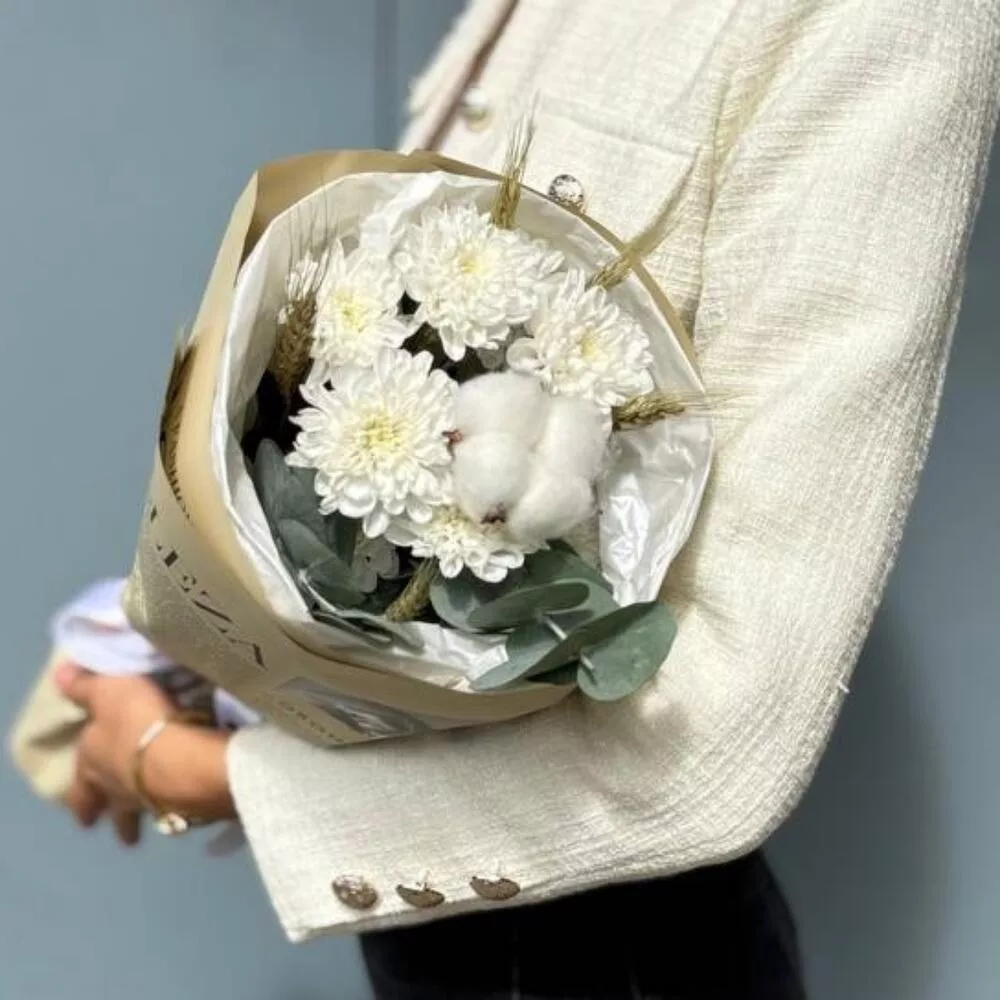
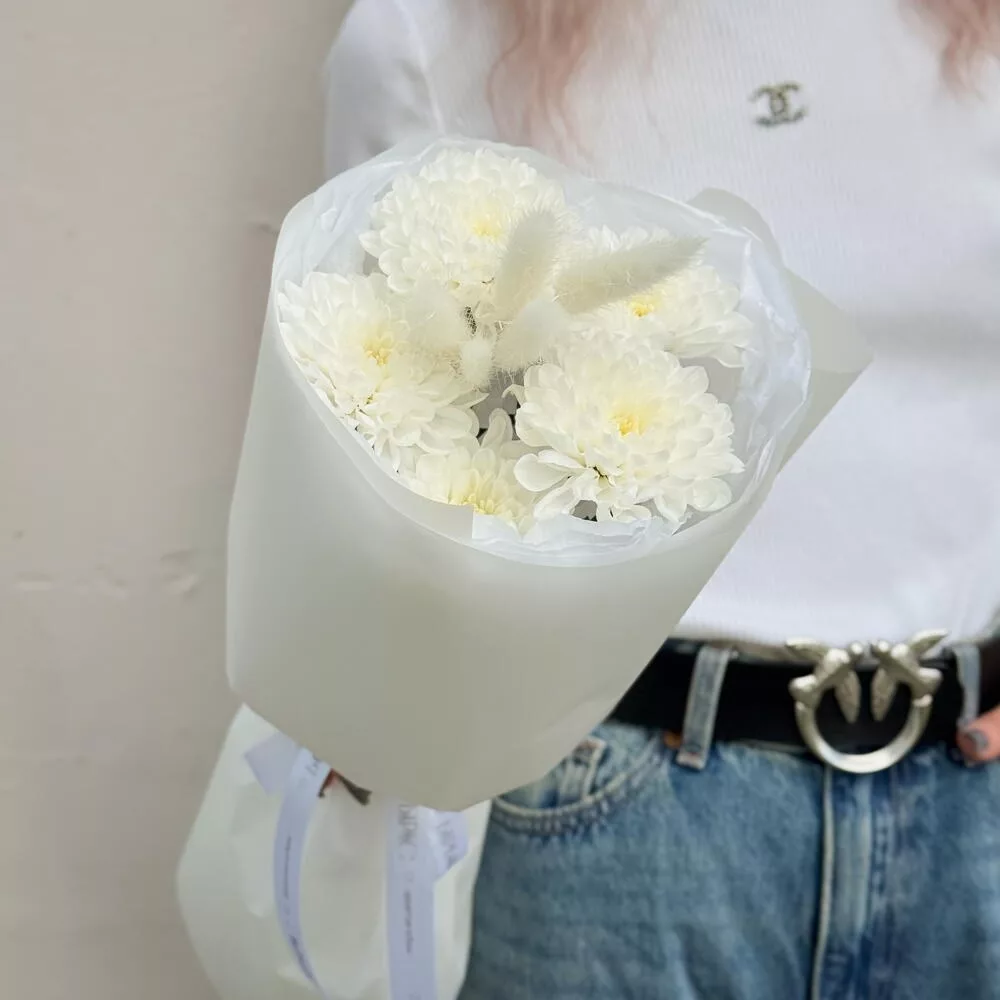
White flowers are elegant and appropriate for almost any celebration. White chrysanthemums, white lisianthus and white spray roses all photograph beautifully and hold well in transit. If you are unsure of the recipient's taste, a mixed bouquet of white and blush tones with green foliage — eucalyptus or ruscus — is a safe, genuinely lovely choice that a florist can assemble with real care. Asking for seasonal greenery rather than filler keeps the arrangement looking fresh rather than padded.
Choosing Flowers for the Occasion, Not Just the Season
Think first about who is receiving the bouquet and what they will feel when they open the door. A young woman turning thirty wants something that feels celebratory and a little dramatic — garden roses in a deep blush or apricot tone, or a lush peony arrangement in late spring when peonies are at their best. A woman in her sixties who keeps a tidy apartment might prefer something structured and long-lasting: alstroemeria, carnations in dusty rose, or a compact arrangement of chrysanthemums that will sit neatly on a windowsill for two weeks.
For a birthday, bold colour is welcome. Gerbera daisies in orange and yellow, sunflowers paired with solidago, or a single-variety bouquet of bright ranunculus all communicate joy without requiring much explanation. For a congratulation — a new job, a graduation, a new baby — white and green combinations feel fresh and modern. Eucalyptus with white roses and a few stems of white snapdragon is simple, elegant and easy to arrange in a vase at home.
For a romantic occasion, do not default to red roses simply because they are familiar. A bouquet of garden roses in different shades of pink and cream, wrapped in kraft paper with a ribbon, can feel far more personal and considered. If the recipient has a favourite flower, even something as simple as a bunch of white freesias, that specificity will mean more than an expensive arrangement chosen without thought. Ask yourself what she would notice first when she unwrapped it.
Seasonal Availability and What Travels Well to Vladimir Oblast
Flower availability in Russia follows both global supply chains and local growing seasons. In January and February, the most reliable varieties are roses from Ecuador and Colombia, chrysanthemums, carnations, and imported tulips from the Netherlands. These are not compromise choices — Ecuadorian roses have exceptionally long stems and dense petals that hold colour for days. Dutch tulips in winter arrive tight-budded and open slowly in the warmth of a home, which recipients often find delightful.
Spring, particularly March and April, is the busiest season for flower deliveries in Russia. International Women's Day on March 8th is the single largest flower-giving occasion in the country, larger than Valentine's Day by a significant margin. If you are sending for March 8th from abroad, place your order at least 48 hours in advance. Demand is enormous and delivery windows fill quickly even in smaller towns.
Summer brings local lilies, lisianthus and the short but spectacular peony season in June. Sunflowers are widely available from July onward and travel well even in warm temperatures because of their sturdy stems. Autumn is the season for dahlias, which are visually striking but slightly more delicate in transit, and for chrysanthemums, which are nearly indestructible and last exceptionally well in cool rooms.
Winter deliveries to Kameshkovo require insulated packaging. Tropical varieties like anthuriums and birds of paradise are not ideal for cold-weather transit to smaller towns — roses, spray roses and carnations are the most reliable choices when temperatures drop below zero.
How to Place an Order from Outside Russia Without Confusion
The practical side of ordering internationally is simpler than many people expect, but a few details prevent most of the common mistakes. First, have the recipient's full address ready in Russian if possible, or at least in transliterated Latin characters. Kameshkovo addresses follow the standard Russian format: street name, building number, apartment number. If you only have a partial address, contact the florist before placing the order rather than guessing — misdeliveries in small towns are harder to correct than in cities.
Time zones are the most frequent source of confusion. Moscow time is UTC+3. When you calculate your delivery window, convert honestly. If you want flowers to arrive at 6 p.m. Kameshkovo time on a Tuesday, and you are placing the order from London at noon on Monday, you have ample time. If you are placing from Los Angeles at midnight on Monday, you are already cutting into Tuesday morning Moscow time. Most florists display their cutoff times in Moscow time — check that first.
Payment from abroad is usually handled by card through a secure international gateway. Have your card details ready and check that your bank does not automatically block international transactions. Some banks flag Russian merchant charges as unusual — a quick call to your bank before ordering saves a frustrating declined payment. Include a personal message in the order notes; the florist will print or write it on a card attached to the bouquet. Writing the message in Russian is a warm touch, but it is not required — the florist can note the language and present it as-is.
Vase Life, Care Instructions and What to Tell the Recipient
Part of what makes a flower delivery genuinely memorable is how long the bouquet lasts. A recipient who is still enjoying her roses ten days later will remember who sent them. That longevity depends on a few simple steps, and if you include a short note with care instructions — or ask the florist to attach one — you dramatically increase the chance that the flowers will thrive.
Roses should be trimmed at an angle under running water before going into a vase, removing about two centimetres of stem. The vase water should be cool and changed every two days. Keep the bouquet away from direct sunlight, radiators and fruit bowls — ethylene gas from ripening fruit shortens flower life noticeably. Russian apartments in winter are often very warm due to central heating, so a cool corner or a windowsill away from the radiator is ideal.
Tulips continue to grow after cutting and will lean toward light, which some people find charming and others find untidy. A tight glass vase keeps them upright. Chrysanthemums and carnations are the most forgiving varieties — they tolerate warmer rooms and irregular water changes better than roses or lisianthus. Alstroemeria, which is underrated as a gift flower, can last two to three weeks with basic care and produces multiple blooms per stem as it opens.
If you are sending to someone who lives alone or travels frequently, a hardier arrangement of chrysanthemums or alstroemeria is a more considerate choice than delicate garden roses that need daily attention. Matching the bouquet to the recipient's lifestyle is a detail that good florists think about automatically.
Making the Delivery Feel Personal Across the Distance
The physical distance between you and the recipient does not have to make the gesture feel impersonal. In fact, a flower delivery to a small town like Kameshkovo from someone abroad often carries extra weight precisely because of the effort it implies. The recipient knows you thought about it, planned it and navigated the logistics — that intention is part of the gift.
A handwritten-style card message makes an enormous difference. Do not default to a generic phrase. Write something specific: the memory you are thinking of, the exact reason you chose these particular flowers, what you wish you could be there to say in person. Even three sentences of genuine feeling will stay with the recipient long after the flowers have faded. Ask the florist to ensure the card is attached visibly to the bouquet rather than tucked inside packaging.
Consider the timing as part of the gift. Flowers arriving in the morning of a birthday, before the day has fully started, feel like a greeting. Flowers arriving in the early evening feel like a celebration. If the recipient works during the day and lives alone, an afternoon delivery ensures she is home to receive it. You can often specify a delivery window when ordering — use it.
If you want to go further, a follow-up message to the recipient just before the delivery is expected — letting her know something is coming — builds anticipation rather than surprise. Some people love to be surprised; others find an unexpected knock at the door stressful. You know the person you are sending to, and that knowledge is something no florist can replicate.
Sending flowers to Kameshkovo from abroad is genuinely achievable, and when it is done with a little planning, the result is a bouquet that arrives fresh, on time and full of the feeling you intended to send. The distance is just logistics. The part that matters — choosing something real for someone specific, writing a message that sounds like you, timing the delivery so it lands at the right moment of her day — that is entirely yours to give.
Frequently asked questions
Can I send flowers to Kameshkovo if I do not speak Russian?
Yes, entirely. Turboflora handles the delivery address and logistics in Russian on your behalf. You can write your card message in any language and it will be attached to the bouquet exactly as you wrote it. The ordering process itself is available in English, and customer support can assist with address formatting if you only have partial details.
How far in advance should I order from a different time zone?
Placing your order at least 24 hours before the desired delivery time is the safest approach when ordering from abroad. For March 8th, Valentine's Day or other high-demand dates, 48 hours is strongly recommended. Always convert your local time to Moscow time (UTC+3) before calculating your cutoff, as delivery windows are managed on the Moscow schedule.
What happens to the flowers if the recipient is not home when they arrive?
The courier will attempt to contact the recipient by phone before and during delivery. If there is no answer, the florist will coordinate a second delivery attempt or hold the bouquet in temperature-controlled conditions until contact is made. Providing a working Russian mobile number for the recipient when ordering significantly reduces the chance of a missed delivery.
Are there flowers I should avoid sending in winter to Kameshkovo?
Tropical varieties such as anthuriums, birds of paradise and heliconia are not ideal for winter deliveries to smaller towns because they are sensitive to cold air during the final handoff. Roses, spray roses, chrysanthemums and carnations all travel reliably in cold weather when properly insulated. Ask the florist to confirm cold-weather packaging is included with your order.
Is it true I must always send an odd number of flowers in Russia?
Yes, this is a firmly held custom across Russia and not a regional variation. Even numbers of flowers are associated with mourning occasions, so a bouquet of ten or twelve is considered inappropriate for celebrations. Always choose an odd number — seven, nine, eleven, fifteen — regardless of the flower type or the occasion you are marking.
Ready to send flowers?
Pick the city, choose the bouquet, and a local florist takes it from there.
Choose a city →