Sending Flowers to Kirzhach from Abroad? Here Is Everything That Matters
You are sitting in Berlin, Toronto, or Dubai, and someone you love is celebrating a birthday in Kirzhach. You want fresh flowers at their door within hours, not a wilted bouquet that traveled too far for too long. Sending flowers across borders feels complicated, but the mechanics are simpler than most people expect — what matters is knowing the right questions to ask before you place the order.
What Kirzhach Is Like and Why It Shapes Your Order
Kirzhach is a small town in Vladimir Oblast, roughly 100 kilometres northeast of Moscow. It sits along the Kirzhach River and has a quiet, unhurried character — the kind of place where a flower delivery at the door is a genuine event, not just another courier drop. Your recipient will likely notice every detail of the bouquet, so presentation matters more here than in a busy city centre where people are used to seeing flowers everywhere.
The town experiences a true continental climate. Winters are cold and long, summers are warm but short, and the shoulder seasons — March through April and October through November — can be unpredictable. This affects which flowers travel well and which ones struggle. Delicate blooms like garden roses or sweet peas are better suited to summer orders, while sturdy varieties such as chrysanthemums, alstroemeria, and spray roses hold up reliably in cooler months.
Because Kirzhach is not a large metropolitan centre, your order needs to be placed with a florist who already has logistics in place for the Vladimir Oblast region. Turboflora delivers fresh flowers from Saint Petersburg across Russia, including Kirzhach, within a one-to-two-hour window once the order is confirmed and the route is active. Knowing this geography in advance means you set realistic expectations for your recipient — and you avoid the disappointment of ordering from a service that simply cannot reach the town at all.
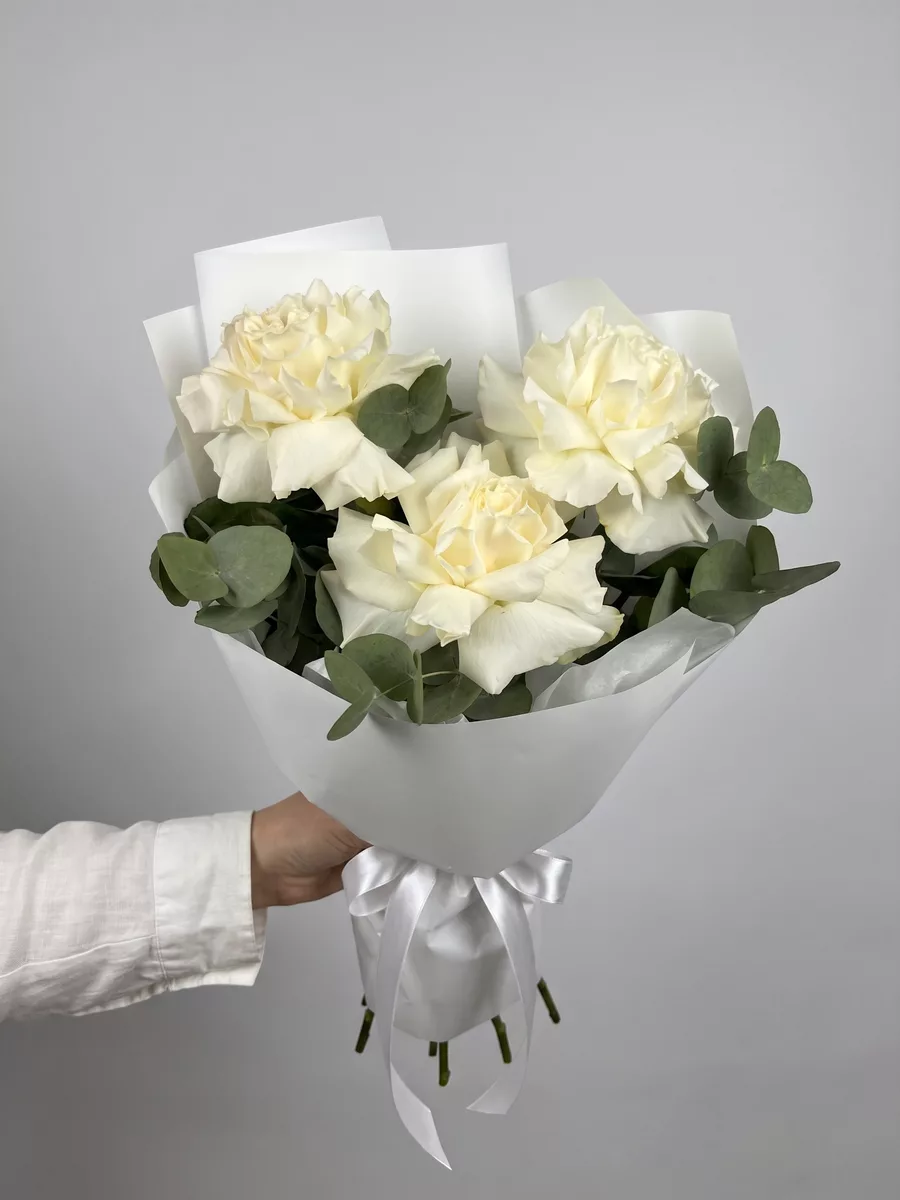
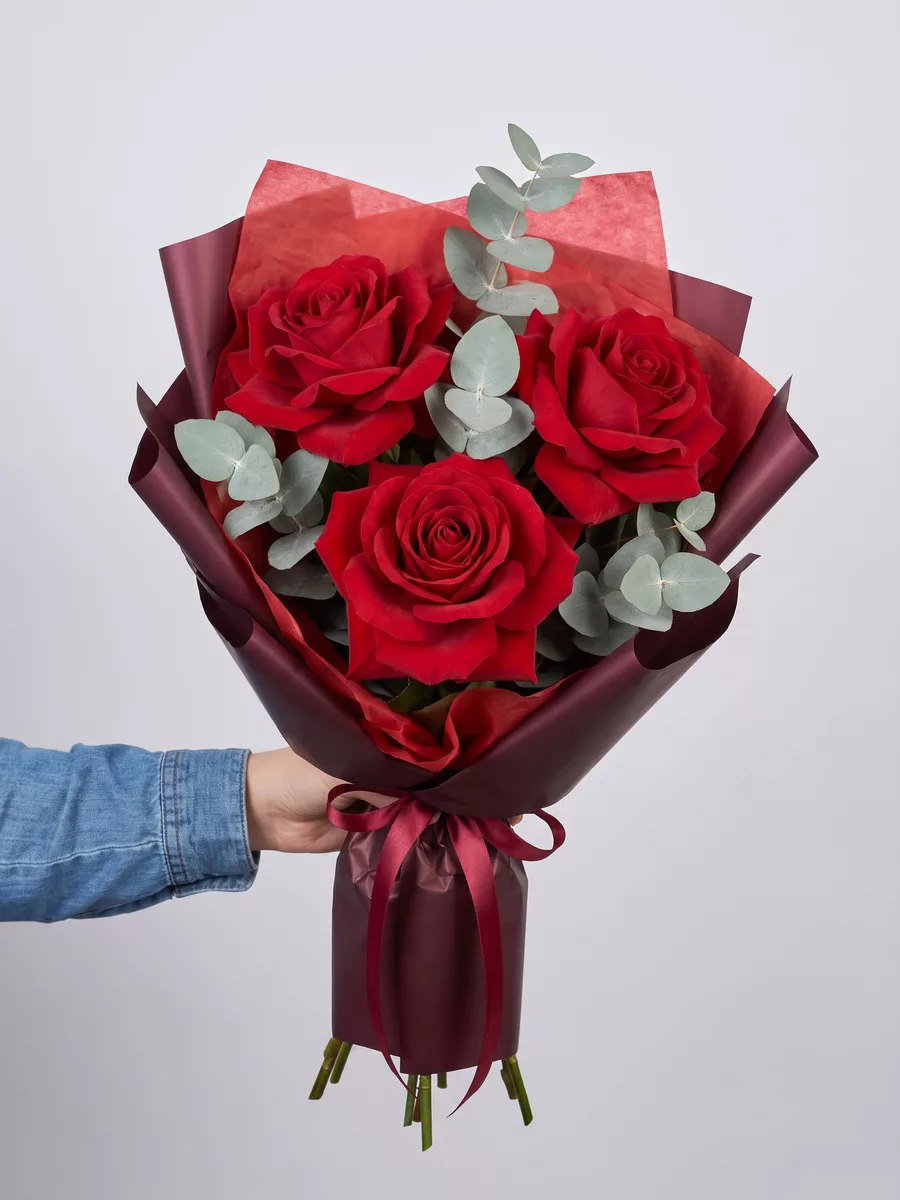
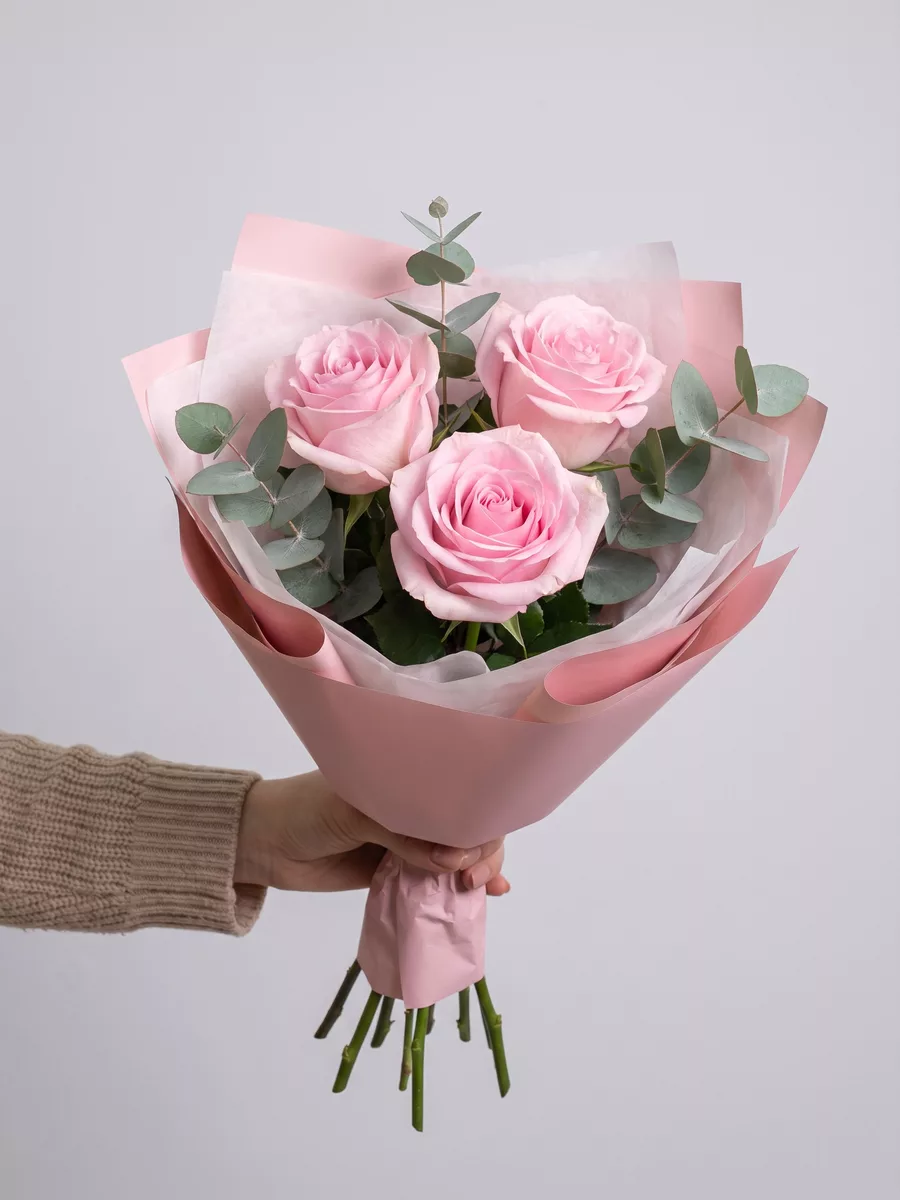
Bouquets we can deliver

Reading the Occasion Before You Choose the Flowers
Before you think about varieties or colours, think about the person receiving the bouquet and what they will feel when they open the door. A grandmother celebrating her seventieth birthday in Kirzhach will respond very differently to a tight arrangement of white calla lilies than she will to a lush, garden-style mix of peach spray roses, white lisianthus, and soft eucalyptus. The second option feels like someone thought about her specifically. The first, however beautiful, can feel formal and distant.
For a younger recipient — a daughter, a friend, a partner — bold colour combinations work well. Bright sunflowers paired with burgundy alstroemeria and green pittosporum feel energetic and personal. If the occasion is a professional milestone, such as a promotion or a business anniversary, cleaner lines suit the moment better: monochromatic arrangements in white or cream, or a structured bouquet of red roses in an odd number, which is the Russian standard for celebratory gifts.
Russian flower-giving culture has one rule that surprises many international senders: always send an odd number of flowers. Even numbers are reserved for mourning, so a bouquet of twelve roses would carry an unintended message. A working florist will always count for you, but if you are specifying the quantity yourself, stay with seven, nine, eleven, or fifteen stems. This single detail separates a thoughtful gift from an accidental faux pas, and it costs nothing to get right.
Timing Your Order Across Time Zones
This is where international senders most often stumble. Kirzhach operates on Moscow Time, which is UTC plus three hours. There is no daylight saving adjustment in Russia, so the offset stays constant year-round. If you are ordering from London in winter, Moscow Time is three hours ahead. From New York, it is eight hours ahead. From Los Angeles, eleven. From Tokyo, it is six hours behind Moscow Time — meaning your afternoon in Japan is already the previous evening in Kirzhach.
The practical consequence is straightforward: if you want flowers delivered at midday in Kirzhach, you need to place your order well before that moment in your local time. Factor in the time it takes to process the order, prepare the arrangement, and complete the delivery route. A one-to-two-hour delivery window means the florist needs the order confirmed before the window opens, not during it.
Morning deliveries in Russia are culturally common for birthdays — there is something genuinely lovely about receiving flowers before the day has fully started. But they require early placement. If you are ordering from a time zone where it is already late evening, you may be ordering for the following morning without realising it. Always convert the delivery time to Moscow Time first, then work backwards to your local clock. Writing this down before you open the order form takes thirty seconds and prevents the most common mistake international customers make.
Choosing Flowers by Season in the Vladimir Oblast
Seasonal awareness is one of the things that separates a florist from a catalogue. In Kirzhach, the growing calendar follows a familiar continental pattern, but the winters are serious — temperatures regularly drop below minus fifteen Celsius between December and February, and even October can bring frost. This affects both what is available and how flowers must be transported.
In winter, the most reliable choices are flowers that have been professionally cold-stored and travel well in insulated packaging: roses, chrysanthemums, gerberas, carnations, and alstroemeria. These varieties are hardy and maintain their appearance even when the outside temperature is hostile. Avoid ordering tropical or ultra-delicate blooms in January or February — anthuriums and bird-of-paradise can suffer even in short transit if the cold is extreme.
Spring, from late April onward, opens up a wider palette. Tulips are enormously popular in Russia in March and April, particularly around International Women's Day on the eighth of March, which is the single busiest flower day of the year — order well in advance if your delivery falls near that date. By May and June, peonies arrive and they are beloved. A mono-bouquet of soft pink or coral peonies in early summer is one of the most emotionally resonant gifts you can send to a Russian recipient. Summer also allows for garden roses, lisianthus, and ranunculus. Autumn is chrysanthemum season, and a rich arrangement of burgundy, copper, and white chrysanthemums feels perfectly matched to the season.
What to Write on the Card — and How to Write It
The card is the part of a flower delivery that most international senders underestimate. In Russia, the written message carries real weight. A handwritten card — or a message printed and presented as one — is expected with any serious gift. A bouquet that arrives without a card can feel impersonal, even slightly cold, particularly in a smaller town like Kirzhach where gestures are noticed.
If you are writing in English, that is completely fine — the recipient will likely treasure a message in your own language, especially if you are a family member living abroad. However, if you want to add a phrase in Russian, a simple warm line goes a long way. Something like 'S dnyom rozhdeniya' means 'Happy Birthday.' 'Pozdravlyayu' means 'Congratulations.' You do not need to write in Cyrillic — the florist can transcribe it — but making the effort to include even one Russian phrase shows care.
Keep the message warm and specific. Generic phrases like 'best wishes' read as filler. Instead, reference the occasion directly: 'Wishing you a wonderful fiftieth — thinking of you from London.' That kind of specificity transforms a card from a formality into something the recipient may keep. Also consider the tone of your relationship with the person. A message to a close friend can be playful and informal. A message to a parent or older relative should feel respectful and tender. The florist delivering the bouquet will read the card aloud if asked — in Kirzhach, that sometimes happens.
Packaging, Presentation, and What Arrives at the Door
Russian recipients have high expectations for flower presentation. A bouquet that looks beautiful in a photograph but arrives loosely wrapped and slightly dishevelled will disappoint. The packaging is part of the gift — it signals how much thought went into the order. When you place your order, look for options that include proper wrapping: kraft paper, organza, or a combination, tied with ribbon and secured so the flowers are protected during transit.
For winter deliveries in Kirzhach, insulated packaging is not optional — it is essential. Flowers exposed to below-zero temperatures even briefly can suffer petal damage, particularly roses and gerberas. A professional florist accounts for this automatically, using thermal wrapping or insulated boxes for cold-weather deliveries. If you are ordering in December or January, confirm that cold-weather packaging is included.
The presentation style also matters culturally. Russian recipients tend to appreciate lush, full arrangements over minimalist ones. A bouquet that looks abundant — where the flowers are layered and the greens frame the blooms generously — reads as generous and celebratory. A sparse, architectural arrangement can feel understated in a context where fullness signals affection. This does not mean every bouquet needs to be enormous, but it does mean that even a modest arrangement should look complete and intentional, not thin. Greenery such as eucalyptus, ruscus, or pittosporum adds volume and freshness without inflating the cost, and it extends the vase life of the whole arrangement once the recipient puts it in water.
Helping Your Recipient Keep the Flowers Fresh Longer
The best bouquet in the world lasts only as long as it is cared for properly. Most recipients in Russia know the basics, but if you are sending to someone who does not keep flowers often, a short note with simple care instructions is a genuinely thoughtful addition. You can include this on the card, or ask the florist to attach a printed care sheet.
The fundamentals are always the same. Cut the stems at an angle — about two centimetres — before placing them in water. Use a clean vase, never a container that previously held something else without being thoroughly washed. Change the water every two days and recut the stems each time. Keep the arrangement away from direct sunlight, heating vents, and fruit bowls — ripening fruit releases ethylene gas, which shortens flower life noticeably.
Different varieties have different vase lives. Chrysanthemums and alstroemeria are among the longest-lasting cut flowers, often staying fresh for two weeks or more with proper care. Roses typically last seven to ten days. Tulips are shorter, around five to seven days, but they continue to grow and open in the vase in a way that is charming rather than problematic. Gerberas need their stems kept short and benefit from shallow water rather than deep. Peonies, if they arrive as tight buds, will open slowly over several days — some recipients find this even more satisfying than receiving them fully open, because the flower reveals itself gradually.
If the recipient is not home when the bouquet arrives, ask the florist to leave it in a shaded, cool spot and to notify the recipient immediately so the flowers do not sit in heat or cold for long.
Sending flowers to Kirzhach from abroad is less about navigating bureaucracy and more about paying attention to a few key details: the time zone, the season, the occasion, and the cultural expectations of the person receiving your gift. Get those right and the logistics take care of themselves. A fresh, thoughtfully chosen bouquet arriving at a door in Kirzhach carries the same warmth it would anywhere — perhaps more so, because the distance you sent it from makes the gesture feel even more deliberate.
Frequently asked questions
Which flowers hold up best during delivery to Kirzhach in winter or early spring?
Chrysanthemums, spray roses, and alstroemeria are the strongest choices for cold-season delivery. They tolerate temperature shifts during transit far better than open garden roses or tulips, which can bruise or wilt quickly when moved between cold air and warm interiors. If you are ordering between November and March, build your bouquet around these sturdier stems and add softer accents only if the florist confirms same-day local sourcing.
Does the continental climate in Kirzhach affect which colours and varieties I should choose?
Yes, indirectly. In summer you have more variety available locally, so seasonal blooms like peonies or lisianthus are realistic options. In winter the palette narrows to what travels reliably from larger supply hubs. Warm tones — deep reds, burnt oranges, and creamy whites — tend to photograph beautifully against Kirzhach's quieter domestic settings and feel considered rather than generic, whatever the season.
How do I make sure the bouquet feels personal when I am ordering from thousands of kilometres away?
Write the card message in Russian if you can, even a single line. Ask the florist to wrap the bouquet in a style that suits the recipient's age and personality — structured and elegant for an older relative, looser and more garden-like for someone younger. These small instructions cost nothing extra and transform a standard order into something that feels chosen rather than clicked.
Is Kirzhach well served enough for me to trust a same-day delivery on a significant occasion?
It depends on the florist's existing logistics in Vladimir Oblast. Not every national platform has active routes through smaller towns like Kirzhach. Turboflora operates deliveries across the region with a one-to-two-hour window once the order is confirmed and the route is live. Confirm the delivery window before you pay, and place the order at least a few hours before the occasion rather than at the last moment.
What presentation details matter most to a recipient in a small Russian town like Kirzhach?
In a close-knit town, a bouquet arrives as a visible gesture — neighbours may see it, family will gather around it. This means wrapping, ribbon, and overall shape matter as much as the flowers themselves. A tidy, well-proportioned arrangement in quality paper signals care. Ask the florist to include greenery for volume and to avoid overly sparse designs, which can read as an afterthought rather than a deliberate choice.
Ready to send flowers?
Pick the city, choose the bouquet, and a local florist takes it from there.
Choose a city →