Sending Flowers to Korablino from Abroad — Your Practical Starting Point
You are somewhere far from Russia — another country, another time zone — and someone you love is in Korablino waiting, even if they do not know it yet. Maybe it is a birthday, an anniversary, or simply a moment when you want them to feel remembered. The distance feels large, but the gesture does not have to. Here is everything a sender outside Russia needs to know to get a beautiful, fresh bouquet to Korablino without confusion, delay, or guesswork.
Why Korablino Is Easier to Reach Than You Might Think
Korablino is a small town in the Ryazan Oblast of central Russia, and many senders abroad assume that anything outside Moscow or Saint Petersburg is simply unreachable by a same-day flower service. That assumption costs people real moments. Turboflora operates delivery routes that extend well beyond the major cities, covering towns across Russia including Korablino, with a standard delivery window of one to two hours from the moment an order is confirmed.
For a sender in London, Berlin, or Tokyo, the practical implication is straightforward: you place the order, specify the recipient's address, and the bouquet moves. You do not need to navigate Russian postal systems, find a local contact, or worry about customs paperwork — flowers delivered domestically within Russia do not cross international borders after you place the order.
What does matter is timing. Korablino operates on Moscow Time, which is UTC plus three, with no daylight saving adjustment. If you are in New York, that is an eight-hour difference in winter and a seven-hour difference in summer. A sender who places an order at nine in the evening New York time is placing it at four or five in the morning Moscow time, which affects when same-day delivery can realistically begin. Planning your order for the morning or early afternoon of the recipient's local day gives the best result and ensures the flowers arrive while the person is awake and at home to receive them.
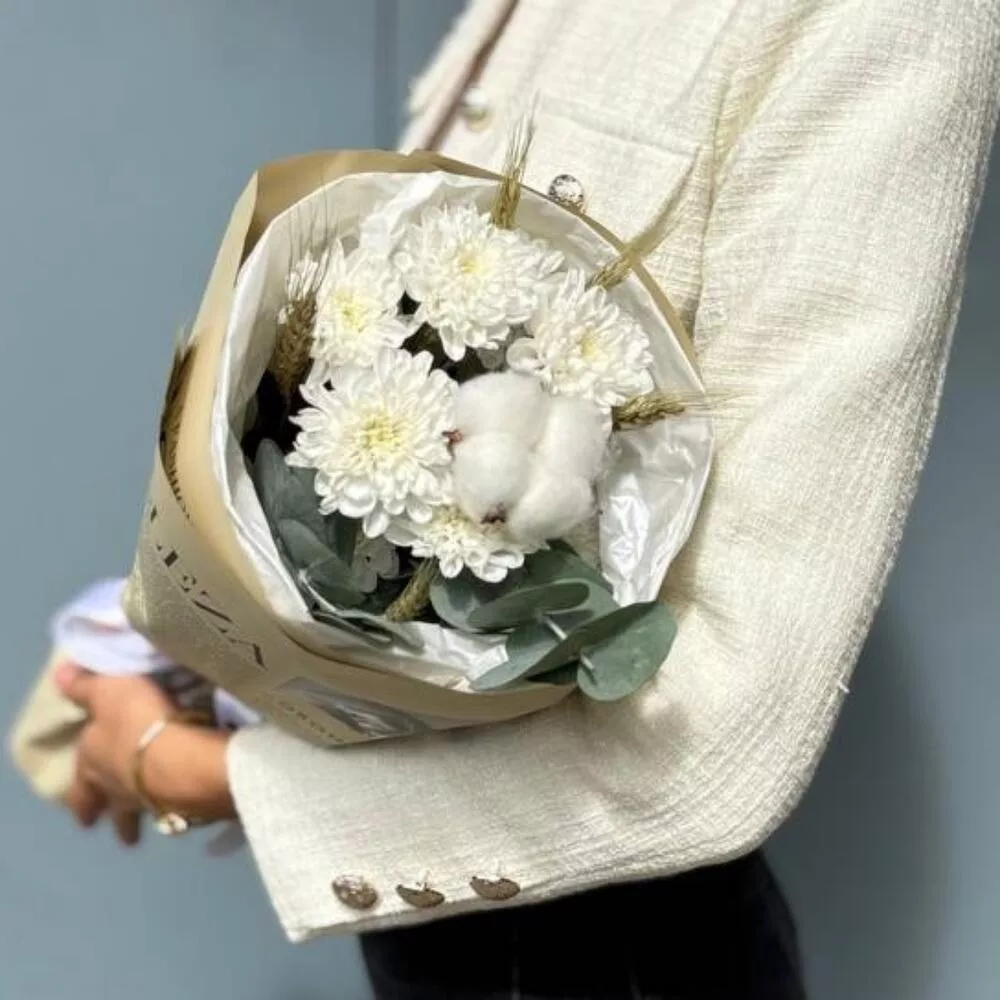
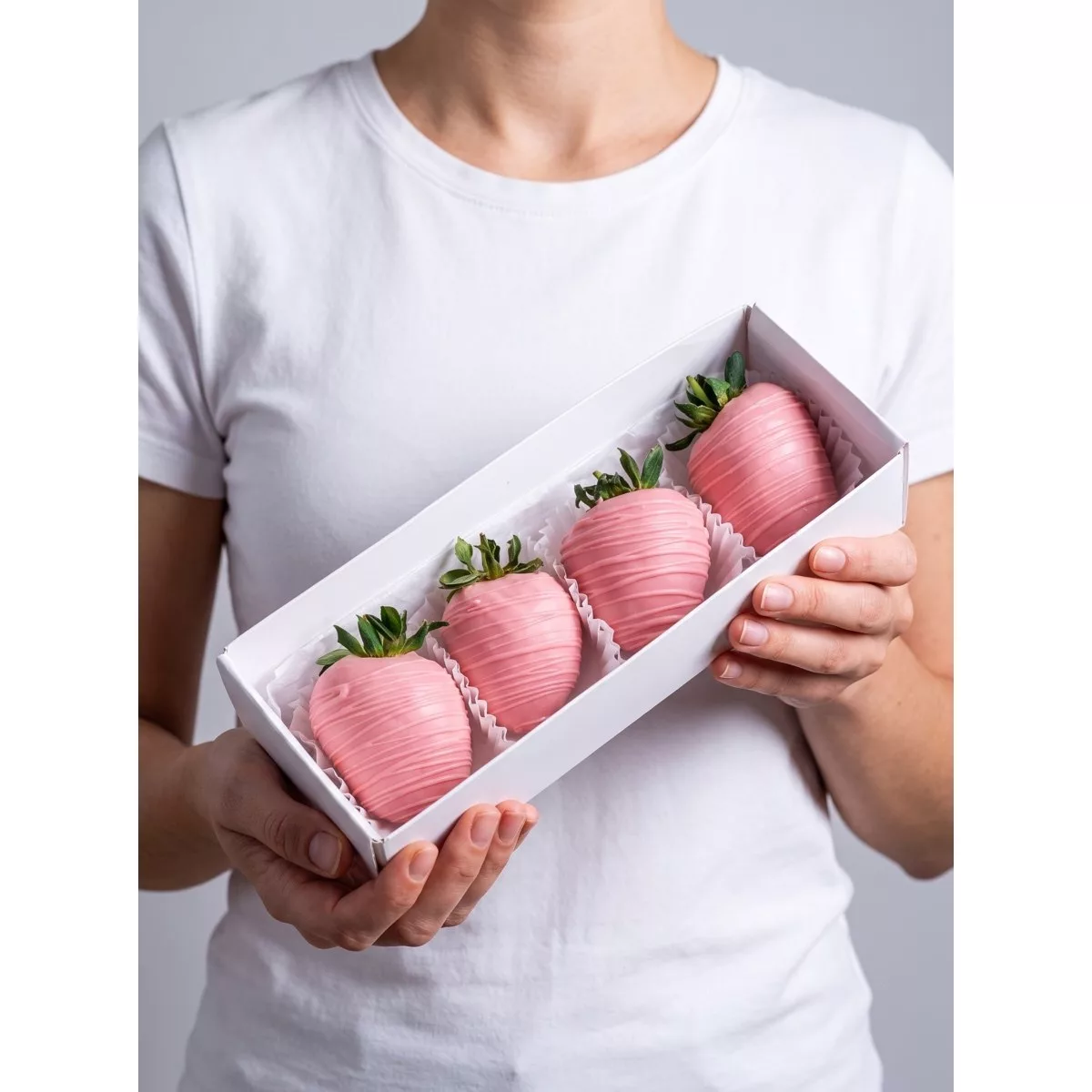
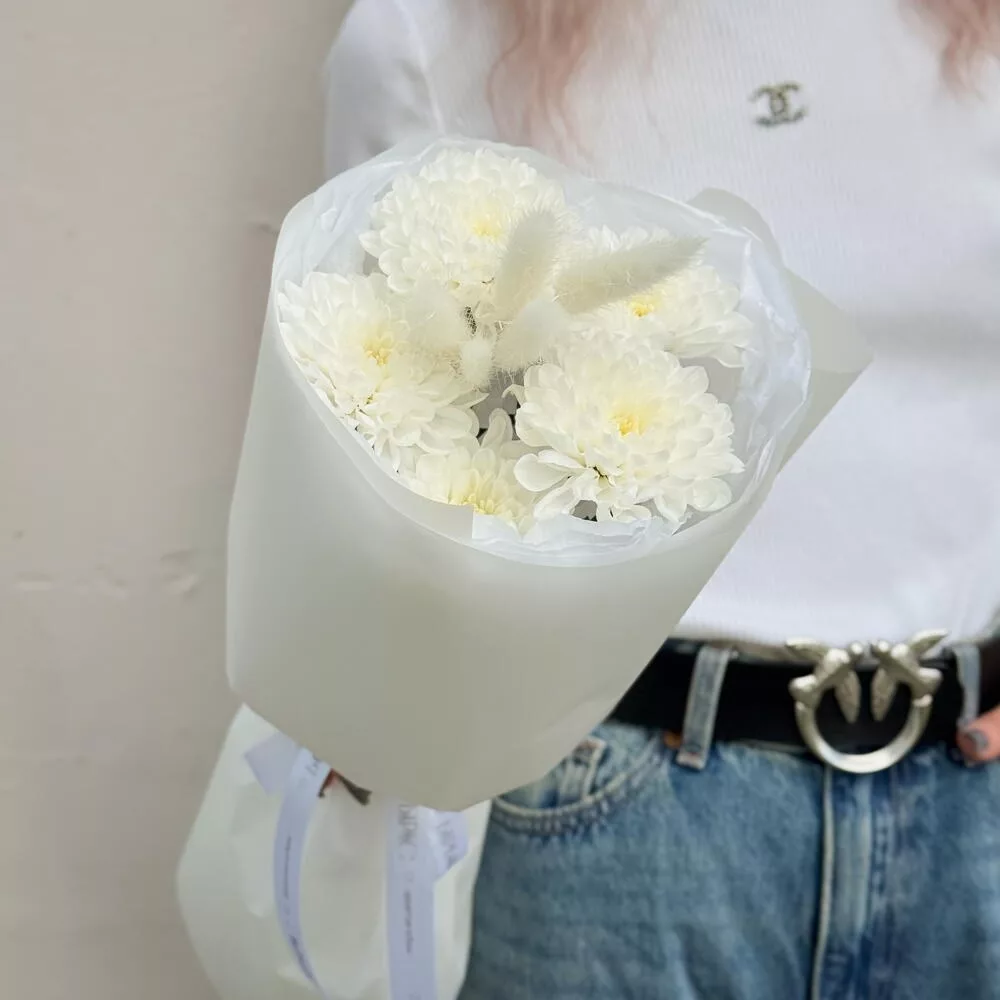
Bouquets we can deliver

Reading the Occasion Before You Choose the Flowers
Before you open any catalogue or think about roses versus tulips, spend a moment on the person receiving the bouquet. In Russian culture, flowers carry specific social weight that differs from what you may be used to. The number of stems matters: an odd number is the standard for celebratory occasions, while an even number is traditionally associated with mourning. If you are sending twelve red roses because that is what a Western florist would suggest, reconsider — eleven or thirteen creates a much warmer impression for a Russian recipient.
Colour carries meaning too, though it is less rigid than the odd-even rule. White flowers are elegant and widely appreciated for birthdays and professional milestones. Red roses communicate romantic feeling clearly and without ambiguity. Soft pinks, peaches, and lavenders read as warm and personal without being intense — ideal for a friend, a colleague, or a relative you want to surprise without making things awkward.
Think about where the recipient is likely to be when the bouquet arrives. Someone at home on a weekend afternoon has time to unwrap, arrange, and enjoy. Someone at a workplace in the middle of a busy day will appreciate a bouquet that is already beautifully presented and easy to carry. A compact, hand-tied arrangement with a clear cellophane wrap travels better through an office than a tall, dramatic display. Matching the bouquet to the setting is as important as matching it to the emotion, and a good florist thinks about both at once.
Seasonal Flowers and What Is Actually Fresh in Korablino
Russia's climate shapes what arrives fresh and at its best in any given month, and Korablino in central Russia experiences genuine seasonal variation — cold winters, warm summers, and shoulder seasons that shift the flower supply noticeably. Ordering in line with the season is one of the most reliable ways to ensure your bouquet looks vibrant rather than tired.
In winter, from December through February, the strongest choices are flowers that travel and hold well in cold conditions: roses from greenhouse stock, spray chrysanthemums, alstroemeria, and carnations. Eustoma, also called lisianthus, is particularly beautiful in winter arrangements — its ruffled petals resemble peonies and it holds for ten to fourteen days in a vase. Avoid tropical varieties like bird of paradise or anthurium in deep winter unless you know the recipient keeps their home very warm, as temperature shock during delivery shortens vase life significantly.
Spring brings tulips, ranunculus, hyacinths, and anemones — all of which are genuinely seasonal and arrive at their freshest between March and May. This is one of the best times to send flowers to Russia because supply is strong and variety is wide. Summer opens up sunflowers, lisianthus in full colour range, phlox, and garden-style arrangements with mixed greens and textural fillers. Autumn is the season for dahlias, asters, and late-season roses with deeper, richer tones that suit September and October beautifully.
If you are unsure what is at its best on the day you are ordering, the safest universal choice across all seasons is a mixed bouquet built around roses or spray roses with seasonal filler — it never looks out of place and always photographs well.
Choosing by Budget Without Losing the Feeling
Flower budgets are personal, and there is no single right answer. What matters is that the bouquet reads as intentional and considered, regardless of its size. A modest arrangement of five to seven stems, properly composed and neatly presented, communicates more care than a large, loosely assembled bunch that looks like it was put together in a hurry.
At a more modest spend, the strongest options are single-variety bouquets: a clean bundle of tulips in spring, a tight cluster of spray roses, or a group of white chrysanthemums with eucalyptus. These work precisely because their simplicity looks deliberate. The key is choosing one variety and committing to it rather than mixing too many elements with too few stems of each.
A mid-range budget opens up combination bouquets where a focal flower — a garden rose, a peony in season, or a large-headed lisianthus — is supported by complementary textures like waxflower, pittosporum, or ruscus. This layering is what makes a bouquet feel full and professional rather than sparse. The recipient sees depth and colour, not just a single row of stems.
At a higher spend, you have room for statement flowers: large-headed David Austin-style roses, peonies when in season, or a mixed arrangement that genuinely fills a room. For milestone occasions — a significant birthday, a major anniversary, a professional achievement — this scale matches the weight of the moment. Whatever your budget, adding a handwritten card in Russian or English makes the delivery personal in a way that no upgrade in flowers can replicate on its own.
Placing the Order from a Different Country — Practical Steps
Ordering from abroad involves a few practical details that are worth addressing directly so nothing is left to chance. The most important is the recipient's address. Russian addresses follow a specific format: street name and building number first, then apartment number if applicable, then city, then region, then postal code. If you are not sure of the full address, ask the recipient's family member or a mutual contact rather than guessing — a delivery to an incomplete address in a small town like Korablino is genuinely difficult to resolve remotely.
Phone numbers matter more in Russia than in some other countries for delivery logistics. Couriers typically call ahead to confirm arrival, especially in residential areas where access may require a door code or a building intercom. Providing a working Russian mobile number for the recipient — or a secondary contact number for someone nearby — reduces the chance of a missed delivery significantly.
Payment from abroad is handled through the Turboflora website, which accepts international cards. There is no need for a Russian bank account or a local intermediary. The order confirmation and any updates come to your email, so use an address you check regularly on the day of delivery.
If you want the delivery to be a surprise, do not send the recipient a message telling them to expect something. It sounds obvious, but many senders do it out of excitement. The courier will reach them directly. The surprise lands better when it is genuinely unexpected, and in a town the size of Korablino, an unexpected bouquet at the door is a memorable event.
What Happens After Delivery — Helping the Flowers Last
Even the freshest bouquet benefits from a few minutes of attention when it arrives. As a sender abroad, you may not be there to help, but including a short note with care instructions is a thoughtful addition that many recipients genuinely appreciate — especially if they do not have much experience with cut flowers.
The first step is always a fresh cut. Stems should be trimmed at a diagonal angle, about two centimetres from the base, using scissors or a sharp knife rather than tearing. This opens the stem's vascular tissue and allows it to draw water efficiently. Doing this under running water or while the stems are submerged prevents air bubbles from blocking the cut end.
Water temperature matters more than most people realise. Cool or room-temperature water is correct for almost every variety. Very cold water slows water uptake in roses and tulips. Very warm water accelerates bacterial growth and shortens vase life. Change the water every two days and re-trim the stems each time.
Placement in the home makes a significant difference. Flowers last longest away from direct sunlight, away from radiators, and away from fruit bowls — ripening fruit releases ethylene gas, which accelerates wilting in cut flowers. A cool room or a spot near a north-facing window extends vase life noticeably.
Roses typically last seven to ten days with good care. Chrysanthemums and alstroemeria can reach two weeks. Tulips last five to seven days but move toward the light, so repositioning the vase occasionally keeps the arrangement looking balanced. Lisianthus is the quiet overachiever — given clean water and a cool spot, it regularly reaches twelve to fourteen days.
Small Touches That Make a Delivery Feel Personal
The bouquet is the main event, but the details around it shape how the moment feels when it arrives. For a sender who cannot be present, these small additions carry real weight and are worth thinking about before you finalise the order.
A card message is the most important addition. Write it in the language you and the recipient share — there is no need to translate into Russian unless that feels natural to you. A genuine sentence or two in your own words will always outperform a formal phrase you found online. If the occasion is a birthday, name the year or the milestone. If it is just because, say that plainly. Recipients remember specific words far longer than they remember the exact flowers.
Wrapping style affects the first impression significantly. A bouquet in kraft paper with a simple ribbon reads as warm and handcrafted. Cellophane with a satin bow is more formal and suits professional or milestone occasions. If you have a preference, note it when ordering — florists pay attention to these details.
For significant occasions, consider adding a small accompaniment to the bouquet. A box of chocolates, a small plant, or a candle can be included with the delivery and transforms it from a flower order into a more complete gift. In Russian culture, arriving at someone's home with a gift — even by proxy — is a gesture of genuine respect.
Finally, if the recipient lives alone or you know they will be at home by themselves when the bouquet arrives, the delivery itself becomes part of the occasion. A courier arriving with flowers is a small event. It creates a story the recipient will retell. That story starts with the decision you made, from wherever in the world you are sitting right now.
Sending flowers to Korablino from abroad is not complicated once you understand the practical steps and the cultural context behind them. The distance between you and the recipient does not diminish the gesture — in many ways it amplifies it, because the effort of reaching across time zones to mark a moment says something that no local purchase can quite replicate. Choose seasonally, count your stems, write something real on the card, and let the bouquet do the rest.
Frequently asked questions
Can I send flowers to Korablino if I do not speak Russian?
Yes, entirely. The Turboflora website operates in a way that international senders can navigate without Russian language skills. For the card message, write in whatever language you and the recipient share — there is no requirement for Russian. The delivery address and recipient phone number are the only fields where Russian-format information is genuinely necessary.
How far in advance should I place the order given the time zone difference?
Korablino runs on Moscow Time, UTC plus three, with no daylight saving changes. Aim to place your order so that it lands during Turboflora's operating hours in Russia, ideally before midday Moscow time on the delivery day. This gives the full afternoon for delivery and ensures the recipient is likely to be awake and home when the bouquet arrives.
Is an odd number of flowers really important for Russian recipients?
It is a genuine cultural convention and worth following. Even numbers are associated with mourning in Russian tradition, and while younger recipients in cities are often relaxed about it, older recipients and those in smaller towns like Korablino tend to notice. Choosing an odd number — five, seven, nine, eleven — costs nothing and avoids an unintended message.
What if the recipient is not home when the bouquet arrives?
The courier will call the recipient's phone number before or upon arrival, which is standard practice for Russian deliveries. This is why providing a working mobile number is important. If the recipient is briefly unavailable, arrangements can usually be made for a short wait or a re-attempt. A secondary contact number helps resolve these situations quickly without you needing to intervene from abroad.
Which flowers hold up best if the recipient cannot put them in water immediately?
Chrysanthemums, alstroemeria, and carnations are the most resilient out of water and handle a delay of an hour or two without visible deterioration. Roses and tulips are more sensitive and should go into water as soon as possible. If you know the recipient will be away from home for part of the day, choosing a hardier variety protects the bouquet's appearance through that gap.
Ready to send flowers?
Pick the city, choose the bouquet, and a local florist takes it from there.
Choose a city →