Sending Flowers to Koryazhma from Abroad? Here Is Everything That Matters
Koryazhma sits in the Arkhangelsk region of northwestern Russia, a city of paper mills, river views and people who genuinely appreciate a thoughtful gesture from far away. If someone you love lives there and you are placing an order from London, Berlin, Toronto or anywhere else outside Russia, the distance feels enormous — but the delivery does not have to. What matters most is knowing a few practical things before you click confirm: how the northern climate shapes which flowers travel best, what Russian gifting customs your recipient will notice, and how to time everything so the bouquet arrives looking as though you handed it over yourself.
Why Koryazhma Is a Unique Destination for Flower Delivery
Koryazhma is a compact industrial city on the Vychegda River, and that geography shapes everything about sending flowers there. The city experiences genuine continental winters with temperatures regularly dropping below minus twenty Celsius from December through February, and short but warm summers where the light barely disappears at night. Both extremes matter when you are choosing what to send.
In deep winter, delicate open blooms like garden roses or anemones can suffer even during the short journey from a van to a front door if the packaging is not properly insulated. Spray roses, chrysanthemums and alstroemeria are far more resilient at low temperatures and will arrive with their petals intact. In summer the opposite challenge appears — heat can accelerate opening, so tight buds in summer bouquets are not a flaw but a deliberate choice that gives your recipient several extra days of enjoyment.
Because Koryazhma is not a major metropolitan centre, the people who live there tend to feel the thoughtfulness of a flower delivery more acutely than someone in a large city where such gestures are routine. A well-chosen bouquet sent from abroad carries real emotional weight. It says that someone took the time to think carefully, to navigate an international order, and to make sure something beautiful arrived at a specific door in a specific northern city. That effort is noticed and remembered.
Bouquets we can deliver

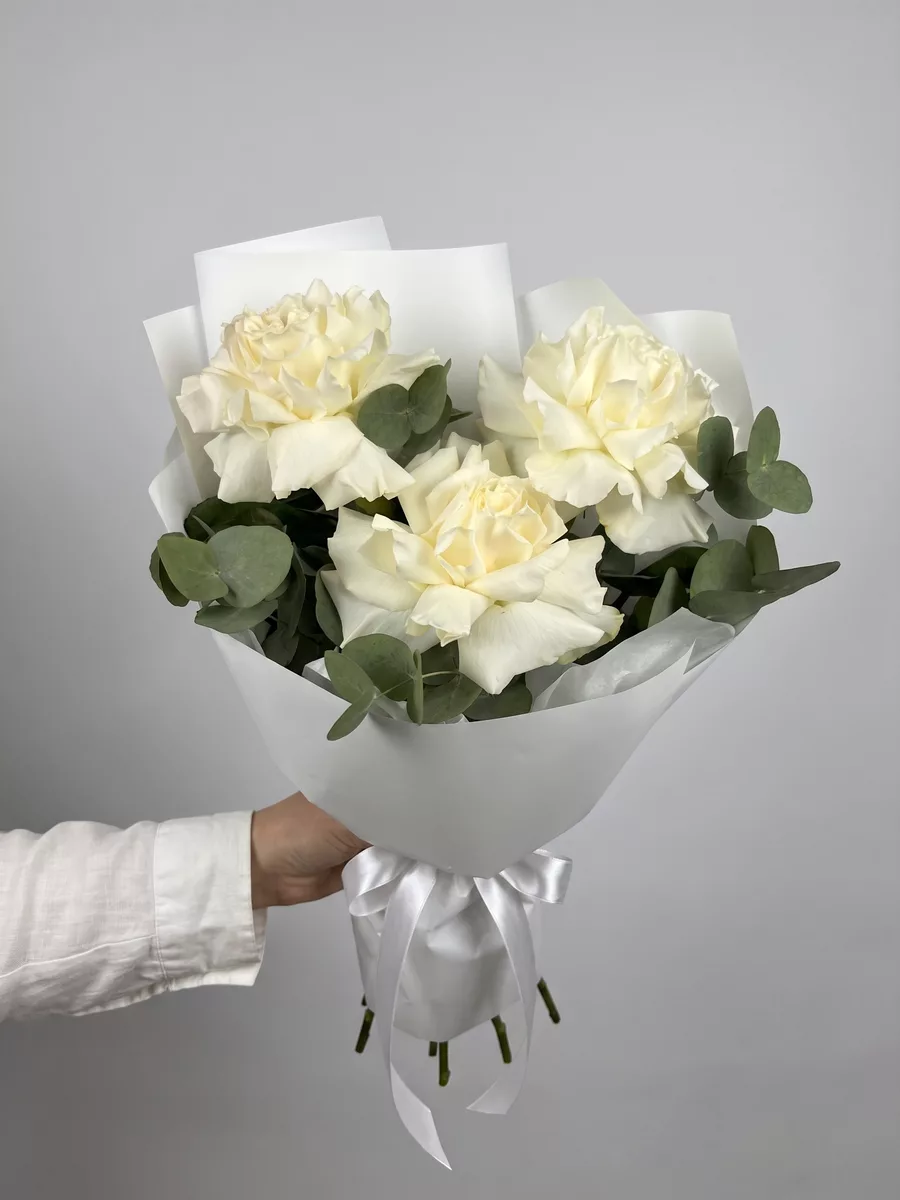
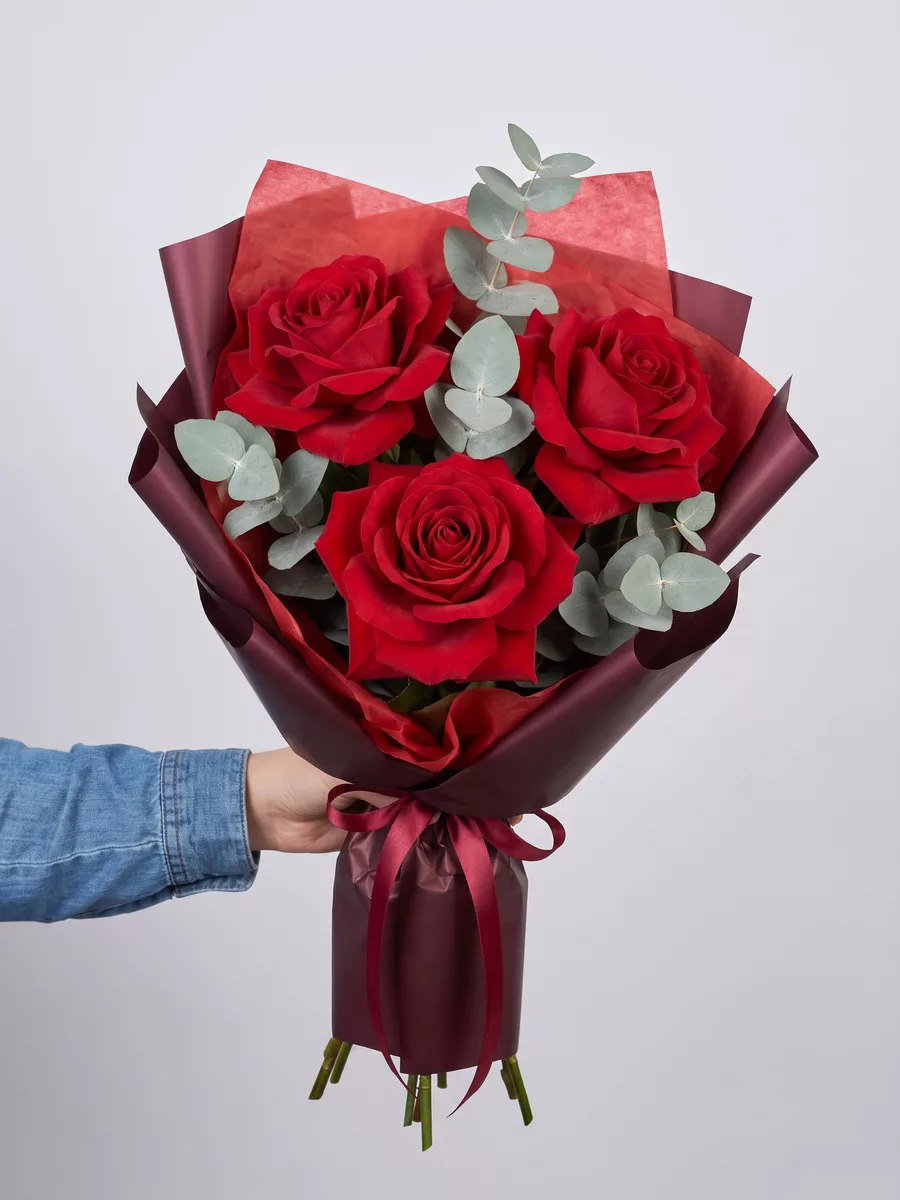
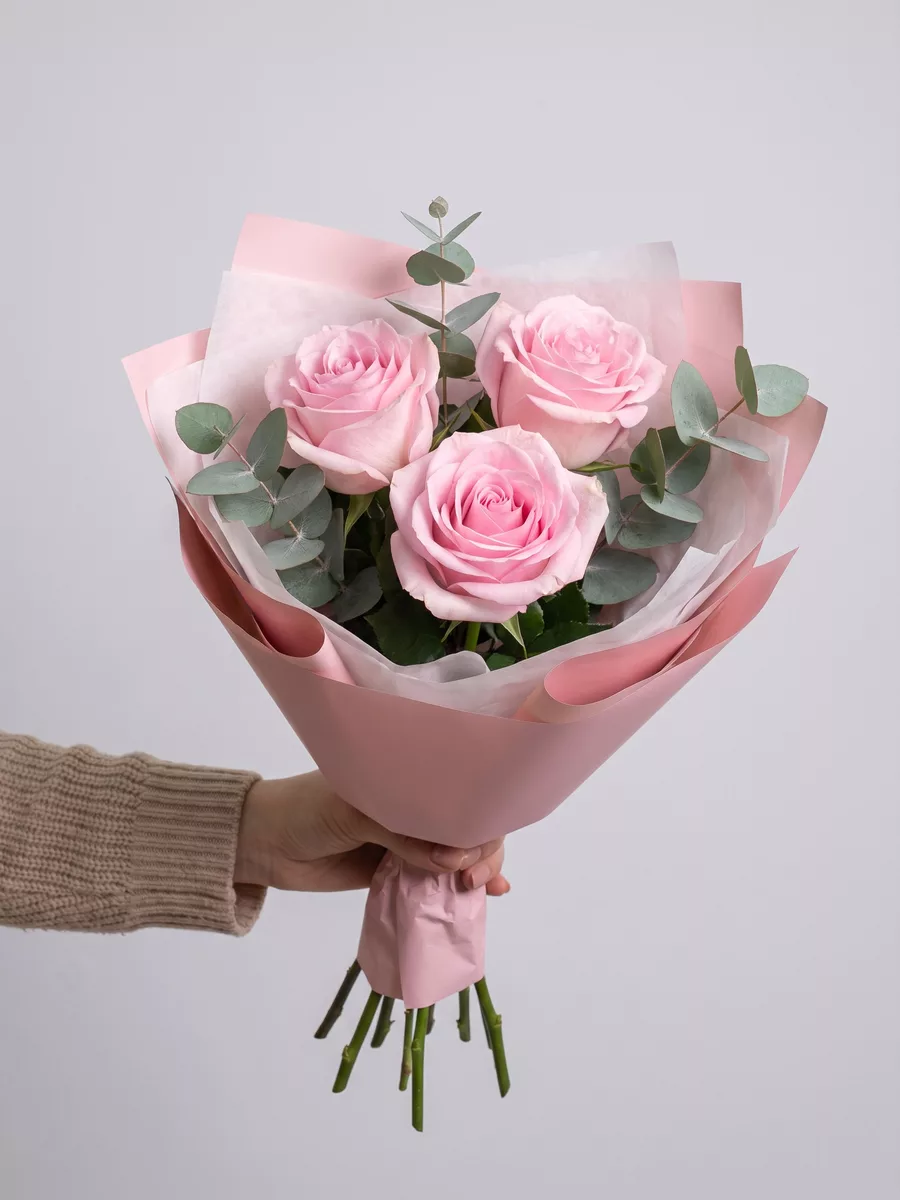
Reading the Occasion Before You Choose the Flowers
The first question to ask yourself is not which flowers you like but what your recipient will feel when they open the door. A birthday calls for something exuberant — sunflowers paired with orange gerberas, or a mixed bouquet of pink and cream peonies in season. An anniversary asks for something more considered: a monochromatic arrangement of garden roses in blush or deep red, wrapped simply so the flowers speak for themselves.
For a new baby, Russians traditionally celebrate with white or pale yellow flowers rather than the pink-or-blue conventions common in Western Europe and North America. White tulips or white chrysanthemums with soft greenery feel both celebratory and elegant. If you are congratulating someone on a professional achievement — a promotion, a graduation, a successful project — bold colours work well. Bright red or orange roses, or a structured arrangement with lisianthus and eucalyptus, communicate respect as much as joy.
Russian recipients generally appreciate bouquets that look full and generous. A single stem is a romantic gesture between close partners, but for most other occasions a fuller arrangement signals warmth and effort. If you are unsure about the relationship dynamic, always go slightly larger rather than slightly smaller. The presentation matters too: ribbon colour, the choice of wrapping paper, whether the stems are left visible or fully wrapped — these details are noticed by Russian recipients in a way that might surprise senders from other cultures. Describing the occasion clearly when you place your order allows a florist to make those small choices well.
Navigating the Odd-Number Rule and Other Russian Customs
If you have never sent flowers to Russia before, there is one custom you absolutely must know: bouquets for living recipients should always contain an odd number of stems. Even numbers — two roses, four tulips, six gerberas — are reserved for funerals and are considered deeply inappropriate for any celebratory or affectionate occasion. This is not a superstition that urban Russians have abandoned; it is observed across generations and across the country, including in smaller cities like Koryazhma.
When you place your order, a professional florist will already compose the bouquet with this in mind, but it is worth confirming if you are specifying an exact stem count yourself. Three, five, seven, nine, eleven — any of these numbers is correct. The most common retail bouquets are seven or eleven stems, which gives a composition enough density to look genuinely full.
Another custom worth knowing is that yellow flowers carry mixed associations in Russian culture. Some people associate yellow roses or yellow tulips with separation or unfaithfulness, though this belief is more pronounced among older generations and varies by region. If your recipient is younger or you know they are not superstitious, yellow flowers are perfectly fine — sunflowers in particular are universally beloved and carry no negative connotation at all. When in doubt, pair yellow blooms with white or orange rather than sending a purely yellow arrangement. Finally, note that many Russians prefer to receive flowers without the price tag or order receipt visible — discretion about cost is considered polite, so a good florist will never attach pricing information to the delivery.
Choosing Flowers by Season in the Arkhangelsk Region
Ordering from abroad means you may be in a different season entirely from your recipient, so it helps to think about what is actually happening in Koryazhma on the day of delivery. January and February are the coldest months, and the city can feel very grey. This is exactly when a burst of colour matters most emotionally. Roses, carnations and chrysanthemums are all available year-round and hold up well in cold transport. Tulips arrive in abundance from February onward and are one of the most popular choices for International Women's Day on March 8th — the single biggest flower-giving occasion in Russia.
Spring in Koryazhma arrives slowly. By May the light returns dramatically and mood lifts noticeably. Peonies begin their season in late May and run through June, and they are arguably the most beloved summer flower among Russian women. If you are sending a birthday or anniversary gift in late spring or early summer, a peony bouquet — blush, white or deep magenta — will be received with genuine delight.
Summer brings ranunculus, lisianthus and garden roses alongside seasonal greenery like eucalyptus and ruscus. Autumn is the season for dahlias, which come in extraordinary colours and hold their shape well. By October the choice shifts back toward hardy varieties: alstroemeria, spray roses and carnations. Alstroemeria deserves special mention because it is often underestimated — it lasts up to two weeks in a vase, which means your recipient in Koryazhma will be looking at your gift long after senders of more fragile flowers have been forgotten.
Timing Your Order Across Time Zones
Koryazhma operates on Moscow Time plus two hours, meaning it is in the UTC+5 zone. If you are in Western Europe, Koryazhma is three to four hours ahead of you. If you are on the East Coast of North America, the city is eight hours ahead. This gap is the most common source of mistakes for international senders, and it is worth calculating carefully before you place your order.
The most important thing to understand is that delivery windows are set in Koryazhma local time, not your local time. If you want flowers to arrive before your recipient leaves for work at nine in the morning Koryazhma time, you need to place the order the night before by your own clock. A same-day delivery request submitted at noon in New York is already late afternoon in Koryazhma, which limits the available window significantly.
For special occasions with a fixed time — a birthday breakfast surprise, flowers waiting when someone returns from a trip — place the order at least twenty-four hours in advance to be safe. This gives time to confirm the delivery address, any access codes for apartment buildings, and the recipient's schedule. Russian apartment buildings often have intercom systems and sometimes security codes for the entrance; including this information in your order notes prevents the delivery from being delayed at the door. If you are unsure of the exact address format, a Russian address reads as: street name, building number, apartment number, city, region, postal code — in that order, which is the reverse of most Western conventions.
What Happens After the Flowers Arrive: Vase Life and Care
Part of the gift you are sending is the days of enjoyment that follow the delivery, so it helps to pass along a few care notes — especially if your recipient is not someone who regularly receives flowers. You can include a short message with the bouquet, or simply send a text after delivery.
The first thing your recipient should do is trim the stems at a diagonal cut, removing about two centimetres, before placing them in water. Diagonal cuts increase the surface area through which the stem draws water. The water should be cool and clean — changed every two days. Koryazhma tap water is generally fine for flowers, but if it is heavily chlorinated, letting it stand for an hour before use helps. Keep the bouquet away from radiators, which are very active in Russian homes during the heating season from October through April. Centrally heated apartments can be quite warm and dry, which shortens vase life noticeably.
Roses last five to eight days with good care. Chrysanthemums and alstroemeria often reach ten to fourteen days. Tulips are shorter-lived but open beautifully over three to five days and can be extended slightly by keeping the water very cold. Peonies, if they arrive as tight buds, will open gradually over four to six days — each day revealing more of the bloom, which makes them feel like a gift that keeps giving.
If any stems begin to wilt before the others, remove them immediately rather than leaving them in the vase. Decomposing stems release ethylene gas, which accelerates aging in the remaining flowers. A little attention in the first two days makes a significant difference to how long the whole arrangement stays beautiful.
Placing the Order from Outside Russia: Practical Steps
Ordering internationally is straightforward once you know what information to prepare. You will need the full delivery address in Russian or transliterated format, the recipient's phone number including the Russian country code plus seven, and the preferred delivery window in Koryazhma local time. If you do not have the recipient's phone number, delivery becomes significantly harder because the courier needs to coordinate access to the building.
Payment from abroad is handled online, and most international cards are accepted. If you encounter any issues, a bank transfer or alternative payment method can usually be arranged by contacting the shop directly. Currency is processed in Russian rubles, so your bank will apply its own exchange rate — check this in advance if the amount matters to you.
When writing your gift message, you can write in English and it will be printed as you write it, or you can ask for the message to be translated into Russian. Many recipients in smaller cities appreciate a message in Russian because it feels more personal and requires no effort to read. If you write in English, keep the message short and warm — a sentence or two is ideal.
Finally, consider whether you want the delivery to be a surprise. If so, do not include the recipient's name in the order notes in a way that would prompt a confirmation call to them. Instead, note clearly in the order that this is a surprise and ask for contact to be made only with you. Most florists handle this routinely, but stating it explicitly removes any ambiguity. A surprise delivery in a northern Russian city, arriving on a grey winter afternoon, is a genuinely memorable experience for the person who opens the door.
Sending flowers to Koryazhma from abroad is less complicated than it might appear, and the reward — the photograph your recipient sends you, the voice message, the moment of genuine surprise — is entirely worth the small effort of getting the details right. Know the odd-number rule, think about the season and the temperature, give yourself enough time across the time zones, and choose flowers that suit the person rather than just the occasion. The distance between you and Koryazhma is real, but a well-made bouquet arriving at the right door at the right time closes that distance in a way that few other gestures can.
Frequently asked questions
Can I send flowers to Koryazhma if I do not speak Russian?
Yes, entirely. The order process is available in English, and you can write your gift message in English — it will be printed exactly as you write it. If you prefer the message translated into Russian for your recipient, simply request that when placing your order and it will be handled for you without any additional steps on your part.
How far in advance should I order if I am sending from a different time zone?
At least twenty-four hours ahead is the safest approach for international orders. Koryazhma is UTC+5, so if you are in Western Europe or North America the time difference is significant. Ordering the day before ensures the delivery window you want is still available and gives time to confirm address details, building access codes and any special instructions without rushing.
Which flowers hold up best in Koryazhma's cold winters?
Spray roses, chrysanthemums, alstroemeria and carnations are the most cold-resilient choices for winter delivery. They tolerate brief exposure to low temperatures during the handover at the door without losing their appearance. Avoid fully open blooms of delicate varieties like garden roses or anemones in deep winter — tight buds travel far better and open beautifully once inside a warm apartment.
Is it true that even numbers of flowers are inappropriate in Russia?
Yes, this is a genuine and widely observed custom. Even numbers of stems are associated with funeral flowers across Russia, including in Koryazhma. Always send an odd number — three, five, seven, eleven and so on — for any birthday, anniversary, congratulation or romantic occasion. A professional florist will compose the bouquet with this in mind automatically.
What should my recipient do first when the flowers arrive?
The single most helpful first step is to trim the stems diagonally by about two centimetres and place them immediately in cool, clean water. They should keep the bouquet away from radiators, which are very active in Russian homes during the heating season. Changing the water every two days and removing any wilting stems promptly will extend the life of the arrangement significantly.
Ready to send flowers?
Pick the city, choose the bouquet, and a local florist takes it from there.
Choose a city →