Sending Flowers to Kusa from Abroad? Here Is Everything That Matters
Kusa is a quiet town in the Chelyabinsk region, tucked into the southern Urals, and if someone you love lives there, distance should not shrink the gesture. Ordering flowers from another country feels complicated until you understand exactly what shapes the experience — the time zones, the seasons, the local customs around receiving a bouquet. This guide walks you through each part so that what arrives at the door feels warm, considered and completely right.
Why Kusa Is Different from Sending to a Big City
Most people ordering from abroad picture Moscow or Saint Petersburg when they think of Russian flower delivery. Kusa sits in a different reality. It is a small industrial town of roughly twenty thousand people in the Ural mountains, and that geography changes the conversation around flowers in practical ways. Elevation and continental climate mean temperatures swing hard between seasons — winters are genuinely cold, summers are short and vivid, and spring arrives later than in European Russia. A bouquet that travels well in April in Saint Petersburg may arrive wilted in Kusa if the composition was not chosen with that climate in mind.
The town itself has a close-knit character. Occasions matter deeply here — birthdays, anniversaries, graduations, professional celebrations — and a flower delivery is noticed. It carries weight in a way that can feel more public than in a large anonymous city. This is not a reason to overthink it, but it is a reason to be deliberate. A beautiful, generous arrangement lands with more meaning than a small, uncertain one.
For a sender abroad, the key difference is logistics and lead time. You are working across time zones, and Kusa operates on Yekaterinburg time, which is UTC plus five. If you are placing an order from Western Europe in the afternoon, it is already evening in Kusa. Plan your order with that gap in mind, and aim to confirm details at least a day before the occasion.
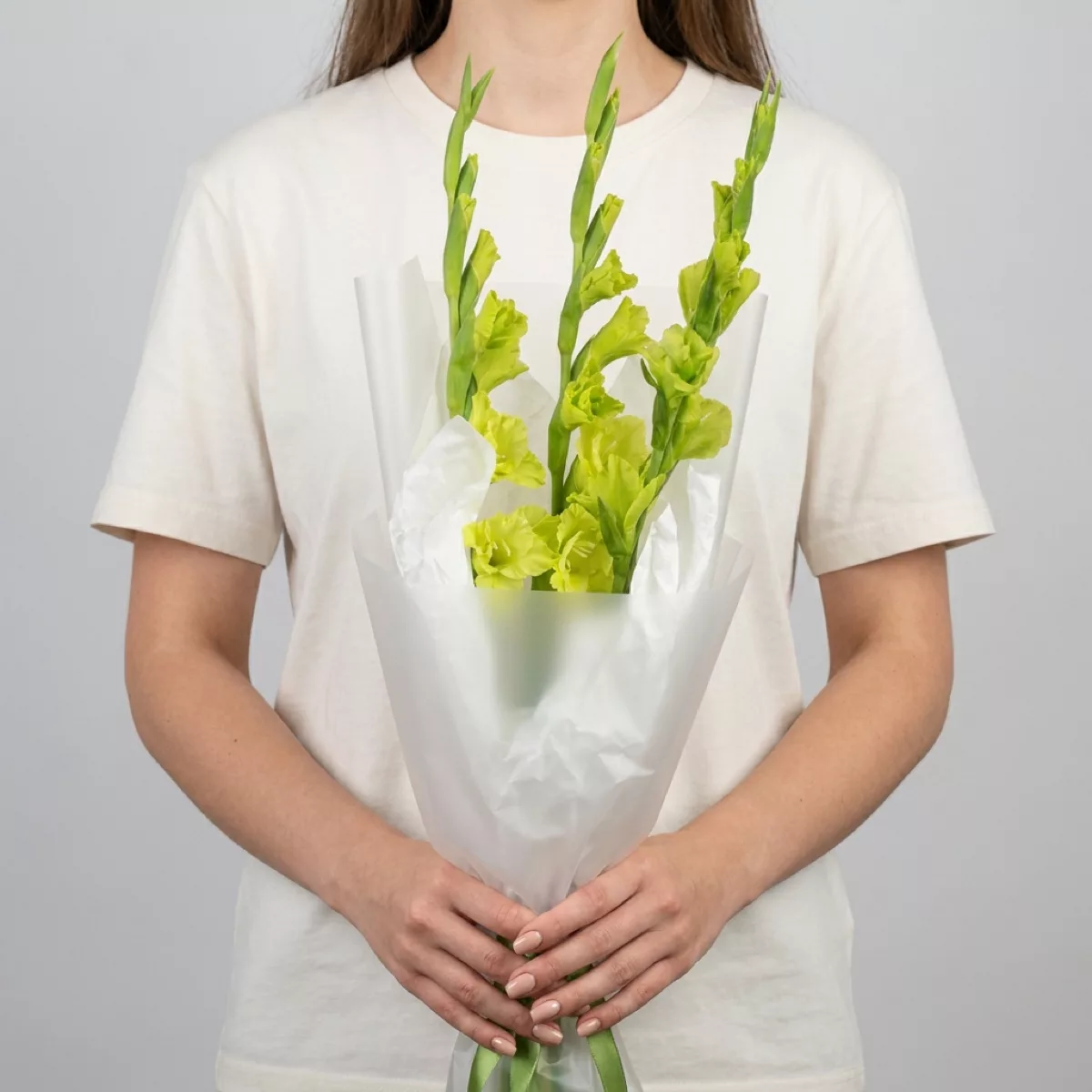
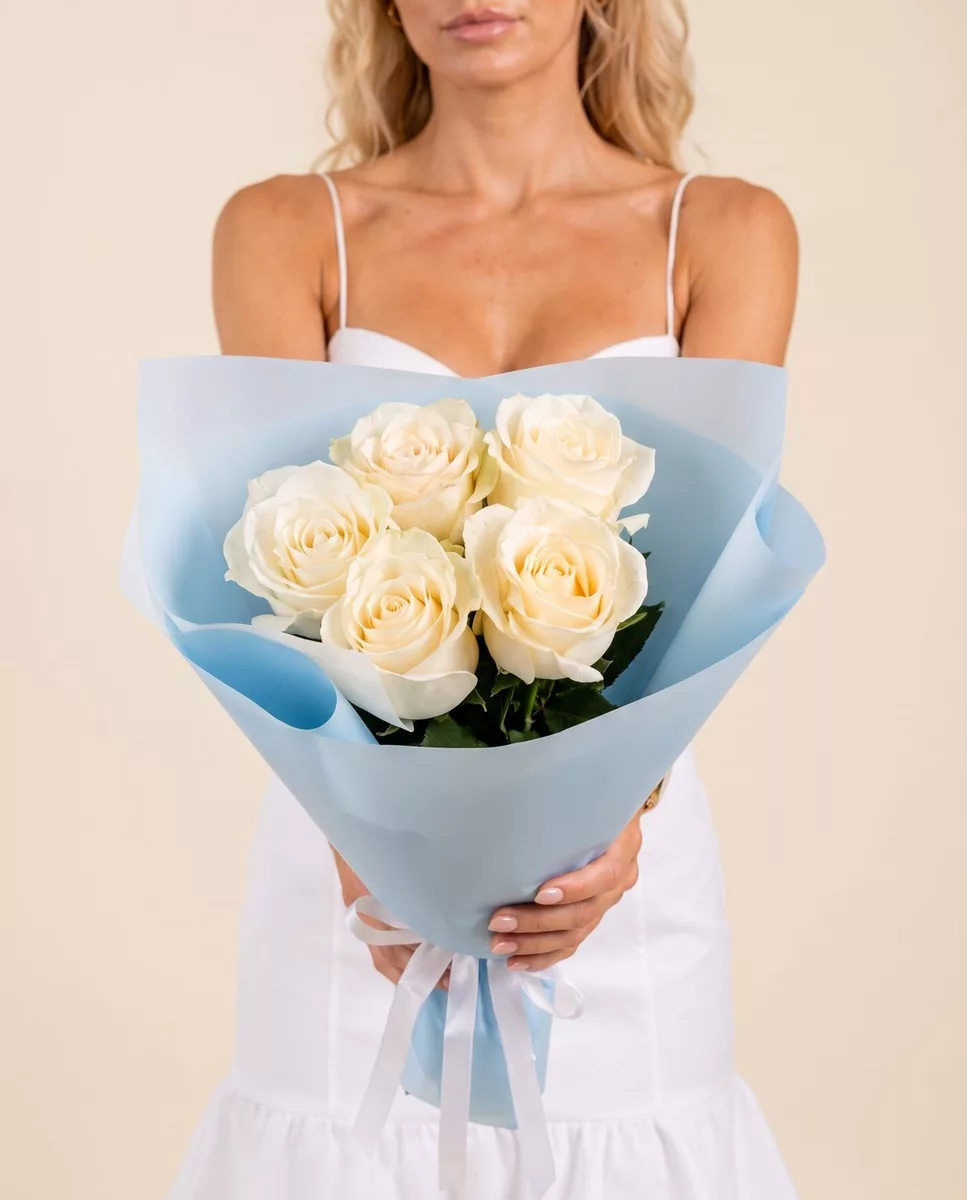
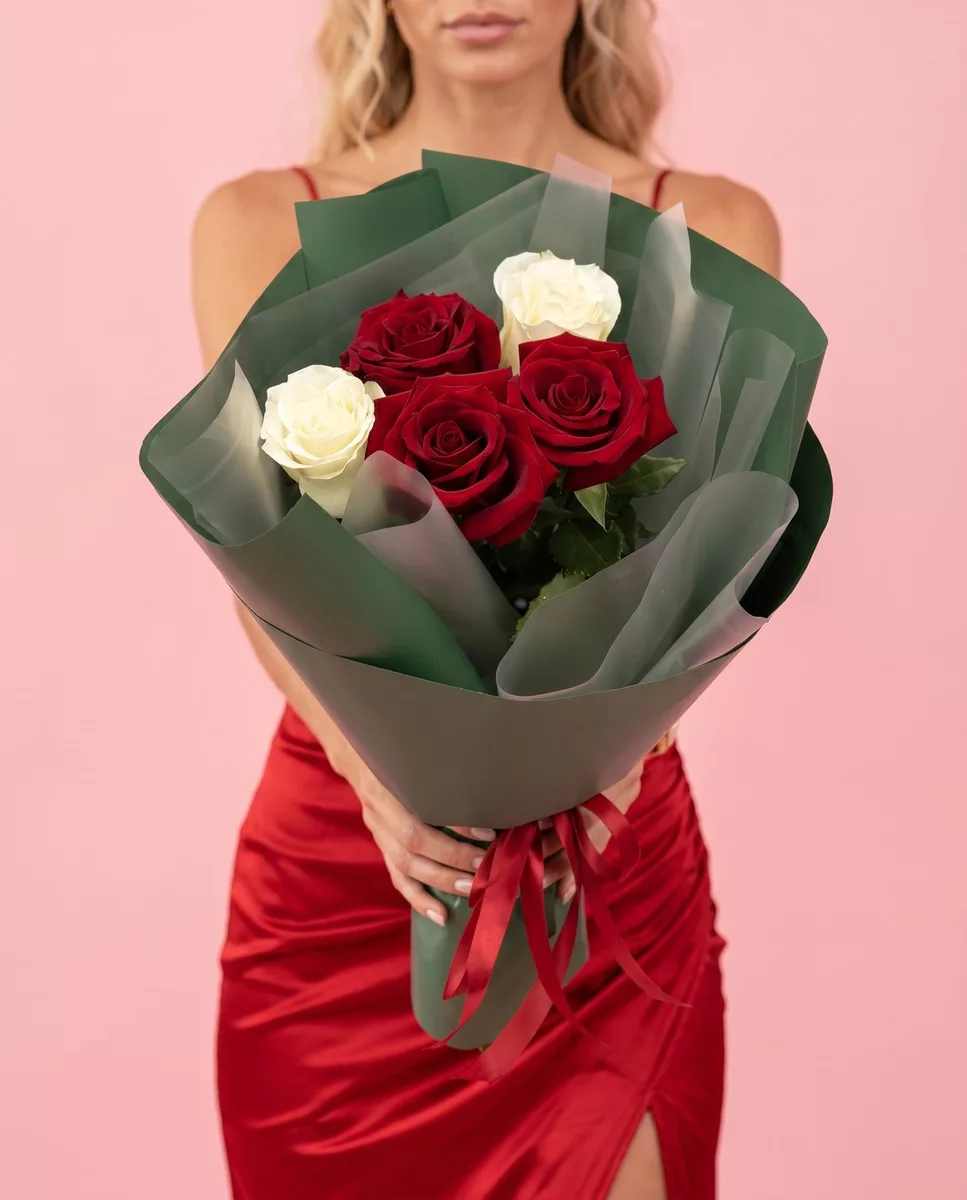
Bouquets we can deliver

Reading the Russian Calendar Before You Order
Russia runs on a gifting calendar that differs from what most Western senders expect, and knowing it will help you choose the right moment and the right flowers. The most significant date for flower gifting is the eighth of March, International Women's Day. In Russia this is not a quiet observance — it is one of the biggest flower-giving days of the entire year, comparable to Valentine's Day and Mother's Day combined. If your recipient is a woman and the date is approaching, order several days early and expect higher demand.
The twenty-third of February, Defender of the Fatherland Day, is the corresponding occasion for men, though flowers are less traditional here than small gifts. New Year's Eve is enormous in Russia — larger culturally than Christmas — and winter arrangements with white spray roses, eucalyptus, and deep red carnations feel genuinely seasonal and appropriate. Orthodox Christmas falls on the seventh of January, and while not every family observes it with gifts, awareness is useful.
Birthdays in Russia carry a specific tradition worth knowing: you do not congratulate someone before their birthday, and flowers are always given on the day itself or after, never in advance. If you are tempted to send a day early to make sure it arrives, resist that instinct and instead communicate the delivery window carefully. Russians also strongly prefer odd numbers of flowers in a bouquet — even numbers are associated with mourning and funerals, so always confirm your arrangement follows that convention.
Choosing Flowers for the Ural Climate and the Season
The Ural region has a continental climate with cold winters that can drop well below minus twenty Celsius and warm but brief summers. This matters when you choose varieties, because some flowers simply do not travel well in extreme cold or arrive stressed from temperature shock. In winter months, roses, chrysanthemums, alstroemeria, and spray carnations are the most reliable choices. They handle cold transit better than open, delicate blooms like garden ranunculus or anemones, which can bruise or close permanently if chilled mid-route.
Spring in Kusa arrives in late April or May, and tulips become the natural choice around Women's Day and the weeks that follow. Dutch tulips in single strong colours — deep purple, coral, clean white — look generous without being fussy. Peonies arrive in the market in late May and June and are beloved across Russia for their fullness and scent. If the occasion falls in that window, a peony bouquet will feel genuinely seasonal and considered.
Summer allows for more variety. Sunflowers are popular for birthdays and are cheerful without being overly formal. Lisianthus, with its ruffled petals that resemble garden roses, holds well in warm weather and photographs beautifully. Autumn in the Urals comes early, and by September the palette naturally shifts toward warm tones — orange and burgundy chrysanthemums, rust-toned roses, and dahlias when available. Matching the bouquet to what is actually blooming in the season always feels more alive than forcing a summer arrangement in October.
How to Structure Your Order from Another Country
Placing an international order requires a few extra steps that domestic senders skip without thinking. Start with the recipient's full address written in Russian if at all possible. Kusa addresses follow the standard Russian format: street name, building number, apartment number, then city and postal code. If you only have the address in transliteration, pass it along and confirm it is complete — a missing apartment number can delay delivery significantly in a residential block.
Provide a working Russian mobile number for the recipient. Delivery drivers in Russia almost always call ahead to confirm someone is home, and without a local number the coordination becomes difficult. If your recipient does not know about the delivery, you can ask us to call only upon arrival rather than in advance, but the number itself is essential.
Time zones require active management. Kusa is five hours ahead of Moscow and eight hours ahead of Central European Time. If you want flowers delivered at midday on a Tuesday in Kusa, you need your order confirmed by late the previous evening at the latest from Central Europe. Factor in any back-and-forth on bouquet details.
For the card message, write it in the language your recipient reads. If that is Russian and you are not confident in the translation, write your message in English and ask for help — a florist who works internationally will be used to this. A handwritten card in the sender's own language, even if the recipient reads it slowly, often carries more emotional weight than a perfectly typed translation.
Budgeting Thoughtfully When Sending from Abroad
Currency conversion and international payment can make the budget feel abstract, but it is worth thinking concretely about what different investment levels actually produce. A smaller arrangement — a tight hand-tied bouquet of seven or nine stems — reads as a sincere, personal gesture. It suits a thank-you, a thinking-of-you moment, or a modest birthday acknowledgment. It is not a diminished gift in Russian culture; presentation and freshness matter more than sheer volume.
A mid-range arrangement allows for combination work: roses paired with lisianthus and eucalyptus, or tulips mixed with muscari in spring. These combinations have more visual depth and hold up better in photographs, which matters because in Russia it is very common for recipients to photograph and share flower gifts with family or on social media. A well-composed mixed bouquet photographs with far more life than a single-variety bunch of the same spend.
A generous arrangement — a large structured bouquet or a hatbox composition — is appropriate for significant milestones: a major birthday, a wedding anniversary, a graduation, a professional achievement. In Kusa, where a flower delivery is a noticeable event, a large and beautiful arrangement makes a strong statement. Hatboxes and preserved arrangements are also worth considering if the recipient travels frequently or lives alone, as they require less immediate care than a fresh cut arrangement.
Always factor delivery into your total. Delivery to Kusa from Saint Petersburg involves distance, and honest budgeting includes that cost rather than treating it as a surprise at checkout.
What Happens After Delivery: Helping Your Recipient Care for the Flowers
You will not be there to unwrap the bouquet, so a short note with care instructions is one of the kindest things you can include. Most people in Russia know the basics of flower care, but a reminder is always welcome, especially for varieties the recipient may not have received before.
Cut stems should be trimmed at an angle under running water immediately after unwrapping — about two centimetres from the bottom. This reopens the stem's vascular system and dramatically extends vase life. The vase water should be cool and changed every two days. Flower food sachets, when included with the delivery, should be dissolved in the water at the recommended ratio rather than ignored.
Keep the arrangement away from direct sunlight, radiators, and draughts. In Kusa in winter, apartments are often very warm due to central heating, which shortens vase life for delicate varieties. Roses in a warm room will last five to seven days with good care; chrysanthemums and alstroemeria can reach ten to fourteen days. Tulips prefer cooler conditions and will last longest near a window in winter.
If you have sent a hatbox or preserved flower arrangement, care is different: no water, no direct sunlight, no high humidity. Preserved roses in particular should simply be left in their box in a dry room. They can hold their appearance for months without any intervention, which makes them a thoughtful gift for someone who may not have time to tend to fresh flowers regularly.
Making the Moment Feel Personal Across the Distance
The technical side of international delivery is solvable. The harder part is making the gesture feel genuinely close when you are thousands of kilometres away. A few deliberate choices move a flower delivery from functional to memorable.
Colour is one of the most personal signals in a bouquet. If you know your recipient's favourite colour, anchor the arrangement around it rather than defaulting to a generic palette. A person who always wears burgundy will feel seen by a deep wine-toned rose arrangement in a way that a standard pink and white mix simply cannot replicate. Pass that preference along when you order.
Scent is another dimension that photographs cannot carry but the recipient will experience immediately. Roses with fragrance — not all commercial roses are scented — freesias, hyacinths in spring, and peonies in early summer all fill a room. If scent matters to your recipient, specify it. A florist who knows their stock can tell you which roses in that week's delivery are genuinely fragrant.
The card message is the part most people underestimate. A specific, honest sentence lands harder than a beautiful but generic phrase. Write something only you could write — a reference to a shared memory, a private joke, a simple and direct statement of feeling. In Russian gifting culture, the words that accompany flowers are taken seriously. The bouquet opens the door; the message is what walks through it.
Finally, consider timing the delivery to coincide with a moment in the recipient's day when they will be home and unhurried — late morning or early afternoon on a day off tends to work better than a weekday evening when someone has just returned from work.
Sending flowers to Kusa from abroad is entirely achievable when you approach it with a little local knowledge and enough lead time. The distance is real, but it does not have to diminish the gesture — in fact, a beautifully chosen, well-timed bouquet arriving in a small Ural town from someone on another continent carries a particular kind of weight. The recipient knows the effort it took. Get the address right, respect the odd-number rule, match the flowers to the season, and write something true on the card. That combination, more than any single variety or arrangement style, is what makes the moment land.
Frequently asked questions
How far in advance should I order flowers to Kusa from abroad?
Order at least 24 to 48 hours before the occasion to allow for time zone differences, address confirmation, and bouquet preparation. For major dates like the 8th of March or New Year, extend that to three or four days. Last-minute orders are sometimes possible, but giving yourself a full day of lead time removes the stress of back-and-forth across time zones.
Why does the number of flowers in a Russian bouquet matter?
In Russia, even numbers of flowers are traditionally associated with mourning and are given at funerals. For any celebratory or affectionate occasion, always choose an odd number — seven, nine, eleven, fifteen stems and so on. This is a widely observed convention across generations and regions, including in smaller towns like Kusa, so it is worth confirming before finalising your order.
What flowers hold up best in Kusa's cold winter climate?
Roses, spray carnations, chrysanthemums, and alstroemeria are the most reliable in cold-weather delivery. They tolerate temperature fluctuations during transit better than open, delicate blooms like ranunculus or anemones. Ask for varieties described as hardy or long-stemmed when ordering in December through February, and avoid arrangements with tropical flowers that are sensitive to cold shock.
Can I write my card message in English if my recipient speaks Russian?
Yes, and it can actually feel more personal. A message in your own handwriting and language signals genuine effort. If you prefer the card to be in Russian, write your message in English and ask the florist to help with the translation. Keep the message specific and personal rather than generic — a single honest sentence in any language carries more meaning than a beautiful but impersonal phrase.
What is the best occasion-specific flower choice for a Kusa birthday in summer?
Sunflowers are a popular and joyful birthday choice in Russian summer and suit Kusa's brief warm season well. Peonies, if the birthday falls in June, are deeply loved and feel genuinely seasonal. Lisianthus mixed with spray roses makes an elegant combination that photographs well. Avoid heavy tropical arrangements in summer heat and focus on varieties with strong stems and good water uptake.
Ready to send flowers?
Pick the city, choose the bouquet, and a local florist takes it from there.
Choose a city →