Sending Flowers to Kushva from Abroad: A Florist's Honest Advice
Kushva sits in the middle of the Ural Mountains, a small industrial city where winters are long and genuinely cold, and where a bouquet arriving at someone's door can feel like a warm hand reaching across thousands of kilometres. If you are ordering from Europe, North America, or anywhere else outside Russia, the process is simpler than you might expect — but there are a few things worth knowing before you choose your flowers, write your card, and press confirm.
Why Kushva Is Different from Sending to Moscow or Saint Petersburg
Most people ordering flowers internationally assume the destination city is like any other — a place with a florist on every corner and same-day delivery as standard. Kushva is a quieter city in Sverdlovsk Oblast, and that geography shapes everything about how your order should be planned. The Ural climate is continental and unforgiving: winters regularly drop below minus twenty Celsius, and even spring and autumn carry sharp frosts that can damage delicate petals during transit from vehicle to doorstep.
This is not a reason to hesitate. It is a reason to choose wisely. Flowers that travel well in cold — sturdy roses with tight buds, chrysanthemums, alstroemeria, spray carnations — will arrive looking composed even after a brisk walk from the delivery car to a front door. Flowers with very thin petals or tropical origins, like anthurium or bird of paradise, are riskier in deep winter and are better saved for warmer months.
The city's size also means that the recipient is likely to know their neighbours. A beautiful, well-presented bouquet is a genuine event in a smaller community. Presentation matters here as much as variety selection. Generous wrapping, a proper water sachet at the stem base, and a handwritten-style card message all signal that the sender thought carefully — and that thoughtfulness travels further than the flowers themselves.
Bouquets we can deliver

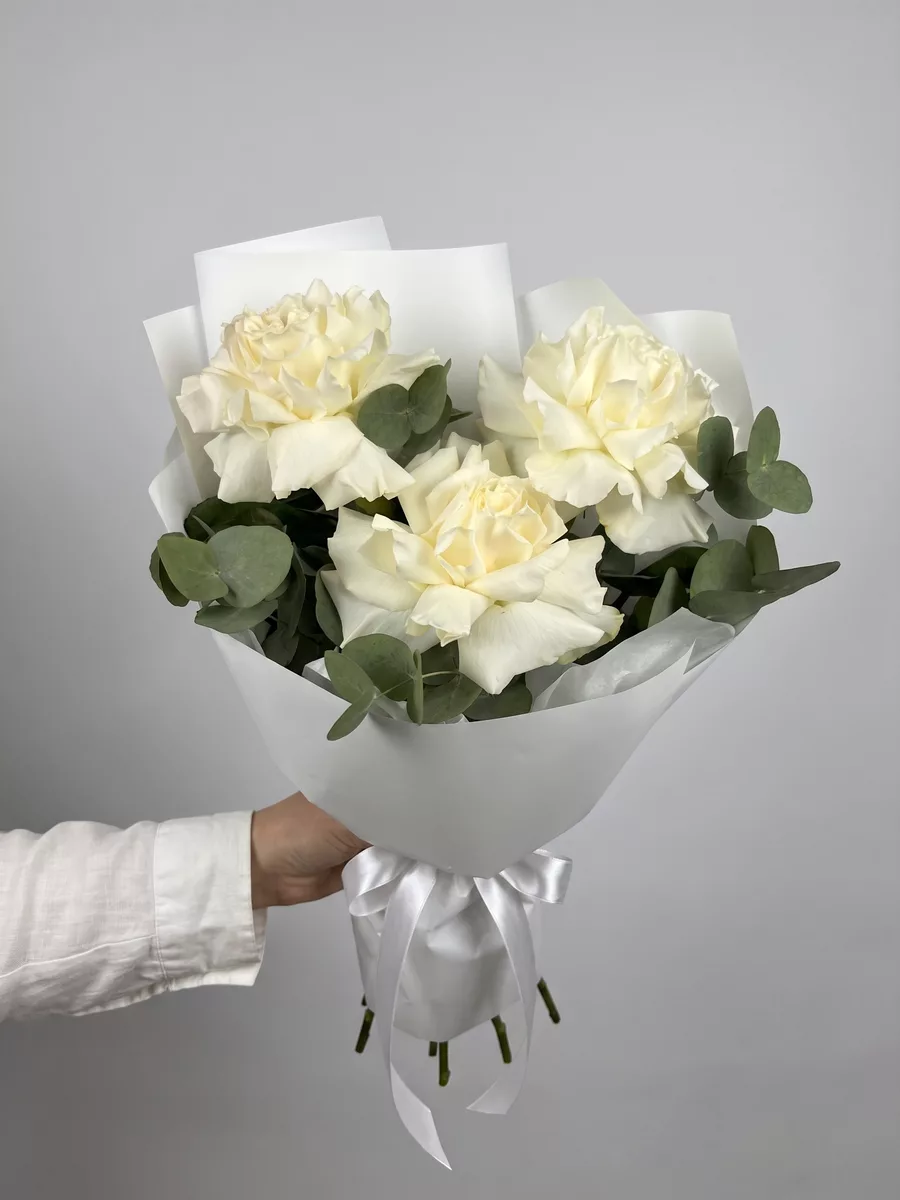
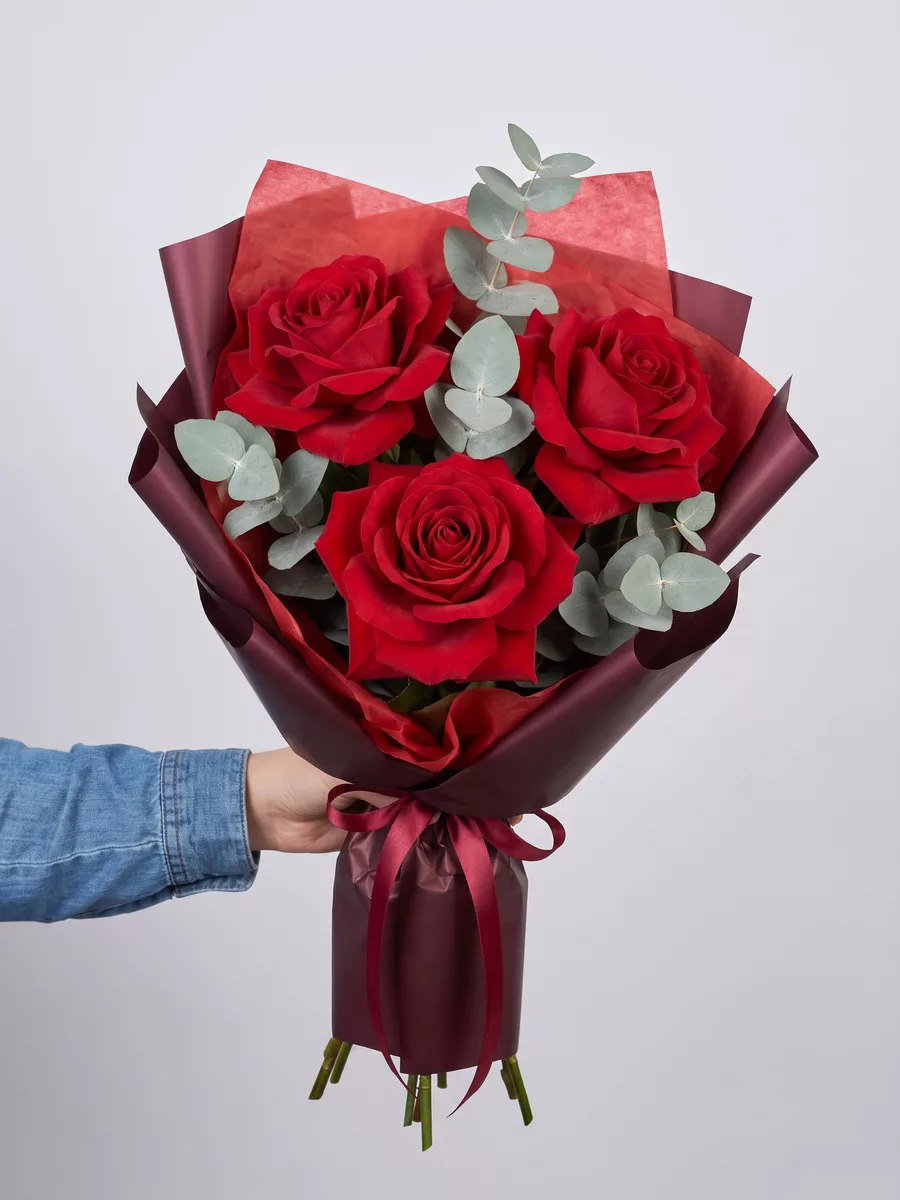
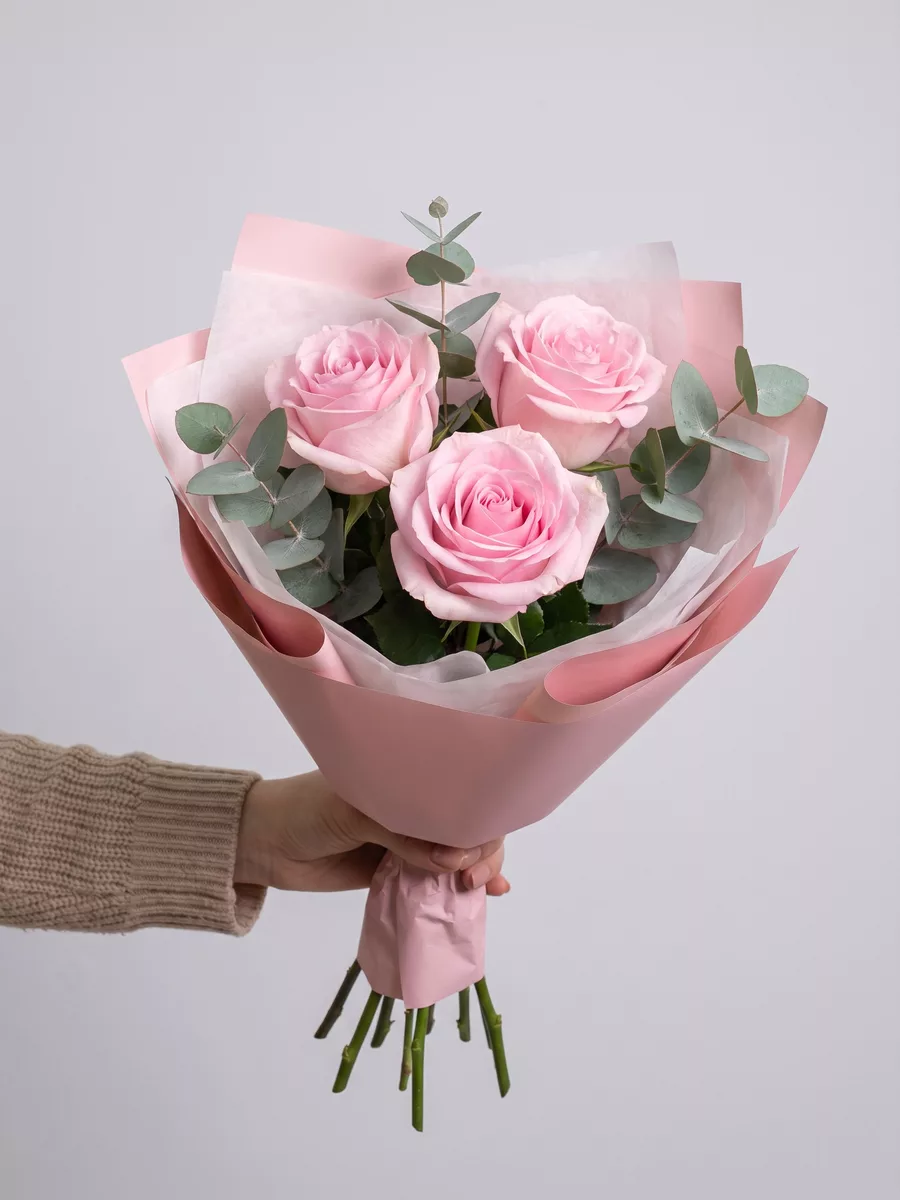
How to Choose Flowers Based on Who Will Receive Them
Before you think about colours or budget, think about the person standing at the door when the delivery arrives. A grandmother celebrating her birthday will respond to something she recognises: full-headed roses in warm tones, fragrant freesias if the season allows, or a classic mix of chrysanthemums and alstroemeria that she can arrange herself in a favourite vase. Familiarity is affection in flower form for many older recipients.
A younger woman — a daughter, a colleague, a friend — often appreciates something more considered in its composition. A bouquet built around garden roses, ranunculus in season, and eucalyptus foliage reads as thoughtful rather than generic. If she follows any kind of aesthetic online, she likely notices the difference between flowers arranged with intention and flowers bundled by default.
For a man receiving flowers — which is perfectly normal in Russia, especially for birthdays and professional milestones — lean toward strong shapes and deep colours. Burgundy roses, sunflowers in summer, or a bold monochromatic arrangement of white spray roses carry weight without feeling overly decorative.
Children love colour above all else. Bright gerberas, multicoloured tulips in spring, or a cheerful mix of solidago and bright alstroemeria will land with exactly the right energy. Whatever the recipient's age, always include a message in Russian if you can — even a phonetically written phrase means a great deal when the card is read aloud.
Timing Your Order Across Time Zones
Kushva runs on Yekaterinburg Time, which is UTC plus five. That is a significant gap from Western Europe, and an even larger one from the Americas. When it is nine in the morning in London, it is already two in the afternoon in Kushva. When it is nine in the morning on the East Coast of the United States, it is seven in the evening there. This time difference catches many international senders off guard.
The practical consequence is that if you want flowers delivered in the morning — which is often the nicest time to receive them, especially on a birthday — you need to place your order the evening before, your local time. Placing an order at noon in Paris on a Tuesday may already mean an afternoon or evening delivery in Kushva on that same day, depending on the exact hour.
For major Russian holidays — International Women's Day on the eighth of March, Valentine's Day, and New Year — demand spikes sharply and placing your order at least two or three days ahead is genuinely important. These are not dates when you want to be last-minute. The eighth of March in particular is the single largest flower-giving occasion in Russia, and roses and tulips in every colour move in enormous quantities. Ordering early also gives you time to compose a proper message rather than rushing the most personal part of the whole gesture.
Seasonal Flowers That Work Well for Kushva's Climate
The Ural region has four distinct seasons, and working with them rather than against them is one of the simplest ways to get a better bouquet. In winter, from November through February, the most reliable choices are roses, chrysanthemums, alstroemeria, carnations, and hypericum berries as accents. These varieties handle cold corridors, unheated entryways, and brief exposure to freezing air far better than thinner-petalled alternatives.
Spring arrives later in Kushva than in southern Russia — often not feeling genuinely warm until late April. But when it comes, tulips, daffodils, and hyacinths are both locally meaningful and visually striking. Tulips especially are associated with the eighth of March and carry a cultural warmth that goes beyond their appearance. A monobouquet of tulips in a single saturated colour is one of the most beloved gifts in Russian spring tradition.
Summer opens up the full range. Peonies, available roughly from May through July, are intensely popular and their full, layered blooms photograph beautifully and fill a room with fragrance. Garden roses with open heads, lisianthus, and matthiola all work well in the warmer months. Sunflowers are a summer staple that feel generous and cheerful.
Autumn brings dahlias, solidago, and the deeper tones of burgundy roses and orange alstroemeria. Compositions that echo the colours outside the window — amber, rust, deep red — feel particularly fitting and are often more memorable than a generic all-white arrangement.
Russian Flower Customs Worth Knowing Before You Order
If you are not familiar with Russian flower-giving traditions, a few details are worth knowing so your bouquet lands exactly as intended. The most discussed custom is the odd-number rule: bouquets for living recipients are traditionally given in odd numbers, while even numbers are associated with mourning. In practice, a bouquet of eleven roses or fifteen tulips is perfectly standard, and most ready-made arrangements already follow this convention. If you are ordering a custom number, odd is always the safe choice.
Colour carries meaning too, though younger generations are increasingly relaxed about this. Yellow flowers were historically associated with separation or jealousy, so while a yellow rose bouquet is beautiful and increasingly accepted, it may still give pause to an older recipient. Red roses are unambiguously romantic. White flowers are elegant and neutral in most gift contexts. When in doubt, a mixed composition with varied tones sidesteps any concern entirely.
The card message is taken seriously. Russians tend to read cards carefully and keep them. A message that names the occasion, addresses the recipient warmly, and closes with a genuine wish — rather than a generic phrase — will be remembered. If you write in English, that is fine and often charming, but even a few words in Russian transliterated phonetically show effort that is always noticed. Florists can sometimes assist with simple Russian phrases if you ask when placing the order.
Choosing a Bouquet by Budget Without Losing Quality
Budget shapes what is possible, but within any range there is a version of a bouquet that feels generous and considered. At a modest level, a clean monobouquet — fifteen alstroemeria stems in a single colour, or a dozen spray roses arranged tightly — can look more intentional than a mixed arrangement that tries to do too much with too little. Simplicity is not a compromise; it is often a stronger aesthetic choice.
In a mid-range budget, you gain access to a supporting cast: eucalyptus or ruscus foliage to add depth, hypericum berries for texture, a mix of main flowers with a secondary variety that echoes rather than competes. A bouquet of roses with matthiola and dusty miller feels complete without being crowded. This is the range where composition really starts to sing.
At a higher budget, the options expand to peonies in season, garden roses with their fuller heads and shorter vase life, lisianthus, or ranunculus — varieties that are more delicate in transit but visually stunning when they arrive in good condition. These work best when ordered in warmer months or when the delivery window is short enough to protect them.
Whatever your budget, always allocate something for proper packaging. A bouquet wrapped carelessly loses half its impact at the door. Kraft paper, a ribbon, a water sachet at the stem base, and a properly attached card are not extras — they are part of the gift.
Helping the Recipient Keep Flowers Fresh Longer
Once the bouquet arrives, its vase life depends almost entirely on what the recipient does in the first hour. If you can include care instructions with your card — or send a quick message before the delivery — it makes a real difference. The most important step is cutting the stems at an angle under cool running water before placing them in a clean vase. An angled cut increases the surface area absorbing water and prevents the stem base from sitting flat against the vase bottom and blocking uptake.
The vase water should be cool and changed every two days. Removing any leaves that fall below the waterline prevents bacterial growth that shortens vase life significantly. Most bouquets include a small sachet of flower food — a mix of sugar, acidifier, and biocide — that should be dissolved in the first fill of water and genuinely extends freshness by several days.
In Kushva's winters, placement matters too. Flowers last longest away from radiators, which are often running at full strength from October through April. A windowsill in a cold room is actually ideal: cool air slows cellular respiration in the petals and keeps blooms tight longer. Roses and chrysanthemums kept at around ten to fifteen Celsius can last ten days to two weeks. Tulips and ranunculus are shorter-lived but no less worth it — they simply reward being enjoyed immediately rather than saved.
Reminding the recipient of these small steps shows care that extends beyond the delivery itself.
Sending flowers to Kushva from abroad is a genuinely meaningful gesture — perhaps more so than sending to a large city, because it is less expected and therefore more felt. The distance between you and the recipient is real, but a well-chosen bouquet, ordered with the season and the person in mind, closes that gap in a way that a message or a call cannot quite replicate. Plan around the time difference, lean into varieties that travel well in the Urals climate, and take a moment to write something personal on the card. Those details are what the recipient will remember long after the last petal has fallen.
Frequently asked questions
Can I order flowers for Kushva if I do not speak Russian?
Yes, entirely. The order process on turboflora.com works in a way that international senders can navigate, and you can write your card message in English. If you would like a simple Russian phrase included, you can note that in the order comments and we will do our best to help. The recipient's address should be written in Russian or transliterated carefully to ensure accurate delivery.
How far in advance should I order for a birthday or holiday in Kushva?
For everyday occasions, ordering the evening before your local time is usually enough given the time zone difference. For major Russian holidays — especially the eighth of March and New Year — place your order two to three days ahead. These dates see very high demand across Russia and early ordering ensures your chosen flowers are available and your delivery slot is secured.
Are there flowers I should avoid sending to Kushva in winter?
Tropical varieties with very thin or waxy petals, such as anthurium or bird of paradise, are more vulnerable to cold exposure during the final steps of delivery in deep winter. Roses, chrysanthemums, alstroemeria, carnations, and spray roses are all reliable in cold temperatures and arrive in far better condition. Save more delicate varieties for orders placed between May and September.
Why do Russian bouquets traditionally have an odd number of flowers?
The odd-number tradition is deeply rooted in Russian culture and is observed across generations. Even numbers are associated with mourning and are used at funerals, so gifting an even number to a living person can feel jarring, especially to older recipients. Ordering a bouquet of eleven, fifteen, or twenty-one stems is perfectly standard and ensures your gift carries the right intention.
What is the best way to let the recipient know flowers are coming without spoiling the surprise?
The most practical approach is to make sure the recipient will be at or near the delivery address during the expected window. You can do this by arranging for a trusted family member to be home, or by sending a vague hint — a message saying something nice is on its way — without revealing the gift itself. Providing an accurate phone number for the recipient also allows the delivery team to coordinate arrival smoothly.
Ready to send flowers?
Pick the city, choose the bouquet, and a local florist takes it from there.
Choose a city →