Sending Flowers to Kyshtym from Abroad? Here Is What to Expect
You are somewhere outside Russia — maybe in Berlin, Dubai, or Toronto — and someone you care about is in Kyshtym, a quiet city in the Chelyabinsk region of the southern Urals. You want to send flowers that arrive fresh, feel personal, and land at exactly the right moment. The distance feels like a problem, but it does not have to be. What you actually need is clarity: on timing, on what grows well in a cold climate, on what Russians expect when flowers arrive at the door, and on how to make the whole thing feel close even when you are far away.
Who Is Receiving the Flowers and What Will They Feel
Before you think about roses versus peonies, think about the person opening the door. Kyshtym is a small city — around 38,000 people — and receiving a flower delivery there, especially one ordered from abroad, carries real emotional weight. It signals that someone thought carefully enough to cross a time zone and a language barrier just to mark a moment. That feeling is the gift before the flowers even leave the paper.
For a mother or grandmother, warmth and familiarity matter most. Soft pinks, creamy whites, and garden-style arrangements with alstroemeria, spray roses, and lisianthus feel like an embrace. For a younger recipient — a partner, a friend, a sibling — something bolder and more contemporary reads better: a tightly composed bouquet of single-variety tulips or a monochrome arrangement of burgundy ranunculus and eucalyptus.
For a colleague or a professional occasion, restraint is respectful. A clean arrangement of white chrysanthemums or a simple bundle of freesia signals appreciation without overstepping. Russians tend to read flower choices as intentional, so a thoughtful selection says more than a generic mixed bunch ever could.
Also consider who will be home. If the recipient lives alone and works during the day, coordinate delivery for an evening window. If flowers are going to a family home, a daytime delivery is usually fine. Kyshtym is not a large city, so deliveries do not get lost in urban traffic — but planning around the recipient's schedule still makes the moment land better.
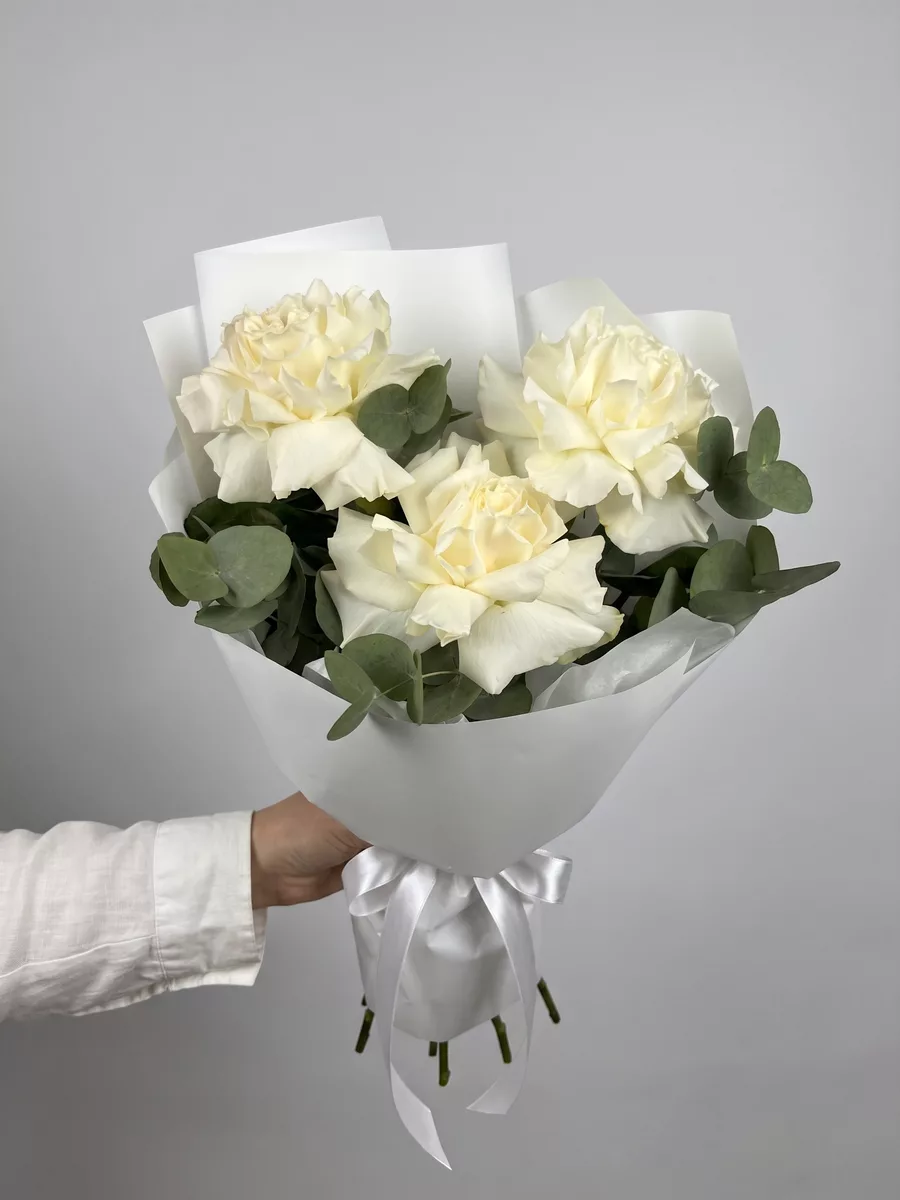
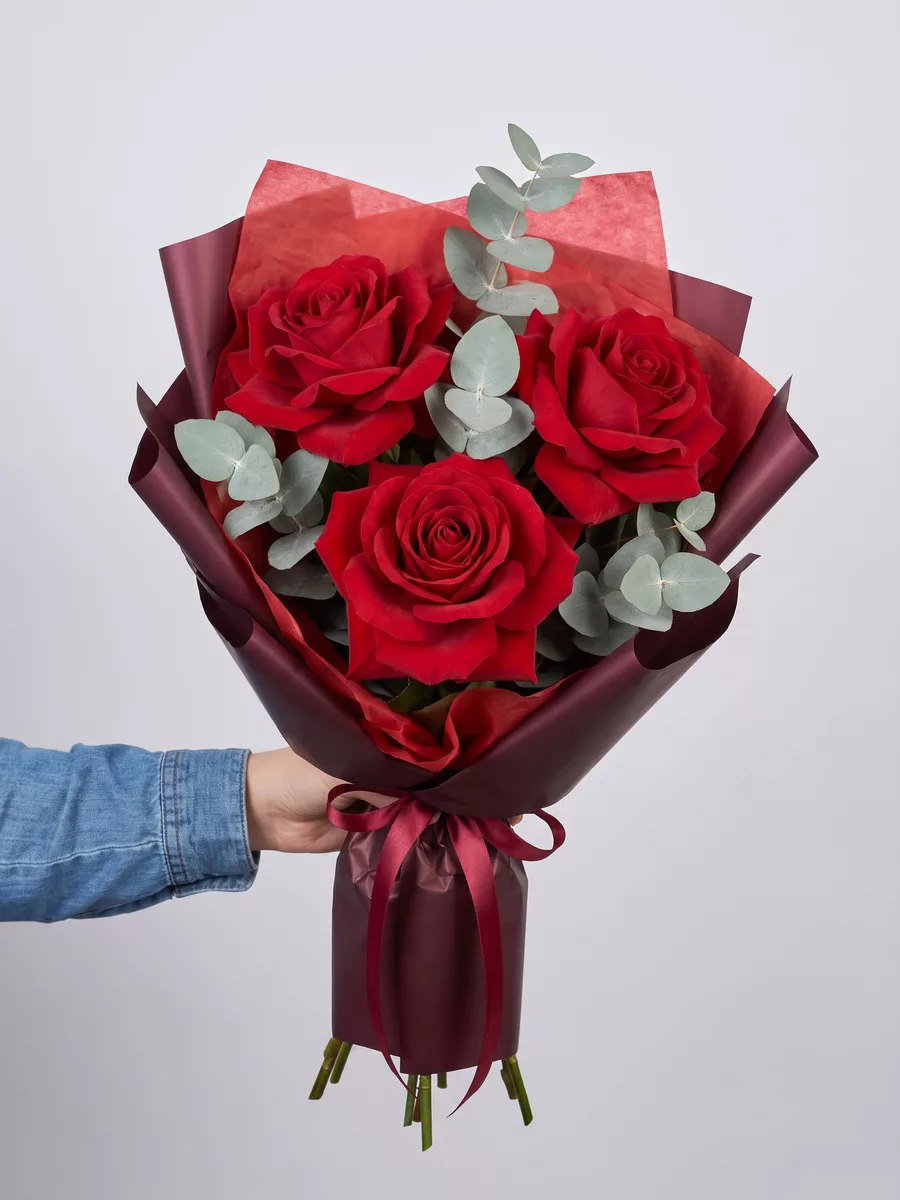
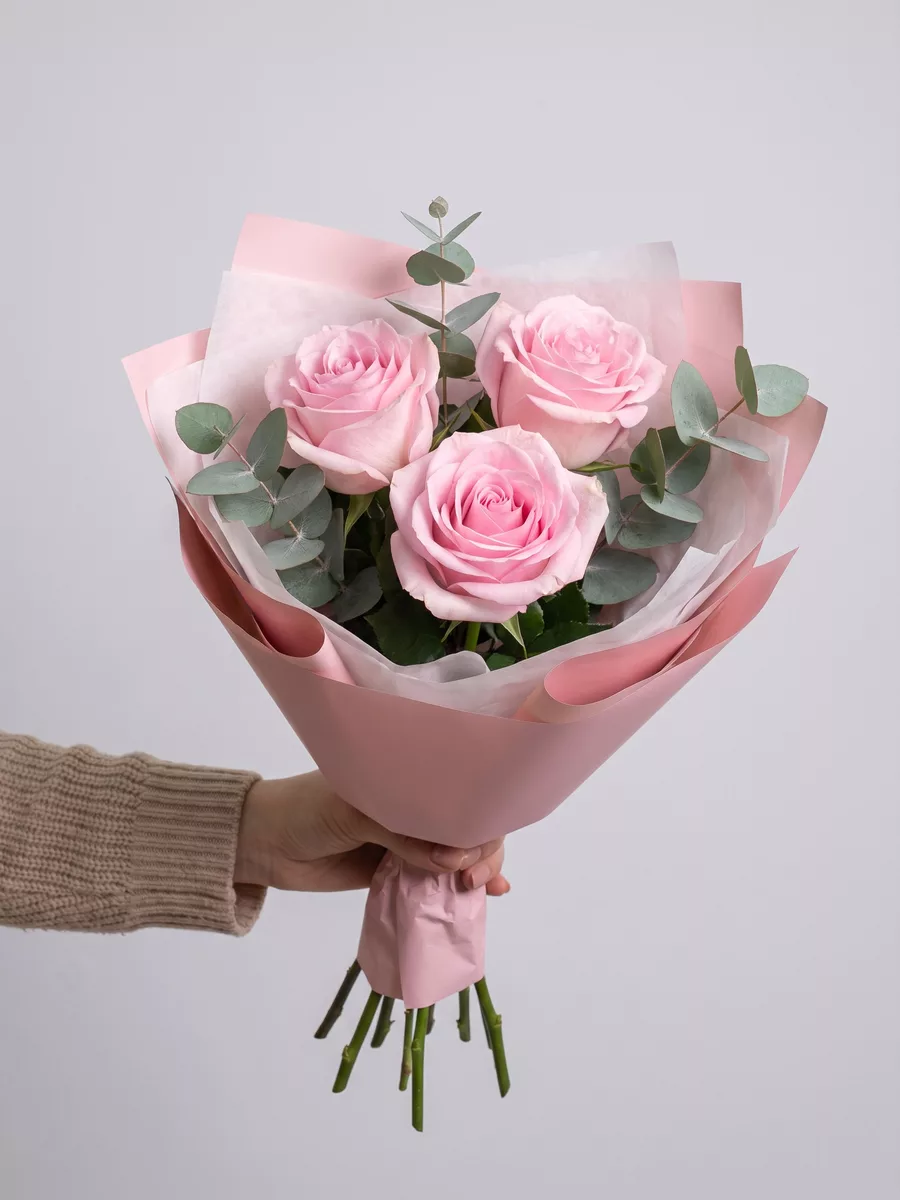
Bouquets we can deliver

Understanding Kyshtym's Climate and What It Means for Your Order
Kyshtym sits in the southern Urals, and the climate there is genuinely continental. Winters are long and cold, with temperatures regularly dropping below minus fifteen degrees Celsius from November through February. Summers are warm but short. This matters for flowers in two very direct ways: what survives the journey in good condition, and what looks seasonally right when it arrives.
In winter, cold-sensitive flowers like tropical anthuriums or garden dahlias are a poor choice. They bruise in cold air even during the short walk from a delivery vehicle to a front door. Hardy varieties like roses, chrysanthemums, carnations, and alstroemeria handle cold transport far better. Bouquets are always wrapped and protected during delivery, but choosing cold-tolerant stems gives you an extra margin of safety.
In spring, from late March through May, tulips are everywhere in Russia and feel exactly right for the season. Daffodils and hyacinths also travel well and carry a strong emotional association with warmer days arriving — a meaningful thing in a city where winter lingers. Early summer brings peonies, which are enormously popular across Russia and feel genuinely luxurious without being formal.
Late summer and early autumn are good seasons for sunflowers, which Russians love for their directness and warmth. By October, the palette shifts back toward roses and chrysanthemums, which hold up well as temperatures fall. Matching your flower choice to the actual season in the Urals is one of the simplest ways to make a bouquet feel considered rather than generic.
Russian Gifting Customs an International Sender Should Know
If you have not sent flowers inside Russia before, a few customs are worth knowing so nothing feels awkward on the receiving end. The most important one is the odd-number rule. Flowers given as a gift are always presented in odd numbers — one, three, five, seven, and so on. Even numbers are traditionally reserved for mourning, so a bouquet of twelve roses, which seems generous in many Western countries, carries the wrong association in Russia. Turboflora's florists always compose bouquets according to this convention automatically, but it is useful to understand why.
Colour carries meaning too, though Russians are generally not rigid about it. Red roses signal romantic love clearly and universally. White flowers are associated with purity and are appropriate for many occasions. Yellow flowers have a complicated reputation in some regions — some people associate them with separation — so if your relationship with the recipient is close and you are unsure, it is safer to choose another colour unless yellow is their known favourite.
Presentation matters a great deal. Russian bouquets are typically wrapped in kraft paper, fabric, or transparent film with a ribbon, and the wrapping is considered part of the gift. A bare bunch handed over without presentation would feel unfinished. Every order from Turboflora is wrapped properly, so you do not need to worry about this, but knowing it helps you appreciate why the packaging is part of what you are paying for.
Finally, it is completely normal and appreciated to include a message card. Writing even a short personal note — in English is fine — adds warmth that no flower variety can replace on its own.
Choosing the Right Bouquet for the Occasion and Budget
The occasion shapes the choice more than budget does, so start there. A birthday calls for something celebratory — full, colourful, and generous in volume. A bouquet of mixed garden roses in two or three complementary tones, filled out with waxflower or pittosporum, reads as festive without being overwhelming. If the birthday falls in spring, a large arrangement of tulips in a single bold colour is both joyful and very Russian in feel.
For an anniversary or romantic occasion, roses remain the classic choice in Russia, and they are classic for good reason — they photograph beautifully, last well with proper care, and carry clear meaning. A monochromatic arrangement of deep red or blush roses with minimal greenery feels elegant and intentional. If you want something less expected, ranunculus in peach or coral tones are romantic and unusual enough to feel special.
For congratulations — a new job, a graduation, an achievement — something bright and energetic fits better than something soft and intimate. Gerberas in strong colours, or a mixed arrangement combining sunflowers with solidago and orange spray roses, communicates enthusiasm and warmth.
If budget is a real constraint, a smaller but well-composed bouquet of a single variety always looks more intentional than a large mixed bunch assembled without a clear idea. Five large-headed roses in one colour, properly wrapped, feel more considered than fifteen stems of mixed filler flowers. Quality of composition matters more than quantity of stems. Whatever the occasion, adding a small note explaining why you chose that particular flower makes the gesture complete.
How to Place an Order from Outside Russia Without Confusion
Ordering flowers for delivery in Russia from an international location is simpler than it sounds, but there are a few practical points that trip people up. The first is time zones. Kyshtym operates on Yekaterinburg Time, which is UTC plus five. If you are in London, that is five hours ahead of you in winter and four in summer. If you are on the US East Coast, Kyshtym is eight hours ahead. This means that if you want same-day delivery, you need to place your order while it is still daytime in Kyshtym, which may mean ordering in the middle of your own night.
The second point is the delivery address. Russian addresses follow a specific format: city, street, building number, apartment number. If you are ordering for someone in an apartment building — which is very common in Russian cities — you need the apartment number as well as the building number. Without it, the courier cannot reach the door. Ask your recipient's address in advance if you do not already have it, and confirm the apartment number specifically.
The third point is the phone number. A Russian mobile number for the recipient is essential. Couriers call ahead to confirm the recipient is home, and without a working local number, delivery cannot be completed. If you only have a WhatsApp number or a foreign number for your recipient, that is usually not sufficient for the courier to reach them.
Finally, if you want delivery at a specific time — say, before a dinner or at the moment of a celebration — note that in the order comments. Turboflora offers timed delivery windows, and this is worth using when the moment matters.
Vase Life and Care: What to Tell the Recipient
Flowers sent from abroad are a significant gesture, and helping them last longer is a kindness to both the recipient and yourself. If you can include a care note with the delivery — or send a quick message to the recipient — a few simple instructions make a real difference to how long the bouquet stays beautiful.
The most important step is a fresh cut. As soon as the bouquet is unwrapped, the stems should be cut at an angle under running water or in a bowl of water, removing about two centimetres from the bottom. This opens the stem's vascular tissue and allows the flower to drink properly. Cutting at an angle rather than straight across increases the surface area for water uptake.
Water temperature matters. Most cut flowers prefer cool or room-temperature water, not warm. Tulips in particular should be kept in cold water and away from heat sources. Roses and carnations are more tolerant, but they still last longer in cool conditions. The vase should be cleaned and the water changed every two days, with another fresh cut each time.
Keep the arrangement away from direct sunlight, radiators, and fruit bowls. Ripening fruit releases ethylene gas, which accelerates flower aging — this is a surprisingly common reason bouquets fade faster than expected, especially in winter when fruit bowls are often kept indoors near warm windows.
With good care, roses last seven to ten days, alstroemeria up to two weeks, chrysanthemums up to three weeks, and tulips around five to seven days. Lisianthus and carnations are also long-lasting and worth choosing if the recipient tends to keep flowers for as long as possible.
Making the Moment Feel Personal Across the Distance
The practical side of ordering flowers internationally is solvable. What stays with people is whether the gesture felt personal or transactional. There are a few ways to close that gap when you are far away.
Write the card message yourself, even if it is short. A message that references something specific — a shared memory, the exact reason you are celebrating, a private joke — does more than a beautifully worded generic greeting. If you are writing in English and worried about the recipient not reading it fluently, keep the language simple and direct. Warmth translates even across language gaps.
Think about timing as part of the gift. Flowers arriving at the exact moment of a birthday morning, or timed to coincide with a work day ending so the recipient comes home to them, feel deliberate in a way that a delivery at a random hour does not. Turboflora's delivery windows allow you to be specific about this, so use that option.
If the occasion is a surprise, coordinate with someone local — a family member or another friend — to make sure the recipient will be home. There is nothing worse than a beautiful bouquet that cannot be delivered because no one answered the door. A simple text asking someone to make sure the recipient is around at a certain time, without revealing why, is usually all it takes.
Finally, consider following up. Sending a message after delivery — asking what they thought of the flowers, whether the colours were right, whether the tulips opened the way you hoped — turns a one-way gesture into a conversation. That exchange is often what people remember longest.
Sending flowers to Kyshtym from abroad asks you to think across time zones, climates, and customs — but none of that is as complicated as it first appears. The real work is the attention you put into the choice: who is receiving the flowers, what they will feel when the door opens, and what you want to say with a bouquet rather than words alone. Get those things right, and the logistics will follow. Turboflora handles the cold Ural air, the proper wrapping, and the door-to-door delivery. Your job is simply to decide what the moment deserves.
Frequently asked questions
Will the florist in Kyshtym understand what I mean if I describe the arrangement in English?
Turboflora handles the translation between your order and the local florist. You write what you want in English — the mood, the colours, the occasion — and that gets communicated clearly before the bouquet is assembled. You do not need to speak Russian or worry that something will be lost. The florist receives a brief they can actually work from.
Kyshtym is a small city — will the florist have access to the same flowers as in Chelyabinsk?
Not always, and that is worth knowing before you order. Seasonal and locally available stems are more reliable than requesting something specific that may not be in supply that week. A good approach is to choose by colour palette and mood rather than locking in one flower. The florist will build something that looks intentional and feels considered within what is genuinely available.
What if I am sending flowers for a birthday but I do not know the exact delivery address, only a neighbourhood?
Contact Turboflora directly before placing the order. A rough address is not enough for Kyshtym delivery, and a failed attempt is harder to rebook in a smaller city than in a major one. If the recipient's address is uncertain, it is better to ask them directly or ask a family member — in Russian culture, knowing a gift is coming does not diminish the gesture.
How does Kyshtym's Ural climate affect which arrangements travel and hold best?
In winter, cold air actually helps cut flowers stay fresh during transit, but arrangements should not sit unheated for long periods. In summer, heat builds quickly and delicate blooms like garden roses or peonies can wilt faster than hardier stems like chrysanthemums or alstroemeria. If you are ordering in July or August, lean toward stems known for resilience rather than the most romantic-looking option on the page.
Is there a meaningful difference between sending a bouquet and sending a boxed arrangement for someone in Kyshtym?
For a personal occasion — a birthday, an anniversary, a homecoming — a hand-tied bouquet feels warmer and more immediate. A boxed or hatbox arrangement reads as more formal and considered, which suits milestone moments or when you want the presentation itself to carry weight. In a city where flower deliveries from abroad are uncommon, either will feel significant, but the format shapes the first impression before a single stem is seen.
Ready to send flowers?
Pick the city, choose the bouquet, and a local florist takes it from there.
Choose a city →