Sending Flowers to Luga from Abroad Without the Guesswork
You are somewhere far from Russia — maybe London, Berlin, Dubai or New York — and someone you love is in Luga, a quiet town in the Leningrad Oblast about two hours south of Saint Petersburg. You want to send them flowers, something real and fresh, not a voucher or a digital card. The distance feels complicated, but the gesture itself is simple. Here is everything you need to know to make it land beautifully.
Why Luga Is Reachable and What That Means for You
Luga sits in the Leningrad Oblast, connected to Saint Petersburg by a well-travelled road corridor. For a sender abroad, this geography matters because it determines how quickly a fresh arrangement can travel from the point of preparation to your recipient's door. Turboflora operates from Saint Petersburg and delivers across the region, including Luga, typically within one to two hours of order confirmation. That speed is not a marketing phrase — it reflects a real logistical route that florists here use daily.
For you, placing an order from abroad, the practical implication is that you do not need to plan days ahead unless you are targeting a specific morning delivery or a holiday when demand spikes. A same-day order placed before early afternoon Saint Petersburg time — that is UTC plus three — will almost always reach Luga the same day. If you are ordering from a time zone far behind Russia, such as the east coast of the United States, remember that your evening is already the next morning in Saint Petersburg. A quick check of the time difference before you place the order saves a lot of disappointment.
Luga itself is a modest, close-knit town. Flowers arrive there less often than in a large city, which means your bouquet will genuinely stand out. Recipients in smaller Russian towns tend to treat a delivered arrangement as a meaningful event, not an ordinary convenience. That context should encourage you: the effort you are making from abroad carries extra weight here.
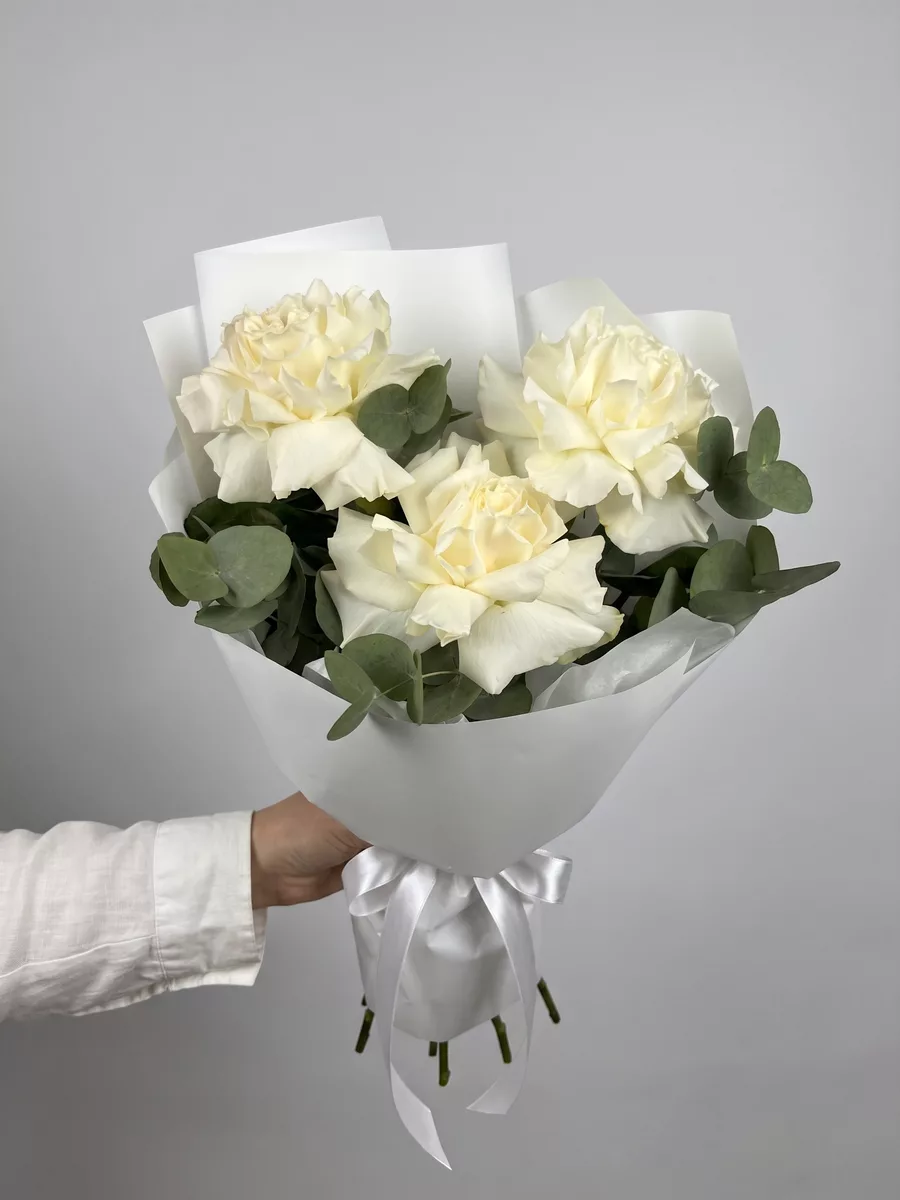
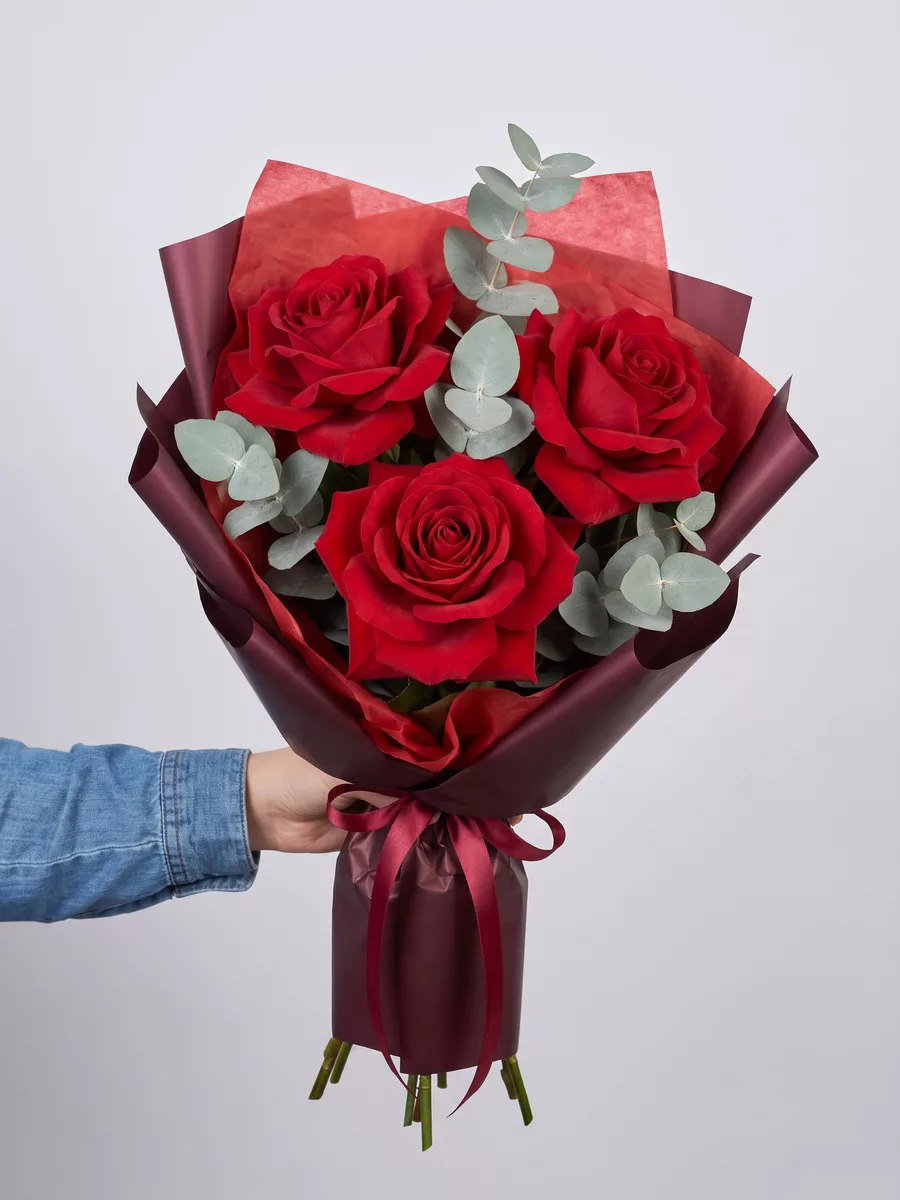
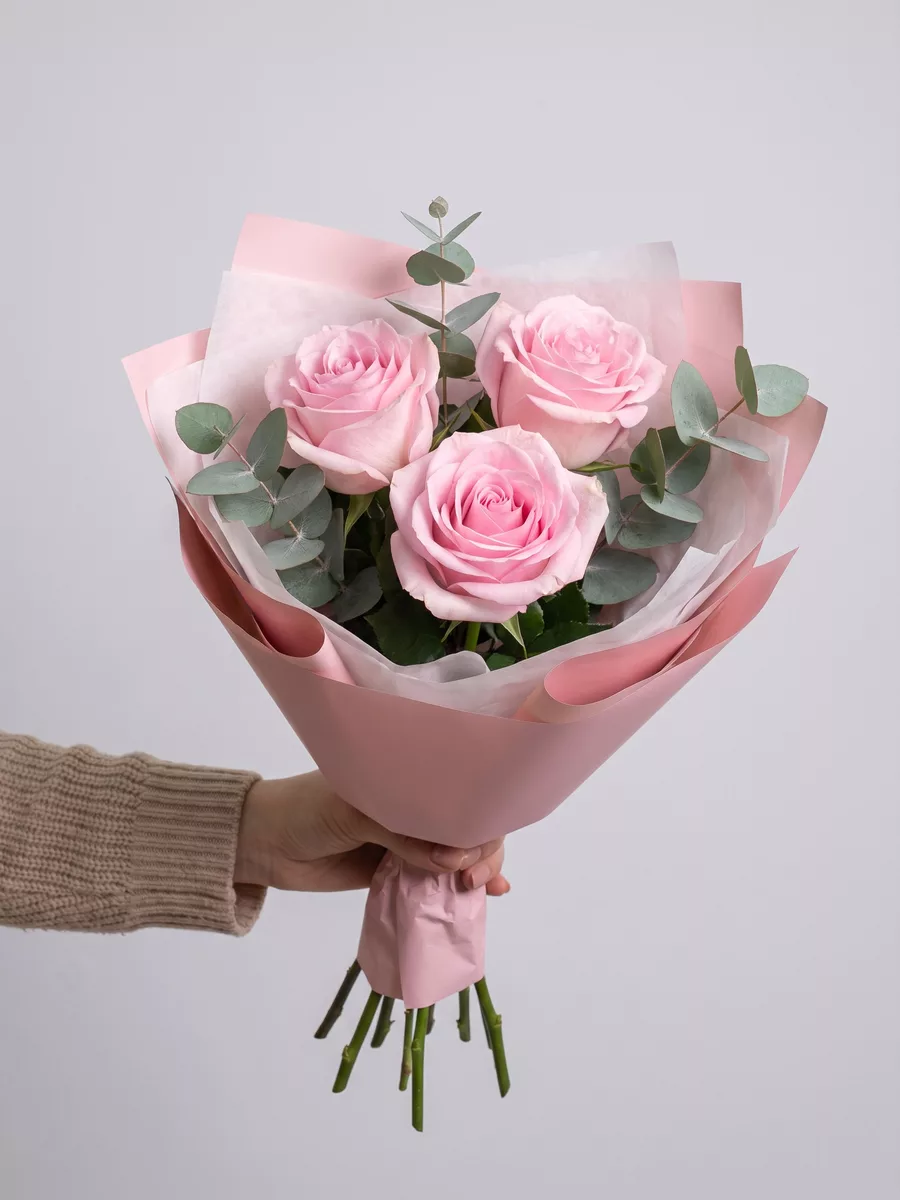
Bouquets we can deliver

Reading the Occasion Before You Choose the Flowers
Before you think about roses versus peonies, think about the person and the moment. Russian gifting culture is warm and expressive, and flowers carry clear social meaning. A birthday calls for abundance and colour. An anniversary leans toward elegance — long-stemmed roses, monochrome palettes, something that feels considered rather than cheerful. A new baby in the family traditionally receives pastel tones, soft whites and pale pinks or yellows, never dark or dramatic colours for that occasion.
If you are celebrating a professional achievement — a promotion, a graduation, a successful exam — Russians appreciate bouquets that look substantial and structured. A tight round bouquet of garden roses or a tall arrangement with lisianthus and eucalyptus reads as respectful and serious in the best way. It says you understood the scale of what they accomplished.
One custom that surprises many senders from outside Russia: flowers are almost always given in odd numbers. Even numbers are associated with grief and are left at memorials. This is not superstition so much as deeply embedded etiquette. A bouquet of five, seven, nine or eleven stems is perfectly normal and expected. When you are ordering and the florist offers you a count, always choose odd. If you are building a custom arrangement, mention this preference. Most florists working with international clients already know to follow this rule, but it is worth confirming so there is no awkward moment when the bouquet arrives.
Seasonal Flowers and What Travels Best to Luga
The Leningrad Oblast has a continental climate with cold winters and mild, sometimes rainy summers. Temperature matters enormously for cut flowers in transit. In January and February, when temperatures in the region regularly drop below minus ten degrees Celsius, certain varieties struggle. Thin-petalled flowers like anemones or delicate ranunculus can bruise in the cold even during a short drive. Roses, chrysanthemums, carnations and alstroemeria are hardier and hold up well in cold-weather delivery when properly wrapped.
Spring, from late March through May, is the most generous season for senders. Tulips are abundant, affordable and travel beautifully. Dutch and locally sourced tulips flood the Saint Petersburg wholesale market from February onward, which means they are genuinely fresh when they leave the shop. Hyacinths add fragrance but are more fragile — ask your florist to wrap them securely. Peonies arrive in late May and early June and are enormously popular in Russia. If your occasion falls in that window, peonies are an almost universally loved choice.
Summer brings sunflowers, lisianthus, garden roses and eustoma. These are ideal for warm-weather sending. Autumn is the season of chrysanthemums, dahlias and branches with berries or rosehips, which create rich, textured arrangements that suit the season perfectly. Whatever time of year you are ordering, describe the occasion and the recipient to your florist rather than naming a specific flower — a working florist will steer you toward what is freshest and most appropriate on that exact day.
Choosing by Budget When You Cannot See the Flowers
Ordering from abroad means you are trusting someone else's eyes. That is a reasonable concern, and the way to manage it is to describe what you want the bouquet to feel like rather than to list specific stems. Think in terms of impression: lush and full, simple and elegant, wild and garden-style, structured and formal. A good florist translates those descriptions into what is available and beautiful that day.
At a modest budget, a clean bouquet of five or seven spray roses with greenery like ruscus or pittosporum is genuinely lovely and not sparse. Spray roses have multiple blooms per stem, so even a smaller arrangement looks abundant. At a mid-range budget, you can move into large-headed garden roses, lisianthus mixed with eucalyptus, or a single-variety bouquet of premium tulips in season. These read as thoughtful and generous without being extravagant.
For a significant occasion — a milestone birthday, a major anniversary, a thank-you to someone who did something important for you — consider a hat-box arrangement or a large round bouquet of premium roses. Peonies at peak season, garden roses in blush or ivory, or a mixed arrangement with orchid stems all signal that you invested real thought. Adding a handwritten card in Russian, even a simple phrase like 'S dnyom rozhdeniya' for happy birthday, elevates the whole delivery. You can ask the florist to write it for you if you provide the message phonetically or in English and request a translation. Small details like this are remembered long after the flowers have faded.
Placing the Order from a Foreign Country Without Confusion
The mechanics of ordering internationally are simpler than most people expect. You will need the recipient's full address in Luga, including the apartment number and entrance number if they live in a multi-storey building. Russian apartment buildings often have several entrances numbered separately, and a delivery without the entrance number can cause delays. If you are not sure of the exact address, ask your recipient's friend or family member — it is perfectly acceptable to coordinate quietly before a surprise delivery.
You will also need a contact phone number for the recipient. Russian delivery practice almost always involves a call or message to the recipient before arrival, both to confirm they are home and to navigate the final steps in a town where some streets require local knowledge. This is not a spoiler for a surprise — the call typically happens only when the courier is minutes away, and most recipients are delighted rather than disappointed.
Payment from abroad is straightforward with international cards. When you place your order, specify the delivery date and the time window you prefer. Morning deliveries, roughly between nine and noon, are popular for birthdays. If you want the flowers to arrive before the recipient leaves for work or celebrations, order the evening before and schedule for first thing in the morning. Include any access notes — a gate code, a building intercom name, whether the building has a concierge — in the order comments. These small details make the difference between a smooth delivery and a frustrated courier standing outside a locked gate.
What Happens After Delivery: Care Instructions for Your Recipient
When flowers arrive in Luga, your recipient may or may not know how to care for them to get the longest possible vase life. If you are sending to someone who does not have much experience with fresh flowers, a short note with care instructions is a genuinely useful addition to the delivery. You can include this in the card message or ask the florist to add a printed care card.
The basics are universal but worth stating clearly. Cut flowers should have their stems trimmed at an angle, about two centimetres from the bottom, before being placed in water. Tap water in Luga is suitable, but room-temperature water is better than cold. Change the water every two days and re-trim the stems each time. Keep the bouquet away from direct sunlight, radiators and draughts — all of which shorten vase life significantly. In Russian apartments, which are often very warm in winter due to central heating, this last point is especially important.
Different varieties have different lifespans. Chrysanthemums and carnations routinely last ten to fourteen days with proper care. Roses last seven to ten days. Tulips, which many people underestimate, last five to seven days and actually continue to grow and open in the vase, which makes them charming to watch. Peonies last five to seven days and should be kept cool. Lisianthus is one of the longest-lasting cut flowers, often holding for two weeks. Knowing these timelines helps your recipient enjoy the flowers fully rather than assuming they are finished when the first petals drop.
Common Mistakes Senders from Abroad Make and How to Avoid Them
The most frequent mistake is ordering too late in the day without accounting for the time difference. Saint Petersburg is UTC plus three, which means it is three hours ahead of most of Western Europe and eight hours ahead of the eastern United States. If you are placing an order at what feels like a reasonable midday hour from your location, it may already be evening in Saint Petersburg. Always check the local time before assuming same-day delivery is possible.
The second common mistake is providing an incomplete address. Luga has streets where buildings look similar and house numbers are not always obvious from the road. An apartment number, an entrance number and a working phone number for the recipient are not optional extras — they are necessary for a smooth delivery. If you are not certain of the entrance number, the florist can call the recipient to confirm, but this removes the element of surprise.
A third mistake is choosing flowers based on personal preference rather than the occasion and the season. Sending tropical flowers like anthuriums or birds of paradise can feel disconnected from Russian gifting culture, where roses, tulips, peonies and garden flowers carry the most emotional resonance. These varieties are also sometimes less fresh when they arrive in a northern Russian town, having travelled further through the supply chain.
Finally, do not skip the card. A delivered bouquet without any message can feel anonymous, even slightly impersonal. Even a short line — 'Thinking of you from far away' or 'Wishing you a wonderful birthday' — transforms the flowers from a transaction into a genuine act of care. The card is what the recipient will read and re-read long after the petals have fallen.
Sending flowers to Luga from abroad is not complicated once you understand the geography, the timing and the small cultural details that make a delivery feel right rather than just correct. The distance between you and your recipient is real, but a well-chosen, freshly made bouquet that arrives on time and in full bloom closes that distance in a way that a message or a phone call simply cannot. Trust the florist with the creative choices, give them the details they need to deliver smoothly, and let the flowers do the rest.
Frequently asked questions
Can I order flowers for Luga delivery if I am in a completely different time zone?
Yes, absolutely. The key is to check the current time in Saint Petersburg, which is UTC plus three, before placing your order. If you are ordering from North America or Asia, your daytime may already be the next morning in Russia. For a guaranteed same-day delivery, place your order before early afternoon Saint Petersburg time. For a specific morning delivery, ordering the evening before is the safest approach.
Do I need to speak Russian to place an order or communicate with the florist?
No Russian is required. Turboflora works regularly with international clients and handles orders in English. If you want a card message written in Russian, simply provide the text in English and ask for a translation — the team will write it correctly. The only thing you need to supply is the recipient's address and phone number in full, which you can copy directly from a Russian contact.
Why do Russian bouquets always seem to have an odd number of flowers?
This is a long-standing cultural tradition across Russia and much of Eastern Europe. Even numbers of flowers are associated with memorial occasions and are placed at graves or given in condolence. For any celebratory or affectionate gift, odd numbers — five, seven, nine, eleven — are the norm. It is not considered strange to give a single flower either. When in doubt, always choose odd.
What is the best flower choice if I am sending to Luga in winter?
In winter, choose hardy varieties that travel well in cold temperatures. Roses, carnations, chrysanthemums and alstroemeria are all excellent choices. Avoid thin-petalled flowers like anemones or ranunculus, which can bruise in transit when temperatures drop below freezing. Tulips are available from February onward and travel well if wrapped properly. Describe the occasion to your florist and they will recommend what is freshest that day.
How do I make sure a surprise delivery stays a surprise in Luga?
Russian delivery practice involves a call or message to the recipient shortly before arrival, mainly to confirm they are home and to find the correct entrance. This typically happens when the courier is just a few minutes away, so the surprise is preserved until the door opens. To help keep it truly unexpected, you can note in your order that it is a surprise and ask the courier to avoid mentioning who sent it until the flowers are handed over.
Ready to send flowers?
Pick the city, choose the bouquet, and a local florist takes it from there.
Choose a city →