Sending Flowers to Mozhga from Abroad: A Practical Florist's Advice
You are somewhere far from Russia — perhaps in Berlin, Toronto, or Dubai — and someone you love is in Mozhga, a quiet city in the Udmurt Republic, waiting for a reason to smile. The distance feels enormous, but the gesture does not have to. Ordering flowers across that gap is simpler than most people expect, and getting it right is mostly about knowing a few things in advance: the local climate, the right timing, what Russians actually love to receive, and how to write a card that lands the way you mean it.
Why Mozhga Is Different from Sending to Moscow or Saint Petersburg
Mozhga sits in the Udmurt Republic, roughly 1,400 kilometres east of Moscow, and its climate is genuinely continental. Winters are long and cold, often dropping well below minus twenty Celsius, while summers are warm but short. That matters for flowers because a bouquet travelling through cold air needs to be assembled with hardier stems — roses and chrysanthemums handle the cold far better than, say, open garden peonies or delicate sweet peas in January.
The city itself is smaller and more intimate than the Russian capitals. People here tend to know each other, and a flower delivery arriving at someone's workplace or apartment building carries a social weight that it might not in an anonymous big city. The recipient will almost certainly be asked about the flowers by neighbours or colleagues, so presentation matters. A well-wrapped bouquet with a visible, thoughtful card says something about the sender before a single word is read aloud.
For someone ordering from abroad, the key practical difference is time zones. Mozhga runs on UTC plus four, which means it is three hours ahead of Moscow. If you are in New York, you are nine hours behind Mozhga. Placing your order in the morning your time can still mean same-day delivery if you do it early enough, but the window closes faster than you might think. Knowing this before you sit down to order saves frustration and ensures the bouquet arrives when the recipient is actually home to receive it.
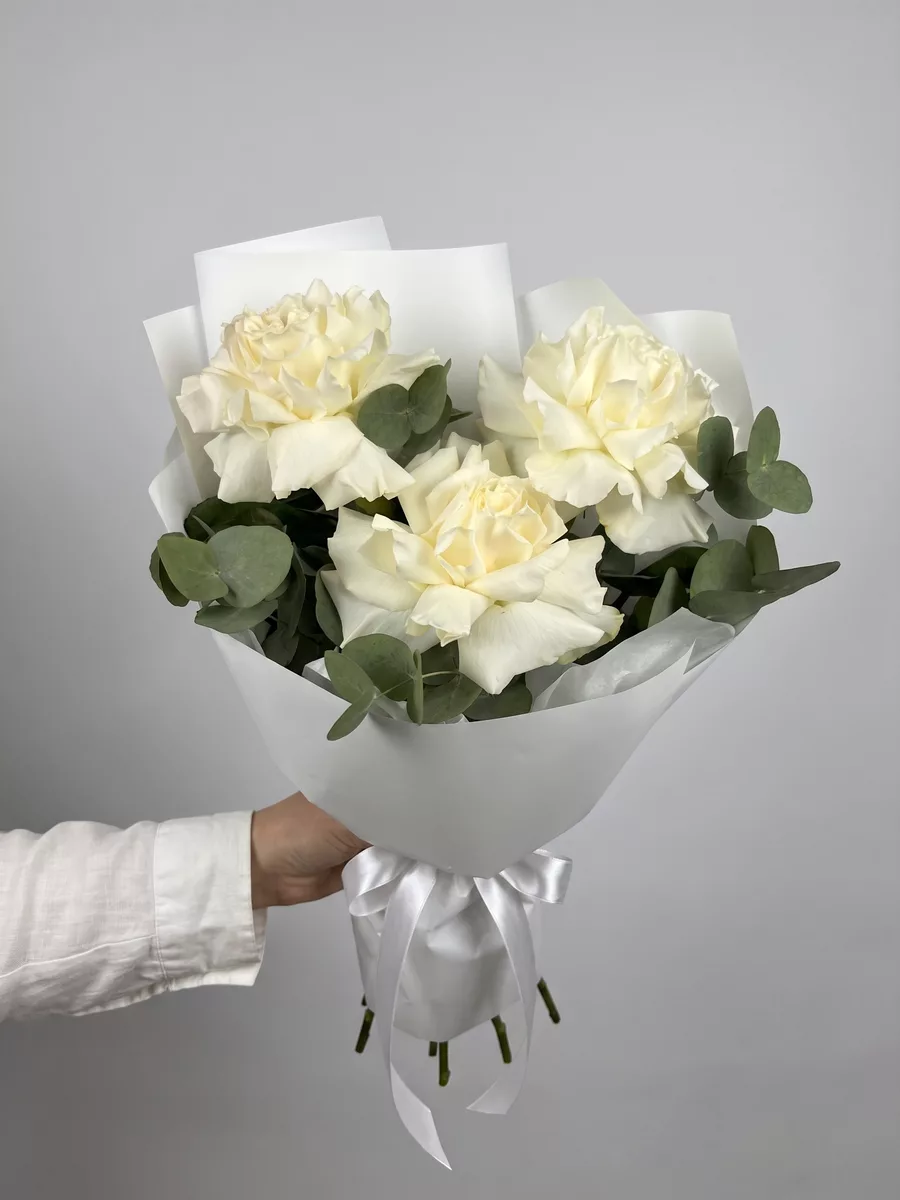
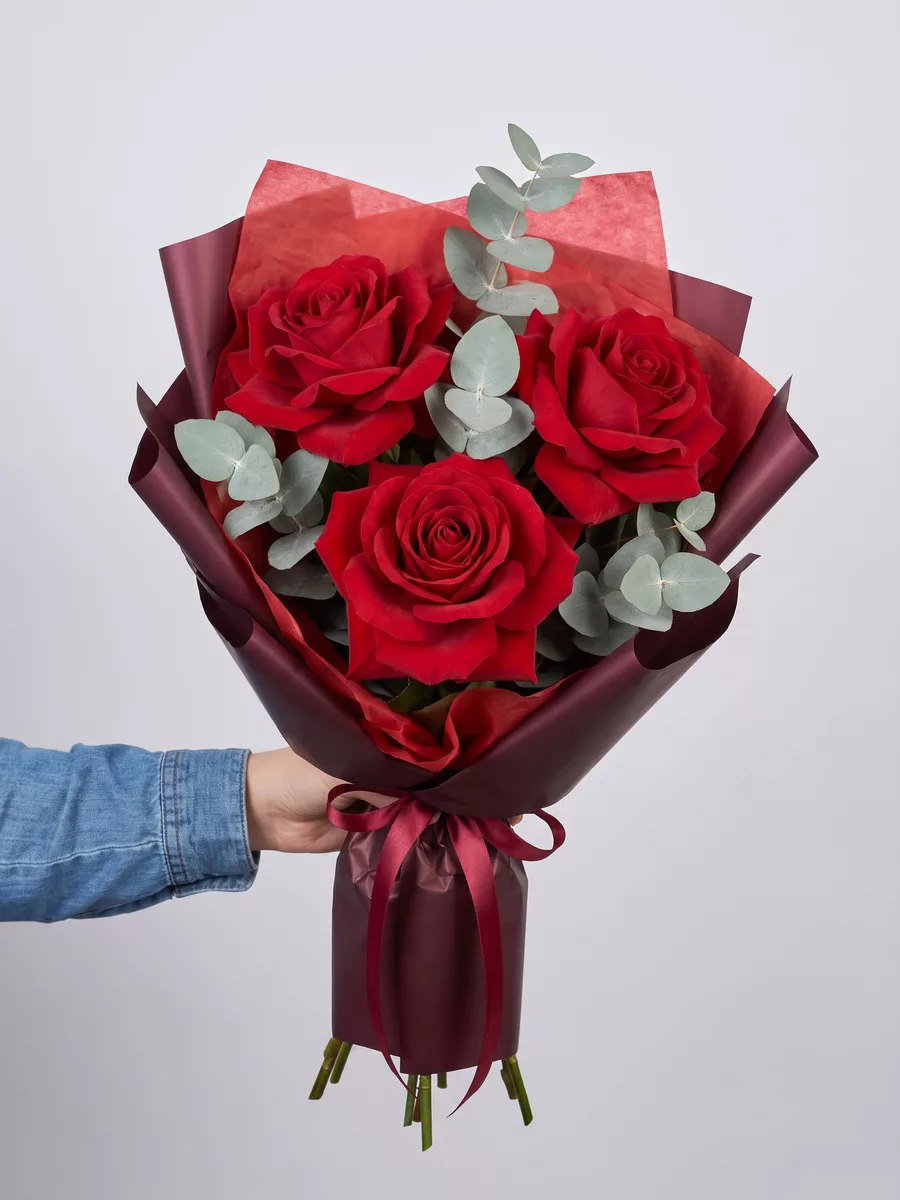
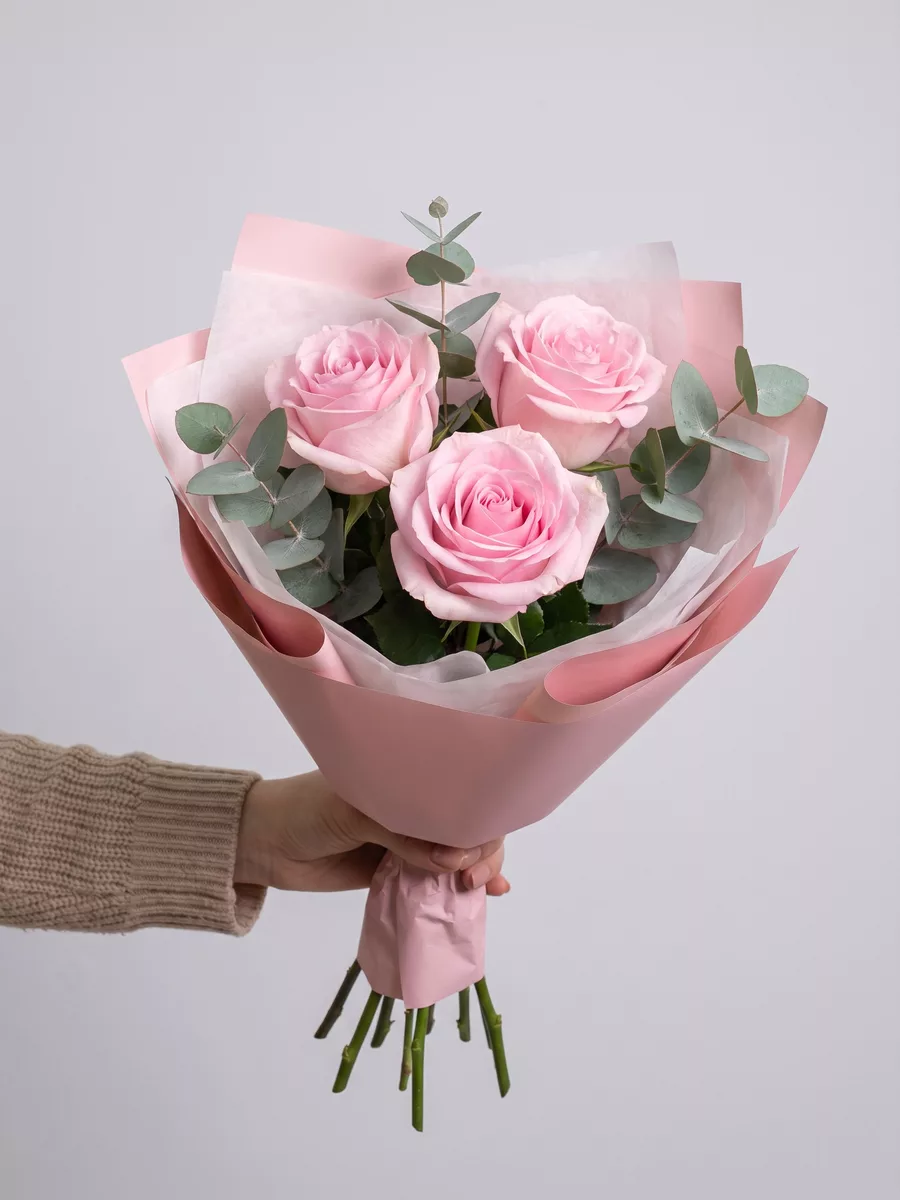
Bouquets we can deliver

Choosing Flowers for the Person, Not Just the Occasion
The best starting point is always the recipient, not the calendar. Think about what they have in their home, what colours they wear, whether they are the type to put flowers in a grand vase on the dining table or tuck a small bunch onto a windowsill. These details shape the bouquet more usefully than any generic occasion guide.
For a woman who appreciates classic elegance, spray roses combined with white lisianthus and silvery eucalyptus create something that feels considered rather than rushed. Lisianthus — sometimes called eustoma — is widely available in Russia year-round and holds beautifully in a vase for ten days or more. It is also relatively unknown to many recipients outside major cities, so it feels special without being theatrical.
For a man, which is a common request from abroad around birthdays or professional milestones, a structured arrangement of large-headed sunflowers with solid green foliage reads as warm and direct rather than fussy. In Russian culture, giving flowers to men is entirely normal, particularly for birthdays and graduations, so there is no awkwardness to worry about.
For a child or a younger recipient, bright gerberas in mixed colours — coral, yellow, magenta — are reliably cheerful and sturdy enough to survive excited handling. They last about a week in fresh water and do not require any special care, which matters when the recipient is not experienced with flowers.
If you genuinely do not know the person's taste, a monochromatic bouquet in soft blush tones — pale pink roses, white ranunculus when in season, cream-coloured freesia — is almost universally flattering and avoids the risk of clashing with interiors.
Navigating Russian Flower Customs Without Getting It Wrong
Russian flower-giving has a few conventions that are not obvious from the outside, and getting them right shows real care. The most important one is the number of stems. In Russia, even numbers of flowers are traditionally associated with funerals and mourning, so bouquets for celebrations and gifts always contain an odd number of stems — three, five, seven, nine, eleven, and so on. This is taken seriously across generations and regions, including in smaller cities like Mozhga. When you place an order, any reputable florist will already know this, but it is worth confirming.
Colour associations are softer than the number rule but still worth knowing. Yellow flowers carry a mild superstition in some parts of Russia — some older recipients associate them with separation or bad luck. This is not universal, and many younger Russians find it entirely outdated, but if you are sending to someone over fifty or to a more traditional family, it is safer to lean toward pinks, reds, whites, or purples.
Wrapping and packaging carry meaning too. Russians expect flowers to arrive beautifully dressed — kraft paper, fabric, or cellophane with a coordinated ribbon is standard. An unwrapped bouquet feels unfinished, almost rude, even if the flowers themselves are exceptional. The card is equally important. A short handwritten-style message, even if it is typed and printed, should feel personal. Avoid generic phrases. Write the recipient's name, mention something specific, and sign with your own name. In a city where everyone knows everyone, a card that feels genuinely personal is remembered long after the flowers have faded.
Timing Your Order Across Time Zones and Seasons
The time zone gap is the single most common source of missed deliveries for international senders. Mozhga operates on UTC plus four, so if you are in London, the city is already seven hours ahead of you. By the time you wake up and think about ordering, it may already be mid-afternoon in Mozhga. Planning the order the evening before, your local time, is almost always the safer approach.
Season affects both what is available and how the flowers travel. In deep winter — December through February — the cold outside is actually an advantage for hardy varieties like roses, alstroemeria, and chrysanthemums, which can handle brief exposure to cold air during the final delivery steps without wilting. The problem in winter is more about the transition from cold outdoor air to a warm heated apartment, which can cause condensation on petals. Good packaging minimises this, but it is worth noting that winter bouquets benefit from being placed in water as soon as they arrive.
Spring, particularly March, is the busiest flower season in Russia. International Women's Day on the eighth of March is the largest flower-giving occasion in the country — larger than Valentine's Day by a significant margin. Tulips are the iconic flower of this holiday, and demand across Russia is enormous. If you are planning a March delivery, order at least three to four days in advance and be specific about the delivery time window you need.
Summer brings the widest variety, including garden roses and locally grown sunflowers, but heat becomes a factor. Flowers delivered in July or August need to be moved into cool water quickly, and the recipient should keep them away from direct sunlight and radiators.
Budget Ranges and What Each Level Actually Gets You
Thinking in budget tiers is genuinely useful when ordering from abroad, because it sets realistic expectations about size, variety, and presentation — not just the number of stems.
At the entry level, you can expect a neat, single-variety bouquet of seven to nine stems. This might be a clean bundle of spray roses in one colour, wrapped simply but attractively. It is a real gesture, not a token, and it works well for a thank-you, a get-well wish, or a casual birthday acknowledgement. The flowers will be fresh and last well, but the arrangement will be straightforward rather than layered.
The mid-range opens up considerably. At this level, a florist can mix two or three complementary varieties — perhaps standard roses with waxflower and ruscus foliage, or alstroemeria with lisianthus and a few stems of ornamental greenery. The bouquet gains visual depth, and the wrapping becomes more considered. This is the level that photographs well and impresses colleagues when delivered to a workplace.
At the higher end, you move into structured, voluminous arrangements. Think fifteen or more stems across four or five varieties, presented in a hat box or with elaborate fabric wrapping. Seasonal additions like ranunculus in spring or dahlias in late summer become possible. These are the bouquets that get kept in the vase until the very last stem fades, and that the recipient describes to friends for weeks afterward.
Whichever level you choose, the emotional weight of the gesture comes from the timing, the card, and the fact that someone cared enough to organise it from the other side of the world.
Giving Instructions That Guarantee a Smooth Delivery
When ordering from abroad, the delivery address is your most important input, and it needs to be complete in a way that works for Russian postal conventions. A Russian address reads in the opposite order from a Western one: it starts with the country, then the region, then the city, then the street, then the building number, and finally the apartment number. For Mozhga, you would write something like: Russia, Udmurt Republic, Mozhga, then the street name and building details.
Building details in Russian cities can be more complex than a simple street number. Many apartment buildings have a corpus number — a secondary building identifier — as well as a pod'ezd, which is the entrance number, and an apartment number. If you have all of these from the recipient, include them. A delivery driver arriving at a large Soviet-era residential block without an entrance number can face real difficulty.
It is also worth specifying a delivery window rather than an exact time. A two-hour window — say, between noon and two in the afternoon — is realistic and gives the logistics room to work. If the recipient will not be home, think about whether a neighbour, a concierge, or a workplace address might be more reliable. In Russia, leaving flowers with a trusted neighbour is entirely normal and not considered intrusive.
For the card message, you can write in English if you prefer — the florist will transcribe it as written, and many recipients in Russia have at least some English. If you want the message in Russian, write it out phonetically or ask the florist to translate a simple phrase. Keep the message warm and direct. A single sentence that says exactly what you mean will always land better than three careful paragraphs.
Helping the Recipient Keep the Flowers Beautiful
The longest-lasting bouquets are the ones where the recipient knows what to do in the first ten minutes. Since you are the one ordering, you are also the person best placed to pass along a few simple tips — either through the card or a separate message.
The first step when a bouquet arrives is to cut the stems at an angle, about two centimetres from the bottom, under running water or while submerged in a bowl. This removes any air bubbles that have formed in the stem and allows the flower to drink immediately. Using a sharp knife rather than scissors causes less stem damage and extends vase life noticeably.
Water temperature matters more than most people realise. Most cut flowers prefer cool to lukewarm water, not cold and not warm. The exception is bulb flowers like tulips, which prefer cold water and a cool room. Roses, lisianthus, and chrysanthemums all do well in cool water changed every two days. Alstroemeria is one of the longest-lasting cut flowers available — it regularly reaches twelve to fourteen days in a clean vase with fresh water.
Placement in the room is the other major factor. Flowers should sit away from direct sunlight, away from heating radiators, and away from fruit bowls. Ripening fruit releases ethylene gas, which accelerates wilting in cut flowers significantly. A spot on a windowsill in winter is usually fine since the glass keeps the immediate air cool, but in summer the same spot can become too warm by midday.
Removing spent blooms as they fade allows the remaining stems to draw water more efficiently and keeps the arrangement looking intentional rather than neglected. Even a bouquet past its peak can look lovely if the tired flowers are gently removed and the remaining stems are rearranged.
Sending flowers to Mozhga from the other side of the world is not a complicated act, but it is a meaningful one. The recipient will know that you navigated time zones, figured out an address format you had never used before, and thought carefully about what they would love to find at their door. That effort is visible in the bouquet before it is even unwrapped. Choose for the person, order with enough lead time, write something true on the card, and the distance between you will feel, for a moment, much smaller than it is.
Frequently asked questions
Can I order flowers for Mozhga delivery if I do not speak Russian?
Yes, entirely. You can place your order in English, write your card message in English, and provide the address in the standard Russian format — Turboflora handles the rest. If you need help formatting the address correctly, the order process guides you through each field so nothing is missed.
How far in advance should I order for a specific delivery time in Mozhga?
For a same-day delivery, place your order before noon Mozhga time, which is UTC plus four. For major occasions like International Women's Day on March 8th, three to four days in advance is strongly recommended. For all other dates, ordering the evening before your local time is the safest approach given the time zone difference.
What flowers are available in Mozhga in winter?
Roses, chrysanthemums, alstroemeria, lisianthus, and carnations are reliably available year-round, including through the coldest months. Tulips are also available from January onward. Seasonal varieties like peonies and ranunculus are not available in winter but return in spring. A florist can advise on the best current options when you order.
Is it acceptable to send flowers to a man in Russia?
Completely normal and widely practised. Russian men regularly receive flowers for birthdays, graduations, professional achievements, and other milestones. Sunflowers, large-headed roses, and bold monochromatic arrangements are popular choices. The same odd-number rule applies — always an odd number of stems for any celebratory occasion.
What happens if the recipient is not home when the flowers arrive?
Specify a delivery window when you order and confirm with the recipient that they will be available. If that is not possible, a workplace address is often more reliable for daytime deliveries. Leaving flowers with a named neighbour is also a common and accepted practice in Russian apartment buildings — just note this preference in your delivery instructions.
Ready to send flowers?
Pick the city, choose the bouquet, and a local florist takes it from there.
Choose a city →