Sending Flowers to Myski from Abroad? Here Is Everything That Matters
Myski sits in the Kemerovo region of Siberia, a city shaped by coal mining and close community ties, where a bouquet arriving at someone's door carries real weight. If you are calling or messaging from Germany, Canada, Israel or anywhere else outside Russia, you already know the feeling — you want to mark the moment properly, but the distance makes it feel uncertain. The good news is that sending flowers to Myski from abroad is entirely straightforward when you understand a few practical details about timing, the local climate, Russian gifting customs and what actually survives the journey to the door looking its best.
Why Myski Is Different from Sending Flowers to a Big City
Most people ordering flowers internationally picture Moscow or Saint Petersburg — cities with dense logistics networks and florists on every corner. Myski is a smaller industrial city in Siberia with a population that values personal gestures all the more because grand commercial displays are less common there. A bouquet landing on a doorstep in Myski feels like a significant event, not just a routine delivery, and recipients often talk about it for days.
The geography matters practically too. Myski sits in a continental climate zone where winters are genuinely severe — temperatures can drop well below minus twenty Celsius from November through March. That affects which flowers hold up in transit and how they should be packaged. Delicate open blooms like garden roses with fully unfurled petals can suffer in those conditions, while tighter buds, spray chrysanthemums, alstroemeria and sturdy carnations travel far better in cold weather.
Summer in Myski brings the opposite challenge: July and August can push temperatures above thirty Celsius, which shortens vase life significantly for any flower left in a warm entrance hall. When you order for summer delivery, choosing flowers with naturally longer vase life — lisianthus, alstroemeria, statice — gives the recipient more enjoyment after the initial surprise fades. Knowing the season you are ordering for is the single most useful thing you can tell the florist at the time of placing your order.
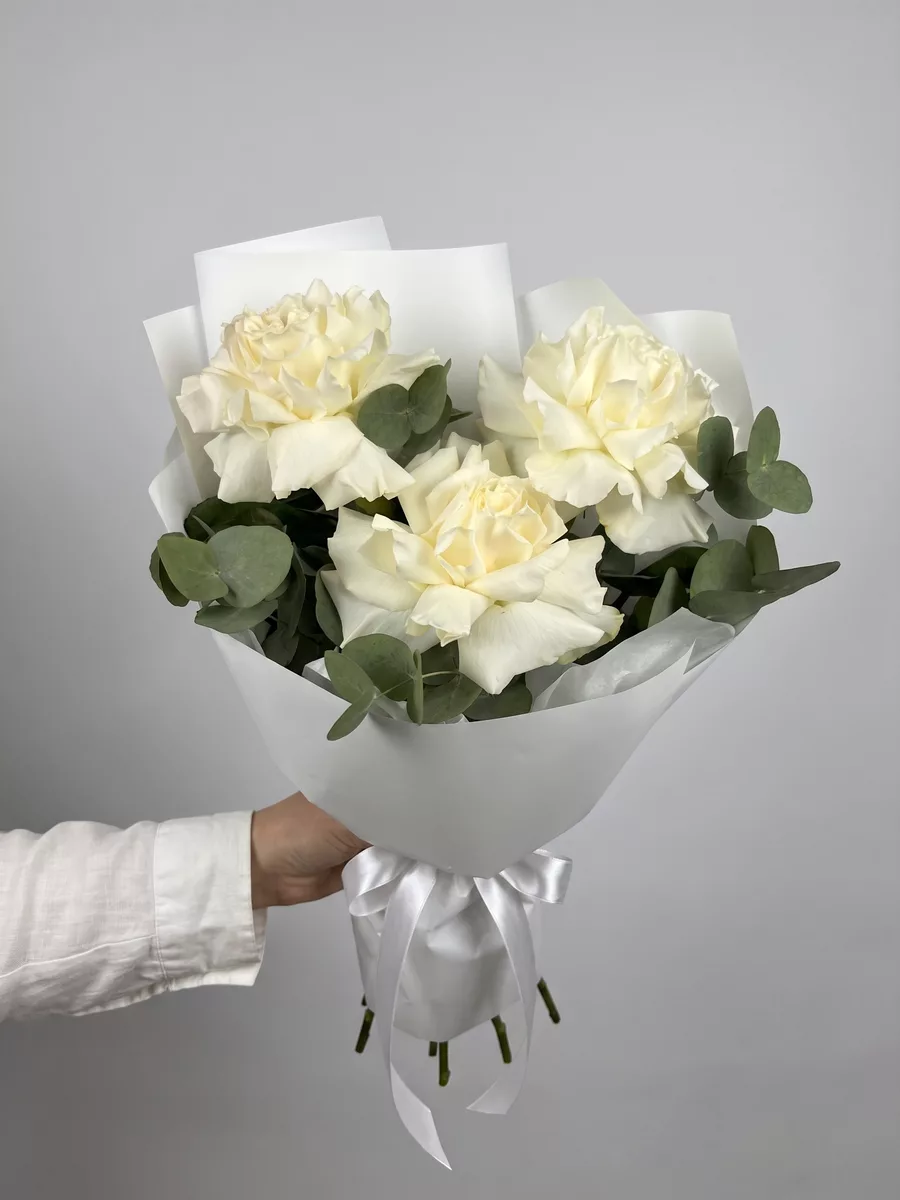
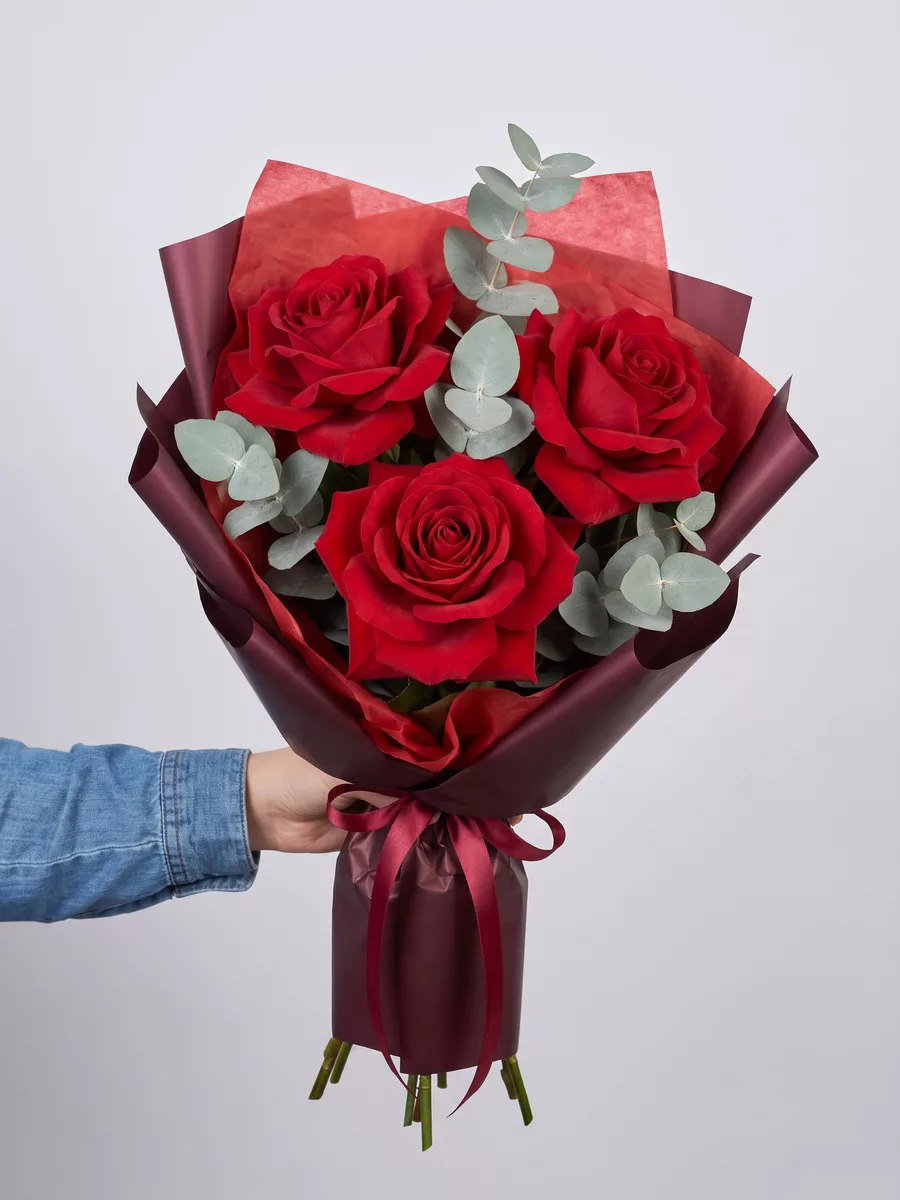
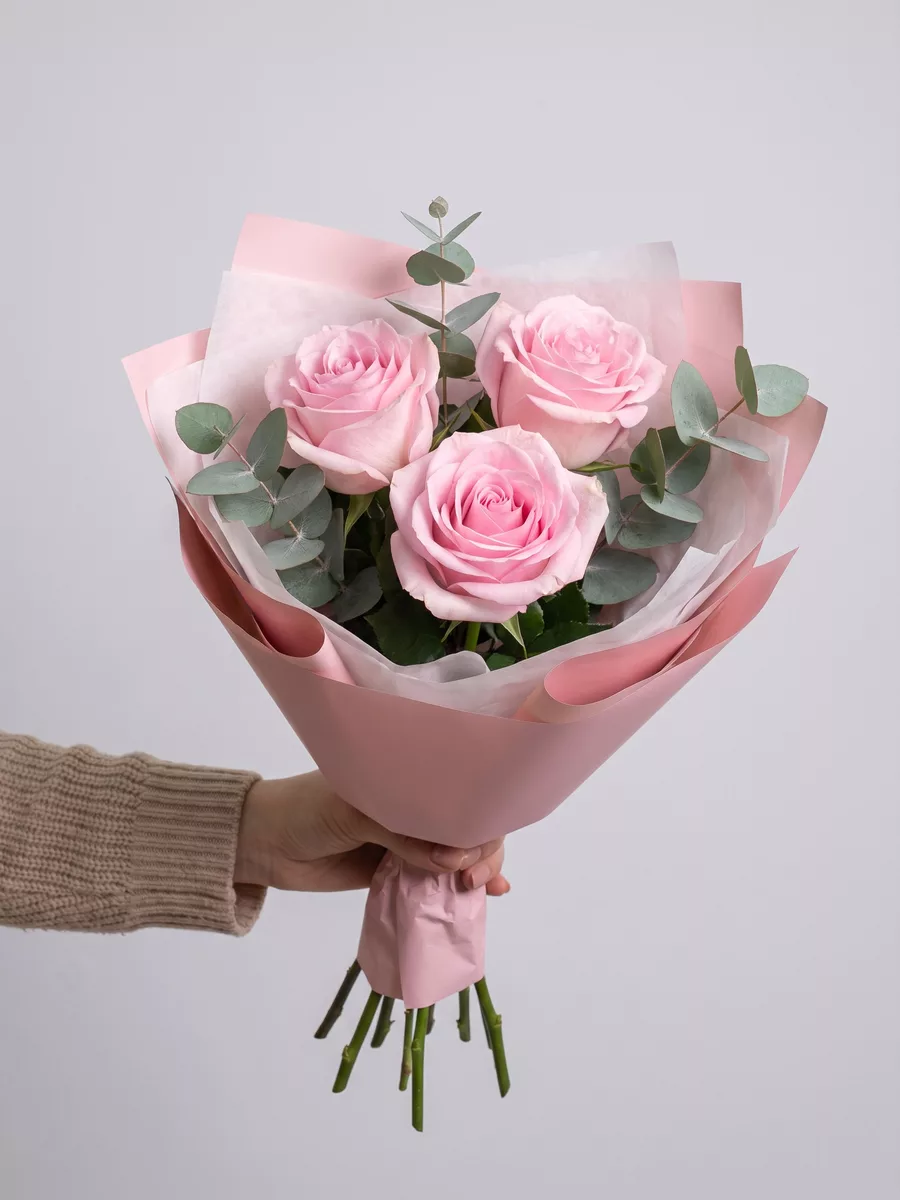
Bouquets we can deliver

Timing Your Order Across Time Zones
Myski operates on Kemerovo time, which is UTC plus seven. If you are placing an order from Western Europe, that means Myski is four to six hours ahead of you depending on your country and the time of year. From North America the gap stretches to ten hours or more. This is not a problem as long as you account for it consciously rather than assuming same-day delivery works on your local clock.
Turboflora delivers fresh flowers across Russia within one to two hours of an order being confirmed. That window applies to Myski as it does elsewhere. The practical point for an international sender is to place your order early enough in the Myski day — ideally before midday Kemerovo time — so that the delivery lands while the recipient is awake and at home to receive it. A bouquet left outside a door in Siberian winter even for thirty minutes can suffer, so timing the arrival to coincide with the recipient being present is worth the small effort of calculating the time difference.
For significant dates like birthdays, anniversaries or graduations, placing the order the evening before your local time almost always lands it at a sensible hour in Myski. For International Women's Day on the eighth of March — the biggest flower-giving day in Russia by far — ordering several days in advance is genuinely wise, as demand across Siberia spikes sharply and you want your specific flower choices confirmed rather than substituted.
Russian Gifting Customs an International Sender Should Know
Russia has a few flower customs that differ from Western European or North American norms, and knowing them prevents accidental awkwardness. The most important one: always send an odd number of flowers. Even numbers of flowers in Russia are traditionally associated with mourning and are placed at graves. A bouquet of eleven roses, thirteen tulips or twenty-one mixed stems signals celebration. A bouquet of ten or twelve signals the opposite, no matter how beautiful it is. This rule is taken seriously across generations and regions, including Siberia.
Yellow flowers carry mixed associations in Russian culture. Older generations sometimes link yellow roses or yellow tulips with separation or bad luck in relationships. This belief is not universal and younger recipients often do not share it, but if you are sending to someone over fifty or to a romantic partner, it is safer to anchor the bouquet in white, pink, red or coral tones and use yellow only as a small accent if at all.
Wrapping style matters more than many international senders expect. In Russia, flowers are typically presented in visible, often elaborate wrapping — kraft paper, organza, or layered tissue — rather than the stripped-back minimalist style common in Scandinavia or Japan. A beautifully wrapped bouquet signals that care went into the presentation, not just the flower selection. Russians also frequently display the bouquet in the wrapping for some time before moving it to a vase, so the outer presentation is genuinely part of the gift.
Choosing Flowers for the Person, Not Just the Occasion
The occasion gives you a starting point, but the person receiving the flowers is the real brief. A woman in her sixties who has spent her life in Siberia and loves her dacha garden will respond differently to a bouquet than her daughter in her thirties who follows lifestyle trends. Think about what the recipient's home looks like, what they wear, whether they are expressive or understated — flowers should feel like they came from someone who knows them.
For a mother or grandmother, lush and generous works beautifully: spray roses combined with alstroemeria, eucalyptus branches and a few stems of waxflower create a bouquet that feels abundant without being overwhelming. These combinations also hold well in a vase for ten days or more, which matters when the recipient lives alone and wants to enjoy the flowers slowly.
For a younger woman celebrating a birthday or a new job, something more architectural and modern often lands better — long-stemmed single-variety bouquets of lisianthus in deep purple, or ranunculus in blush pink layered with Italian ruscus, feel current and considered. For a man — and men in Russia do receive flowers, particularly for professional milestones and birthdays — a structured arrangement of anthuriums, tropical foliage and birds of paradise reads as bold and respectful rather than sentimental. If you are unsure, a classic red or white rose bouquet is never wrong in Russia; it is not a lazy choice but a culturally meaningful one that any recipient will understand immediately.
What to Write on the Card When You Are Far Away
The card message is where the distance either disappears or becomes awkward, and it deserves as much thought as the flowers themselves. International senders sometimes write very short messages because they feel uncertain about language — but a warm, specific sentence in plain language means far more than a formal phrase copied from a website. Write what you would say if you were standing in the room.
If you are writing in English and the recipient reads English, keep it natural and personal. If the recipient's Russian is stronger than their English, a short transliterated phrase or a simple sentence in Russian script can be arranged through the order notes — you do not need to be fluent, just genuine. Something like acknowledging the specific occasion, naming a shared memory or expressing pride in something the recipient has achieved will be read and reread long after the flowers have faded.
Avoid generic phrases like 'wishing you all the best' as standalone messages — they read as filler. Instead, anchor your message to something real: 'I remember you telling me about this birthday last summer and I did not want to let it pass without marking it properly.' That kind of specificity crosses every cultural and linguistic barrier cleanly. Keep the card message to two or three sentences. Russian recipients appreciate warmth and directness in equal measure, and a card that is too long can feel like it is compensating for something rather than simply connecting.
Seasonal Flower Choices and Vase Life in a Siberian Home
Understanding what is in season helps you choose flowers that arrive at their best rather than flowers that were forced and will fade quickly. In late autumn and winter — October through February — the most reliable choices for Myski deliveries are flowers that travel well in cold and have strong vase life: alstroemeria, spray chrysanthemums, carnations, hypericum berries and lisianthus. These are not second-choice flowers; arranged with care and good foliage, they create bouquets that last two weeks or more, which is particularly meaningful in winter when going out to buy replacements is less appealing.
Spring brings tulips, which are enormously popular across Russia and especially beloved for International Women's Day and early birthdays. Dutch tulips in solid colours — deep purple, bright red, soft white — are the most reliably beautiful. Mixed pastel tulip bouquets suit recipients who appreciate something softer. By late spring, peonies arrive and are perhaps the most emotionally resonant flower in Russian culture: lush, fragrant and associated with celebration and abundance.
Summer allows for a wider palette — garden roses, sunflowers, dahlias and gerbera all travel well in moderate temperatures and look spectacular in a Siberian home where summer light is long and golden. Autumn is the season for warm tones: terracotta roses, burgundy chrysanthemums, orange gerbera and dried elements like pampas grass or preserved eucalyptus that last indefinitely. Matching your flower choice to the season is not just practical — it tells the recipient that someone thought carefully about the moment.
How to Place the Order Smoothly from Outside Russia
Placing an international order does not require you to speak Russian or navigate a complicated process. The key information you need to have ready is the recipient's full name, their complete address in Myski including the apartment number and building entrance code if there is one, and a working phone number for the recipient. In Russia, delivery drivers typically call ahead to confirm they are arriving, so the phone number is not optional — it is how the delivery actually reaches the door rather than stopping at the building entrance.
If you are uncertain about the address format, the safest approach is to write the address exactly as the recipient would write it themselves — in Russian Cyrillic if you have it, or in transliterated Latin letters if that is all you have. A full Myski address includes the city name, street name, building number, apartment number and postal code. Missing any of these elements can cause delays, particularly in a city where building complexes often share similar street names.
Payment from abroad is handled straightforwardly through international card options. You do not need a Russian bank account or a Russian phone number to complete the order. If you want to add a personalised card message in Russian but cannot write Cyrillic yourself, include the message in your order notes in English and specify that you would like it translated — this kind of request is common and handled without fuss. The entire process from placing the order to the flowers arriving at the door in Myski takes one to two hours once the order is confirmed.
Sending flowers to Myski from abroad is one of the most direct ways to close a distance that geography has opened. The city is far from the capitals, the winters are real, and the people there know the difference between a gesture that was thought through and one that was not. Choose flowers for the season and the person, get the timing right across the time zones, keep the card message honest and specific, and remember the odd number rule. Everything else — the packaging, the delivery, the call ahead to make sure someone is home — is taken care of. What the recipient remembers is that someone, thousands of kilometres away, decided the moment was worth marking properly.
Frequently asked questions
Which flowers survive Myski's winter temperatures during transit?
Tight buds handle cold transit better than open blooms. Spray chrysanthemums, alstroemeria, carnations and hypericum berries all cope well with Siberian winter conditions. Ask your florist to use insulated wrapping and avoid fully open garden roses or hydrangeas for November through March orders. Lisianthus is another reliable cold-season choice — the buds travel firmly and open gradually once the recipient brings them inside.
Does the coal mining culture in Myski affect how bouquets are received compared to larger Russian cities?
Yes, noticeably. Myski is a close-knit industrial community where personal gestures carry more weight precisely because large commercial displays are uncommon. A well-composed bouquet arriving at someone's door is a genuine event there. Leaning toward generous, warm arrangements — sunflowers, bright gerberas, full seasonal combinations — suits the local character better than minimalist or purely decorative styles.
What combinations work well for a summer delivery to Myski given the heat?
July and August push temperatures above thirty Celsius in Myski, so avoid delicate single-stem flowers that wilt quickly in warm entrance halls. Alstroemeria, statice and lisianthus hold up longest. Combining one of these with a textural element like waxflower or solidago gives the arrangement visual interest while keeping vase life realistic across several days of summer warmth.
How does the UTC plus seven time zone affect when I should place my order from Western Europe?
Myski runs four to six hours ahead of Western Europe depending on your country. A florist preparing a morning delivery in Myski may need the order confirmed the previous evening your time. Place orders at least a day ahead and account for that gap when choosing a delivery window — what feels like early afternoon to you in Berlin or Paris is already evening in Myski.
Can I include a message in a language other than Russian for a Myski delivery?
Most Turboflora florists can transcribe or transliterate a short message, but keeping it brief helps. A message in your own language accompanied by a Russian translation you write yourself — even roughly — adds a personal touch the recipient will appreciate. If you are uncertain, a simple warm phrase in Russian is easy to prepare and means far more to someone in Myski than a generic printed card.
Ready to send flowers?
Pick the city, choose the bouquet, and a local florist takes it from there.
Choose a city →