Sending Flowers to Nizhnyaya Salda from Abroad: What You Need to Know
You are somewhere in Europe, North America or Central Asia, and you want a bouquet to arrive at a door in Nizhnyaya Salda — a quiet industrial town in the Sverdlovsk Oblast of the Urals. The distance feels enormous, but the gesture is simple: you want someone there to feel remembered. Getting that right from thousands of kilometres away takes a little local knowledge, and that is exactly what this article gives you.
What Nizhnyaya Salda Is Like and Why It Matters for Your Order
Nizhnyaya Salda sits in the middle Urals, roughly 170 kilometres north of Yekaterinburg. It is a small town of around 17,000 people, not a regional capital, which means flower delivery logistics there are different from sending to Moscow or Saint Petersburg. Understanding the geography helps you set the right expectations before you place your order.
The town experiences a true continental climate. Winters are long and genuinely cold, with temperatures regularly dropping below minus 20 degrees Celsius from November through February. Summers are short but warm, often reaching 25 to 28 degrees in July. These temperature swings matter enormously for cut flowers in transit, because a bouquet of open garden roses travelling through a frozen Ural winter needs protection that a summer delivery simply does not require.
Because Nizhnyaya Salda is not a major hub, delivery is routed through Yekaterinburg and then outward. This is not a problem — it is simply the reality of the route. Planning your order a day ahead rather than at the last minute gives the arrangement the best chance of arriving in peak condition. If you are ordering for a specific occasion such as a birthday or anniversary, placing the order the evening before from your time zone is usually the safest approach. Your recipient will not know any of this; they will only see the flowers at the door.
Bouquets we can deliver
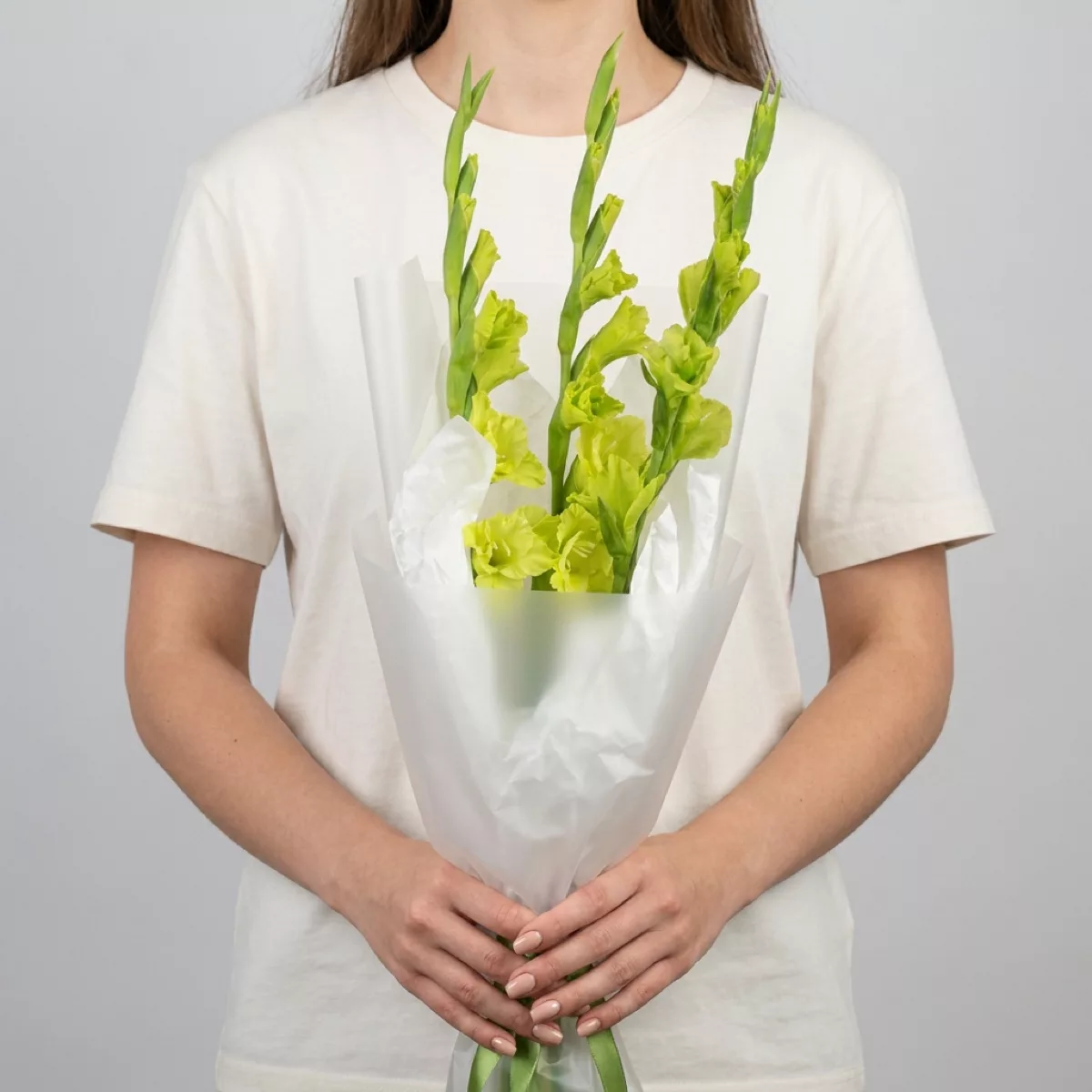
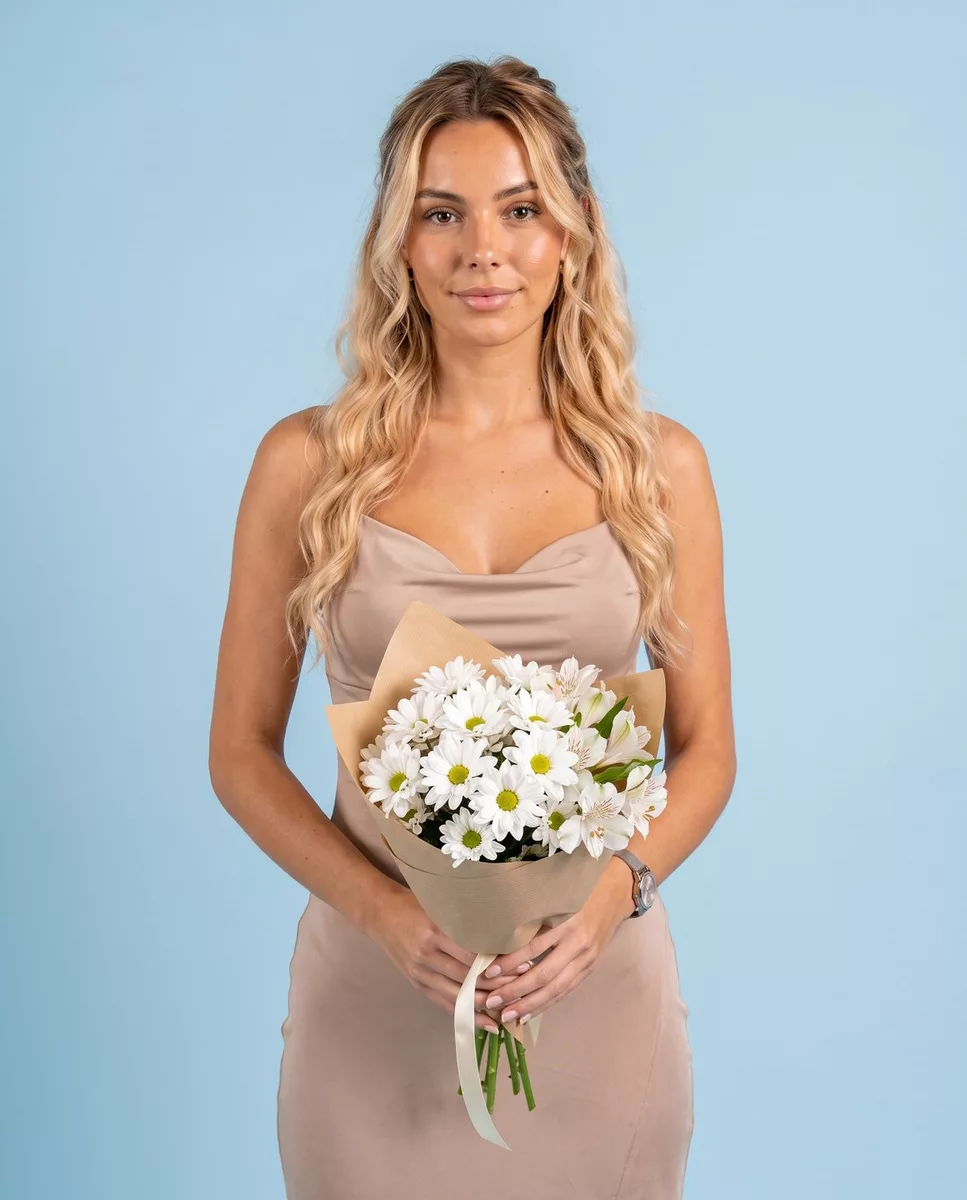
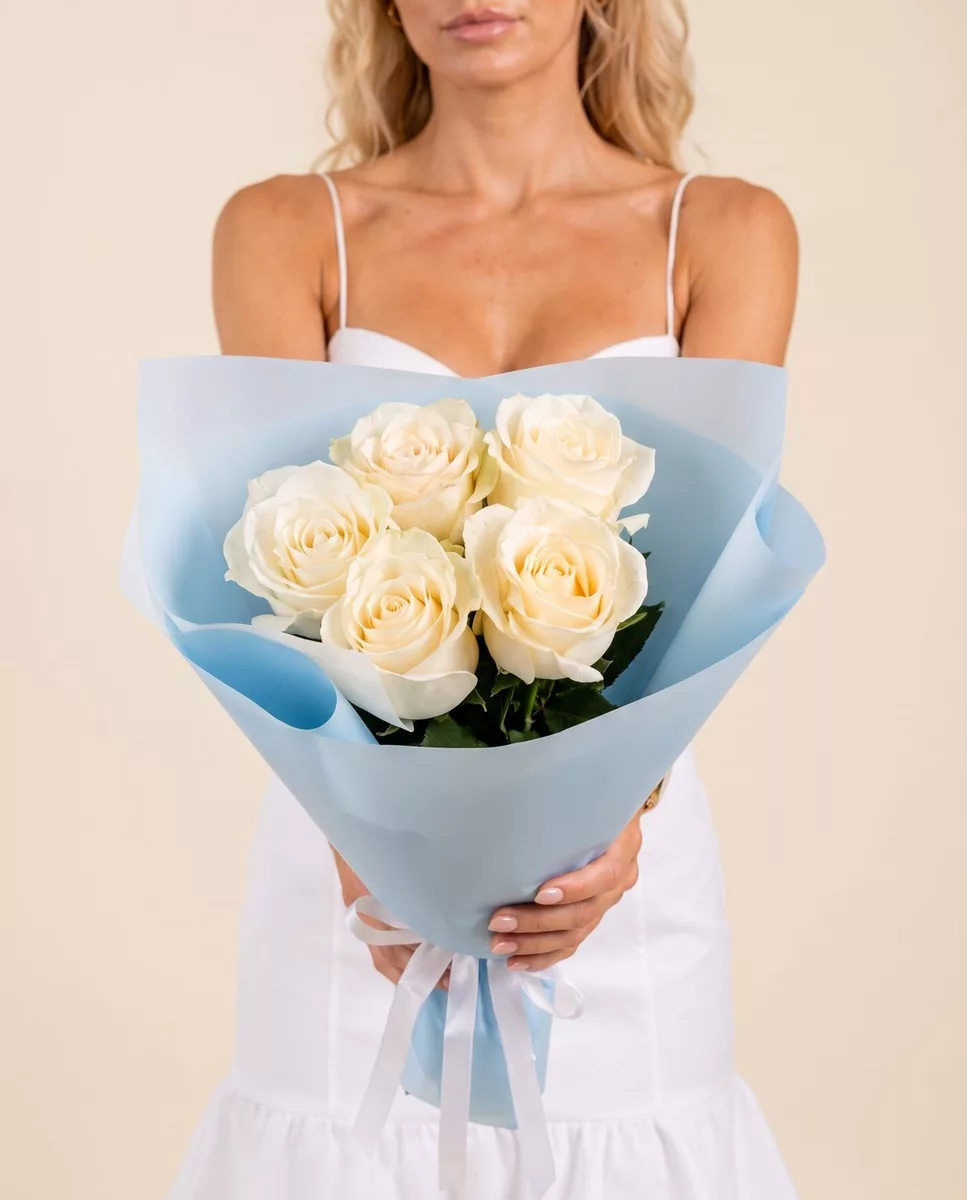
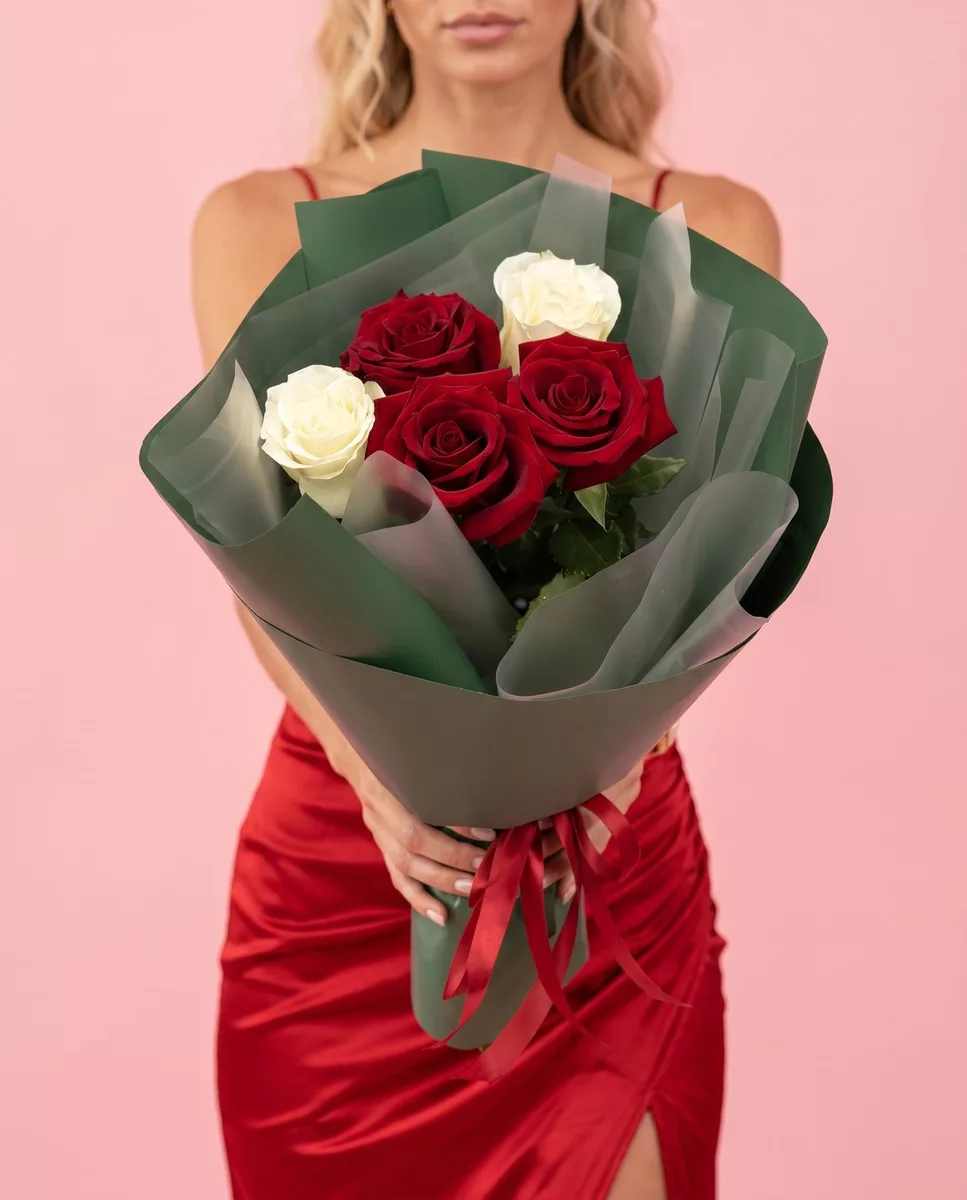
Choosing the Occasion First, Then the Flowers
The most useful thing a florist can tell someone ordering from abroad is this: start with the person and the moment, not with a flower name. What will your recipient feel when they open the door? Surprise, warmth, celebration, tenderness? That feeling should drive every choice you make, from colour to stem count to wrapping style.
For a birthday, bold and generous reads best — think full-headed spray chrysanthemums mixed with alstroemeria and eucalyptus, a combination that photographs well and lasts a long time in a vase. For a romantic gesture, single-variety bouquets of garden-style roses or lisianthus in blush and dusty rose tones feel intimate rather than showy. For a new baby or a congratulation on a promotion, something bright and unconventional — sunflowers with solidago and green button chrysanthemums — signals joy without being generic.
Russian recipients in smaller towns tend to appreciate generous volume. A bouquet that looks full and layered, with texture from foliage and filler flowers alongside the focal blooms, is received as more thoughtful than a minimal arrangement of three stems, however elegant those stems may be. This is not a rule, but it is a pattern worth knowing. If your recipient has a very modern, spare aesthetic, you can always note that in the order comments and the arrangement will reflect it. Thinking about who will receive the flowers — their age, their taste, the room they live in — is the most useful thing you can do before you choose a single variety.
Seasonal Availability and What Travels Well to the Urals
Ordering from abroad means you may be looking at a flower shop website in spring while Nizhnyaya Salda is still under snow, or vice versa. Seasonal availability in Russia's floral market is largely driven by imports from the Netherlands, Ecuador and Kenya, so the calendar is less restrictive than you might expect — roses, carnations, alstroemeria, chrysanthemums and lisianthus are available year-round and travel well.
What changes with the season is not availability but suitability. In deep winter, from December through February, avoid open, fully bloomed flowers in your order. Ask for buds that are just beginning to open — roses at the one-quarter open stage, lisianthus with two or three buds still closed. These will survive the cold transit better and open beautifully in the warmth of the recipient's home over the following two or three days. A fully open peony in a minus 15-degree delivery corridor will arrive damaged.
In summer, the concern flips. Heat between June and August can accelerate wilting, particularly for tulips, which are tender and fast-moving in warm conditions. Spray roses, statice, and solidago are far more heat-tolerant and hold their shape well. Sunflowers are excellent in summer — they are sturdy, cheerful and unmistakable. If you are ordering between late April and early June, you may find lilac available from Russian growers, which is a genuinely special choice that carries enormous sentimental weight in Russian culture. A branch of lilac says spring in a way no imported flower can replicate.
How to Place an Order When You Are Outside Russia
Placing a flower order from abroad sounds complicated but is straightforward once you know the steps. The main practical points are currency, time zones and the delivery address format.
Payment is handled in Russian roubles, and international cards — Visa and Mastercard — may face restrictions depending on your country of issue since 2022. If your card does not process, a transfer through a payment system that operates in Russia is usually the alternative. It is worth checking this before you are in a hurry on the morning of a birthday.
Time zones are the most common source of mistakes. Nizhnyaya Salda operates on Yekaterinburg Time, which is UTC plus 5, with no daylight saving adjustment. If you are in London, that is 5 hours ahead in winter and 4 hours ahead in summer. If you are in New York, it is 8 to 9 hours ahead. When you type a delivery time in the order form, you are entering Nizhnyaya Salda local time, not your own. Double-check this. An order for 10 am placed from Berlin without accounting for the time difference can easily result in a midday or afternoon delivery instead.
For the delivery address, write the street name and house number clearly. Russian addresses follow the format: street name, house number, apartment number if applicable. If your recipient lives in a multi-storey building, the apartment number and floor are important — delivery to a building entrance without an apartment number causes delays. Ask your recipient for their full address in advance, or confirm it with a family member locally.
Budgeting for a Bouquet That Feels Right
When you are ordering from abroad, it helps to understand what different spending levels actually look like in the recipient's hands — not as a price tag, but as a physical experience.
At a modest level, you are looking at a single-variety bouquet: perhaps eleven spray roses in a single colour, wrapped in kraft paper with a satin ribbon. It is clean, sincere and completely appropriate for a casual birthday or a thank-you gesture. The stems will be fresh and the presentation neat.
At a mid-range level, the bouquet gains variety and volume. A combination of garden roses, lisianthus and eucalyptus, or tulips with muscari in spring, fills both the arms and the room. This is the level most people choose for close family members or romantic partners, and it reads as genuinely generous without being excessive.
At a higher level, you move into arrangements with premium focal flowers — large-headed Dutch roses, peonies in season, or orchid stems — combined with textural foliage and presented in a hatbox or a structured wrap rather than a simple paper cone. This is the level for milestone birthdays, significant anniversaries, or moments when you want the recipient to feel that serious thought went into the gift.
One practical note: adding a small gift alongside the bouquet — chocolates, a soft toy, a candle — is very common in Russian gifting culture and is always warmly received. If the occasion is a birthday, this small addition often matters more to the recipient than the flower count.
Writing the Card Message When You Do Not Speak Russian
The card is the voice of the bouquet. In Russia, a handwritten or printed note is expected with a gift delivery — arriving without one can feel impersonal or even confusing to the recipient. If you are ordering from abroad and do not speak Russian, this section is for you.
You can write your message in English, and it will be printed or handwritten exactly as you provide it. Many recipients in Russia, particularly those under 40, read English well enough to understand a heartfelt message. If you want the message in Russian and you do not speak the language, you have two options: use a translation tool such as DeepL, which handles Russian very naturally, or write the sentiment in English in the order notes and ask for a Russian translation in the comments field.
Keep the message simple and personal. "Happy birthday, I am thinking of you from far away" carries more warmth than a long paragraph. Russian card culture tends toward directness and sincerity rather than elaborate prose. Wishes for health, happiness and warmth are universally appropriate and always land well.
If the occasion is a name day — den angela in Russian — rather than a birthday, acknowledge it specifically. Name days are celebrated in Russia as seriously as birthdays, sometimes more so, and a card that mentions the occasion by name shows cultural awareness that the recipient will notice and appreciate. If you are unsure whether your recipient celebrates their name day, it is safe to simply wish them happiness on their special day without specifying which occasion it is.
Vase Life and Care Instructions Your Recipient Will Actually Use
One of the most generous things you can do when sending flowers from abroad is to include simple care instructions with the bouquet. Most people in Russia know to put flowers in water, but the details that extend vase life by four or five days are less widely known.
The first step on receiving a bouquet is to trim the stems at an angle — about two centimetres from the bottom, using a sharp knife rather than scissors, which can crush the vascular tissue. This cut should be made under running water or immediately before placing the stems in the vase, so no air enters the stem. A diagonal cut increases the surface area available for water uptake.
The vase water should be cool and clean, changed every two days. Flower food sachets, which are sometimes included with the bouquet, contain a mild bactericide and a small amount of sugar that genuinely extends bloom life — encourage your recipient to use them if provided. The vase should be kept away from direct sunlight, heating radiators and fruit bowls. Ripening fruit releases ethylene gas, which accelerates petal drop in roses, lisianthus and carnations.
Different varieties have different natural lifespans. Chrysanthemums and carnations are the longest-lasting cut flowers, often remaining fresh for two weeks or more with good care. Alstroemeria is similarly long-lived. Roses and lisianthus typically last seven to ten days. Tulips are shorter — five to seven days — but they continue to grow and move in the vase in a way that many people find beautiful. Knowing this helps your recipient enjoy each stage rather than feeling the bouquet is failing when a tulip bends toward the light.
Sending flowers to Nizhnyaya Salda from the other side of the world is not a complicated act — it is a human one. You are asking someone in a small Ural town to open their door and feel that distance does not matter. The practical details covered here — time zones, seasonal choices, transit temperatures, card messages — exist only to make that moment land as well as it possibly can. Get the person right, get the timing right, and the flowers will do the rest.
Frequently asked questions
Can I order flowers for Nizhnyaya Salda delivery if I am based outside Russia?
Yes, you can place an order from anywhere in the world through the Turboflora website. The main practical consideration is payment — check that your card processes in Russia before the occasion arrives, and account for the time difference between your location and Nizhnyaya Salda, which operates on UTC plus 5 with no daylight saving.
How far in advance should I order for a specific date?
Placing your order the evening before the occasion, using Nizhnyaya Salda local time as your reference, gives the best result. For major holidays such as International Women's Day on March 8th or Valentine's Day, ordering two to three days ahead is strongly advisable, as demand across Russia rises sharply and same-day slots fill quickly.
What flowers hold up best in the Ural winter cold during delivery?
Carnations, spray chrysanthemums and alstroemeria are the most cold-tolerant cut flowers and are excellent choices for winter orders. If you want roses, request buds at the one-quarter open stage rather than fully bloomed flowers — they travel through cold conditions far better and open gradually once your recipient places them in a warm room.
Can I write the card message in English?
Absolutely. Your message will be printed exactly as you write it. Many recipients in Russia read English, particularly those under 40. If you prefer a Russian-language card, write your message in English in the order notes and request a translation in the comments field — we will handle it before the bouquet is prepared.
Is it appropriate to add chocolates or a small gift alongside the flowers?
Adding a small gift is very common in Russian gifting culture and is warmly received. Chocolates, a soft toy or a candle alongside a bouquet signals extra thoughtfulness. For birthday deliveries especially, this combination is a familiar and appreciated gesture that often means as much to the recipient as the flowers themselves.
Ready to send flowers?
Pick the city, choose the bouquet, and a local florist takes it from there.
Choose a city →