Sending Flowers to Nyazepetrovsk from Abroad? Read This First
You are sitting in Berlin, Toronto or Dubai, and someone you care about is in Nyazepetrovsk — a quiet industrial town in the Chelyabinsk region of the southern Urals. You want to send flowers, but you are not sure how delivery works from abroad, what Russian customs expect, or which blooms will actually survive the journey to their door. This article answers every practical question a sender outside Russia is likely to have, so the bouquet arrives looking the way you imagined it.
What Nyazepetrovsk Is Like and Why It Matters for Flower Delivery
Nyazepetrovsk sits in the northern part of the Chelyabinsk region, surrounded by forested hills and the Nyazepetrovsk Reservoir. The town has a population of roughly ten thousand people, and its climate is sharply continental — cold winters that regularly drop below minus twenty Celsius and warm, sometimes dry summers. That temperature range matters enormously when you are choosing flowers for someone there.
In winter, delicate open blooms like garden roses with many petals or fully open tulips can suffer from cold air between the delivery vehicle and the front door. A florist who knows the region will assemble the bouquet with this in mind, choosing tighter bud stages that open gradually once the recipient brings them inside. In summer, the opposite problem arises: heat can accelerate wilting in transit, so stems that travel well — spray chrysanthemums, alstroemeria, sturdy single-stem roses — become the sensible backbone of any arrangement.
For a sender abroad, the key practical point is that Nyazepetrovsk is not a major city with round-the-clock logistics. Delivery windows matter. Turboflora works within a one-to-two-hour delivery promise across Russia, including the Chelyabinsk region, which means the bouquet is assembled fresh and dispatched promptly rather than sitting in a refrigerated warehouse. Knowing this helps you set realistic expectations for the recipient and choose a delivery time that fits their day — mid-morning or early afternoon tends to work best for residential addresses in smaller Russian towns.
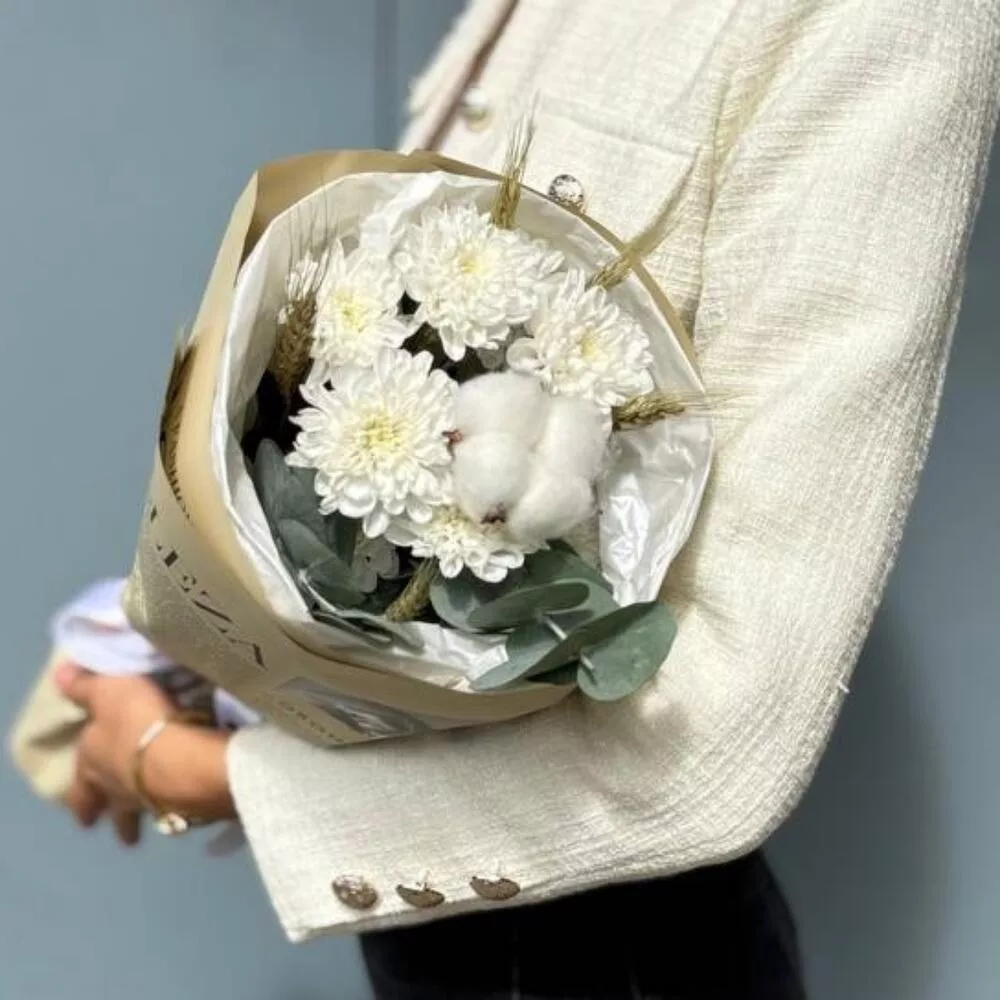
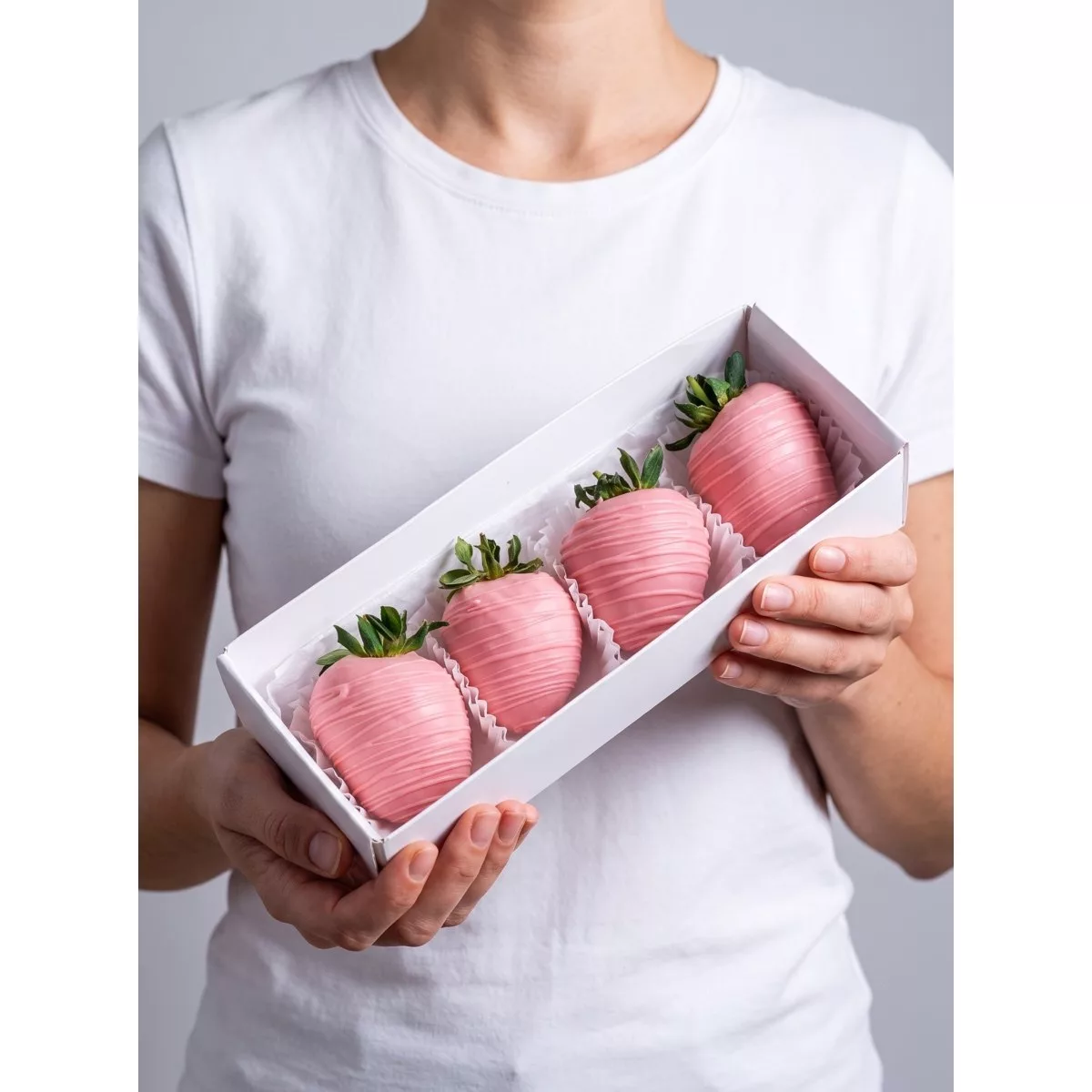
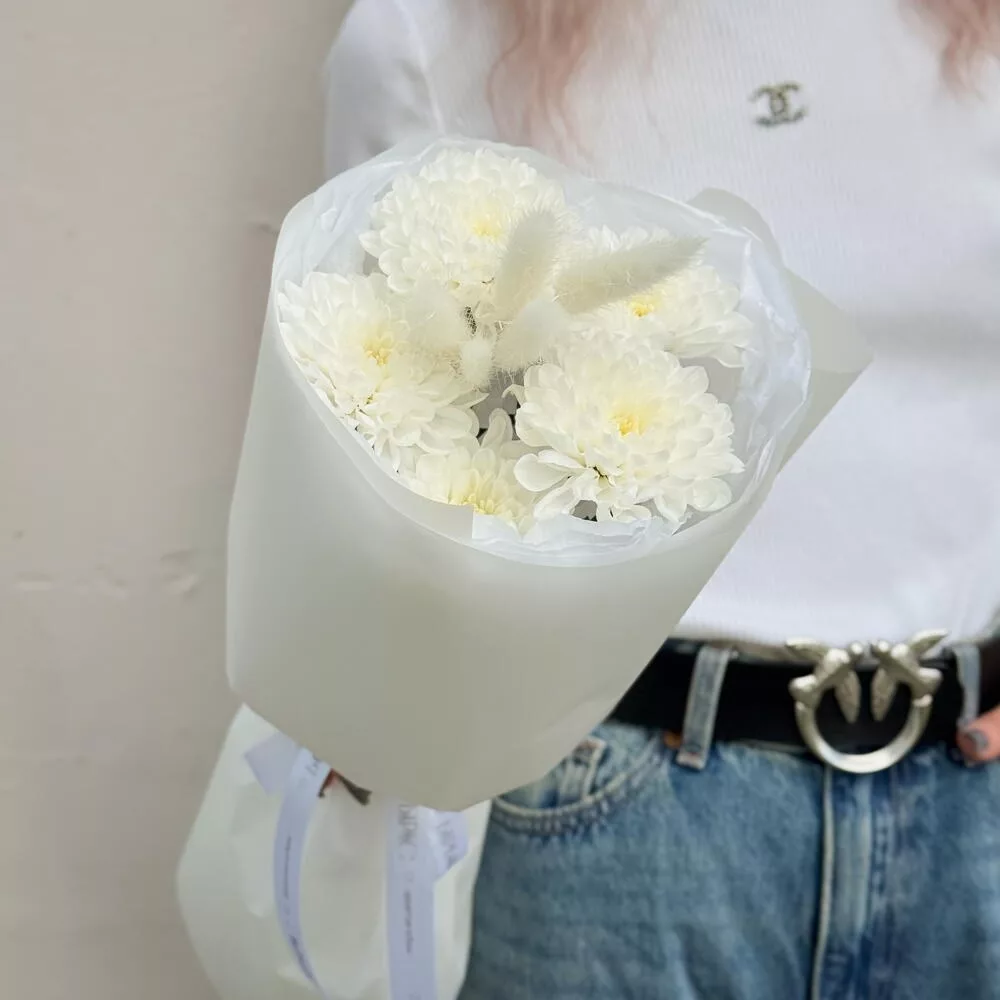
Bouquets we can deliver

How to Place an Order When You Are Outside Russia
Ordering from abroad is straightforward once you understand the two things that trip people up most often: the address format and the phone number for the recipient. Russian postal addresses follow the pattern of region, city, street, building number, and apartment number — in that order. When you fill in the delivery form, write the recipient's address exactly as they gave it to you, including the apartment number if applicable. A missing apartment number in a multi-storey building can delay delivery significantly.
The recipient's Russian mobile number is essential. Delivery drivers call ahead in Russia — this is standard practice and the recipient expects it. If you only have a WhatsApp number with a foreign country code, ask the recipient to confirm their local Russian number before you place the order. Without it, the driver has no way to coordinate the handover.
Payment from abroad is handled through international card processing on the Turboflora website. Most major Visa and Mastercard cards issued outside Russia work, though some banks flag international e-commerce transactions and may require you to confirm the payment through your banking app. It is worth having your card ready and your banking app open before you begin checkout, so the process takes two minutes rather than twenty.
Time zones are the third common stumbling block. Nyazepetrovsk operates on Yekaterinburg Time, which is UTC plus five, with no daylight saving adjustment. If you are in London in winter, that is eight hours ahead of you. If you want flowers delivered at noon local time in Nyazepetrovsk, you need to place the order by four in the morning London time at the latest. Setting a calendar reminder the evening before saves a great deal of last-minute stress.
Choosing Flowers for the Person and the Occasion
Start with the recipient, not with the flower catalogue. A young woman celebrating a birthday responds differently to a loose, garden-style arrangement of lisianthus, eucalyptus and peach spray roses than an older relative does. A man marking a professional achievement is often more comfortable receiving a structured arrangement of anthuriums and tropical foliage than a pastel bouquet. Russian gifting culture is warm and generous, and the size and presentation of the bouquet carry meaning — a small, sparse arrangement can read as an afterthought even if the flowers inside it are expensive.
For romantic occasions, red roses remain the clearest signal in Russian culture. A dozen long-stemmed red roses is a classic that needs no explanation across generations or backgrounds. If you want something more personal, deep burgundy roses mixed with white waxflower and dark green ruscus create a richer, more sophisticated version of the same feeling without straying into unfamiliar territory for the recipient.
For celebrations that are not romantic — a new job, a graduation, a housewarming — sunflowers are enormously popular in Russia and carry genuine warmth. Mixed with yellow solidago and a few stems of orange alstroemeria, they make an arrangement that feels festive without being overly formal. White flowers, particularly white chrysanthemums, are traditionally associated with mourning in Russian culture, so unless you know the recipient well and the context is clearly joyful, it is safer to avoid all-white compositions. A florist will always guide you away from combinations that might be misread.
Seasonal Availability and What Grows Well in Each Month
Russia imports a significant portion of its cut flowers year-round, so roses, carnations, alstroemeria and chrysanthemums are reliably available in Nyazepetrovsk in every month. What changes with the seasons is what looks most natural, most fresh, and most generous for the price.
From November through February, the best-value choices are premium roses — Ecuadorian varieties with large heads and long stems travel exceptionally well and hold their colour beautifully in cold air. Hypericum berries in red or orange add texture and last remarkably well in vase water. Tulips are available from Dutch growers throughout winter and are a cheerful contrast to the grey Ural landscape outside the recipient's window.
March is the month of mimosa in Russia. On International Women's Day, March eighth, mimosa is as culturally loaded as red roses on Valentine's Day in the West. If you are sending flowers to a woman in Nyazepetrovsk on or around March eighth, a bouquet that includes mimosa — with its soft yellow clusters and faint honey scent — will be recognised immediately as a thoughtful, culturally aware gesture. Order early: demand in the days before March eighth is extremely high across all of Russia.
Spring and early summer bring ranunculus, peonies from late May onward, and garden-style lisianthus. Peonies in particular are deeply loved in Russia and, when they are in season, make an impression that is difficult to match at any price point. Late summer and autumn suit dahlias, eustoma and tall sunflowers. Knowing the season means you can ask for what is genuinely at its best rather than what is merely available.
Presentation, Wrapping and the Russian Idea of a Proper Bouquet
In Russia, the wrapping of a bouquet is not an afterthought — it is part of the gift. An unwrapped bunch of flowers handed over in plain cellophane reads as hasty. Kraft paper with a satin ribbon, or layered tissue with a coordinating outer wrap, signals that care went into the presentation. When you order online from abroad, the florist handles this entirely, but it is worth knowing that the packaging is already built into what a Russian recipient expects to receive.
The number of flowers in a bouquet carries a specific meaning in Russian tradition: even numbers of stems are given at funerals, and odd numbers are given for all living celebrations. This is not a superstition that every Russian follows strictly, but it is widespread enough that a professional florist always composes celebratory bouquets with an odd count — five, seven, eleven, fifteen stems — as a default. You do not need to specify this; it is simply how it is done.
Round, hand-tied bouquets are currently the most popular format in Russia for home delivery. The stems are gathered at a central point, wrapped tightly, and presented with the heads fanning outward — the bouquet sits upright on a table and photographs beautifully, which matters because the recipient will almost certainly take a picture to send back to you. Hat-box arrangements and flower boxes with a foam base are also popular for birthdays, particularly for recipients who appreciate the novelty of opening a box to find a dense, flat arrangement of roses or ranunculus inside. Both formats travel well in a delivery bag.
Writing a Card Message Across a Language and Cultural Gap
A handwritten card is included with most flower deliveries in Russia, and it is the part of the gift that the recipient reads first and keeps longest. If you are writing in English, the florist can include your message exactly as written — many recipients in Russia, particularly younger ones, read English well enough to appreciate a personal message in the sender's own language. However, if you want to be certain the full warmth of your words reaches the recipient, consider writing your message and then asking the florist to include a Russian translation alongside it.
Russian card messages tend to be warmer and slightly more effusive than their English equivalents. Where an English speaker might write 'Happy Birthday, thinking of you,' a Russian equivalent would more naturally read 'Wishing you joy, health and everything your heart desires on this wonderful day.' Neither is more sincere than the other, but if you want the card to feel native to the culture, leaning into warmth rather than understatement works well.
For romantic messages, Russian uses the formal and informal 'you' — vy and ty — and the choice matters. A message written by the florist in Russian will default to the appropriate register based on context. If you specify that the recipient is a close partner, ty will be used; for a more formal relationship, vy is safer. You do not need to know Russian grammar to communicate this — simply describe your relationship to the recipient when you add the card note, and the florist will handle the rest.
Avoid humour that depends on wordplay or cultural references specific to your home country. A joke that lands perfectly in English may read as strange or even rude when translated. Warmth, sincerity and specificity — mentioning the occasion clearly, naming what you admire about the person — travel across languages far better than cleverness.
Keeping the Flowers Fresh After Delivery: What to Tell the Recipient
The bouquet arrives, the recipient is delighted, and then the flowers last three days instead of ten. This is the most common disappointment in flower gifting, and it is almost always preventable. Since you are the one sending from abroad, it helps to know what advice to pass along — either in the card or in a message afterward.
The single most important step is re-cutting the stems. The moment a stem is cut, it begins sealing the wound to prevent water loss. By the time the bouquet reaches the recipient, the cut ends have partially sealed. Cutting another centimetre off each stem at a forty-five-degree angle, ideally under running water or while the stem tip is submerged, reopens the channel and dramatically improves water uptake. Most people skip this step because they do not know it matters.
Vase water should be cool and changed every two days. Warm water encourages bacterial growth that blocks the stems. The vase should be rinsed with each water change. Flowers should be kept away from direct sunlight, radiators, and fruit bowls — ripening fruit releases ethylene gas, which accelerates petal drop in roses and tulips particularly.
With proper care, roses last seven to ten days, alstroemeria and chrysanthemums up to two weeks, and tulips five to seven days depending on the temperature of the room. Lisianthus and carnations are among the longest-lasting cut flowers and will reward careful recipients with up to three weeks of colour. Passing this information to the recipient — even just a short voice message — turns a beautiful delivery into a gift that keeps giving for much longer than the occasion itself.
Sending flowers to Nyazepetrovsk from outside Russia is entirely achievable when you have the right information before you start. The town's continental climate, the cultural weight of presentation and odd petal counts, the importance of the recipient's local phone number, and the time zone difference between you and the Urals — these are the details that separate a smooth delivery from a frustrating one. Turboflora handles the assembly, the wrapping and the one-to-two-hour delivery window; your job is simply to choose with the recipient in mind and place the order with enough lead time for the occasion. The flowers will arrive fresh, the card will carry your words, and someone far away will know they were thought of.
Frequently asked questions
Can I order flowers for Nyazepetrovsk delivery if I do not speak Russian?
Yes. The Turboflora website is accessible to international customers, and the order form works in a straightforward way. You can write your card message in English and it will be included exactly as written. If you want a Russian translation added alongside your message, simply note that in the order comments and the florist will arrange it.
How far in advance should I order for a specific delivery time?
For same-day delivery, placing the order at least three to four hours before your preferred delivery window is advisable, accounting for the time zone difference between your location and Nyazepetrovsk, which operates on UTC plus five. For major dates like March eighth or February fourteenth, ordering one to two days ahead is strongly recommended as demand is very high.
What if the recipient is not home when the delivery arrives?
The delivery driver calls the recipient's Russian mobile number before arriving. If the recipient cannot be reached, the driver will attempt contact again and coordinate a revised time. This is why providing an accurate local Russian phone number when placing the order is essential — it is the primary way the driver and recipient connect to arrange the handover.
Are there flowers I should avoid sending to Russia for cultural reasons?
All-white flower arrangements, particularly those featuring white chrysanthemums, are strongly associated with mourning in Russian culture and are best avoided for celebratory occasions. Even numbers of stems carry the same association. A professional florist will automatically compose celebratory bouquets with an odd stem count and will avoid combinations that might carry unintended meaning.
What is the best flower choice for a recipient I do not know very well?
Mixed bouquets built around roses or alstroemeria are universally well-received and carry no risk of misreading. Choosing warm colours — coral, peach, soft yellow — rather than a single bold colour keeps the arrangement feeling generous and personal without making a statement the recipient might find surprising. Adding greenery like eucalyptus or ruscus adds volume and a pleasant natural scent.
Ready to send flowers?
Pick the city, choose the bouquet, and a local florist takes it from there.
Choose a city →