Sending Flowers to Ostrov from Abroad? Here Is What to Actually Expect
Ostrov is a quiet town in the Pskov region, and someone you love is there right now — a mother, a partner, a friend — waiting, perhaps not even expecting anything. You are sitting thousands of kilometres away, wondering whether it is even possible to send real, fresh flowers to a place that small. It is. But there are a few things worth knowing before you order, and getting them right is the difference between a bouquet that arrives glowing and one that never quite lands the way you meant it to.
Why Ostrov Is Worth the Extra Thought
Ostrov sits along the Velikaya River in the Pskov Oblast, not far from the Estonian border. It is not a major city, and that is exactly why your gesture will mean more there. In smaller Russian towns, receiving a flower delivery is a genuinely memorable event — neighbours notice, families talk, and the recipient feels singled out in the best possible way. The emotional weight of a bouquet arriving at a door in Ostrov is simply higher than in a capital city where deliveries are routine.
For you as a sender abroad, the key thing to understand is that delivery to Ostrov works through a coordinated logistics chain that reaches the Pskov region reliably. Turboflora handles the full route from composition to doorstep, so you do not need to piece together local contacts or translate addresses across multiple services. What you do need is to think about timing, seasonal availability and the occasion — because those three things shape everything about whether the bouquet lands perfectly.
Ostrov experiences a continental climate with cold winters and warm summers. That matters for flower selection and for how the recipient should care for what arrives. A sender in Dubai or Berlin may not think about the fact that a February delivery in Ostrov means stepping outside into minus temperatures, but your florist should — and will. Knowing this context helps you ask the right questions and set realistic expectations from the start.
Bouquets we can deliver
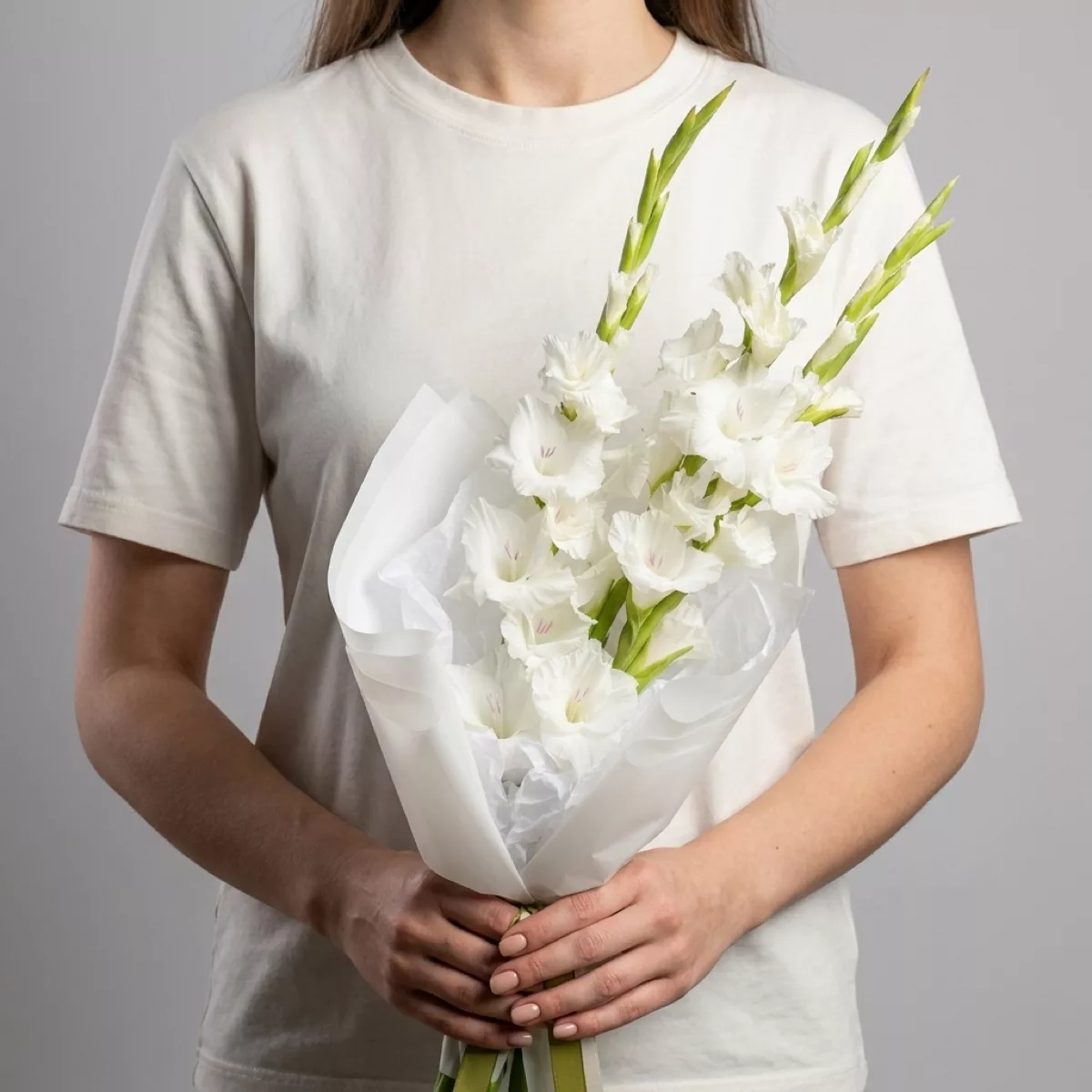
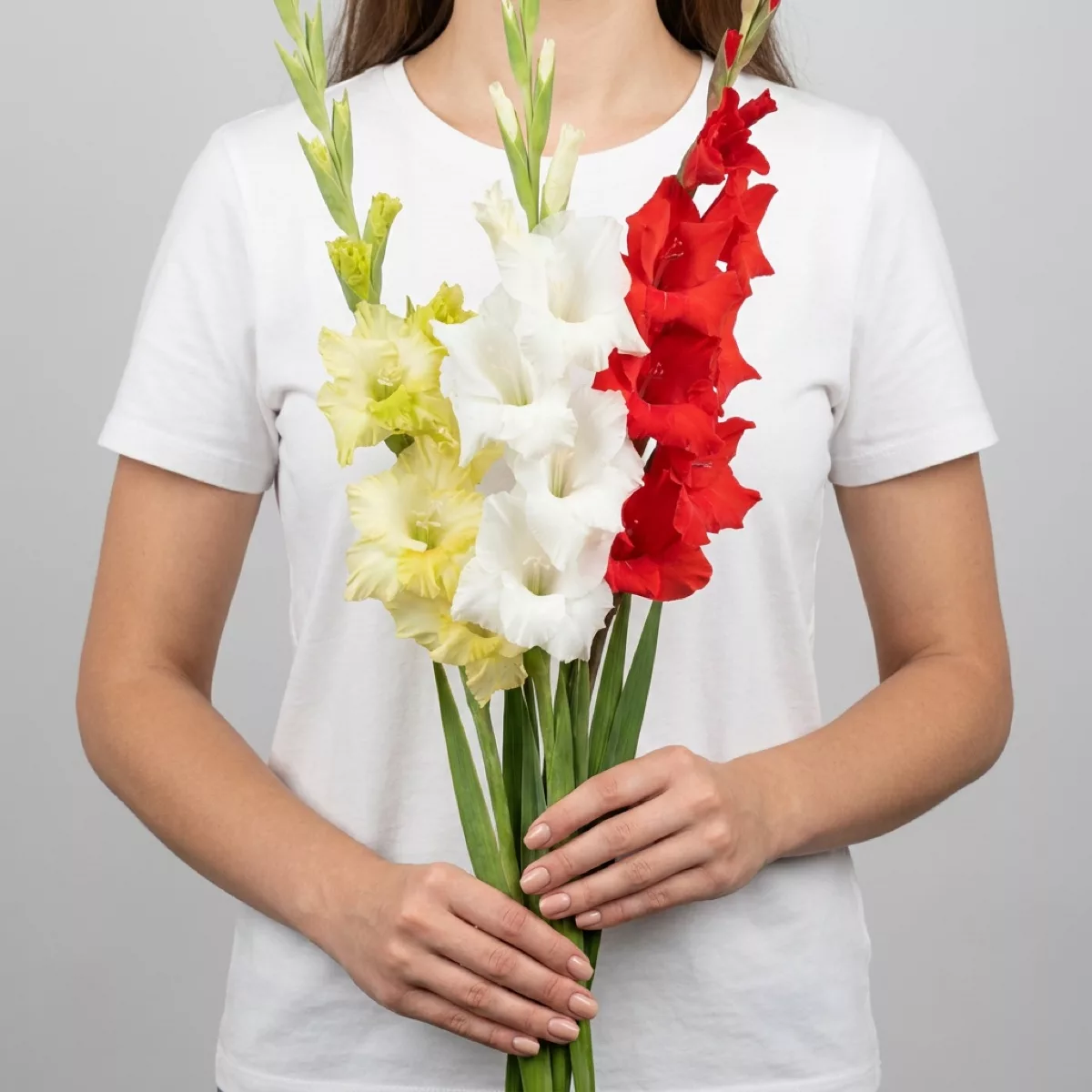
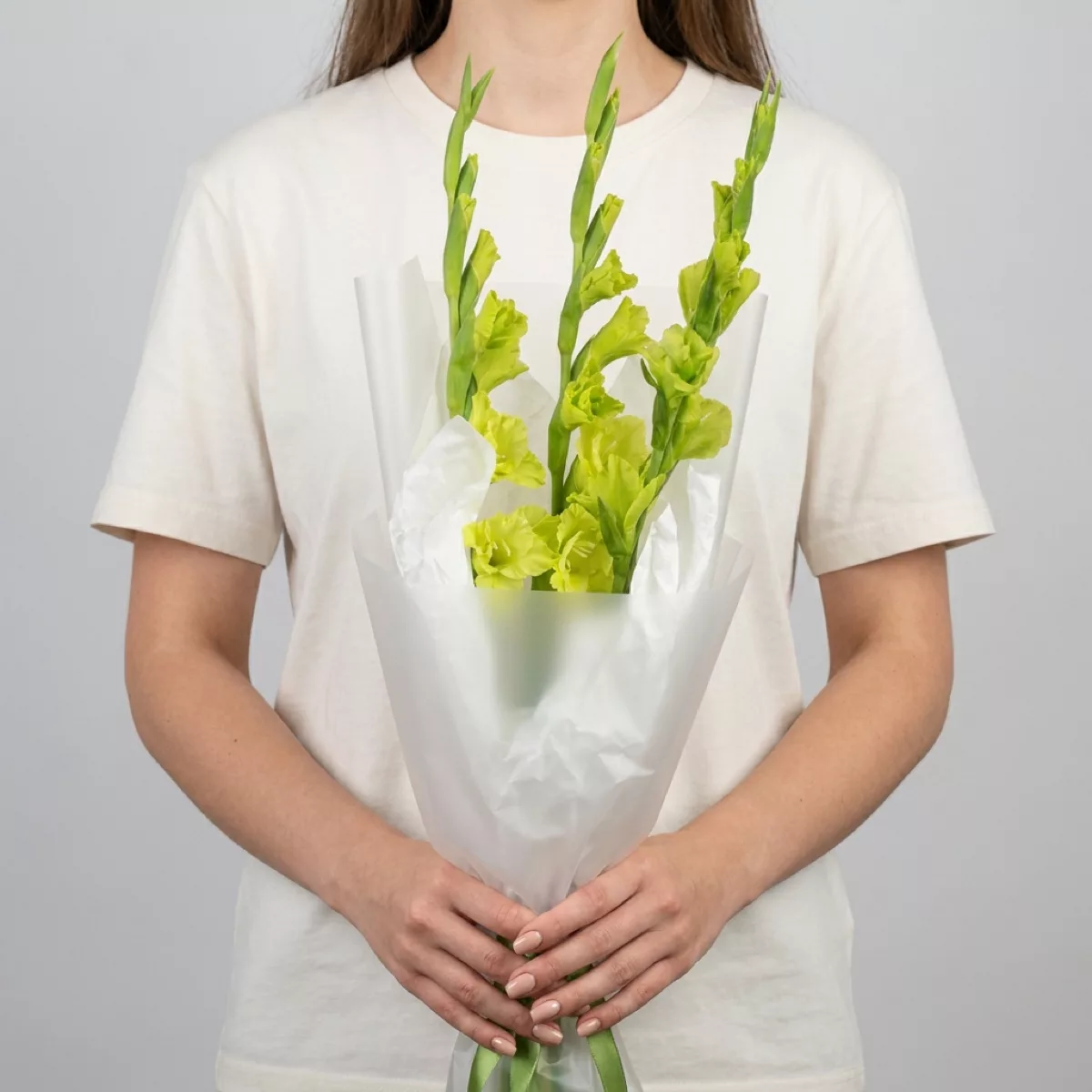
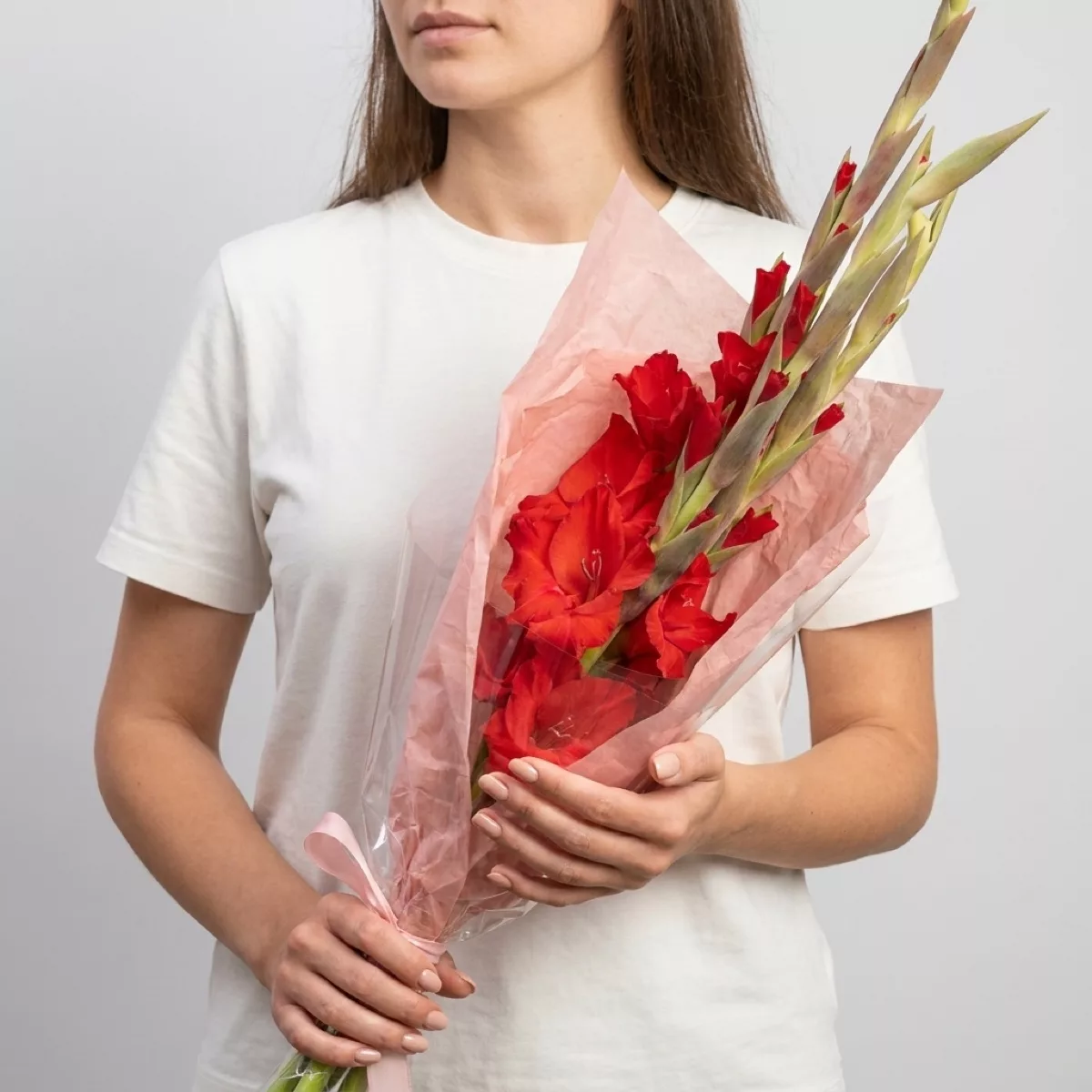
Choosing for the Person, Not Just the Occasion
Before you think about which flowers, think about who is receiving them. A grandmother in Ostrov who grew up tending a dacha garden will likely respond more warmly to something familiar — garden roses, fragrant alstroemeria, or a generous bunch of chrysanthemums — than to an architectural tropical arrangement. A younger woman might love the drama of lisianthus in deep violet or a loose, asymmetric wrap of ranunculus and eucalyptus. The bouquet should feel like it came from someone who knows her, not from a generic catalogue.
For birthdays, volume and warmth tend to work well. Think full, rounded shapes in the recipient's favourite colours, with something fragrant if possible — freesia adds scent without overwhelming the arrangement. For anniversaries sent from abroad, red and blush roses remain deeply meaningful in Russian culture; this is not a cliché to avoid but a genuine emotional language. For a new baby or a housewarming, soft whites and pale pinks or creams feel celebratory without being showy.
If you genuinely do not know the recipient's preferences, lean toward mixed seasonal bouquets with clear colour harmony rather than single-variety bunches. A well-composed mix of spray roses, wax flower and lemon leaf reads as thoughtful and considered. It also holds up better over several days, which matters when you cannot be there to replace it. Think of the bouquet as the beginning of a conversation — it should feel personal, warm and unmistakably chosen.
Timing Your Order Across Time Zones
This is where senders from abroad most often stumble. Ostrov operates on Moscow Time, which is UTC+3. If you are in London, that is two hours ahead of you in winter and three in summer. If you are in New York, the gap is eight hours. If you are in Tokyo, it is six hours behind Moscow. Getting this wrong by even a few hours can shift a birthday morning delivery into a late evening arrival, which changes the whole feeling of the gesture.
Turboflora delivers within one to two hours of order confirmation. That means you should place your order at least two to three hours before the moment you want the flowers to arrive — and you should calculate that window in Moscow Time, not your local time. A useful habit is to convert the recipient's preferred delivery window first, then work backwards to figure out when you need to be at your screen placing the order.
For special dates like March 8th — International Women's Day, the single most flower-intensive day in Russia — order well in advance. Demand across the Pskov region spikes dramatically, and same-day availability for premium varieties like Dutch roses or peonies can disappear quickly. The same applies to February 14th and May 9th, which is Victory Day and carries significant meaning for many families in towns like Ostrov. Planning three to five days ahead for peak dates is not overcautious — it is simply smart.
Seasonal Flowers That Suit Ostrov's Climate
Ostrov's winters are genuinely cold, with temperatures regularly dropping below minus ten Celsius from December through February. This affects both what looks right for the season and how flowers survive the final stretch of delivery. In winter, choose hardy varieties: spray roses, standard chrysanthemums, carnations and alstroemeria all travel well in cold conditions and last longer once indoors. Avoid delicate open blooms like garden anemones or fully open tulips in deep winter — they bruise easily in the cold and wilt faster once the temperature changes sharply.
Spring in Ostrov, from late March through May, is the most joyful season for flower sending. Tulips are everywhere and deeply loved — a large, generous bunch of tulips in mixed pastels or a single saturated colour is one of the most appreciated gifts you can send. Daffodils and hyacinths carry scent that fills a small apartment beautifully. If you are sending for March 8th, tulips and mimosa together are a classic Russian combination that will feel completely right.
Summer brings the possibility of garden roses, lisianthus and sunflowers — all of which photograph beautifully and hold up well in the warmer months. Autumn is the season for richly coloured arrangements: deep orange roses, burgundy chrysanthemums, and dahlias if available. Matching the bouquet to the season is not just aesthetic — it is practical, because in-season flowers are fresher, more fragrant and more likely to last the full week in a vase.
How Russian Flower Customs Work
If you did not grow up in Russia or a neighbouring country, a few customs may surprise you. The most important one: always send an odd number of flowers. Even numbers of flowers are associated with mourning in Russian tradition, and sending twelve roses or ten tulips can feel jarring to the recipient, even if they are too polite to mention it. This applies across all occasions — birthdays, anniversaries, congratulations. One, three, five, seven, eleven, fifteen, twenty-one — these are the numbers that feel celebratory.
Wrapping matters too. In Russia, bouquets are typically presented wrapped — in kraft paper, translucent film, or fabric — rather than arranged in a box or delivered unwrapped. A beautifully packaged bouquet signals care and effort. The wrapping is often kept for a few hours even after the flowers are home, because it is part of the visual pleasure of receiving them. When ordering, you do not need to specify this in detail — a good florist will wrap appropriately by default.
It is also common in Russia to give flowers with a small accompanying note or card. If you are sending from abroad, a personal message in Russian or English (or both) adds something that the flowers alone cannot. Even a few words — written in your own phrasing rather than a template — will be read more than once. Do not underestimate this. For a recipient in Ostrov who knows you are far away, your words alongside the bouquet are the real gift.
Giving the Delivery Address Correctly
Addresses in Russia follow a different format from most Western countries, and getting this wrong is the most common practical mistake senders from abroad make. Russian addresses typically go from largest to smallest: city, street, building number, apartment number. In Russian postal format it looks like this — Pskov Oblast, Ostrov, ulitsa Lenina, dom 5, kvartira 12. If you are writing in Latin script, the structure stays the same: Oblast, city, street name, building, apartment.
For Ostrov specifically, make sure you include the Pskov Oblast designation so the address is unambiguous. There are other small towns in Russia, and a partial address can cause delays. If the recipient lives in a private house rather than an apartment block, note that there is no apartment number — just the house number and, if relevant, a korpus (building section) number. When in doubt, ask the recipient directly for their full postal address in the Russian format and copy it exactly.
The recipient's phone number is essential for delivery in smaller towns. The courier may need to call ahead, especially if the building entrance requires a door code or if the recipient needs to come downstairs. Provide a Russian mobile number if the recipient has one. If they do not have a local number and rely on a messaging app, note that in your order comments. A small amount of coordination at this stage saves a great deal of frustration later and ensures the bouquet arrives in its best possible condition.
Helping the Recipient Keep the Flowers Fresh
You chose the flowers, paid for them and arranged delivery across thousands of kilometres. The last thing you want is for the bouquet to fade in two days because the recipient did not know how to care for it. Most people in Russia are familiar with basic flower care, but a short note with your order can make a real difference — especially if the recipient is older or simply not in the habit of keeping cut flowers.
The most important step is the cut. As soon as the bouquet arrives, the stems should be cut at a forty-five degree angle under running water or submerged in a basin. This prevents an air bubble from blocking water uptake. Remove any leaves that would sit below the waterline in the vase — they rot quickly and cloud the water, which shortens vase life significantly. Change the water every one to two days, or whenever it begins to look cloudy.
In Ostrov's winters, the indoor air tends to be very dry because of central heating. This is hard on flowers. Placing the vase away from direct heat sources — radiators, sunny windowsills in direct afternoon light — helps considerably. Roses and tulips in particular are sensitive to heat and will open and drop petals much faster near a warm radiator. A cool spot, even slightly drafty, is better than a warm one. Chrysanthemums and alstroemeria are the most forgiving in dry indoor conditions and can last ten to fourteen days with basic care. Tulips and ranunculus are more fleeting — five to seven days — but their beauty in that window is worth it.
Sending flowers to Ostrov from abroad is not complicated once you understand the rhythm of it — the time zones, the seasonal choices, the odd-number rule, the wrapped presentation. What makes it meaningful is not the logistics but the intention behind it: someone far away took the time to make sure something beautiful arrived at a specific door on a specific day. In a town like Ostrov, that lands differently than it might in a busy city. The bouquet becomes a story the recipient tells. Get the details right, and the flowers do the rest.
Frequently asked questions
Can I send flowers to Ostrov if I don't speak Russian?
Yes, entirely. You can place your order in English through Turboflora's website. Provide the recipient's address in Russian script if possible — you can ask the recipient to send it to you by message — and include their Russian mobile number. The delivery process itself is handled in Russian on the ground, so you do not need to communicate with anyone locally.
How far in advance should I order for a birthday delivery in Ostrov?
For a regular date, ordering on the same day is fine as long as you account for the time difference and place your order at least two to three hours before the desired delivery window in Moscow Time. For major Russian holidays like March 8th or February 14th, order three to five days ahead to secure availability of premium flower varieties and preferred delivery slots.
What flowers last longest after delivery in winter conditions?
Chrysanthemums, alstroemeria and carnations are the most durable in winter, tolerating cold transit and dry indoor heating well. Standard spray roses also hold up reliably. Avoid requesting fully open garden roses or anemones for winter delivery — they are more fragile in sharp temperature changes and tend to have a shorter vase life once indoors.
Is it true I should never send an even number of flowers in Russia?
Yes, this is a genuine and widely observed custom. Even numbers of flowers are associated with mourning in Russian culture and will feel out of place for a birthday, anniversary or celebration. Always choose an odd number — three, five, seven, eleven, fifteen or twenty-one are all common and appropriate. Your florist will follow this automatically, but it is good to know why.
What if the recipient is not home when the flowers arrive?
This is why providing a working Russian mobile number for the recipient is so important. The courier will call ahead to confirm they are available. If the recipient is temporarily unavailable, a new delivery window can usually be arranged. Leaving flowers unattended at a doorstep in winter is not ideal, so direct contact with the recipient at the time of delivery is always the preferred approach.
Ready to send flowers?
Pick the city, choose the bouquet, and a local florist takes it from there.
Choose a city →